Targeting the ‘Activated State’ KRAS: Discovery of the Highly Cooperative PROTAC Degrader ACBI4
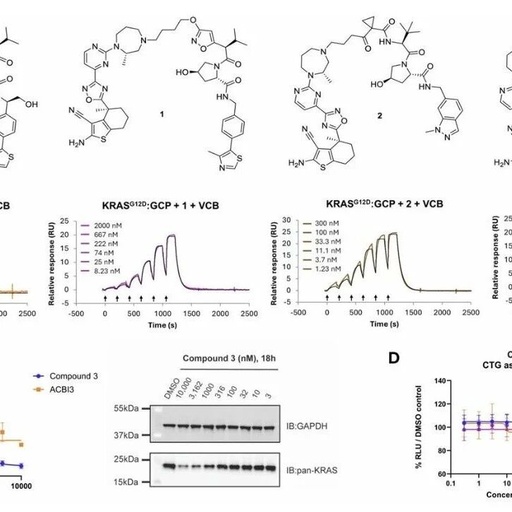
Targeting the 'Activated State' KRAS: Discovery of the Highly Cooperative PROTAC Degrader ACBI4

Hello everyone, this week I am sharing an article published in JACS titled “Identification of a Highly Cooperative PROTAC Degrader Targeting GTP-Loaded KRAS(On) Alleles.” The corresponding authors are Professors Alessio Ciulli and Kirsten McAulay from the University of Dundee, along with Peter Ettmayer from Boehringer Ingelheim. Their research primarily focuses on the mechanism of action … Read more

Literature Sharing | J. Am. Chem. Soc | Enzyme-Activated Sugar-Coated Bifunctional Degraders

Literature Sharing | J. Am. Chem. Soc | Enzyme-Activated Sugar-Coated Bifunctional Degraders

The team of Christina M. Woo from Harvard University’s Department of Chemistry and Chemical Biology has developed an enzyme activation strategy by integrating O-GlcNAc modifications into the ligands of cyclimids recognized by cereblon (CRBN). These sugar-coated PROTACs (SCPs) were designed based on structural analysis of representative cyclimids that degrade CRBN and the target protein BRD4. … Read more

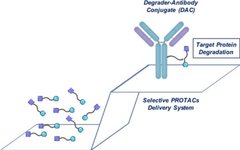
New Frontiers in Medicinal Chemistry: In-Depth Analysis of DAC Technology

New Frontiers in Medicinal Chemistry: In-Depth Analysis of DAC Technology

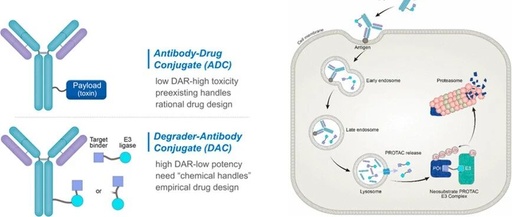
Following antibody-drug conjugates (ADCs), a new drug form known as “Degrader-Antibody Conjugate” (DAC) is gaining attention in the field of oncology and other diseases due to its unique “targeted protein degradation” mechanism. 1 What is DAC?DAC, short for Degrader-Antibody Conjugate, is an innovative drug conjugation technology. It cleverly combines the targeting specificity of monoclonal antibodies … Read more

Latest Trends in Antibody Drugs for 2024: Which Will Lead the Next Decade – Bispecific Antibodies, ADCs, or PROTACs?

Latest Trends in Antibody Drugs for 2024: Which Will Lead the Next Decade - Bispecific Antibodies, ADCs, or PROTACs?

In 2024, the global antibody drug market is expected to experience explosive growth. According to IQVIA, global spending on biopharmaceuticals is projected to exceed $892 billion by 2028, with antibody drugs holding a significant share. In the fields of oncology and autoimmune diseases, three major technological routes—bispecific antibodies (BsAbs), antibody-drug conjugates (ADCs), and proteolysis-targeting chimeras … Read more

The Future of PROTACs and Molecular Glue: E3 Ligand Development Overview

The Future of PROTACs and Molecular Glue: E3 Ligand Development Overview

This article combines literature and patents to introduce the recent development status of new E3 ligands. First, let’s talk about DCAF1. Biological Background of DCAF1 DCAF1 (also known as VprBP) is a multifunctional E3 ubiquitin ligase substrate receptor that participates in the regulation of various cellular processes. It is part of the Cullin-RING ligase (CRL) … Read more

DAC: Degrader-Antibody Conjugates and Their Mechanisms

DAC: Degrader-Antibody Conjugates and Their Mechanisms

Introduction Degrader-antibody conjugates (DAC) are a novel entity that combines the payload of a proteolysis-targeting chimera (PROTAC) with monoclonal antibodies through a type of chemical linker (DAC = PROTAC + ADC). This article collects several examples of DAC from scientific and patent literature and records specific challenges associated with DAC construction. Overall, these examples indicate … Read more

Coupled New Model! PROTAC + ADC = DAC (Directional Degradation Antibody Conjugates)

Coupled New Model! PROTAC + ADC = DAC (Directional Degradation Antibody Conjugates)

Introduction Degradation-Antibody Conjugates (DACs) are a new type of entity that effectively combines the protein hydrolysis-targeting chimeric (PROTAC) payload with monoclonal antibodies through some type of chemical linker (DAC =PROTAC + ADC). This article collects several examples of DACs from scientific and patent literature and documents specific challenges associated with DAC construction. Overall, these examples … Read more

A Functional Assay for Mining Noninhibitory Enzyme Ligands from One Bead One Compound Libraries: Application to E3 Ubiquitin Ligases

A Functional Assay for Mining Noninhibitory Enzyme Ligands from One Bead One Compound Libraries: Application to E3 Ubiquitin Ligases

Hello everyone, today I would like to share a recent article published in the Journal of the American Chemical Society, titled:A Functional Assay for Mining Noninhibitory Enzyme Ligands from One Bead One Compound Libraries: Application to E3 Ubiquitin Ligases.The corresponding author of this article is Professor Thomas Kodadek from The Herbert Wertheim UF Scripps Institute … Read more

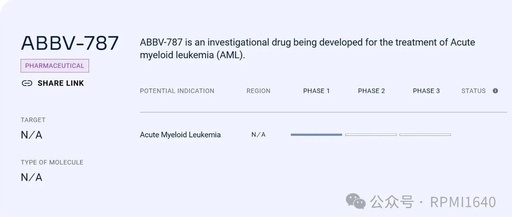
The First PROTAC DAC (ABBV-787) Clinical Trial Termination: Unveiling the Truth

The First PROTAC DAC (ABBV-787) Clinical Trial Termination: Unveiling the Truth

Following a series of DAC transactions last year, interest in this area has gradually increased, leading to various discussions and reviews. Among the products in the clinical phase of DAC, AbbVie‘s product ABBV-787 frequently appears alongside ORM-5029 and ORM-6151, but unlike the latter two, ABBV-787 has never disclosed any technical details in public forums. Although … Read more

Degrader-Antibody Conjugates: Risks on the Path from Concept to Reality

Degrader-Antibody Conjugates: Risks on the Path from Concept to Reality

01 DAC‘s Emergence and Advantages Cancer therapeutics need to balance efficacy and safety, even targeted chemotherapy does not always only kill abnormal cancer cells, and non-specific toxicity can lead to a low therapeutic index and side effects. The technology of Proteolysis-targeting chimeras (PROTACs), which achieve therapeutic effects by promoting the degradation of target proteins, is … Read more