Following antibody-drug conjugates (ADCs), a new drug form known as “Degrader-Antibody Conjugate” (DAC) is gaining attention in the field of oncology and other diseases due to its unique “targeted protein degradation” mechanism.
1
What is DAC?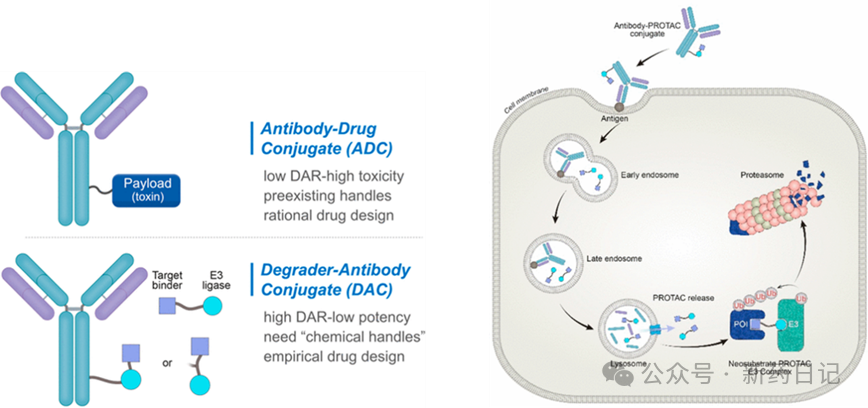 DAC, short for Degrader-Antibody Conjugate, is an innovative drug conjugation technology. It cleverly combines the targeting specificity of monoclonal antibodies with the catalytic destruction capability of targeted protein degraders (usually PROTACs or molecular glues). Its core mechanism of action is: using antibodies to precisely deliver the “degrader” to target cells (such as tumor cells) that express specific antigens, after which the degrader “hijacks” the ubiquitin-proteasome system within the cell to specifically mark and degrade pathogenic key proteins, thereby achieving therapeutic effects.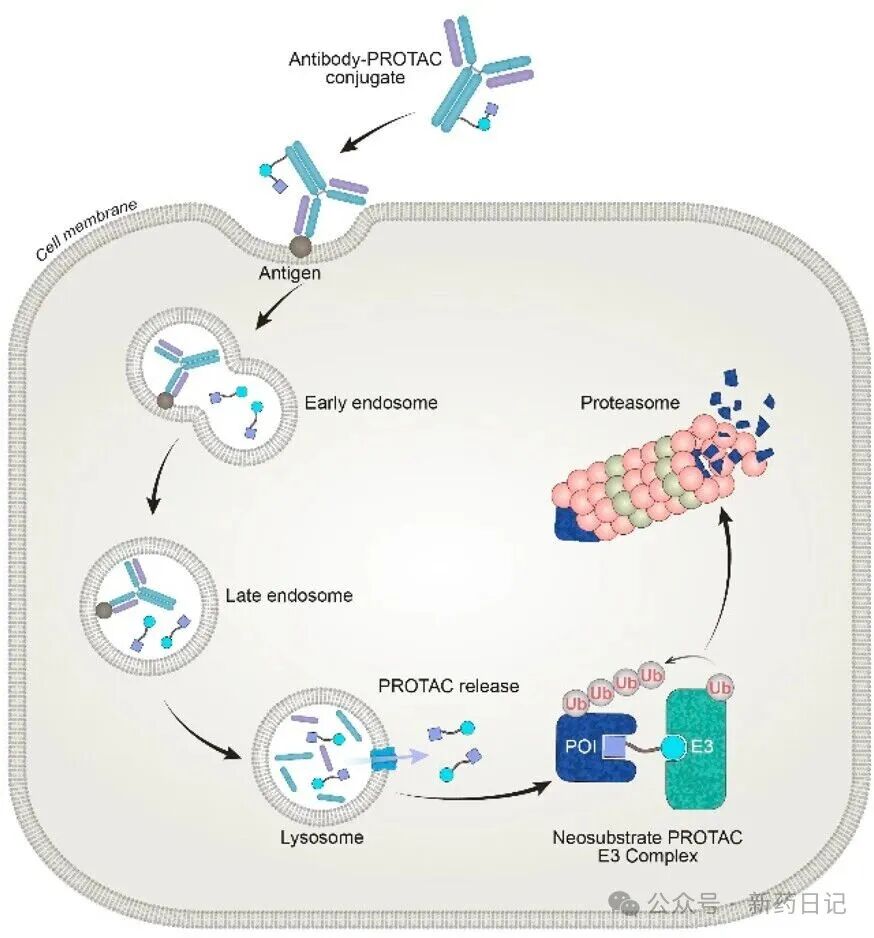
2
Core Differences Between DAC and ADCAlthough DAC structurally resembles ADC, consisting of an antibody, a linker, and a payload, there are essential differences in their mechanisms of action and payloads: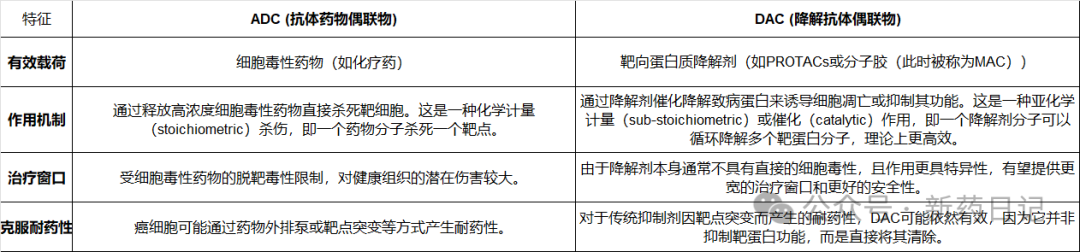
3
The Essence of DAC DesignA successful DAC molecule design requires careful optimization and integration of three core elements:AntibodyChoosing a monoclonal antibody with high affinity, high specificity, and effective internalization is the cornerstone of DAC design. The antibody is responsible for accurately navigating the entire drug molecule to diseased cells, and the targeted antigen should be highly expressed in tumor tissues while being lowly expressed or not expressed in normal tissues to minimize off-target effects.DegraderAs the core of the therapeutic effect, the choice of degrader is crucial, whether to select PROTAC or molecular glue. Currently, the mainstream degrader is PROTAC, a bifunctional small molecule that binds to the target protein on one end and to the E3 ubiquitin ligase on the other, forming a “target protein-PROTAC-E3” ternary complex that induces ubiquitination and degradation of the target protein. The degrader needs to possess high degradation activity, good cell permeability, and stability in endosomal/lysosomal environments.LinkerThe linker is the bridge connecting the antibody and the degrader, and its importance cannot be overlooked.The Key Role of the Linker in DACThe design of the linker directly affects the stability, pharmacokinetic properties, safety, and efficacy of DAC, and its importance is reflected in the following aspects:
- Plasma Stability: The linker must be stable enough to ensure that the DAC does not prematurely release the degrader during blood circulation, avoiding damage to healthy tissues and ensuring that the drug reaches the target in sufficient amounts.
- Targeted Release: After the DAC is internalized by target cells, the linker needs to break in specific intracellular environments (such as the acidic environment of lysosomes or specific enzymes) to efficiently release the active degrader. Linkers can be classified into cleavable and non-cleavable types. Cleavable linkers break under specific conditions, releasing the intact degrader; while non-cleavable linkers rely on the degradation of the antibody itself to release the degrader attached to some amino acid residues.
- Physicochemical Properties: The chemical properties of the linker (such as hydrophilicity/hydrophobicity) can affect the solubility and aggregation tendency of the entire DAC molecule, thereby impacting its production and clinical application.
4
Clinical DAC Representative MoleculesAs an emerging drug type, the research and development pipeline for Degrader-Antibody Conjugates (DAC) is still in its early stages. According to incomplete statistics, there are about 20 publicly disclosed DAC pipelines globally, with only 3 molecules entering clinical trial stages, demonstrating the immense potential and challenges in this field. These pioneers are currently focusing on well-validated mature targets in hematological malignancies and solid tumors (such as HER2, CD33), among which the South Korean biotechnology company Orum Therapeutics is at the forefront of this field with its unique molecular glue DAC platform.All clinical-stage DAC molecules from Orum Therapeutics adopt a strategy centered on degrading the GSPT1 protein. GSPT1 (also known as eRF3a) is a key protein that regulates cell cycle transitions and protein translation termination processes. As it is a natural substrate of the CRBN E3 ubiquitin ligase, it can be efficiently cleared by molecular glue degraders such as thalidomide analogs, effectively inhibiting tumor cell proliferation, providing an ideal mechanism for developing new anti-cancer therapies.Representative Molecule Analysis
- ORM-5029: The First DAC to Enter Clinical Trials Globally
- Drug Composition: As the first DAC drug to enter clinical trials globally, ORM-5029 consists of three parts:
- Antibody: Pertuzumab, targeting HER2.
- Payload: GSPT1 molecular glue degrader (SMol006).
- Linker: A classic Mc-Val-Cit-PABC cleavable linker, with a drug-antibody ratio (DAR) of about 4.
- Preclinical Data: In HER2-positive BT-474 cell lines, ORM-5029 exhibited extremely high cytotoxicity, 100 to 1000 times higher than using GSPT1 degrader alone or other control ADCs. In animal models, a single dose of 10 mg/kg showed significant tumor suppression effects.
- Clinical Status: Currently, ORM-5029 is undergoing a Phase I clinical study in the United States involving 87 HER2-positive advanced solid tumor patients (NCT05511844), expected to be completed by October 2025.
2. ORM-6151: A Model of Technological Iteration and Innovation
- Drug Composition: Based on ORM-5029, Orum Therapeutics developed another first-in-class molecule ORM-6151, showcasing rapid iteration of DAC technology. This molecule targets CD33 for the treatment of hematological malignancies and has undergone two key optimizations in its design:
- New Linker: An innovative β-glucuronide cleavable linker that can be precisely cleaved under the action of lysosomal-specific glucuronidase, and compared to traditional VC linkers, it has better hydrophilicity and plasma stability.
- Fc Region Modification: The antibody has undergone Fc engineering modifications to reduce binding to Fc-γ receptors, aiming to minimize potential off-target effects and side effects.
- Preclinical Data: In vitro experiments showed that ORM-6151 achieved ultra-high cytotoxicity at the picomolar (pmol) level in CD33-positive cell lines. In xenograft animal models, a dose as low as 1 mg/kg demonstrated strong anti-tumor efficacy, with a clear observation of a strong correlation between tumor growth inhibition and GSPT1 protein degradation levels.
5
Future Prospects and Challenges of DACDAC technology opens up new avenues for drug development targeting traditional “undruggable” targets (such as scaffold proteins lacking enzymatic activity, transcription factors, etc.), with great potential to address resistance, improve efficacy, and enhance safety. However, this technology still faces several challenges:
- Large Molecular Weight: DACs typically have a larger molecular weight than ADCs, which poses higher demands on their pharmacokinetics, tissue permeability, and production processes.
- Complex Pharmacology: Due to their catalytic mechanism of action, the dose-effect relationship of DACs may be more complex, requiring more refined clinical study designs to determine optimal treatment regimens.
- Immunogenicity Risks: As large molecule biopharmaceuticals, DACs still carry the risk of triggering immune responses in the body.