Hello everyone, today I would like to share a recent article published in the Journal of the American Chemical Society, titled:A Functional Assay for Mining Noninhibitory Enzyme Ligands from One Bead One Compound Libraries: Application to E3 Ubiquitin Ligases.The corresponding author of this article is Professor Thomas Kodadek from The Herbert Wertheim UF Scripps Institute for Biomedical Innovation & Technology.
Chemical dimers, as synthetic molecules that can bring two or more unrelated proteins close together, hold significant value in chemical biology and drug development. One important application of chemical dimers is to bring target proteins near certain enzymes that can alter the activity of the target proteins, such as PROTAC. The core of such applications lies in the requirement that dimer molecules bind to the enzyme without inhibiting its activity. However, current mainstream high-throughput screening (HTS) methods cannot distinguish between non-inhibitory binding molecules and unbound molecules; while other screening methods can find ligands, they cannot directly reflect their impact on enzyme function, including one bead one compound libraries (OBOC).
In this article, the authors developed a novel functional screening platform: by co-immobilizing enzyme substrates and small molecules on TentaGel (TG) resin, and introducing soluble enzymes under conditions with almost no background “trans” modifications. If a small molecule binds to the enzyme, it will cause the enzyme to form a high concentration near the immobilized substrate, thereby driving post-translational modifications (PTM), which can then be detected through methods such as fluorescence labeling, achieving simultaneous detection of binding and enzyme activity. This technology was successfully applied to the mining of E3 ubiquitin ligase ligands, as shown in Figure 1.
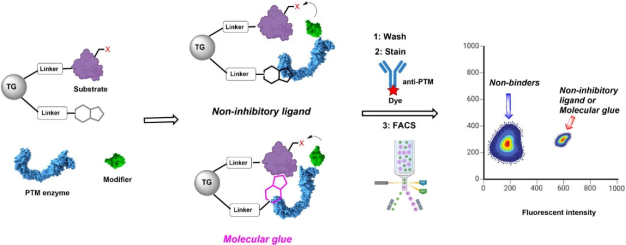
Figure 1. Method for screening non-inhibitory enzyme ligands from one bead one compound libraries
The authors first established a proximity-driven ubiquitination detection method on resin to screen for non-inhibitory ligands of VHL E3 ubiquitin ligase. They created six different TG beads, each immobilizing either the VHL ligand VH 032 (positive control) or acetyl group (negative control), and linked 1, 2, or 3 lysine residues as simplified substrates. After co-incubating these six TG beads with the enzyme, they found through Alexa Fluor 647 labeled anti-ubiquitin antibody staining and flow cytometry analysis that the TG beads displaying VH 032 showed significantly higher ubiquitin-dependent fluorescence signals than the control group, and the number of lysines had little effect on signal intensity, proving that this detection method can effectively distinguish between VHL ligands and non-binding molecules, and confirming that the enzyme complex recruited to the TG beads can mediate multiple ubiquitination events to form ubiquitin chains, as shown in Figure 2.
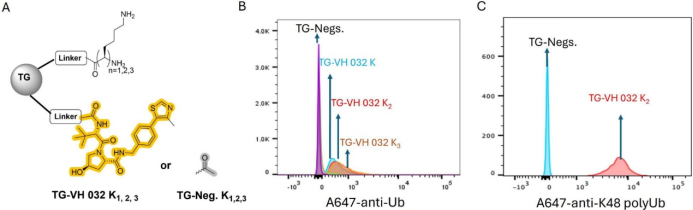
Figure 2. Activity coupling analysis of VHL E3 ligase ligands using simplified substrates
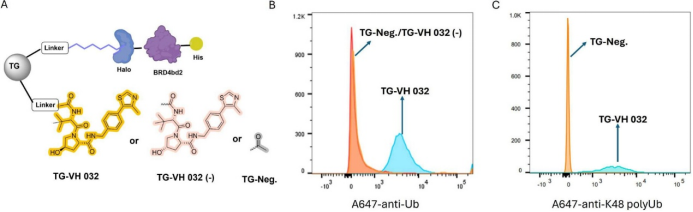
Figure 3. Activity coupling analysis of VHL E3 ligase ligands using protein substrates
Next, the authors compared the differences in substrate ubiquitination efficiency between the VHL ligand VH 032 and the PROTAC molecule MZ1 on resin. At standard enzyme concentrations, both could support the ubiquitination of HTP-BRD4bd2, but the MZ1 bead showed a stronger signal. As the enzyme concentration was diluted, the fluorescence signals of both types of beads weakened; at the lowest concentration, the MZ1 bead still maintained a significantly higher ubiquitination signal than background, while the VH 032 bead showed no difference from the negative control group. This indicates that PROTAC, by simultaneously binding to E3 ubiquitin ligases and substrates, and the resulting additional protein interaction free energy, can efficiently drive ubiquitination even at low enzyme concentrations. This suggests that the screening stringency can be flexibly controlled by adjusting enzyme concentrations, thereby preferentially discovering PROTAC-like molecules rather than simple E3 ligands, as shown in Figure 4.
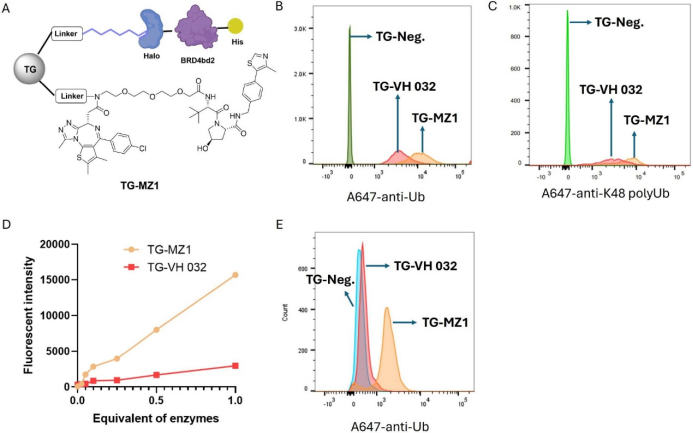
Figure 4. Comparison of ubiquitination levels mediated by VHL E3 ligase ligands and PROTAC
The authors also applied the established functional screening platform to the Cereblon E3 ligase complex to verify its applicability in different E3 ligase systems, as shown in Figure 5.
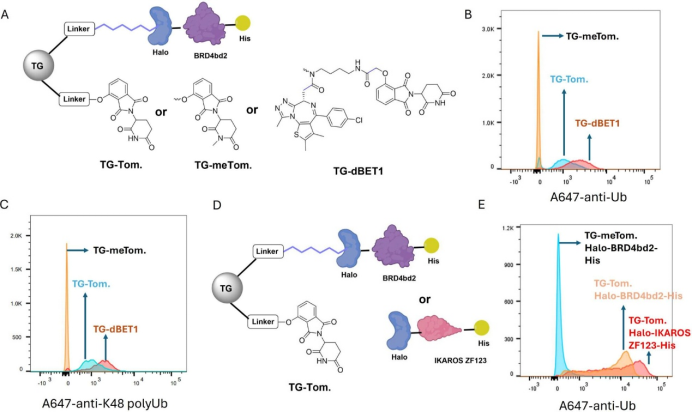
Figure 5. Ubiquitination of HTP-BRD4bd2-His6 on resin
Finally, the authors utilized the established screening platform to construct a microplate OBOC library containing 92 hydroxylproline-containing compounds through parallel solid-phase synthesis, aimed at discovering novel VHL ligands. After ubiquitination reactions and flow cytometry analysis, four compounds were found to mediate polyubiquitination of substrate proteins, among which compound 8 exhibited strong activity and small molecular weight. By linking it with the BRD4 ligand JQ1, they formed the PROTAC molecule WJ3014, which could reduce BRD4 levels in HeLa cells to 23% of the control at a concentration of 1 μM, and its degradation effect could be competitively inhibited by VH 032 or free JQ1. Competitive binding experiments confirmed that compound 8 is a weak binding ligand of VHL, validating the effectiveness of this functional screening strategy in discovering weakly active non-inhibitory ligands, as shown in Figure 6.
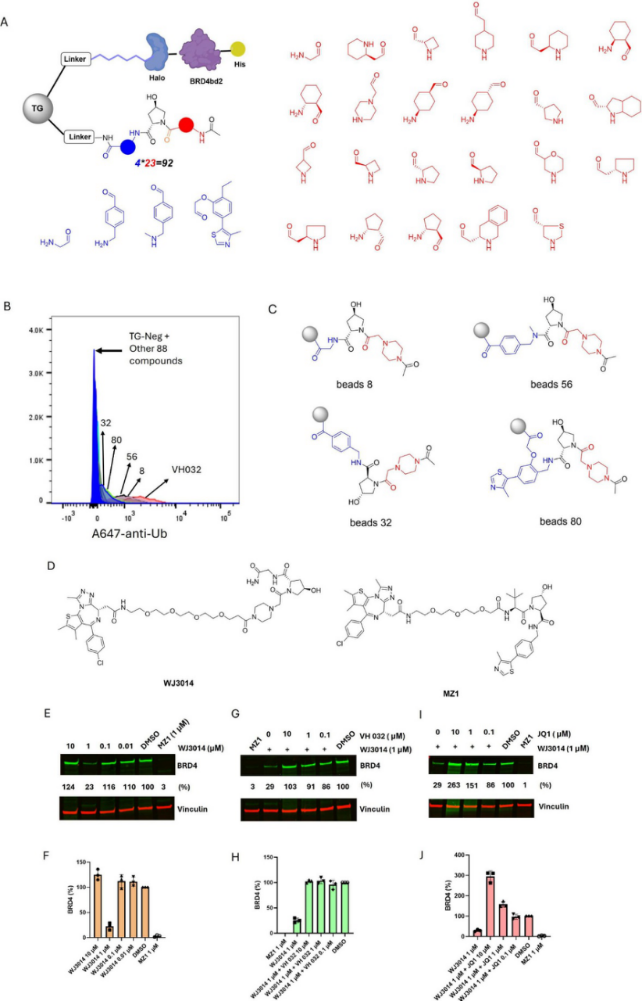
Figure 6. Discovery of a new VHL ligand using ubiquitination experiments on resin
In summary, this article developed a functional screening platform based on OBOC libraries, which specifically identifies non-inhibitory enzyme ligands by correlating the binding of small molecules to enzymes with enzyme activity. The authors successfully applied it to the discovery of ligands for E3 ligases such as VHL and Cereblon, and identified a novel weak binding VHL ligand compound “8”, whose derived PROTAC molecule can mediate the degradation of target proteins in cells. This strategy can be extended to the discovery of non-inhibitory ligands for other post-translational modification enzymes, and screening can be preferentially conducted by adjusting enzyme concentrations.
Authors: YXM
DOI: 10.1021/jacs.5c07307
Link: https://doi.org/10.1021/jacs.5c07307
Previous article