Recent Advances in Analytical Methods for Antibody-Drug Conjugates (ADCs): From In Vitro to In Vivo (Part 2)
Recent Advances in Analytical Methods for Antibody-Drug Conjugates (ADCs): From In Vitro to In Vivo (Part 2)

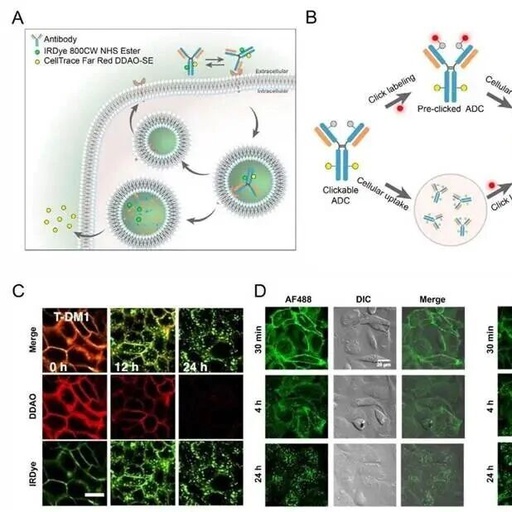
Good article to read: Abstract: In the past decade, antibody-drug conjugates (ADCs) have sparked a new wave of development in the biopharmaceutical market due to their high efficacy in cancer treatment. As of now, the U.S. Food and Drug Administration (FDA) has approved 13 types of ADCs for clinical treatment. The development of ADCs relies … Read more

Where to Bet on the Next Generation of ADCs?

Where to Bet on the Next Generation of ADCs?

Wu Ni | Author You Yi | Editor In October, Hansoh Pharmaceutical licensed the overseas rights of its self-developed ADC drug targeting CDH17 to Roche. This gastrointestinal tumor target was also a hot topic at this year’s AACR conference, where over ten related ADC drugs were showcased, with nine from Chinese pharmaceutical companies. Industry insiders … Read more

The Prospects of 3D Printing Technology in the Healthcare Sector

The Prospects of 3D Printing Technology in the Healthcare Sector

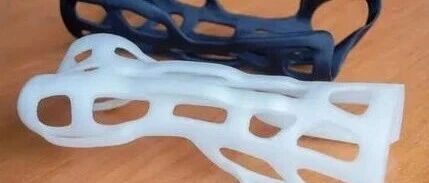
Personalized Medical Device Manufacturing Continues to Deepen Traditional medical devices often fail to fully meet individual patient needs, whereas 3D printing technology can quickly design and print personalized medical devices based on specific patient data, such as CT or MRI scan data. Examples include surgical guides, implants, and rehabilitation aids. In orthopedics, personalized metal implants … Read more

Sutro R&D Day: Next Generation ADC

Sutro R&D Day: Next Generation ADC

On November 12, Sutro held its R&D Day event. With the complete termination of the original pillar product FRα, Sutro’s situation is not optimistic. The focus of this R&D Day event remains on ADCs.Related Reading: Sutro 25H1: ROR1 is returned, continuing to push the dual payload platformSutro pointed out that its platform expands the therapeutic … Read more

Technology Recreates Life: Microbots and Organoids Open a New Era in Medicine

A 3D bioprinter can produce over 100,000 organoids daily, and nano-robots are small enough to swim upstream in our blood vessels—these concepts, once confined to science fiction, are now transitioning from the laboratory to reality, quietly reshaping the future of the pharmaceutical industry. Can you imagine? An organoid that beats like a heart can actually … Read more

New Quantum Sensor Achieves Single-Atom Level Detection, A Breakthrough in Material Science

Significant progress has been made in physics research. The Max Planck Institute in Germany has successfully developed the world’s most sensitive quantum sensor, achieving detection precision at the single-atom level, which will bring revolutionary changes to fields such as material science and biomedicine. This new type of sensor is based on nitrogen-vacancy centers in diamonds … Read more

China’s ADC Innovations Continue to Drain Foreign Wallets

China's ADC Innovations Continue to Drain Foreign Wallets

Several high-value BD cases in 2025 have sparked strong interest in the Chinese biopharmaceutical sector from the capital market. China has become a major force in global BD output, thus examining the licensing pipelines of domestic biopharmaceutical companies can roughly analyze the direction of global pharmaceutical innovation. In the first half of this year, ADC … Read more

Organ-on-a-Chip and Organoids: Revolutionary Technologies in Alternative Toxicology

Organ-on-a-Chip and Organoids: Revolutionary Technologies in Alternative Toxicology

1. Development Background and Technical Needs in Alternative Toxicology 1.1 Limitations of Traditional Toxicology Methods Traditional toxicology relies on animal testing and two-dimensional cell cultures, which have significant drawbacks: animal testing fails to accurately predict about 60% of hepatotoxic drugs due to interspecies differences (e.g., mouse vs. human liver metabolism), as seen in the troglitazone … Read more

Breaking Through Device Bottlenecks: Avidity-Driven Targeted Fragment Drug Screening

Breaking Through Device Bottlenecks: Avidity-Driven Targeted Fragment Drug Screening

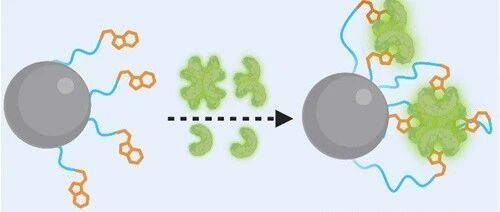
Recently, Professor Thomas Kodadek’s team at the University of Florida published a research paper titled “Exploiting Avidity Effects for the Discovery of Low-Affinity Protein-Binding Fragments” in the Journal of Medicinal Chemistry. This groundbreaking fragment drug screening technology innovatively utilizes avidity effects, successfully developing a new platform for efficient and low-cost fragment screening. Research Background Fragment-based … Read more

Organ-on-a-Chip (OOAC): Revolutionizing Biomedical Research

Organ-on-a-Chip (OOAC): Revolutionizing Biomedical Research

Organ-on-a-Chip (Organ-on-a-Chip, OOAC) is a micro-engineering system based on microfluidic technology that can highly simulate the structure and function of human organs, demonstrating revolutionary potential in drug development, disease modeling, and personalized medicine. 1.Technical Principles and Core Advantages 1. Technical Foundation Organ-on-a-Chip constructs a microchannel network through microfabrication technology, utilizing living human cells to simulate … Read more