Another Bright Path for ADC Development – Non-Internalizing ADC
Another Bright Path for ADC Development - Non-Internalizing ADC

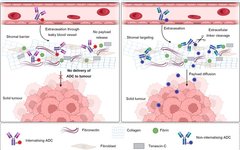
Antibody-Drug Conjugates (ADC) typically require internalization to release their cytotoxic payload. However, there are strict limitations, requiring high expression of internalizing antigens and efficient intracellular processing. A new method has emerged, allowing the payload to be released extracellularly from cleavable linkers after binding to poorly internalizing antigens or other tumor components. This method eliminates the … Read more
Analysis Method Development for ADC Drugs

Antibody-drug conjugates (ADCs) are primarily composed of three “modules”: an antibody (usually a monoclonal antibody), a linker, and a cytotoxic drug (payload). In recent years, ADCs have stood out among biological drugs due to their combination of the potent killing effect of chemotherapy agents and the precise targeting of antibody drugs, earning the title of … Read more

Overview of Currently Approved Antibody Drug Conjugates (ADCs)

Overview of Currently Approved Antibody Drug Conjugates (ADCs)

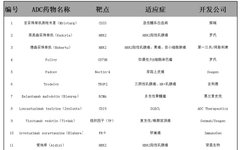
Antibody Drug Conjugates (ADCs) are a new type of targeted anti-tumor therapy. They combine the targeting capability of monoclonal antibodies with the cytotoxic effects of highly effective chemotherapeutic agents, primarily used for the treatment of various refractory cancers. ADCs precisely identify and attack cancer cells while minimizing damage to normal cells, thus exhibiting high efficiency … Read more

Key Points and Challenges in PK/PD Studies of ADC Drugs

Key Points and Challenges in PK/PD Studies of ADC Drugs

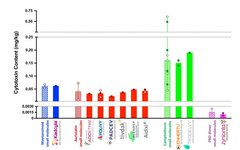
Click the blue text above to follow us IntroductionAntibody-drug conjugates (ADC) consist of antibodies, linkers, and small molecule toxins. While they possess the advantages of high targeting ability and high cytotoxicity, their structural diversity and complexity, as well as the low levels of small molecule toxins released in the circulatory system, present numerous challenges for … Read more

The Future of PROTACs and Molecular Glue: E3 Ligand Development Overview

The Future of PROTACs and Molecular Glue: E3 Ligand Development Overview

This article combines literature and patents to introduce the recent development status of new E3 ligands. First, let’s talk about DCAF1. Biological Background of DCAF1 DCAF1 (also known as VprBP) is a multifunctional E3 ubiquitin ligase substrate receptor that participates in the regulation of various cellular processes. It is part of the Cullin-RING ligase (CRL) … Read more

Experiences and Lessons in ADC Clinical Development

Experiences and Lessons in ADC Clinical Development

After nearly 30 years of development, the ADC platform has been established, with 12 approved products by the FDA and many more in development. This article aims to provide guidance for clinical researchers on the effective design of clinical protocols and the lessons learned from ADCs. 01Introduction In cancer treatment, compared to novel immunotherapy targets … Read more

Essential Guide: Non-Clinical Pharmacology and Toxicology Assessment of ADCs

Essential Guide: Non-Clinical Pharmacology and Toxicology Assessment of ADCs

Recently, the ADC (Antibody-Drug Conjugate) conference has been held one after another, with major biotech companies competing to report their ADC pipelines. It is expected that 2024 will still be the main stage for ADCs. Developing an entry-level ADC seems not too difficult, but how to evaluate the pharmacology and toxicology in the preclinical stage … Read more

The Structure-Activity Relationship of ADCs

The Structure-Activity Relationship of ADCs

Introduction ADC drugs are a class of highly promising anti-tumor drugs that are rapidly developing. Although 14 ADCs have been officially approved, the complex structure of ADCs poses significant challenges in the development and optimization of new ADC drugs. Studying the “structure-activity relationship” of ADC drugs and understanding the intrinsic connection between the efficacy/safety of … Read more

Key Questions Regarding The Therapeutic Window of ADCs

Key Questions Regarding The Therapeutic Window of ADCs

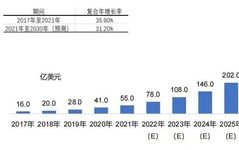
Introduction Antibody-drug conjugate (ADC) therapy has rapidly developed over the past few decades, with 14 products approved globally and over 140 ADCs currently in clinical trials. By 2030, the ADC market is expected to exceed $15 billion. The basic principle of ADCs: by combining the specificity of monoclonal antibodies with the cytotoxicity of effective small … Read more

Non-Cancer ADC: The Ultimate Choice for Differentiated Competition

Non-Cancer ADC: The Ultimate Choice for Differentiated Competition

Since the concept of ADC was proposed in 1900, it has existed as a new type of cancer treatment method. Although its development has faced many challenges over the past century, top scientists in the relevant fields around the world have been conducting years of experiments and iterations to improve safety, reduce off-target effects, and … Read more