ESP32 Power and Power Management: Hardware Design for Power Optimization

ESP32 Power and Power Management: Hardware Design for Power Optimization

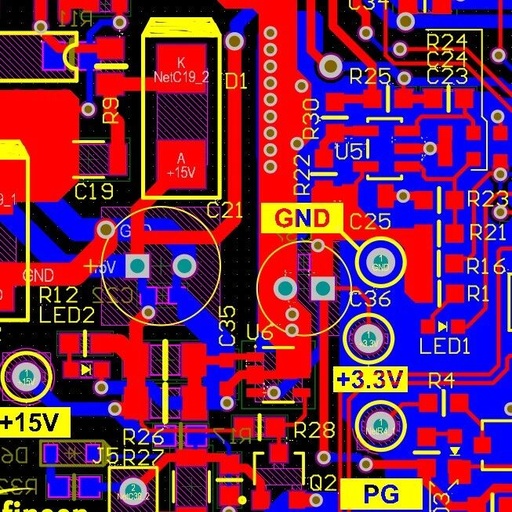
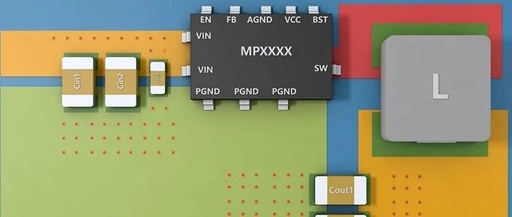
The power optimization hardware design for the ESP32 is the cornerstone of achieving ultra-low power systems, requiring meticulous control over power architecture, peripheral circuits, PCB layout, and more. Below are hardware-level optimization solutions validated by engineering: 1. Power Topology Optimization 1. Efficient Power Conversion Solutions Scenario Recommended Solution Static Current Conversion Efficiency Key Models Input … Read more

Mastering Reference Paths: Optimizing ADC Layout and Routing

Mastering Reference Paths: Optimizing ADC Layout and Routing

When designing high-performance data acquisition systems, diligent engineers carefully selecthigh-precision ADCs and other components required for the analog front-end adjustment circuit. After several weeks of design work, they execute simulations and optimize the circuit schematic. To meet deadlines, designers quickly assemble the PCB layout and routing. A week later, the first prototype PCB is tested. … Read more

Comprehensive Analysis of PCB Layout Design Key Points

Comprehensive Analysis of PCB Layout Design Key Points

▲ Click the blue text above to follow us and never miss any valuable articles! In electronic circuit systems, printed circuit boards (PCBs) are the key carriers for mounting electronic components and achieving electrical connections. The PCB Layout design is the core aspect that determines the performance of the PCB. From the signal integrity of … Read more

Creating Libraries in Proteus

Creating Libraries in Proteus

Proteus is a program with a unique capability to simulate the operation of microcontroller circuits. Another excellent feature, similar to other programs, is the design of printed patterns. Sometimes the devices provided by the program are not available.Proteus allows users to create custom components, which is crucial for designs using special devices or new chips. … Read more

The Layout of Crystal Oscillators on PCBs: A Technical Challenge, Avoiding PCB Edges is Crucial

The Layout of Crystal Oscillators on PCBs: A Technical Challenge, Avoiding PCB Edges is Crucial

1. Problem Description A certain dashcam requires an external adapter for testing. During power-on testing, it was found to exceed standards, specifically at frequencies of 84MHz, 144MHz, and 168MHz. The cause of the excessive radiation needs to be analyzed, and corresponding countermeasures should be provided. The radiation test data is as follows:2. Analysis of Radiation … Read more

PCB Layout and Routing Guidelines

PCB Layout and Routing Guidelines

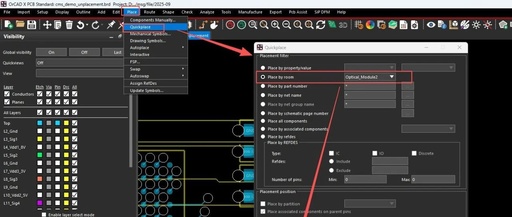
1. Layout 10 Rules for Component Layout: 1. Follow the principle of “large first, small later; difficult first, easy later,” meaning that important circuit units and core components should be prioritized in layout. 2. The layout should refer to the schematic diagram, arranging major components according to the main signal flow direction of the board. … Read more

Common PCB Layout Constraint Principles

Common PCB Layout Constraint Principles

A good circuit board not only needs to achieve the functionality of the circuit design but also must consider electrical characteristics such as EMI, EMC, ESD (Electrostatic Discharge), and signal integrity. Additionally, mechanical structure and heat dissipation issues for high-power chips must be taken into account. On this basis, the aesthetic aspect of the circuit … Read more

Electromagnetic Interference Issues in DSP Systems

Electromagnetic Interference Issues in DSP Systems

In high-speed digital signal processing (DSP) systems, electromagnetic interference (EMI) is a critical issue that cannot be overlooked. Due to the high-frequency signal processing and complex circuit layouts involved in DSP systems, the electromagnetic environment becomes more complicated, easily leading to signal distortion, system instability, and even functional failure. Therefore, engineers need to understand the … Read more

How to Design Efficient and Aesthetic PCB Layouts

How to Design Efficient and Aesthetic PCB Layouts

1. PCB Layout 1. Follow the layout principle of “big first, small later, difficult first, easy later”, meaning that important unit circuits and core components should be prioritized in the layout. 2. The layout must refer to the schematic diagram and place components according to the signal flow rules of the schematic. 3. The arrangement … Read more

PCB Layout and Wiring: Essential Guidelines

PCB Layout and Wiring: Essential Guidelines

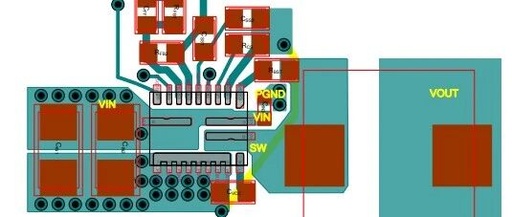
PCB, also known as Printed Circuit Board, enables the connection of electronic components and the realization of functions. It is also an important part of power circuit design. This article will introduce the basic rules for PCB layout and wiring. Basic Rules for Component Layout 1. Layout according to circuit modules. Related circuits with the … Read more