Considerations for Vias on PCBs
Considerations for Vias on PCBs

Vias are one of the essential components of multilayer PCB boards, with drilling costs typically accounting for 30% to 40% of the PCB manufacturing costs. Simply put, every hole on a PCB can be referred to as a via. Functionally, vias can be divided into two categories: One is used for electrical connections between layers. … Read more
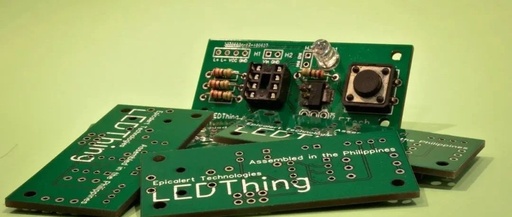
Core Recommendations to Avoid Pitfalls in PCB Prototyping

Core Recommendations to Avoid Pitfalls in PCB Prototyping

Drilling plays a crucial role in PCB design, facilitating electrical connections and component installation. Based on conductivity properties, holes can be classified into metallized and non-metallized holes, with metallized holes further divided into vias and component holes. These are the core structures for connecting interlayer circuits and supporting inserted components. During the prototyping phase, any … Read more

PCB Design | What are PCB Vias? What is Back Drilling?

PCB Design | What are PCB Vias? What is Back Drilling?

Today, we will share technical knowledge about vias and back drilling in PCBs. 1. Via Design in High-Speed PCBs In high-speed PCB design, multi-layer PCBs are often required, and vias are an important factor in multi-layer PCB design. The vias in a PCB mainly consist of three parts: the hole, the pad area around the … Read more

Critical Blind and Buried Via Technology in PCB Design

Critical Blind and Buried Via Technology in PCB Design

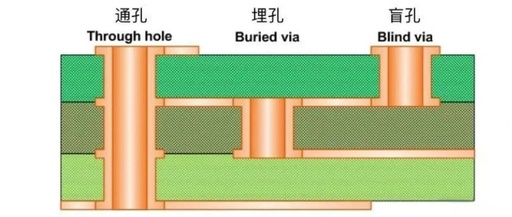
Recently, I encountered a customer complaint regarding PCBA blind and buried via issues. I took this opportunity to study the topic and share knowledge with my colleagues and friends. **Core Concept:** In traditional PCB design, vias (referred to as “through holes” or “vias”) that connect different layers of circuits are through holes that extend from … Read more

Advanced PCB Internal Structure Diagrams

Advanced PCB Internal Structure Diagrams

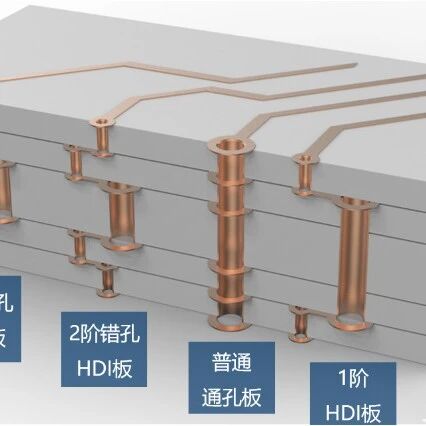
PCBEngineers often find multilayer circuit boards confusing at first glance, especially with layers reaching ten or more, resembling a spider web.Below are several internal structure diagrams of multilayer PCBs, showcasing various stacking structures in a three-dimensional format. 01 The core of High-Density Interconnect (HDI) boards lies in the vias. The processing of multilayer PCB traces … Read more

Comprehensive Analysis of PCB Layout Design Key Points

Comprehensive Analysis of PCB Layout Design Key Points

▲ Click the blue text above to follow us and never miss any valuable articles! In electronic circuit systems, printed circuit boards (PCBs) are the key carriers for mounting electronic components and achieving electrical connections. The PCB Layout design is the core aspect that determines the performance of the PCB. From the signal integrity of … Read more

Blind and Buried Via Plating Technology: Decoding the Precision Process of High-Density Interconnect PCB Manufacturing

Blind and Buried Via Plating Technology: Decoding the Precision Process of High-Density Interconnect PCB Manufacturing

How does traditional plating address the “dog bone effect” and void defects when the aspect ratio of the interlayer vias exceeds 10:1? Technical Principles and Process Challenges Structural Characteristics of Blind and Buried Vias Definition Differences Blind Via: Connects outer layers to inner layers, typically 50-200μm deep Buried Via: Completely embedded within inner layers, aspect … Read more