Jialichuang Plans IPO: Launch of 34 to 64-Layer Ultra-High-Density PCBs and HDI Products, Accelerating High-End Strategy?
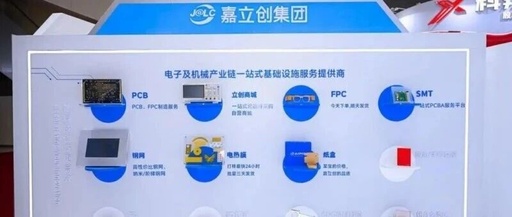
Jialichuang Plans IPO: Launch of 34 to 64-Layer Ultra-High-Density PCBs and HDI Products, Accelerating High-End Strategy?

As the global electronics industry evolves towards high performance and miniaturization, printed circuit boards (PCBs), as core foundational components, are becoming crucial for hardware innovation. Jialichuang Group (hereinafter referred to as “Jialichuang”), a one-stop electronic and mechanical industry chain service provider that started with PCB prototyping, recently announced the mass production of 34 to 64-layer … Read more
Top Ten Common EMC Challenges in PCB Design

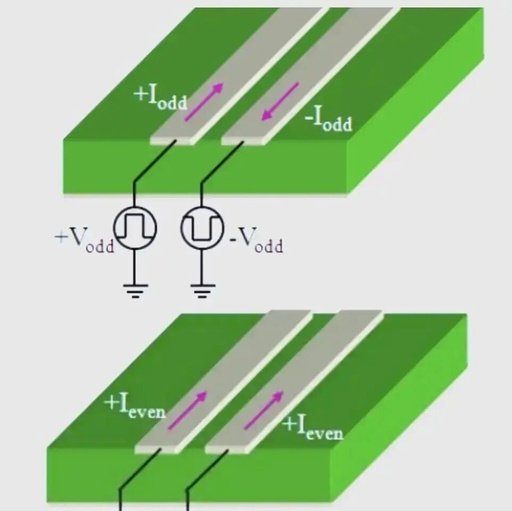
Top Ten Common EMC Challenges in PCB Design

A collection of quick questions and answers about PCB knowledge, your PCB knowledge base! Designing printed circuit boards (PCBs) faces multiple challenges such as size constraints, structural integration, thermal management, and power efficiency. On top of that, electromagnetic compatibility (EMC) issues present additional obstacles for the market launch of new products, further complicating the design … Read more

Why Design PCB Holes as ‘Annular Ring-Free’?

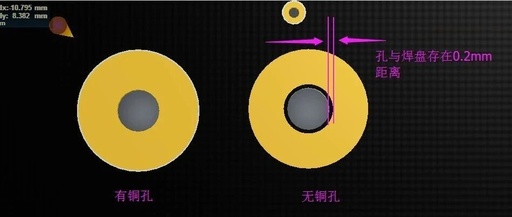
Why Design PCB Holes as 'Annular Ring-Free'?

★ What is an “Annular Ring”? First, to understand “annular ring-free”, we need to know what an “annular ring” is. In traditional PTH (Plated Through Hole) design, a hole consists of three parts: ✒︎ Drill Hole: The hole drilled in the PCB. ✒︎ Copper Layer on Hole Wall: The copper layer formed on the hole … Read more

Guide to Avoiding Pitfalls in High-Frequency PCB Routing: 4 Core Techniques to Enhance Signal Integrity by 90%

Guide to Avoiding Pitfalls in High-Frequency PCB Routing: 4 Core Techniques to Enhance Signal Integrity by 90%

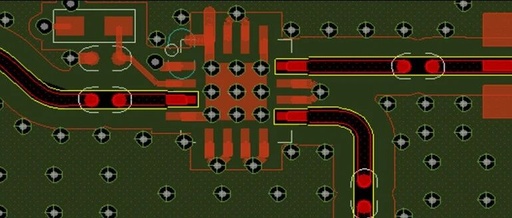
Today, we will discuss the techniques for high-frequency PCB routing design. High-frequency PCB routing requires a focus on signal integrity, anti-interference capability, and impedance matching. Below are detailed explanations of the key techniques: High-Frequency PCB Routing Techniques 1. Core Routing Principles Multilayer Board Design High-frequency circuits have a high level of integration and require at … Read more

Unveiling the ‘Invisible King’ of the PCB Industry – M9 Material

Unveiling the 'Invisible King' of the PCB Industry - M9 Material

In today’s rapidly advancing AI server landscape and the impending launch of 800G/1.6T switches, there is a critical material undergoing a technological revolution alongside GPU chips. This material is the top-tier substrate for PCBs – M9 grade material. 1. What is M9 Material? In the PCB (Printed Circuit Board) industry, the “M” series typically refers … Read more

Functions and Advantages of Step Slots in High-Frequency PCBs

Functions and Advantages of Step Slots in High-Frequency PCBs

What is a PCB Step Slot? First, let’s briefly understand what a step slot is. In multilayer PCBs, conventional slots penetrate the entire thickness of the board. In contrast, a step slot is a non-through, depth-controlled slot that extends only to specific layers within the board, resembling a “step” in its cross-section, hence the name. … Read more

Why PCB Design Generally Controls Impedance at 50 Ohms

Why PCB Design Generally Controls Impedance at 50 Ohms

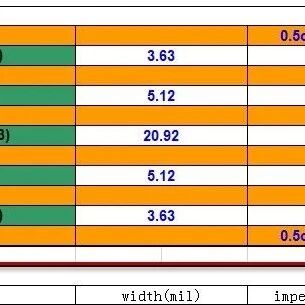
During the PCB design process, before routing, we generally stack the layers of the project we are designing, calculating the impedance based on thickness, substrate, number of layers, and other information. After the calculations, we typically obtain the content shown in the figure below. From the above figure, it can be seen that the single-ended … Read more

Comprehensive Summary: Design Specifications for Electromagnetic Compatibility in Printed Circuit Boards!

Comprehensive Summary: Design Specifications for Electromagnetic Compatibility in Printed Circuit Boards!

WeChat Official Account:Electromagnetic Compatibility HomeIntroduction It should be noted that this summary only provides some basic conclusions. Specific calculations for trace lengths of frequency signals, harmonic frequencies to consider, wavelength, PCB-level shielding, design of shielding cavities, size and number of shielding apertures, handling of incoming and outgoing wires, calculations for cutoff waveguide diameters and lengths, … Read more

PCB Design Specifications: ADC/DAC Design Guidelines

PCB Design Specifications: ADC/DAC Design Guidelines

Documenting work, sharing experiences, and open-sourcing! Speed up! Committed to ensuring that every step of our design is theoretically supported! Star and follow = progress together. Be sure to check the comments section, as some colleagues will discuss and supplement there, enriching this theoretical library together! Documentation is getting more concise! CPU is burning up … Read more

The Catastrophe of Sub-7nm Processes: Noise Becomes the Arch-Nemesis of Chip Design!

The Catastrophe of Sub-7nm Processes: Noise Becomes the Arch-Nemesis of Chip Design!

Noise has always been a core concern for communication experts, but it is now rapidly becoming a tricky problem that every semiconductor designer must face—— Some chips are already experiencing performance degradation issues. Noise can be defined as any interference that deviates from the ideal state and may affect the expected functionality. In the semiconductor … Read more