General Principles of PCB Layout and Wiring in AD
General Principles of PCB Layout and Wiring in AD

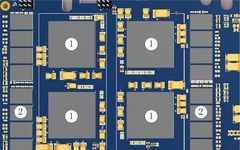
1 Layout Principles 1. Follow the layout principle of “large first, small later; difficult first, easy later,” meaning that important circuit units and core components should be prioritized in layout. Large first, small later; difficult first, easy later In the above image, 1 is positioned due to mechanical structure determining the power supply and terminal … Read more
3 Common Connection Methods for PCB Stacking

3 Common Connection Methods for PCB Stacking

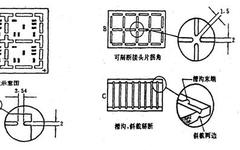
1 Bridge Connection The bridge connection point is a high-stress area on the PCB, which can easily cause cracking or fractures in surrounding solder joints and components.The length of the bridge connection point should be <2.54mm and the width <2mm.As shown in the figure below. 2 V-Groove ① The thickness of the PCB for stacking … Read more

Tech Tips for Manual Soldering of PCB Components

Tech Tips for Manual Soldering of PCB Components

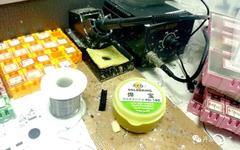
The following content is a collection of knowledge and techniques I have gained from recently soldering surface mount components, which I am now selflessly sharing with you (if you can understand it, then great! ~ (~ ̄▽ ̄)~). However, I want you to know that soldering is not something you can learn in just a few tries; … Read more

Controlling The PCB Etching Process

Controlling The PCB Etching Process

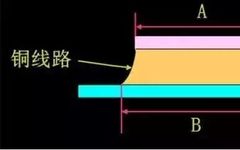
The process of transforming a printed circuit board from a blank panel to revealing the circuit patterns is a complex series of physical and chemical reactions. This article will analyze the final step—etching. Currently, the typical processing method for printed circuit boards (PCBs) employs the “pattern plating method”. This means that a lead-tin resist layer … Read more

How to Solve PCB Plating Film Issues?

How to Solve PCB Plating Film Issues?

With the rapid development of the PCB industry, PCBs are gradually moving towards high-precision fine lines, small apertures, and high aspect ratios (6:1-10:1). The copper requirement for holes is 20-25μm, and for boards with DF line spacing ≤4 mil, most PCB manufacturers face plating film issues. Film entrapment can cause direct short circuits, affecting the … Read more

Detailed Explanation of the Significance of Each Layer in PCB Design

Detailed Explanation of the Significance of Each Layer in PCB Design

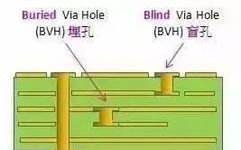
1. Signal Layers Altium Designer can provide up to 32 signal layers, including the Top Layer, Bottom Layer, and Mid-Layers. These layers can be interconnected through vias, blind vias, and buried vias. Figure 1 PCB Holes (1) Top Signal Layer Also known as the component layer, it is mainly used to place components. For double-sided … Read more

How to Avoid Solder Bridging Issues in PCB Design

How to Avoid Solder Bridging Issues in PCB Design

Click the blue words above to follow PCB knowledge Many newcomers to PCB design think that once they finish the PCB design, they can go home. No, no, no, that’s not the case. When the PCB files are sent to the manufacturing factory, various problems often arise during the PCB processing, such as solder bridging … Read more

10 PCB Layout Details You Might Not Know!

10 PCB Layout Details You Might Not Know!

PCB Layout is a meticulous task that involves not only regulatory constraints but also numerous details that engineers need to consider. In this article, we have compiled some critical details to pay attention to in layout design. Let’s see if you are aware of them! 1. Layout of Special Components √ Heat-generating components should be … Read more

Is It Difficult to Turn Schematics into Real PCBs? The Truth Is Surprising

Is It Difficult to Turn Schematics into Real PCBs? The Truth Is Surprising

Everyone knows that making a PCB board involves turning the designed schematic into a tangible PCB circuit board. Please do not underestimate this process; many things that work in theory can be difficult to implement in practice, or something that one person can achieve, another may not. Therefore, while making a PCB board is not … Read more