Recommended Video





In the previous issue, we discussed ECU flashing, focusing on the flashing process based on the UDS protocol, which directly operates on the ECU. The output of calibration is the key input for ECU flashing. So, what exactly is calibration?
 Definition of CalibrationCalibration is essentially the process of optimizing ECU control parameters. It uses standard calibration tools (such as USBCANFD-400U) to calibrate various parameters of the ECU and observe the calibration effects. Calibration mainly relies on two standard protocols: CCP and XCP.
- CCP(CAN Calibration Protocol) is the earliest CAN bus calibration protocol, widely used in automotive and industrial fields. It is easy to operate, highly compatible, and supports real-time data transmission, making it suitable for applications with high real-time requirements.
-
XCP(Universal Calibration Protocol) is an upgraded version of CCP, supporting multiple bus types (such as CAN, LIN, FlexRay, etc.) and offering more powerful functionality. It supports block transfer, high data transmission efficiency, and also supports master-slave and peer-to-peer communication modes, making it more adaptable.
 Performance Requirements and Principles of CalibrationThe goal of calibration is to optimize the performance of the ECU to meet various requirements such as emissions, economy, and power. For example, in automatic control, a simple linear equation Y=5X−2 can describe the relationship between braking force Y and pedal position X. By compiling, linking, and flashing the control algorithm into the controller, engineers continuously adjust parameters a and b to optimize the value of Y. This process is calibration.
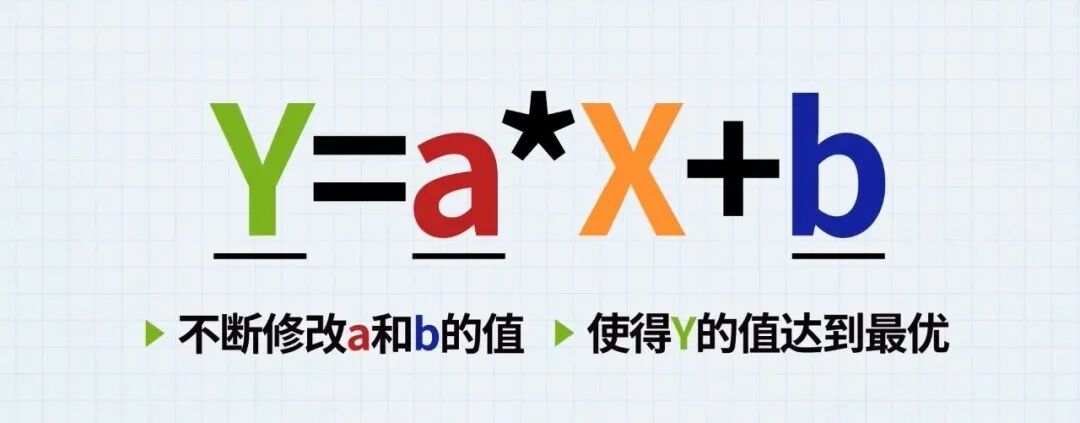 XCP calibration communicates with the ECU through calibration tools, sending commands, Calibration Transfer Objects (CTO), and Data Transfer Objects (DTO). Through these interactions, the calibration tool continuously modifies and optimizes internal variables of the ECU and data from external sensors to achieve optimal performance.
 ZLG Zhiyuan Electronics CAN FD Interface CardThe CAN FD interface card from ZLG Zhiyuan Electronics, paired with the ZXDoc upper computer software, is an ideal tool for efficient calibration. Through ZXDoc, users can easily connect to the ECU, modify parameters in real-time, and optimize system performance. This combination not only improves calibration efficiency but also ensures data accuracy and stability.
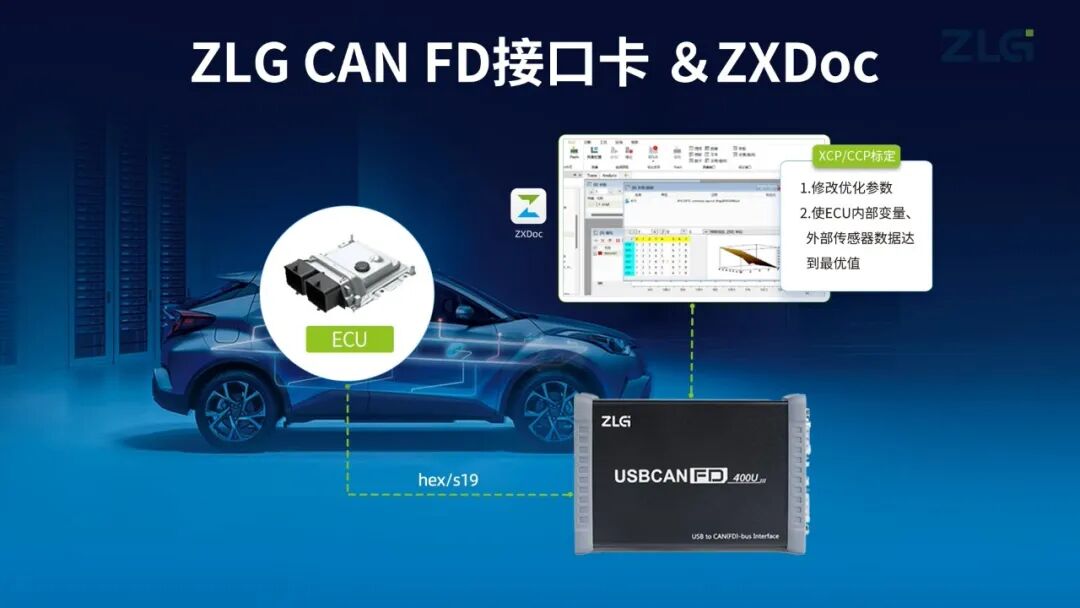 So, how does the ZLG Zhiyuan Electronics CAN FD interface card work with ZXDoc to achieve efficient calibration? In the next issue, we will provide a detailed introduction.
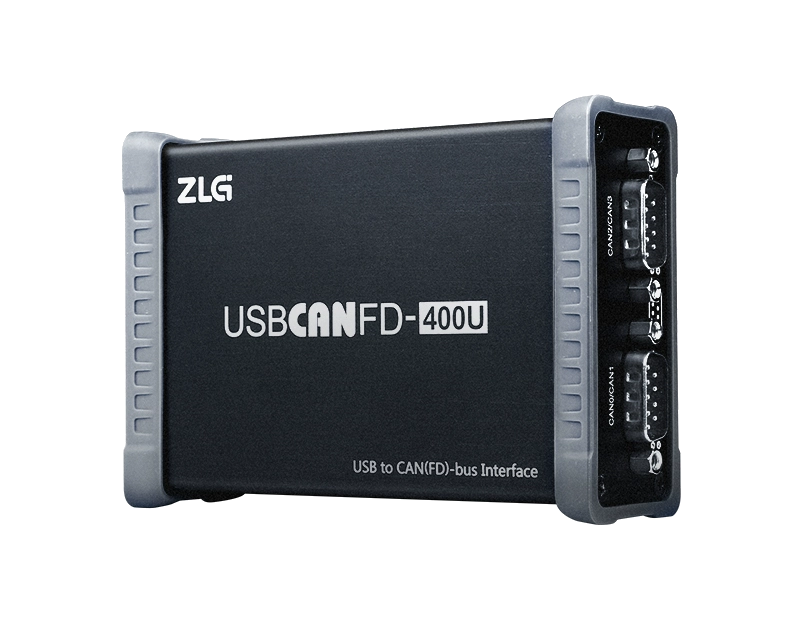 |
USB Interface CANFD Card USBCANFD-400U |
Long press to purchase |