A Novel DNA-Protein Cross-Linking Chemical Probe Reveals the Source of Cytotoxicity from DPC
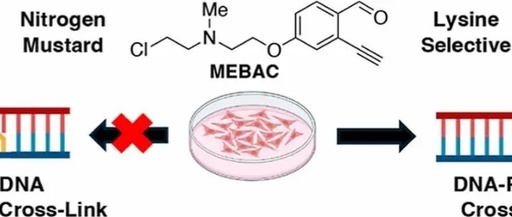
A Novel DNA-Protein Cross-Linking Chemical Probe Reveals the Source of Cytotoxicity from DPC

Hello everyone, today I will introduce an article published in JACS titled “Examination of a Chimeric Bis-Electrophile for Selective DNA–Protein Cross-Linking and Mechlorethamine Reveals an Unknown Source of Nitrogen Mustard Cytotoxicity.” The corresponding author of this paper is Marc M. Greenberg from Johns Hopkins University, and the main research direction of the group is to … Read more
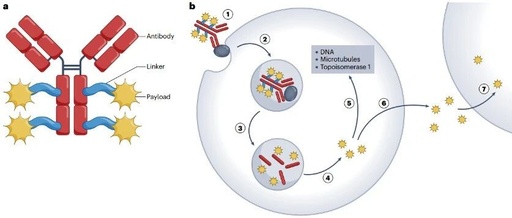
Characteristics and Coupling Methods of ADC Toxins

Characteristics and Coupling Methods of ADC Toxins

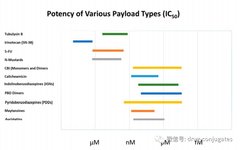
Payload The early developed ADCs used FDA-approved anticancer agent small molecule payloads, such as DM1 and vincristine, but these drugs have poor toxicity. Due to the large size of ADCs, it is estimated that only about 2% of ADCs are effectively internalized, thus more toxic payloads have been developed as ADC payloads, most of which … Read more

Discussion on Off-Target Toxicity Mechanisms of ADC Drugs

Discussion on Off-Target Toxicity Mechanisms of ADC Drugs

ADC drugs utilize monoclonal antibodies to specifically deliver cytotoxic drugs to tumor cells, characterized by precise targeting and specific killing of tumors, thereby limiting the exposure of cytotoxic drugs to normal cells or tissues. The main clinical toxicities of ADC drugs include gastrointestinal, hematological, hepatic, neurological, and ocular toxicities, which are usually dose-limiting[2]. Depending on … Read more

Overview of Non-Targeted Uptake and Toxicity Mechanisms of ADC Drugs

Overview of Non-Targeted Uptake and Toxicity Mechanisms of ADC Drugs

Source: YaoDu Author: Cheng Chuan Yuan Hang Editor: Wan Zi 1 Introduction Antibody-Drug Conjugates (ADCs) are a novel class of highly effective biopharmaceuticals that link antibodies (Antibody) to biologically active small-molecule cytotoxic payloads (Payload) via linkers (Linker). ADCs aim to enhance the therapeutic index (TI) of chemotherapeutic agents by more selectively delivering cytotoxic drugs to … Read more

In-Depth Review of ADC Drug Development: History, Challenges, and Future Directions

In-Depth Review of ADC Drug Development: History, Challenges, and Future Directions

Since the first ADC drug Mylotarg® (gemtuzumab ozogamicin) was approved by the FDA in 2000, as of December 2021, a total of 14 ADC drugs have been approved globally for hematological malignancies and solid tumors, and currently, there are over 100 ADC candidates at various stages of clinical trials. Recently, the journal Signal Transduction and … Read more

Structure and Function of Antibody-Drug Conjugates (ADC)

Previous Reviews 2023 Overview of Antibody Drug Industry Development History of Monoclonal Antibodies, This Article is Enough! Brief Discussion on the Mechanism of Action and Advantages/Disadvantages of Antibodies How to Name Monoclonal Antibodies, Read This! Magic Bullet – ADC Antibody-drug conjugates (ADC) are a class of targeted biological agents composed of an antibody, a linker, … Read more

New Antitumor Drug – PDL1 ADC

New Antitumor Drug - PDL1 ADC

Antibody-drug conjugates (ADCs) in antitumor therapy, also known as “biological missiles,” are a new type of drug that combines targeting and antitumor activity. By linking cytotoxic drugs to targeted drugs, when the targeted drug acts on the corresponding target, the drug enters the tumor cells through phagocytosis, causing lysis and releasing the cytotoxic drug to … Read more

Branch Linkers for ADCs: What Length is Appropriate?

Branch Linkers for ADCs: What Length is Appropriate?

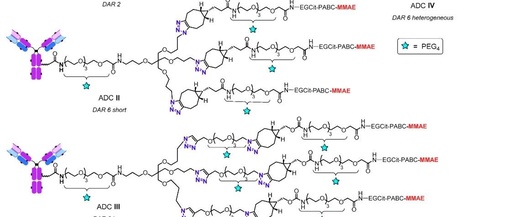
Selecting different lengths of branched amino triazole linkers for site-specificMTGase-mediated antibody modification, followed by strain-promoted azide-alkyne cycloaddition (SPAAC) for payload coupling. For the payload portion, clinically validated monomethyl auristatin E (MMAE) was used, coupled with hydrophilic EGCit linkers, resulting in homogeneous ADC I (DAR 2) and ADC II/III (DAR 6).At the same time, ADC IV … Read more