
Payload
The early developed ADCs used FDA-approved anticancer agent small molecule payloads, such as DM1 and vincristine, but these drugs have poor toxicity. Due to the large size of ADCs, it is estimated that only about 2% of ADCs are effectively internalized, thus more toxic payloads have been developed as ADC payloads, most of which are too toxic to be used as standalone therapeutic drugs.Therefore, a good payload should have an IC50 in the low nanomolar or even picomolar range and possess good physicochemical properties, such as an acceptable hydrophilic/hydrophobic balance and good stability.►Extremely HighIC50 generally below 10-9 M; that is: 2 to 6 orders of magnitude more toxic than commonly used chemotherapeutic agents (such as doxorubicin, paclitaxel, 5-fluorouracil, methotrexate, etc.)!►Why Extremely High?Limited amount of ADC reaching tumor tissue (about 1-2%)Limited number of tumor cell surface antigensPoor internalization efficiency of cancer cells for ADCsSuboptimal stability of the ADC linker causes premature drug releaseThe specificity of ADCs for tumor cells is key to their success. Efforts should be made to prevent premature release of the payload to reduce damage to surrounding healthy tissues (although sometimes the bystander effect is needed).From a commercial and clinical perspective, payload molecules should also be chemically easy to handle, with clear scaling-up production and purification methods. They should also have clear intellectual property (IP) and/or licensing, and cost-effective synthesis routes.All these factors should be considered when developing ADCs.When comparing the cytotoxicity data of different payloads, many issues need to be considered, including the type of cell line used to evaluate them, incubation time, starting cell number per well, and the type of assay used (e.g., metabolic assays), such as MTT or ATP-based assays (e.g., MTS), all of which may affect IC50.Therefore, it is challenging to directly compare different payloads.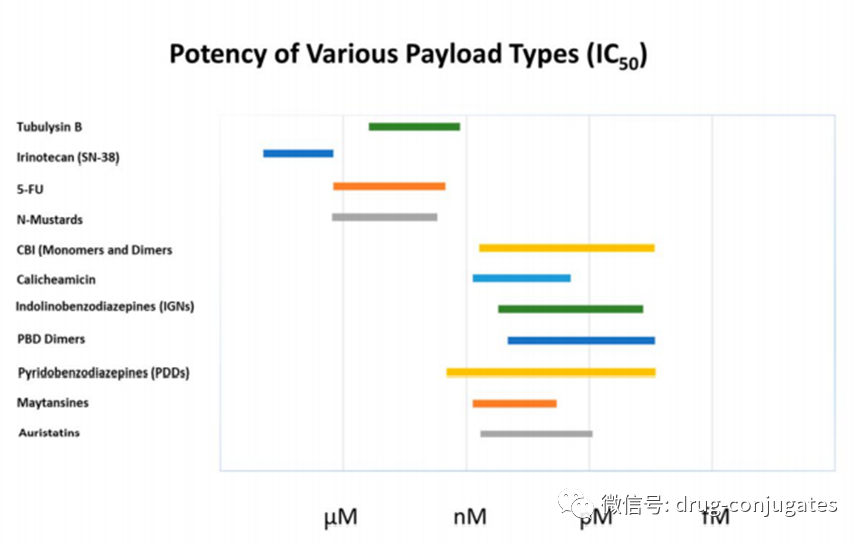

Coupling Methods
Monoclonal Antibodies: Currently focused on IgG1 and IgG4●Each monoclonal antibody molecule contains about 80-100 lysine residues, with at least 30 exposed lysine residues on the surface●Each monoclonal antibody molecule contains 4 disulfide bonds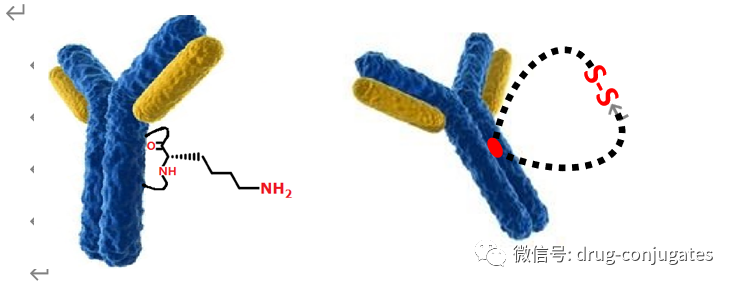 Many methods have been developed to attach linker-payload to antibodies. The first conjugation method developed involved the reaction of electrophilic groups (e.g., maleimide or N-hydroxysuccinimide (NHS) moieties) located at the end of the linker-payload with the exposed nucleophilic -NH2 groups of lysine residues. This “random” conjugation method leads to heterogeneity of ADC drugs.Later, the initial or fully reduced disulfide bonds between the four chains of the antibody were used to produce an average number (i.e., 2, 4, 6, 8) of nucleophilic thiol groups for conjugation with electrophilic linker-payloads. Despite improvements, this method still leads to ADC heterogeneity (i.e., drug-to-antibody ratio (DAR) of 1-8), which may negatively affect parameters such as pharmacokinetics, tolerability, and efficacy.In light of this, site-specific conjugation methods, such as the THIOMAB™ technology, have been developed.Lysine Residue CouplingThe terminal amine coupling with lysine residues is an early developed coupling method, which has low selectivity due to the presence of 80-100 lysines in the antibody.
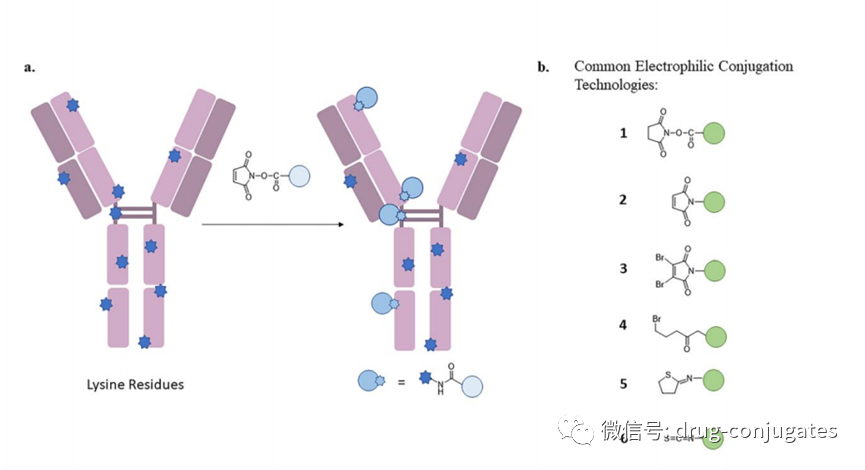 The entire IgG1 antibody, and its reaction with electrophilic (maleimide) linker-effective payload constructs. (b) Structures of six commonly seen electrophilic conjugation technologies: (1) NHS, (2) maleimide, (3) dibromomaleimide, (4) 5-bromopentan-2-one, (5) Traut reagent and (6) isothiocyanate.Because lysines are exposed on the antibody exterior, lysine-based conjugation is very convenient, and the amines of lysine are good nucleophiles. Currently, lysine coupling reactions often involve using activated payloads to form stable amide bonds.Cysteine CouplingMonoclonal IgG antibodies such as IgG1, IgG2, or IgG4 contain multiple disulfide bonds, which are considered a uniform and homogenous structural feature. The classic arrangement of disulfide bonds is shown in the figure below. Each IgG contains a total of 12 pairs ofintrachain disulfide bonds, with each pair located in different regions of the antibody.
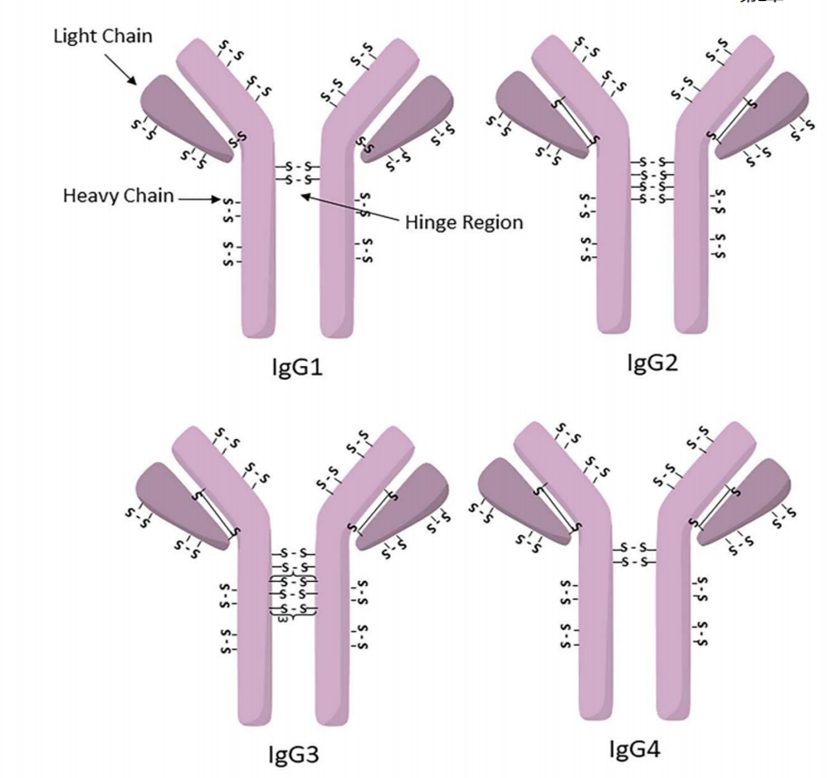 Interchain disulfide bonds are the ideal conjugation sites for cytotoxic payloads. For human IgG1, four pairs of interchain disulfide bonds are usually reduced prior to conjugation using reagents such as tris(2-carboxyethyl)phosphine (TCEP), dithiothreitol (DTT), or 2-mercaptoethylamine (2-MEA). Once free thiols are generated, they can react with linker-effective payload constructs containing suitable electrophilic moieties (e.g., maleimide, NHS, 3,4-dibromomaleimide, etc.), resulting in antibody conjugates with mixed DAR and different sites of conjugation.
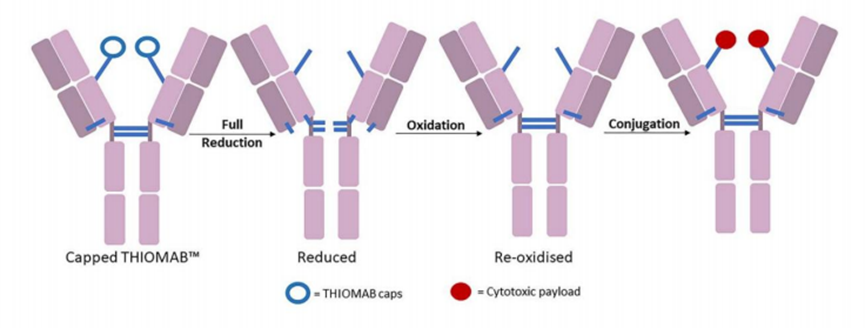
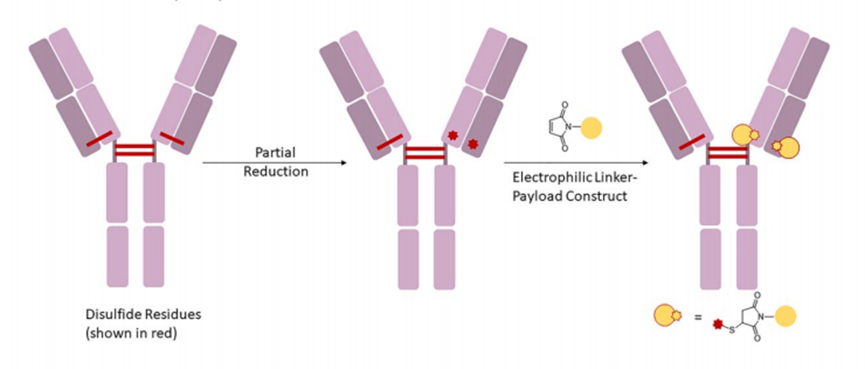 The above figure shows a typical method for partially reducing the disulfide bonds of IgG1 antibodies to generate two nucleophilic thiol groups, which can react with electrophilic linker-effective payload constructs (i.e., DAR = 2) (maleimide coupling). For IgG1 antibodies, up to four pairs of interchain disulfide bonds can be reduced, exposing up to eight nucleophilic thiol groups for coupling. Conjugation based on reductants generating thiols can fully or partially reduce disulfide bonds, resulting in ADCs produced by these methods containing up to 8 payloads (i.e., a DAR of up to 8), but may impact the stability of the antibody.Site-Specific CouplingDue to the reduction of disulfide bonds potentially compromising the stability of the antibody, as well as generating ADCs with non-uniform DAR values, many site-specific conjugations have been developed to improve the homogeneity of the final ADC product. The most famous example of site-specific conjugation is the THIOMAB™ technology developed by Genentech. THIOMAB™ technology utilizes engineered antibodies with modified cysteine residues. This allows linker-effective payloads to couple with specific cysteines without disrupting interchain disulfide bonds.THIOMAB-payload conjugates outperform non-site-specific ADCs because they contain uniformly distributed linker-drug structures, typically with a DAR of 2. Compared to randomly conjugated ADCs, ADCs produced using this technology are effective and have demonstrated superior safety profiles in many in vivo studies, particularly in the aspects of liver and bone marrow toxicity (PS: The downside is the low yield of engineered antibodies).
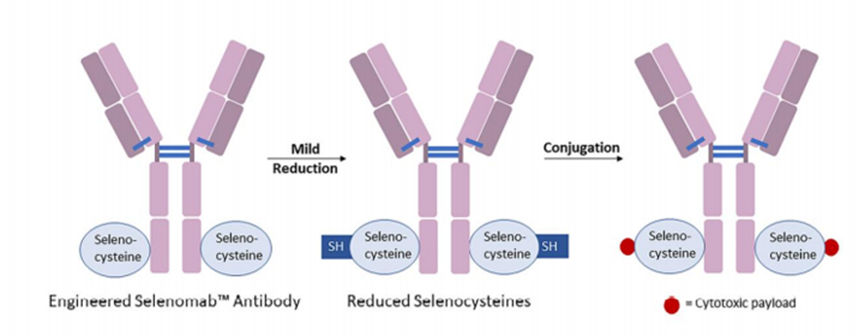
 Other site-specific engineered antibodies have been developed. For example, Selenomab™ ADC developed by Scripps Research Institute (USA) includes one or more selenocysteine residues at specific sites (see below). The selenol groups have unique reactivity, allowing selenocysteine residues to achieve efficient site-specific conjugation. Compared to other specific conjugation ADCs (natural and unnatural amino acids), selenocysteine residues have special reactivity, allowing for rapid, one-step effective reactions under near-physiological conditions.
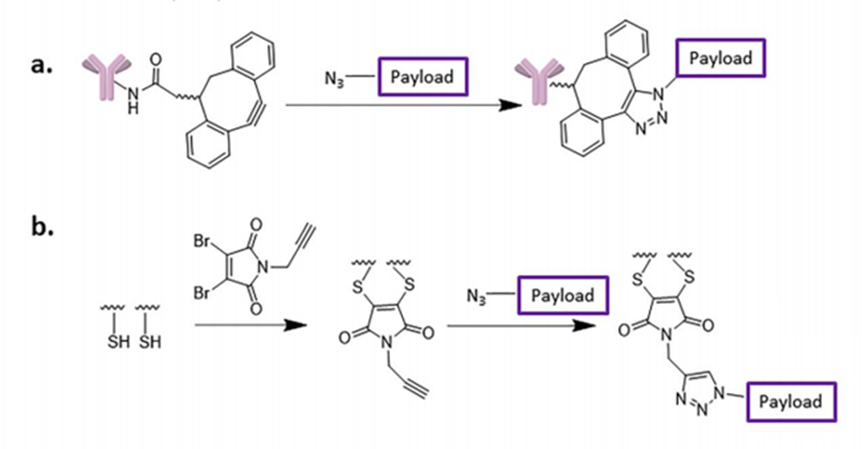
 Click Chemistry ConjugationVarious click chemistry methods have been used to attach payloads to antibodies. In this method, reagents containing azides, such as (difluoroalkyl azide) sulfonate (DAAS-Na), are used to connect azide groups to the end of linker-effective payload structures. The azide functional groups can then react with dibenzyl cyclooctyne (DBCO) to couple to the antibody (see below a). One advantage of click chemistry is that the reactions are highly efficient, with mild reaction conditions, often using copper catalysts (PS: The downside is the need for copper catalysts).
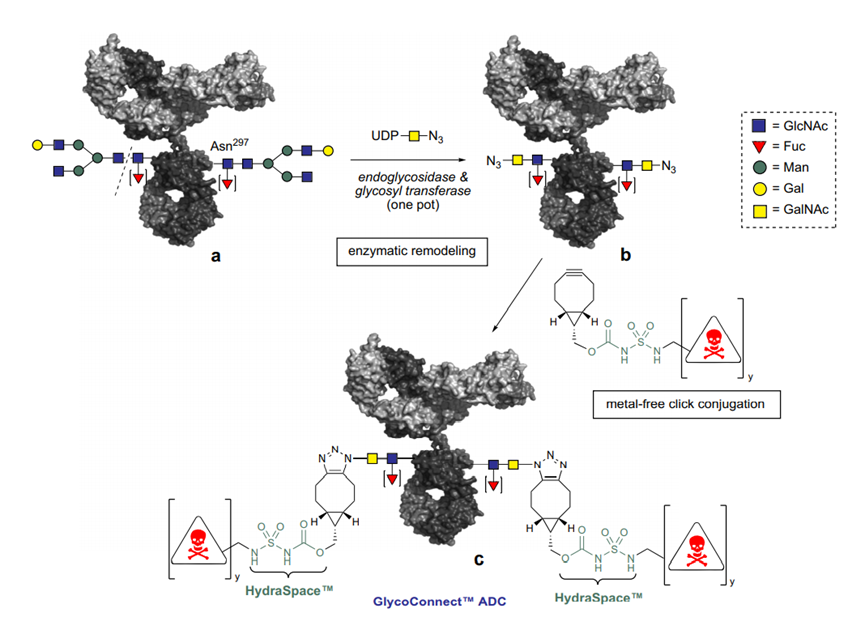
 Other Types of ConjugationIn addition to the well-known conjugation methods based on thiols, amines, or click partners mentioned above, there are other alcohol-based conjugation technologies (e.g., forming carbonates, ethers, and esters) and aldehydes (e.g., through the enzyme that generates formylglycine (FGE)), engineered aminoacyl-tRNA synthetases (aaRS), sialic acid oxidation, and transaminase reagents. Moreover, new methods are emerging, such as Synaffix’s GlycoConnect™ technology, which is based on initial enzymatic modification of two naturally occurring glycan anchor points on the antibody. Then, using metal-free click chemistry, payload molecules are connected in a site-specific manner (for more details, see: glycosylation-based site-specific conjugation technologies).
References:
1.Cytotoxic payloads for antibody-drug conjugates
2.Other published materials compilation
Scan the WeChat QR code to add the Antibody Circle editor, and eligible individuals can join the Antibody Circle WeChat group!Please indicate: Name + Research Direction!


All articles reproduced by this public account are for the purpose of conveying more information, and the sources and authors are clearly indicated. Media or individuals who do not wish to be reproduced can contact us ([email protected]), and we will immediately delete them. All articles represent the author’s views and do not represent the position of this site.