Understanding Serial Communication: Basics of SPI
Understanding Serial Communication: Basics of SPI

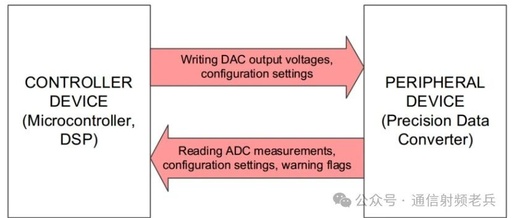
In this article, we will introduce the basics of digital communication and the Serial Peripheral Interface (SPI) communication. This includes the communication structure and the required digital lines.Many precision analog devices have digital interfaces between microcontrollers (referred to as controllers) and controlled devices (referred to as peripherals). For example, a precision Analog-to-Digital Converter (ADC) measures … Read more
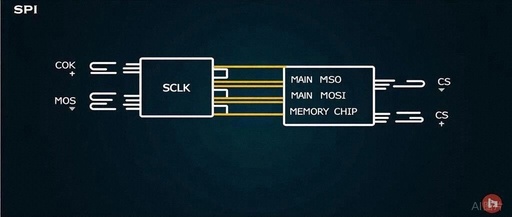
Understanding the Principles of the SPI Communication Protocol

Understanding the Principles of the SPI Communication Protocol

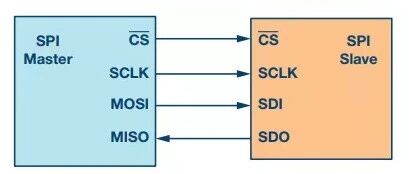
The full English name of SPI is Serial Peripheral Interface, which, as the name suggests, is a serial peripheral interface.SPI is a synchronous serial communication interface specification primarily used for short-distance communication in embedded systems.This interface was developed by Motorola in the mid-1980s and has since evolved into an industry standard.SPI is a high-speed, full-duplex, … Read more

Understanding the SPI Bus Interface

Understanding the SPI Bus Interface

The Serial Peripheral Interface (SPI) is one of the most widely used interfaces between microcontrollers and peripheral ICs (such as sensors, ADCs, DACs, shift registers, SRAM, etc.). SPI is a synchronous, full-duplex, master-slave interface. Data from the master or slave is synchronized on the rising or falling edge of the clock. Both the master and … Read more

Mastering SPI Communication: Comprehensive Guide to Four-Wire and Seven-Wire Applications

Mastering SPI Communication: Comprehensive Guide to Four-Wire and Seven-Wire Applications

1. Overview of SPI Communication SPI (Serial Peripheral Interface) is a synchronous serial communication protocol developed by Motorola (now NXP), primarily used for short-distance, high-speed communication between master and slave devices. Its features include full-duplex transmission, master-slave architecture, and no complex protocol layers, making it widely used in embedded devices such as memory (e.g., Flash), … Read more

Introduction to SPI (Serial Peripheral Interface)

Introduction to SPI (Serial Peripheral Interface)

1. Introduction to SPI SPI, which stands for Serial Peripheral Interface, is a synchronous serial communication protocol originally defined by Motorola for its MC68HCXX series processors. The SPI interface is primarily used for communication between EEPROMs, FLASH memory, real-time clocks, ADCs, as well as digital signal processors and digital signal decoders. SPI is a high-speed, … Read more

Introduction and Comparison of CAN, I2S, I2C, SPI, and SSP Buses

Introduction and Comparison of CAN, I2S, I2C, SPI, and SSP Buses

1. SPI Bus The Serial Peripheral Interface (SPI) bus technology is a synchronous serial interface introduced by Motorola. Most MCUs (Microcontrollers) produced by Motorola, such as the 68 series MCUs, are equipped with SPI hardware interfaces. SPI is used for full-duplex, synchronous serial communication between the CPU and various peripheral devices. It can simultaneously transmit … Read more

EOS-8: IO/SPI/I2C/RS232-485

EOS-8: IO/SPI/I2C/RS232-485

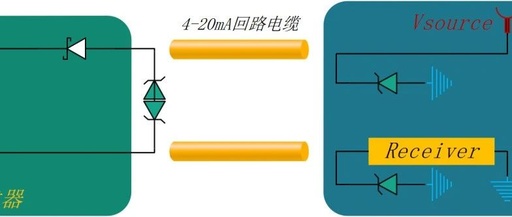
★★★EOS-8—IO★★★ Author: Timothy Proofreader: Timothy Introduction: For various conventional interfaces, we have a good awareness of ESD protection. However, for some discrete or DIY circuits, cross-board usage often also requires ESD protection, such as GOIO, acquisition ports, or cross-board SPI, I2C, etc. This section introduces ESD protection for some IO and cross-board communication interfaces. €1.Digital … Read more

The Importance of SPI in Quality Control for SMT Processing

The Importance of SPI in Quality Control for SMT Processing

Click the blue text to follow us In the SMT processing, solder paste printing is a crucial step that affects soldering quality. SPI (Solder Paste Inspection) serves as the core tool for solder paste quality inspection, playing a vital role in ensuring the quality of solder paste printing and improving the consistency and reliability of … Read more

Comparison of SPI, DSPI, and QSPI Technologies

Comparison of SPI, DSPI, and QSPI Technologies

Click the aboveblue text to follow us In embedded systems, the Serial Peripheral Interface (SPI) and its extensions (such as DSPI and QSPI) are widely used for high-speed communication with external devices (such as sensors, memory, LCD controllers, etc.). The main differences are as follows: 1 SPI SPI (Serial Peripheral Interface) is a full-duplex synchronous … Read more

Embedded Development in C: SPI Communication Protocol

Embedded Development in C: SPI Communication Protocol

Embedded Development in C: SPI Communication Protocol Introduction The SPI (Serial Peripheral Interface) is a synchronous serial communication protocol widely used for high-speed data transfer between microcontrollers and various peripherals. It was introduced by Motorola in the 1980s and has been widely adopted due to its simplicity, flexibility, and efficiency. SPI is typically used to … Read more