Mr. Bai Meichu’s investigation in Northern Henan extends from the depths of the Taihang Mountains in Lin County eastward, re-entering the vast plains. Neihuang County, located east of Anyang, showcases a scene that is starkly different from the mountainous areas, with its extreme flatness and fertility.The records in the Gazetteer describe Neihuang as an agricultural fertile land shaped by the ancient alluvial deposits of the Yellow River and the Wei and Zhang Rivers. It does not rely on rugged terrain or transportation hubs; its strength is deeply rooted in the soil.With the production of cotton, wheat, coarse cloth, and saltpeter, Neihuang has laid the most solid agricultural foundation in the Northern Henan region.
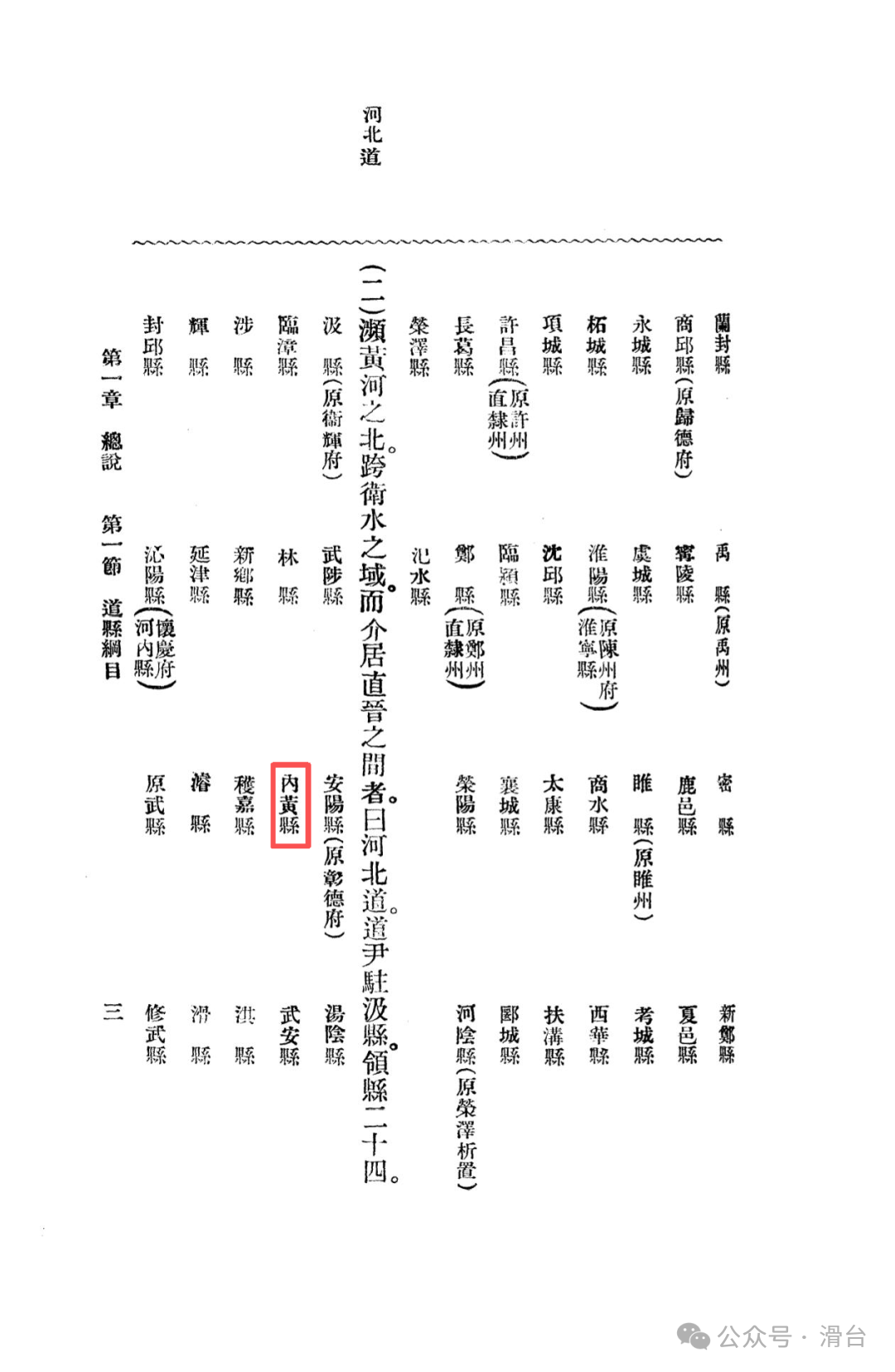
Administrative Evolution: Two Thousand Years of Stability
Among the counties in Northern Henan, the history of Neihuang County’s establishment appears particularly pure and stable. Since the establishment of the county in the Western Han Dynasty, its name and county-level system have remained largely unchanged for two thousand years. This continuity across multiple dynasties reflects the durability and stability of this land as a fundamental agricultural unit.According to the “Neihuang County Gazetteer”, the name “Neihuang” derives from the ancient changes of the Yellow River, which left a large depression of yellow water here, known as Huanggou, Huangze, and Huangchi; also, because it was then under the jurisdiction of Weijun, it was viewed from the perspective of Wei, with the Yellow River to the north being “inside” and to the south being “outside”. Therefore, Neihuang is named for being north of the Yellow River, which also imprints a profound historical connection between this land and the mother river.
Topography and Hydrology: Fertile Fields Nourished by Canals
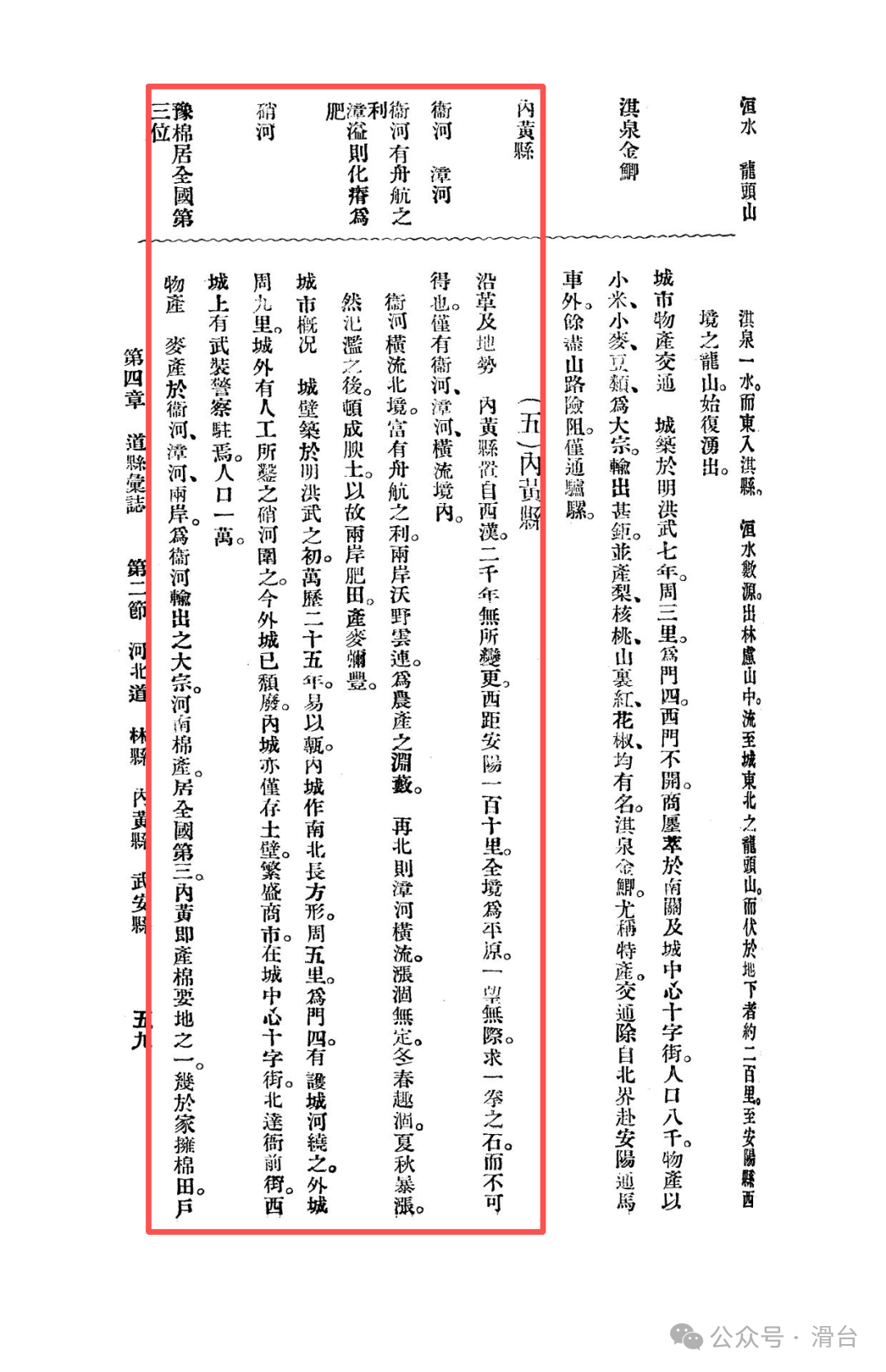
The topography of Neihuang is a typical representation of plains. “The entire area is flat, stretching endlessly, and one cannot find a stone even if one seeks it.” On this vast land, two rivers shape the basic economic geography:
The Benefits of the Wei River:
The Wei River runs across the northern border, with a gentle flow, “rich in navigational advantages“. It is not only the main channel for the transportation of Neihuang’s products but also the core agricultural area along its banks, with fertile land and abundant agricultural produce.
The Gifts of the Zhang River:
The Zhang River to the north is changeable, “with unpredictable floods, drying in winter and spring, and surging in summer and autumn.“However, the sediment left after floods is exceptionally fertile, making the banks of the Zhang River prime wheat fields. The two rivers, with their varying flows, together nourish this granary.
City Overview: The Vicissitudes of Dual City Walls
Compared to its abundant products, the county town of Neihuang appears simple and somewhat weathered. The city walls were built in the early Ming Dynasty, with a unique structure, divided into inner and outer cities:
The inner city is rectangular in shape, stretching north to south, with a perimeter of five li, serving as the administrative and commercial core;
The outer city is larger, with a perimeter of nine li, but“the outer city is now in ruins, and the inner city only retains earthen walls.”
This state of “decay outside, preservation inside” is a true reflection of historical changes and local financial capabilities. The bustling commercial area is concentrated around the central cross streets and the area in front of the government office, with a population of about ten thousand. Its urban scale and commercial vitality contrast sharply with the vast agricultural output, highlighting Neihuang’s role as a production and distribution base for agricultural products rather than a consumption center.
Products and Industries: Sources of Wealth from Cotton, Cloth, Salt, and Oil
The economic lifeline of Neihuang is firmly tied to its diverse and high-quality products, a structure unique to the Northern Henan region:
The Core of Cotton Industry:
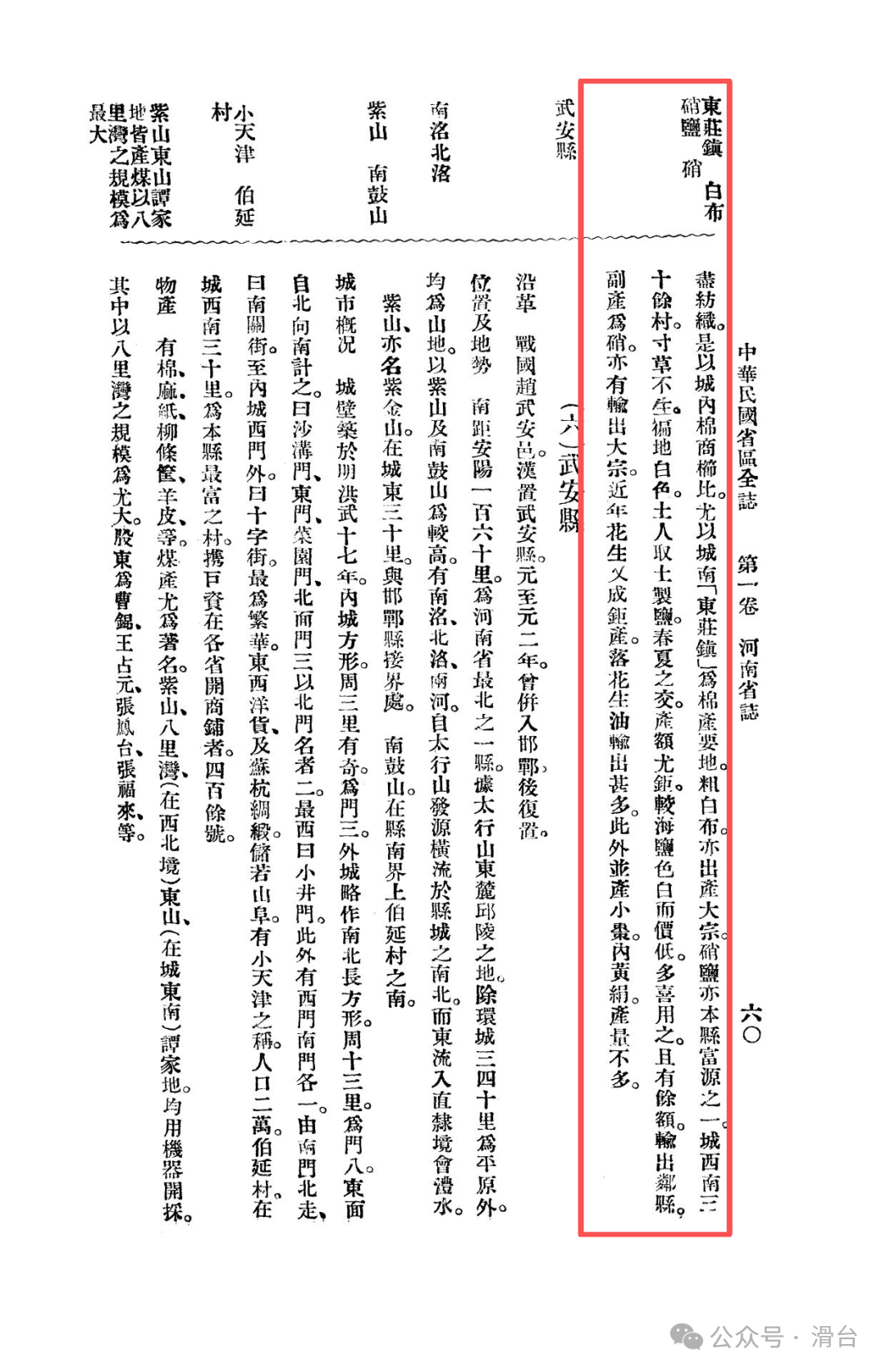
The gazetteer clearly states,“Henan ranks third in cotton production nationwide, and Neihuang is one of the key cotton-producing areas.” Almost every household has cotton fields, and every family engages in weaving, with a dense concentration of cotton merchants in the city, particularly in Dongzhuang Town in the south, which serves as a regional cotton distribution center. The coarse white cloth derived from cotton is also an important export product, forming a complete family handicraft system from raw materials to finished products.
Unique Saltpeter:
More than thirty villages in the southwest of the city have a unique geological feature,“where no grass grows, and the ground is covered in white,” allowing local residents to extract salt from the soil, producing saltpeter. This salt is “whiter and cheaper than sea salt,” and can be exported to neighboring counties, becoming a unique resource for Neihuang. The byproduct “niter” is also sold externally.
Emerging Oilseed Industry:
In recent years, peanut cultivation has gradually risen, with an increase in peanut oil exports, reflecting the dynamic adjustment of agricultural structure in response to market demand.
Other Special Products:
Additionally, Neihuang jujubes are famous far and wide, and although the production of Neihuang silk is limited, it represents the tradition of exquisite handicrafts in the area.
Within Mr. Bai Meichu’s narrative framework, the positioning of Neihuang County is clear and solid. When placed within the broader regional context of Northern Henan, we can see a complete and organic regional division of labor system:
Lin County serves as an ecological barrier and natural heritage, providing water sources and tranquility;
Anyang is the industrial, cultural, and administrative core, leading regional development;
Xinxing is a railway hub, and Daokou is a water transport port, jointly facilitating resource circulation;
Jixian is a cultural and educational center, while Xunxian is a stronghold of faith and military, meeting higher social needs;
Huai County and Yanjin are broadly agricultural hinterlands, providing basic food supplies.
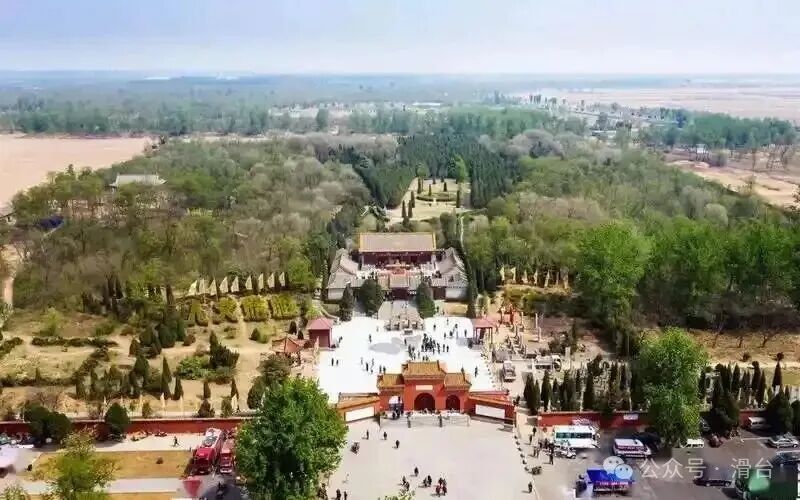
Neihuang County, therefore, stands out as the most specialized and productive “economic crop base” and “handicraft production area”. As the “sea of cotton” in Northern Henan, the countless looms in households support the regional clothing foundation; its unique saltpeter and emerging peanut oil industries also enrich the diversity of the regional economy. Neihuang may lack spectacular landscapes and prominent historical sites, but it is precisely the vast cotton fields and unique saline-alkali lands that together constitute a simple yet solid strength, making it an indispensable granary and cotton storehouse in the Northern Henan plain.
Previous Readings:
Memories of Northern Henan in the “Comprehensive Gazetteer of the Republic of China”: Lin County During the Beiyang Period
Memories of Northern Henan in the “Comprehensive Gazetteer of the Republic of China”: Wuzhi County During the Beiyang Period (Qing Dynasty Hebei Road was stationed here)
Memories of Northern Henan in the “Comprehensive Gazetteer of the Republic of China”: Hebei Road and Jixian During the Beiyang Period (Originally Wei Hui Prefecture)
Memories of Northern Henan in the “Comprehensive Gazetteer of the Republic of China”: Anyang County and Tangyin Historical Sites During the Beiyang Period
Memories of Northern Henan in the “Comprehensive Gazetteer of the Republic of China”: Xinxing County During the Beiyang Period
Memories of Northern Henan in the “Comprehensive Gazetteer of the Republic of China”: Yanjin County During the Beiyang Period
Memories of Northern Henan in the “Comprehensive Gazetteer of the Republic of China”: Xun County During the Beiyang Period
Memories of Northern Henan in the “Comprehensive Gazetteer of the Republic of China”: Huai County and Daokou Town During the Beiyang Period
From the Battle of Weizhou in 1232, examining why the military system of Huizhou collapsed
Did ancient people also make mistakes in dates? The wisdom behind a “historical error”
Excavated brick inscriptions reveal: the migration and geographical codes of a family settling in Huatai Baima County during the Tang Dynasty
The sleeping eight-hundred-year-old Central Plains code: why understanding Huai County is key to understanding the Northern and Southern Dynasties?
#Henan Neihuang #Anyang Neihuang #Memories of Northern Henan #Henan Tourism Culture #Emperor’s Tombs #What You Don’t Know About Henan