New Choices for Domestic RS-485/RS-422 Transceivers: CYI3488/3490/3491
New Choices for Domestic RS-485/RS-422 Transceivers: CYI3488/3490/3491

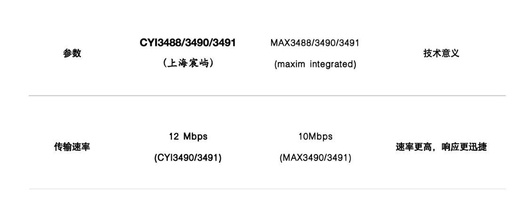
In high-demand application scenarios such as industrial communication, automation control, and telecommunications infrastructure, stable, high-speed, and interference-resistant data transmission is a key issue. For a long time, the MAX series of RS-485/RS-422 transceivers have been widely adopted due to their reliability. Now, Shanghai Chenyu Electronics has launched a new series of CYI3488, CYI3490, and CYI3491 … Read more

Guide to PCB Routing for USB Differential Signal Lines

Guide to PCB Routing for USB Differential Signal Lines

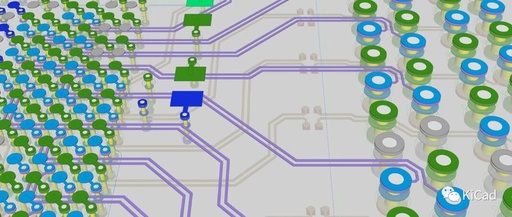
“ This article introduces the key principles and practices for correctly routing USB differential data lines on a PCB. The main goal is to achieve the 90-ohm impedance matching specified in the USB standards, while also considering ESD protection and a complete ground plane.“ USB Speed Levels and Impedance Requirements The USB speed standards have … Read more

Comprehensive Analysis of ESD Protection for Wireless Modules: From Chip Selection to Implementation

Comprehensive Analysis of ESD Protection for Wireless Modules: From Chip Selection to Implementation

In the daily use of smart speakers, there is a high reliance on wireless connectivity, with WiFi and Bluetooth modules serving as the foundation for remote control, voice interaction, and multi-device collaboration. However, these high-frequency communication modules are extremely sensitive to electrostatic discharge (ESD), which can directly lead to module failure, causing connection interruptions and … Read more

Is VSS Directly Connected to VSSA Inside the MCU? Neither!

Is VSS Directly Connected to VSSA Inside the MCU? Neither!

First, the answer: Inside the MCU chip, a resistor (or an equivalent “weak connection”) is placed between VSS and VSSA, rather than a direct short circuit or complete open circuit. This is based on the core ideas of “single-point grounding” and “noise isolation”, but also requires additional consideration of the physical realities and reliability of … Read more

Why ESD Levels Differ Among Systems with Different MCUs in the Same Environment?

Why ESD Levels Differ Among Systems with Different MCUs in the Same Environment?

A washing machine product selected two different manufacturers’ MCUs with pin compatibility. During EMC certification, it was found that MCU A failed at 5kV, while MCU B could withstand up to 8kV, with all other components and environments being identical. Why do different MCU products exhibit varying ESD levels? The reasons behind this are not … Read more

Why Connect Ground Capacitors to MCU Crystals?

Why Connect Ground Capacitors to MCU Crystals?

Many electronic engineers are puzzled by the practice of connecting a ground capacitor on each side of the MCU crystal during design. Even after researching, they find little explanation in books, often mentioning that ground capacitors provide stability or are considered load capacitance, but without in-depth analysis. So today, I will explain why this is … Read more

Checklist Before IC Tape-Out

Checklist Before IC Tape-Out

Click to View: Christmas Benefits | Free 3-Month VIP Membership for E-Course Network! Abstract: Before tape-out, it is necessary to check the layout, routing, drive/load, IO, and design rules of the chip. Based on years of tape-out experience, the necessary checks for each part are summarized as follows. 1. Layout Check 1) Consider the direction … Read more

How to Optimize Layout for IC Chip Tape-Out?

How to Optimize Layout for IC Chip Tape-Out?

Before an IC chip enters the tape-out phase, engineers must prepare extensively to ensure the smooth progress of subsequent stages, and a reasonable layout design is key to ensuring chip performance, reliability, and cost-effectiveness. 1. Pin Layout Optimization Clearly define the direction and position of the pins, especially keeping the clock pins and analog signal … Read more

How to Ground After Bus Isolation?

How to Ground After Bus Isolation?

Both CAN and RS-485 are commonly used field buses in industrial communication, and engineers are likely very familiar with bus isolation solutions. However, they may encounter situations where communication is abnormal even with an isolation scheme in place. This article will explore how to ground after bus isolation. Introduction To ensure the stability of communication … Read more

In-Depth Analysis of Chip I/O Units in SoC Chip Design

In-Depth Analysis of Chip I/O Units in SoC Chip Design

1. Basic Structure of I/O Units The I/O PAD is a critical part of the chip that connects to external circuits, typically consisting of bonding pads, circuits, power lines, and ground lines. The bonding pad (PAD) is used to connect the chip to the package substrate via gold wires, usually shaped as rectangles measuring several … Read more