Fundamentals of C Language Applications: Understanding QSPI Communication
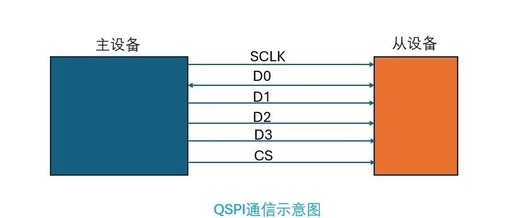
Fundamentals of C Language Applications: Understanding QSPI Communication

Overview: This article mainly discusses the basic principles of QSPI communication, an upgraded version of SPI communication. It aims to help readers understand and apply the QSPI data transmission method. This article is a sister piece to my previous article on SPI communication, which interested readers can refer to first: Fundamentals of C Language Applications … Read more
Support for SPI/QSPI Interface LCD Screens: Complete Hardware Design and Software Demo Open to All

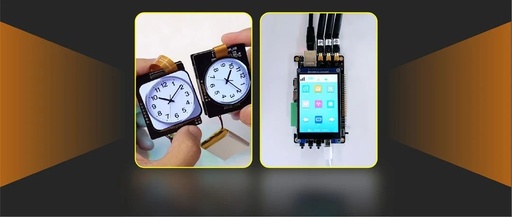
Support for SPI/QSPI Interface LCD Screens: Complete Hardware Design and Software Demo Open to All

Hezhao Air8000—— is a multifunctional industrial engine that integrates 4G, Wi-Fi, BLE, GNSS positioning, G-sensor, and power management, providing powerful scene solution capabilities. It supports multi-network integration and offers over 50 programmable I/O ports to meet the complex peripheral expansion needs of industrial equipment. Currently, the Air8000 supports LCD screens with SPI and QSPI interfaces: … Read more

Conquering H7-TOOL One-to-Four Offline Programming

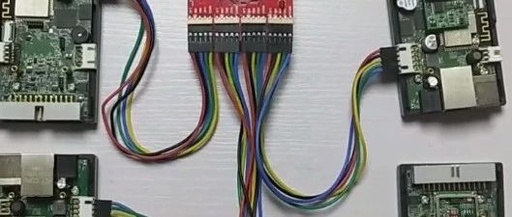
Conquering H7-TOOL One-to-Four Offline Programming

This year on February 7th, the first version of the H7-TOOL offline programmer was released, followed by hybrid programming on March 13th. Today, we have officially conquered one-to-four parallel programming, allowing for offline synchronous programming of four chips. The video below demonstrates the H7-TOOL simultaneously programming four H750 devices with a 46KB boot + 685KB … Read more

Differences and Similarities Between SPI and QSPI: What is the QSPI Protocol and Its Applications

Differences and Similarities Between SPI and QSPI: What is the QSPI Protocol and Its Applications

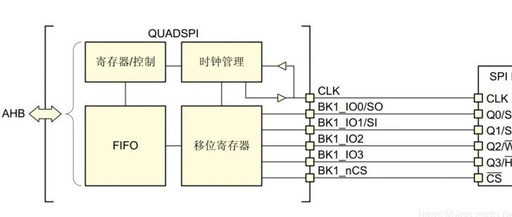
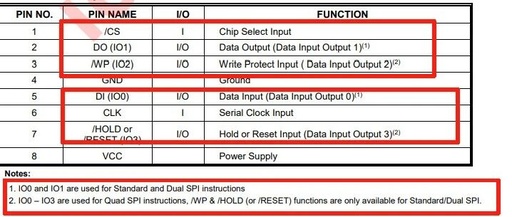
1. What is QSPI? The SPI protocol actually includes three types of protocol interfaces: Standard SPI, Dual SPI, and Queued SPI, corresponding to 3-wire, 4-wire, and 6-wire configurations respectively. (1) Typically, when we refer to SPI, we mean Standard SPI, which has 4 signal lines: CLK, CS, MOSI, and MISO. The data line operates in … Read more

Introduction to Key Points of SPI Hardware Design

Introduction to Key Points of SPI Hardware Design

Today, we will introduce the widely used SPI communication between PCB boards, striving to minimize the introduction of overly textual definitions and instead use straightforward language to explain. Definition: SPI (Serial Peripheral Interface) is a type of serial synchronous communication, which is mostly full-duplex (but it can also be half-duplex), primarily used in chips such … Read more

Comparison of SPI, DSPI, and QSPI Technologies

Comparison of SPI, DSPI, and QSPI Technologies

Click the aboveblue text to follow us In embedded systems, the Serial Peripheral Interface (SPI) and its extensions (such as DSPI and QSPI) are widely used for high-speed communication with external devices (such as sensors, memory, LCD controllers, etc.). The main differences are as follows: 1 SPI SPI (Serial Peripheral Interface) is a full-duplex synchronous … Read more

Advanced SPI Communication Techniques: From Four-Wire to Quad SPI, Daisy Chain Solutions to Double Your Project Speed!

Advanced SPI Communication Techniques: From Four-Wire to Quad SPI, Daisy Chain Solutions to Double Your Project Speed!

1. Independent Chip Select (Standard Multi-Slave Mode) Solution Description: Each slave device is assigned an independent SS (chip select) line, and the master device activates the target slave by pulling down the corresponding SS line.Advantages: Each slave is independently controlled, and communication does not interfere with each other. Supports full-duplex high-speed transmission.Disadvantages: The number of … Read more

Comparison of SPI, DSPI, and QSPI Technologies

Comparison of SPI, DSPI, and QSPI Technologies

Click the aboveblue text to follow us In embedded systems, the Serial Peripheral Interface (SPI) and its extensions (such as DSPI and QSPI) are widely used for high-speed communication with external devices (such as sensors, memory, LCD controllers, etc.). The main differences are as follows: 1 SPI SPI (Serial Peripheral Interface) is a full-duplex synchronous … Read more

Q&A with Experts: Unable to Program QSPI Flash in Original Mode During JTAG Boot

Q&A with Experts: Unable to Program QSPI Flash in Original Mode During JTAG Boot

Problem Description In the Zynq 1.0 version chip, I attempted to program (erase/write/read) the QSPI in the original mode, but the code hangs when booting in JTAG mode. Solution When the QSPI flash is in the original mode, MIO[5] is connected to the HOLD signal. To ensure that the HOLD signal is not held low … Read more