Introduction
The emergence of dual payload antibody-drug conjugates (ADCs) and peptide-drug conjugates (PDCs) marks a significant evolution in the field of targeted therapy.
01
Background
Antibody-drug conjugates (ADCs) have garnered attention for their ability to deliver cytotoxic agents precisely to cancer cells, earning them the title of “magic bullets” for tumor treatment.However, ADCs still face challenges in clinical applications, including tumor heterogeneity and resistance issues.Clinical data indicate that after developing resistance to topoisomerase I inhibitors (Topo1i), similar ADCs may also exhibit concurrent resistance, and this resistance is unrelated to the targeted antigens.
During the chemotherapy era, drug combinations were often used to address tumor heterogeneity and acquired resistance in cancer treatment. As we enter the era of precision therapy, combining ADCs with various anticancer drugs (including traditional chemotherapy, molecular targeted drugs, and immunotherapy) naturally extends this concept. To enhance the therapeutic efficacy of single payload ADCs while maintaining safety, dual payload ADCs have emerged.
02
Emerging Therapies: Dual Payload ADC/PDC
Antibody-drug conjugates (ADCs) are a targeted therapy strategy that combines a targeting antibody, linker, and cytotoxic drug (payload), utilizing the antibody to recognize tumor cells, which are then internalized, leading to the release of the active payload to kill the tumor cells.
However, single payload ADCs rely on a single cytotoxic mechanism, which may allow resistant subpopulations to escape.
Dual payload ADCs couple two complementary cytotoxic drugs or functional molecules on the same antibody molecule, allowing them to simultaneously kill various tumor cells, with the potential to overcome drug resistance, enhance tumor selectivity, and broaden the therapeutic window. This strategy is akin to combination therapy but delivered in a single drug form.
Safety is crucial for the efficacy of ADCs in low target antigen and heterogeneous tumors. Various emerging single-agent combination drug models, including bispecific ADCs, prodrug-conjugates, immune-stimulating ADCs, and protein degradation agent ADCs, are being viewed as the next generation of ADC platforms to address these challenges.
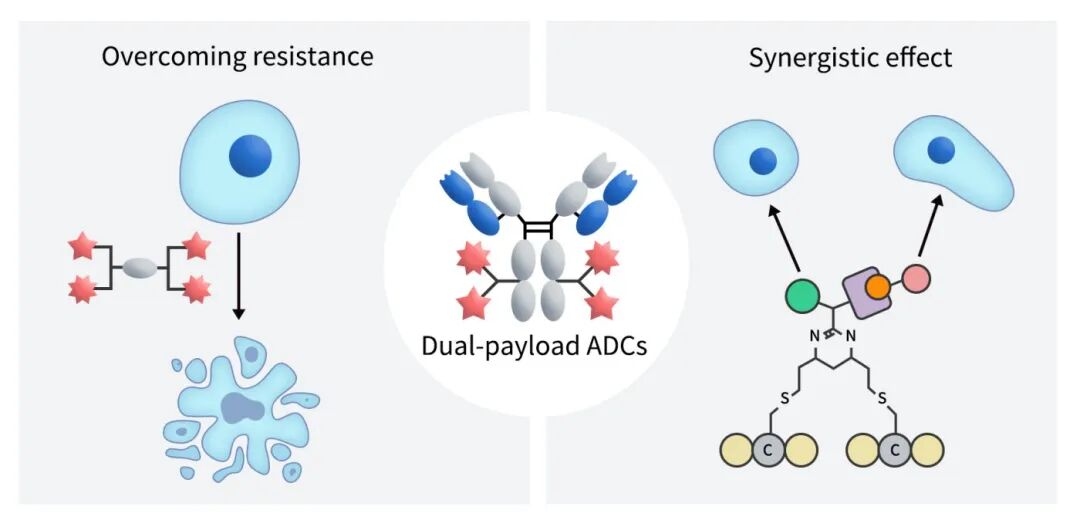
The Structure of Dual-payload ADCs
Similarly, for PDCs, peptides are small, flexible, and highly permeable. Through precise design, scientists can control the release method and timing of each drug. This allows the payloads to be activated sequentially at specific tumor sites or only under specific tumor-specific conditions, achieving more refined delivery control in “combination therapy.” Therefore, dual payload PDCs possess advantages similar to ADCs while leveraging the small size of peptides to enhance delivery flexibility and precision.
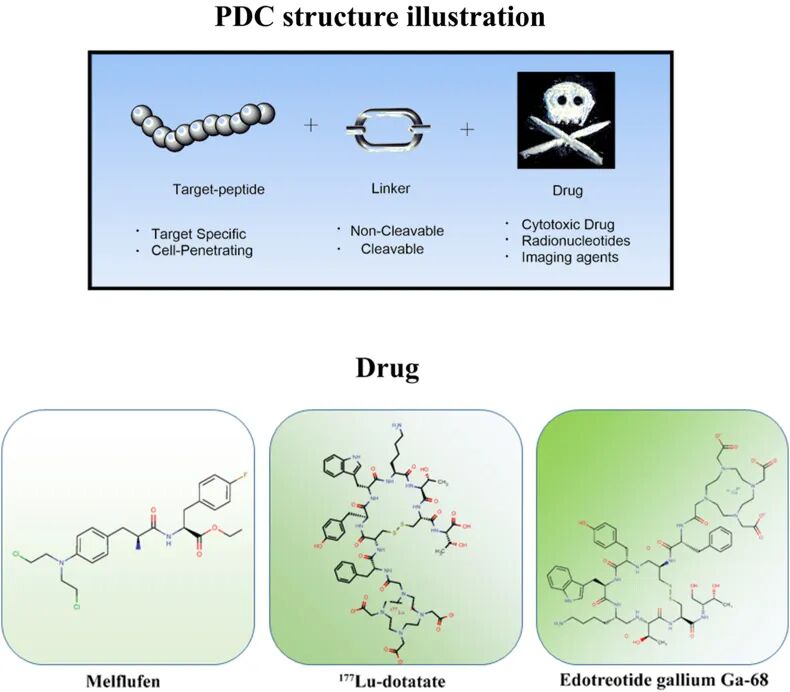
A schematic of a peptide–drug conjugate structure
03
Dual Payload ADC/PDC: Global R&D Trends
As an emerging therapy, there are still few dual payload drugs in clinical trials. Currently, ADCs are leading in the development stage compared to PDCs, with two dual payload ADCs already in early clinical trial stages, while dual payload PDCs have not yet entered clinical trials.According to publicly available data, over 20 pharmaceutical companies worldwide have announced their dual payload ADC pipeline layouts, including overseas companies such as Araris, CrossBridge Bio, Sutro, and Hummingbird, as well as domestic companies like Innovent, Kanghong Pharma, CanSino Biologics, Yilian Biotech, Duoxi Biotech, Qide Pharma, Adcoris, and Affinivax.Among them, Chinese pharmaceutical companies are making significant progress in dual payload ADCs: the two most advanced products are Innovent’s IBI3020 and Kanghong Pharma’s KH815.Global dual payload ADC pipeline overview (according to incomplete statistics from the drug research network)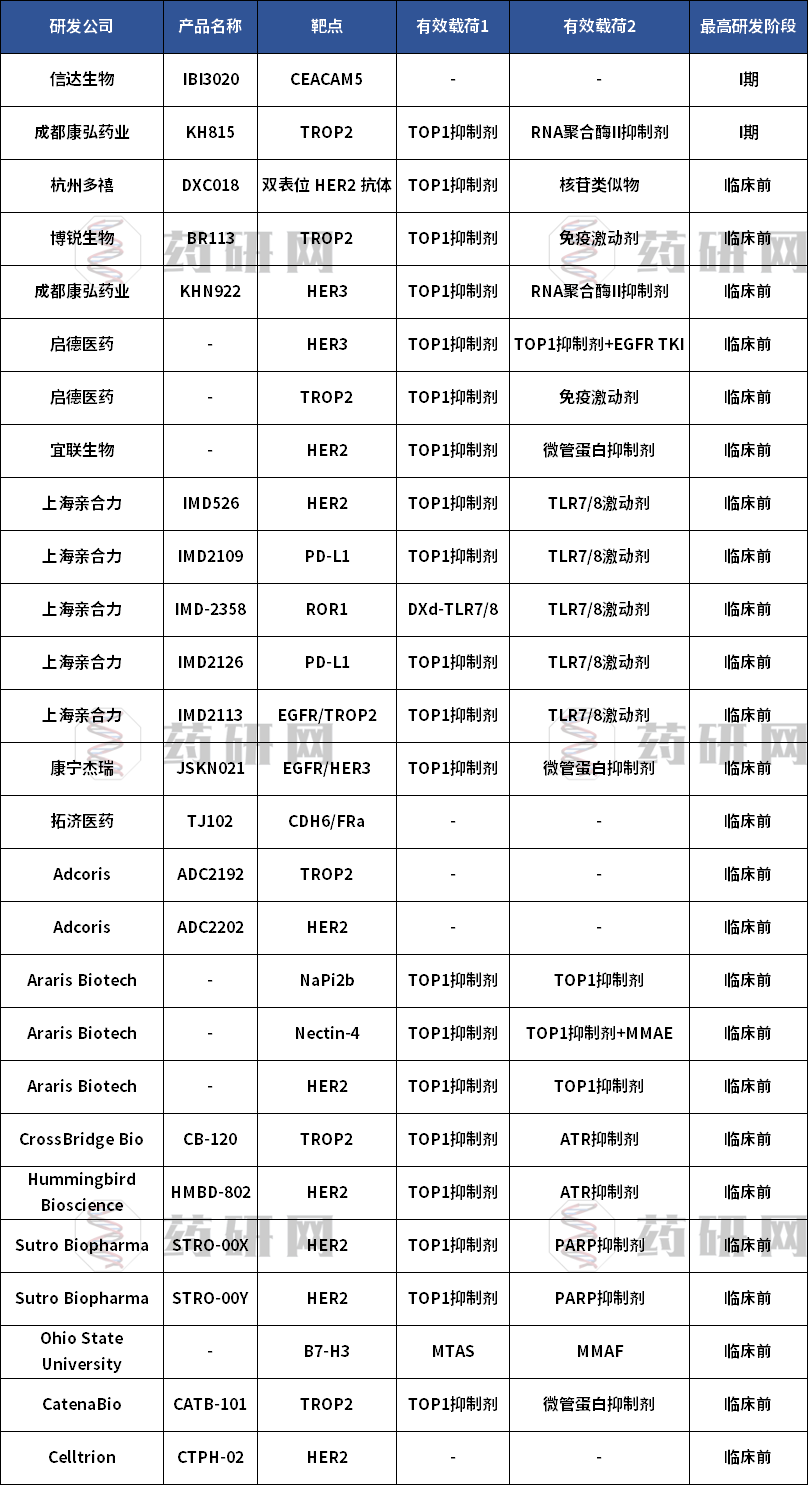
1
Dual Payload ADCs—IBI3020 and KH815
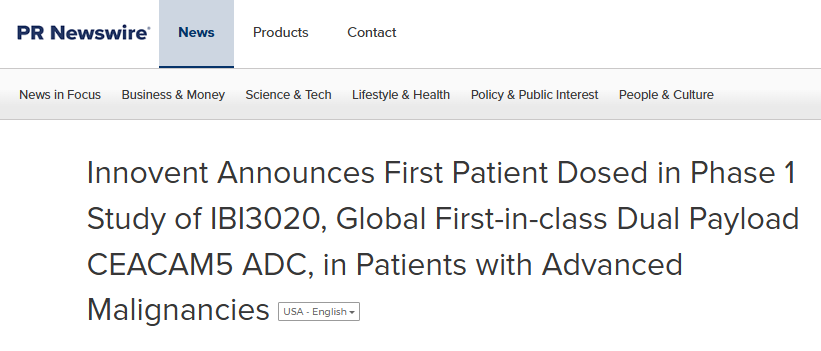
IBI3020 is the first dual payload ADC developed based on Innovent’s proprietary DuetTx platform and is also the world’s first dual payload ADC to begin human trials, currently leading in progress compared to similar products. In April of this year, the first patient was dosed in a Phase I study involving patients with advanced malignancies.IBI3020 targets CEACAM5 and includes two clinically validated payloads. CEACAM5 is a cell surface glycoprotein involved in the adhesion, invasion, and metastasis of cancer cells. It is overexpressed in solid tumors such as colorectal cancer, non-squamous lung cancer, gastric cancer, and pancreatic cancer, but has limited expression in healthy tissues, making it a potentially safe and promising therapeutic target.
Another product, Kanghong Pharma’s KH815, is in Phase I trials; its asset targets the TROP2 molecule and has topoisomerase 1 inhibitor and RNA polymerase 2 inhibitor payloads. The study was originally planned to start Phase I trials in April, but it appears that patient recruitment has not yet begun.
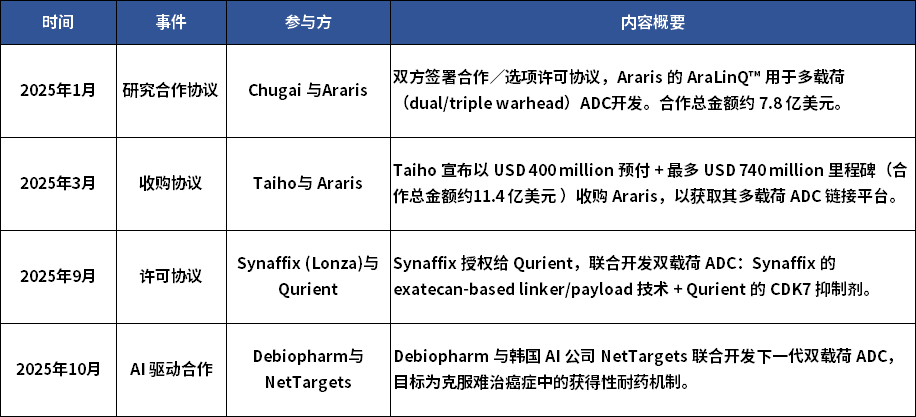
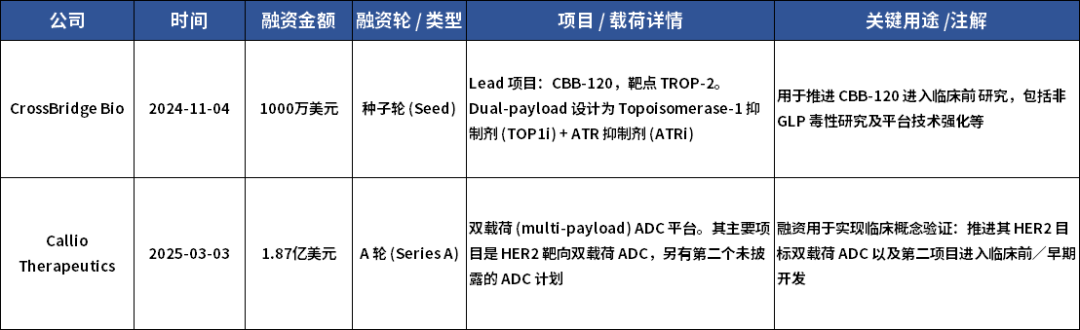
Overall, Chinese biotech companies are leading in preclinical development, while foreign companies are more active in financing and collaboration, as detailed in the table below.
Overview of dual payload ADC transactions
Overview of dual payload ADC financing
2
Dual Payload PDC: Avacta Company Leads
In the dual payload PDC field, Avacta Therapeutics stands out with its dual payload pre|CISION technology.
According to Labiotech, the CEO of Avacta revealed: “The connection technology we developed can link two independent drug molecules to the pre|CISION peptide chain, which will release these drug molecules when a single FAP (fibroblast activation protein) cleavage occurs in the tumor microenvironment. Avacta’s proprietary pre|CISION peptide is the foundation of its drug delivery platform, which targets FAP in solid tumors.”
FAP is a protease expressed on the extracellular surface of 90% of human solid tumor stromal cells. The key aspect of FAP-mediated extracellular payload release has two characteristics: first, the pre|CISION peptide is highly selective for FAP and is not activated by other proteases, creating a highly specific tumor release mechanism; second, based on the extracellular release characteristics, this therapy can significantly activate the bystander effect—meaning the released payload can kill both FAP-positive cells in the stroma and FAP-negative tumor cells.
Avacta has one single payload PDC candidate drug that has entered the clinical stage, and recent preclinical data shows that its dual payload pre|CISION technology demonstrates strong FAP selective delivery capabilities and significant antitumor activity across various complementary payload combinations.
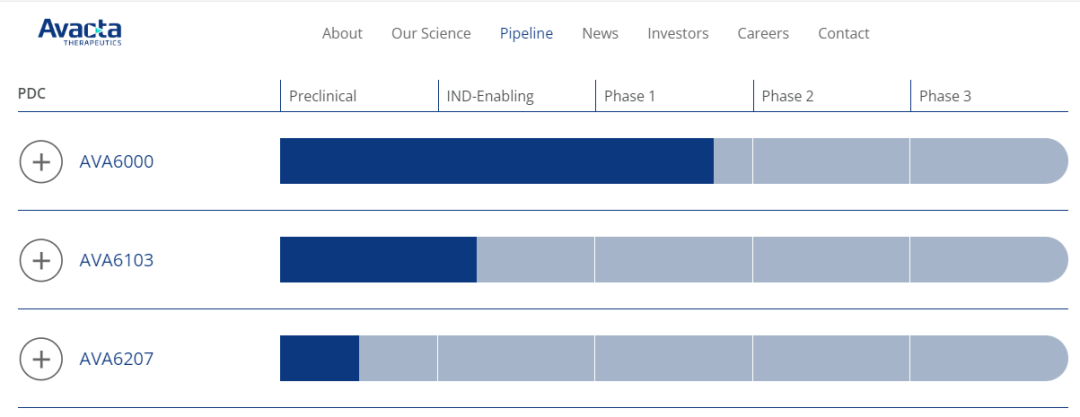
As the first mover in this market, Avacta has developed a combination therapy based on widely used mechanisms—combining topoisomerase I inhibitors (such as exatecan or SN38) with inhibitors of key resistance mechanisms in the DNA damage repair (DDR) pathway.
This combination scheme aims to allow potent anticancer drugs to work by damaging DNA or genetic codes while inhibiting the resistance mechanisms of these drugs. “Such combination therapies will enable us to precisely target cancers that are most likely to develop resistance to topoisomerase I inhibitors,” said the CEO of Avacta. “With our strategic partnership with Tempus, we will use artificial intelligence to optimize combination scheme design based on observed resistance mechanisms in human cancers. Our dual payload PDC candidate product is expected to be submitted to health authorities in 2027.”
04
Conclusion
The next generation of dual payload drugs aims to enhance tumor clearance rates, delay or prevent resistance, and provide cancer patients with more effective and flexible treatment options. Dual payload ADC/PDC may become the next significant milestone in advancing cancer treatment.
As more candidate drugs progress through preclinical and early clinical research stages, they also highlight the growing potential of precision combination therapies in oncology. We look forward to seeing more dual payload candidates experience explosive growth, similar to bispecific antibodies.
References
1.Wen M, Yu A, Park Y, Calarese D, Gerber HP, Yin G. Homogeneous antibody-drug conjugates with dual payloads: potential, methods and considerations. MAbs. 2025 Dec;17(1):2498162. doi: 10.1080/19420862.2025.2498162. Epub 2025 May 5. PMID: 40322862; PMCID: PMC12054377.
2.Fu C, Yu L, Miao Y, Liu X, Yu Z, Wei M. Peptide-drug conjugates (PDCs): a novel trend of research and development on targeted therapy, hype or hope? Acta Pharm Sin B. 2023 Feb;13(2):498-516. doi: 10.1016/j.apsb.2022.07.020. Epub 2022 Aug 3. PMID: 36873165; PMCID: PMC9978859.
3.https://www.labiotech.eu/in-depth/dual-payload-adcs-pdcs/
4.https://www.clinicaltrials.gov/study/NCT06885645
End
Disclaimer: All articles published by this public account (including original and reprinted articles) are intended to convey more information and are credited to their sources and authors. This public account welcomes sharing in friend circles or large groups, and prohibits media or institutions from reprinting to other platforms without authorization..Reprint/Business/Submission | Contact WeChat15618157102(sum_Gmi) Business Cooperation
 Call for Papers
 Click to learn more
Previous Issues
Has the innovation drug bubble burst?
Mid-term review of innovative drugs: a new starting point after the bubble is squeezed
October: Overview of financing for 17 domestic biopharmaceutical companies