FlexRay is a brand new bus and communication system, with a maximum data transfer rate of up to 10 MBit/s for each channel, making FlexRay a very high-speed communication system. The data transfer speed of FlexRay is significantly faster than the previously widely used data buses in the body, drive, and chassis areas (such as K-CAN, PT-CAN, and K-CAN2). In addition to supporting higher bandwidth, FlexRay also supports deterministic data transmission and can be configured for fault tolerance. In simple terms, even if individual components on the FlexRay bus fail, the remaining system can still communicate normally.
FlexRay connects with other bus systems through a Central Gateway Module (ZGM) (Figure 1). To achieve synchronized execution of functions in the connected control units, a unified time base is required. Since each control unit operates with its own clock generator, time matching must be performed via the bus. When the Central Gateway Module is activated, ZGM, DSC, ICM, and DME act as nodes to provide synchronization. To ensure fault-free synchronization of FlexRay, at least two control units must communicate with ZGM. For example, if DSC fails, ICM and DME can be used as synchronization nodes. If there is a fault in FlexRay, ZGM, ICM, DSC, DME, and related lines need to be checked. There are two terminal resistors on each path of the FlexRay bus, each with a resistance value of 97Ω, and the resistance value of the two terminal resistors in parallel is 48.5Ω.
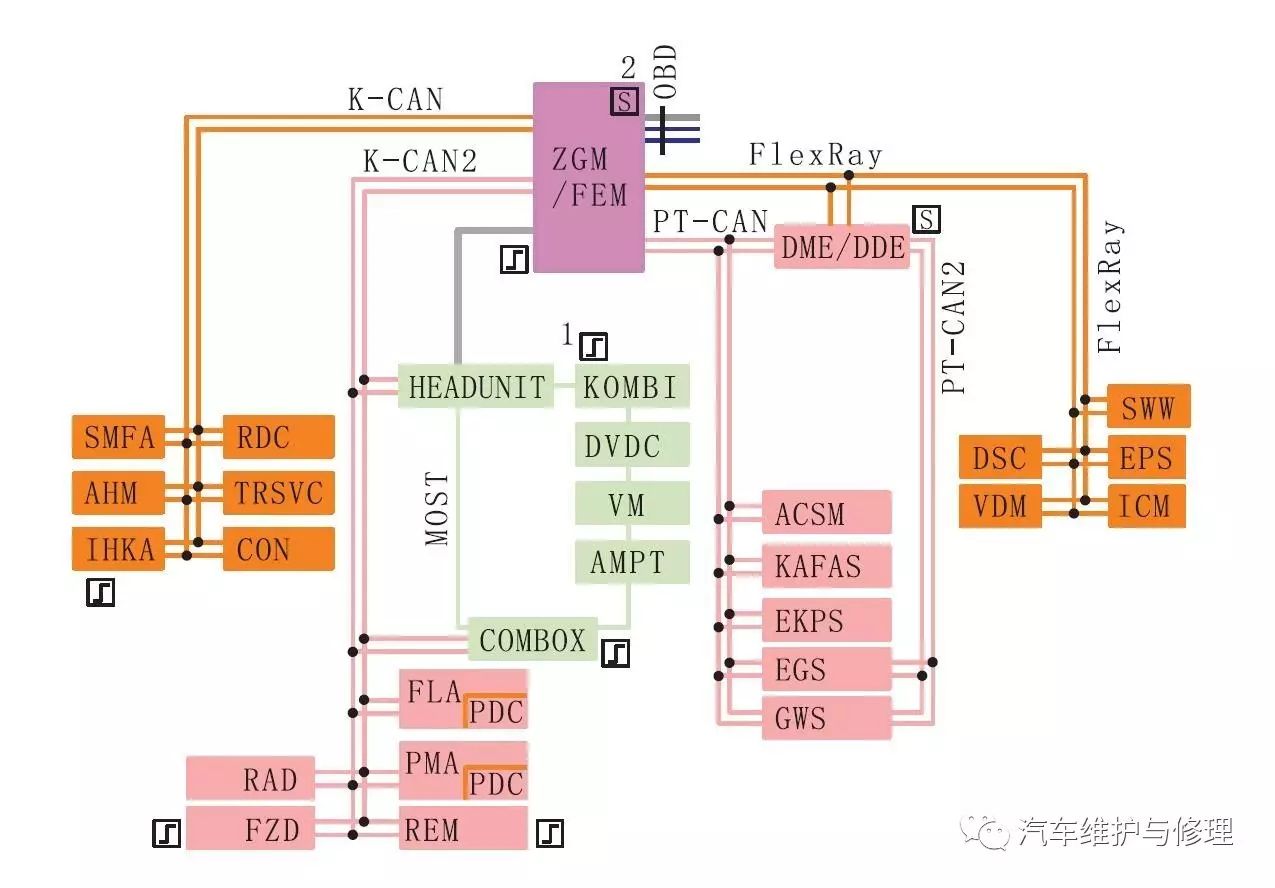
Figure 1: FlexRay connects with other bus systems through the Central Gateway Module (ZGM).
When there is a fault in the FlexRay bus system, if the entire system is down, the focus of fault diagnosis can be placed on the Central Gateway Module or a fault in FlexRay path 0. Any fault occurring in paths other than path 0 will not cause the rest of the system to stop working. Path 0 must have at least two control units communicating with the Central Gateway Module to be considered functioning normally.