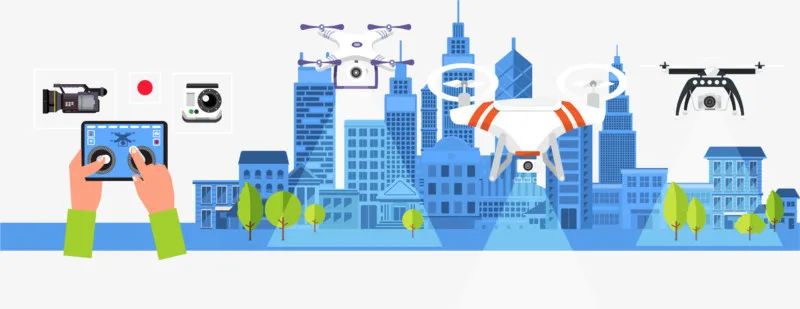

Have you ever wondered about the difference between model aircraft and drones, both of which can fly?
Having discussed the promising prospects and broad employment opportunities for drones, today, let’s delve into what exactly a drone is and introduce the principles of drone flight.
Question
What is a Drone?
A drone, or Unmanned Aerial Vehicle (UAV), is a type of aircraft that is controlled remotely using radio equipment and onboard programmed control devices. It can complete complex aerial tasks and various payload missions without a pilot on board, functioning as an “aerial robot.”
Drone System
Flight Control System
The flight control system is the brain of the drone, enabling it to take off, fly, perform tasks, and return for recovery. It generally consists of three main components: sensors, onboard computers, and servo actuators. The primary functions include maintaining drone stability and control, managing drone task equipment, and emergency control.
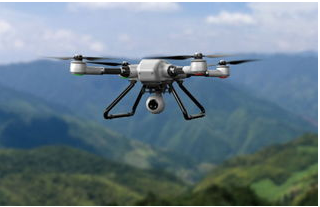
The flight control system is crucial for drones, similar to the role of a pilot in manned aircraft. To achieve higher detection precision and resolution, drones worldwide are increasingly adopting new technologies such as hyperspectral imaging and synthetic aperture radar.
The foundation of the flight control system lies in the various sensors installed within the drone, which are key to ensuring control accuracy. The significant difference between drones and model aircraft is whether they possess a flight control system.
Navigation System
The navigation system provides the drone with reference coordinates for position, speed, and flight attitude, guiding it along a designated flight path, acting as the drone’s “eyes.” The positioning work of the drone is primarily accomplished by the navigation system.
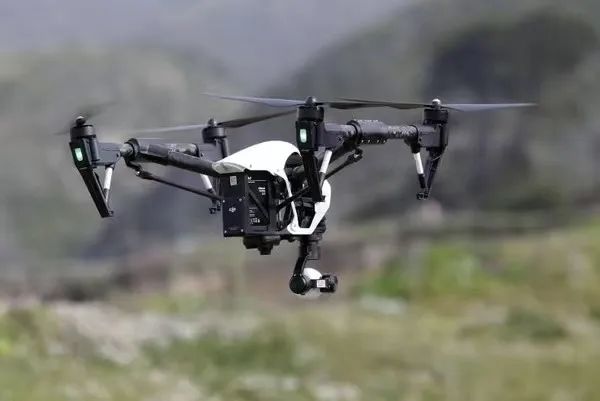
Drone navigation systems are mainly divided into non-autonomous (like GPS) and autonomous (inertial guidance) types, each with their respective disadvantages of susceptibility to interference and accumulating errors. However, as application scenarios expand and consumer demand increases, future drone development will require features such as obstacle avoidance, material or weapon delivery, and automated landing, leading to a navigation technology model that combines multiple navigation technologies: “inertial + multi-sensor + GPS + electro-optical navigation systems.”
Power System
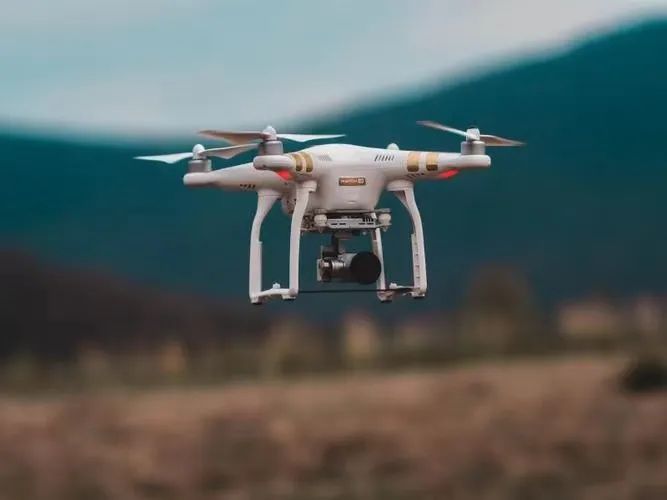
The power system of a drone typically consists of electric motors and internal combustion engines, with most mainstream models currently relying on electric motors. The power system primarily includes motors, electronic speed controllers (ESC), propellers, and batteries, functioning as the heart of the drone.
-
Motor: A device that converts electrical energy into mechanical energy, with brushed and brushless types. Drones primarily use brushless motors.
-
ESC: Its main function is to adjust the voltage for rapid speed control of brushless motors.
-
Propeller: A device that converts the engine’s rotational power into lift.
The numbers on the propeller blades represent:
For example, an 8540F propeller, we can break down the numbers into 85 and 40, representing a diameter of 8.5 inches and a pitch of 4.0 inches, respectively, with F indicating that it is foldable.
-
Battery: The batteries on drones are generally soft-pack polymer lithium batteries, characterized by high energy density, lightweight, and high current resistance.
Data Link
The drone’s data link is responsible for remote control, telemetry, tracking, positioning, and sensor data transmission. The uplink data link enables remote control of the drone, while the downlink data link performs telemetry and data transmission functions, serving as the bridge between the aircraft and ground systems.
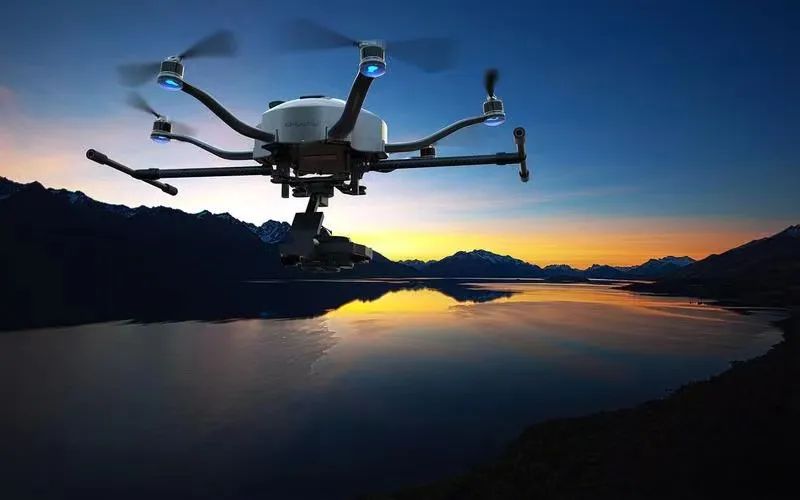
Currently, most ordinary drones use custom line-of-sight data links, while medium to high-altitude, long-endurance drones typically adopt both line-of-sight and beyond-visual-range satellite communication data links. With continuous advancements in modern data link technology, drone data links will become faster and more resistant to interference.
As the drone data link evolves towards high-speed, broadband, and anti-jamming capabilities, the practical application of drones will also strengthen.
To master drone operation, learning and understanding drone system knowledge is an essential and critical step. For a more systematic study of drone-related knowledge, it is advisable to choose a reliable institution for systematic learning.
That’s all for today’s content. If you have any other questions, feel free to leave a comment below, and don’t forget to click on the original text to receive free course materials and experience courses.

Global Hawk Drone Flight Base
Global Hawk Drone Co., Ltd. is a leading comprehensive service provider in the drone field, integrating industrial-grade drone product research and development, industry application solutions, application services, education and training, and school-enterprise cooperation. Its business covers smart cities, military and police, railways, new energy, agriculture, and more, serving over 1,000 enterprises and institutions, cultivating over 30,000 drone elite talents, and boasting professional teaching resources, making it the “Huangpu Military Academy” in the drone field. Come to Global Hawk to learn, where you can earn multiple certifications and high-paying job recommendations, all aimed at cultivating high-quality technical talents in the drone industry.
Disclaimer: Some materials above are sourced from the internet; please contact us for removal if there is any infringement.
 Beginner Science Popularization | Why Get a Drone License?
Are you still confused about the different types of drone certificates?
Drone Science Popularization | What Role Can Drones Play in Firefighting and Rescue?
Agricultural Drones Will Replace Humans, with a Talent Gap Expected to Reach 400,000!
Must-Have for Pilots! Drone Airspace Declaration Process for All 34 Provinces and Cities!
Enrollment Guide | Everything You Want to Know About Global Hawk Drone Flight Academy Is Here
Agricultural Drones Will Replace Humans, with a Talent Gap Expected to Reach 400,000!
I Earned Over 10,000 Monthly from My Side Job with a Salary of 4,000, Drones Are the Way!
Top 10 Trends in the Drone Industry for 2023, the Third One Has the Highest Potential!
Detailed Content of the Temporary Flight Management Regulations, the Last One Is the Most Important!
Is It Easy to Get a Drone License? The Most Detailed Certification Process Is Here!
Legal Knowledge Every Pilot Must Know, Don’t Violate Regulations!