Pathophysiological Mechanisms of Lymph Node Metastasis Differences Between HCC and ICC: Anatomical, Molecular Biology, and Microenvironment Factors

Pathophysiological Mechanisms of Lymph Node Metastasis Differences Between HCC and ICC: Anatomical, Molecular Biology, and Microenvironment Factors

1. Introduction: Differences in Metastasis of Malignant Liver Tumors Primary liver cancer is the third leading cause of cancer-related deaths worldwide, with hepatocellular carcinoma (Hepatocellular Carcinoma, HCC) and intrahepatic cholangiocarcinoma (Intrahepatic Cholangiocarcinoma, ICC) being the two main histological types, accounting for approximately 75%-85% and 10%-15% of primary liver cancer cases, respectively 1. Although both malignancies … Read more
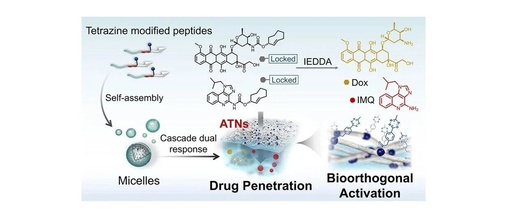

Self-Assembly of Artificial Topological Nanostructures for Enhanced Bioorthogonal Activation and Drug Penetration in Cancer Immunotherapy

Self-Assembly of Artificial Topological Nanostructures for Enhanced Bioorthogonal Activation and Drug Penetration in Cancer Immunotherapy

1. Research Background Despite significant efforts by scientists in developing cancer vaccines based on new antigens or mRNA, most research still focuses on the preventive stage. Eliciting substantial anti-tumor immune responses in patients remains a major challenge, primarily due to the weak immunogenicity of cancer vaccines, the immunosuppressive tumor microenvironment, and the low correlation between … Read more

Opportunities for Newcomers in ADC Drugs Amid Challenges!

Opportunities for Newcomers in ADC Drugs Amid Challenges!

Click to follow Xiaobai Learning MedicineIntroduction: Since the approval of the first ADC drug Mylotarg® (Gemtuzumab Ozogamicin) in 2000, the number of ADC drugs has exploded, with 14 types of ADCs approved for market, and hundreds of ADC drugs undergoing clinical trials for various tumor indications. While ADCs are effective, their clinical development and application … Read more

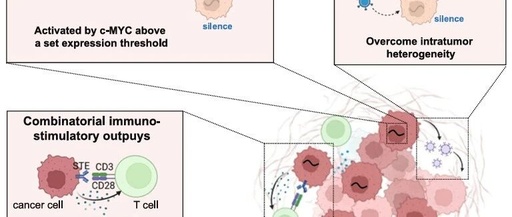
Reprogramming the Tumor Microenvironment with c-MYC-Based Gene Circuit Platform to Enhance Specific Cancer Immunotherapy

Reprogramming the Tumor Microenvironment with c-MYC-Based Gene Circuit Platform to Enhance Specific Cancer Immunotherapy

Hello everyone, today I will introduce an article published in Nature Communications titled “Reprogramming the tumor microenvironment with c-MYC-based gene circuit platform to enhance specific cancer immunotherapy.” The corresponding authors of this article are Dr. Xu Chen and Professor Tianxin Lin from Sun Yat-sen University Affiliated Sun Yat-sen Memorial Hospital, whose main research directions include … Read more

Fatty Acid Metabolism Characteristics in Clonorchis sinensis Related Intrahepatic Cholangiocarcinoma

Fatty Acid Metabolism Characteristics in Clonorchis sinensis Related Intrahepatic Cholangiocarcinoma

Intrahepatic cholangiocarcinoma (ICC) is a malignant tumor originating from the epithelial cells of the secondary and higher bile ducts, and it is the second most common primary liver cancer. In recent years, the incidence and mortality rates of ICC have been rising globally. Clonorchis sinensis (referred to as “liver fluke”) has been classified as a … Read more

Research Perspective: Single Neuron – Single Cell Resolution Trace-n-seq

Research Perspective: Single Neuron - Single Cell Resolution Trace-n-seq

The peripheral nervous system (PNS) coordinates organ function in health and disease. Most cancers, including pancreatic ductal adenocarcinoma (PDAC), are associated with PNS neurons, leading to a complex tumor microenvironment (TME). However, neuronal cell bodies exist in various PNS ganglia, away from tumor masses. Therefore, neurons innervating cancer or healthy organs have evaded current tissue … Read more

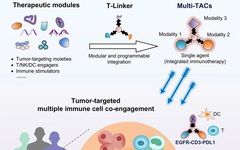
Multimodal Targeting Chimeras Enable Integrated Immunotherapy

Multimodal Targeting Chimeras Enable Integrated Immunotherapy

Immunotherapy has revolutionized cancer treatment by mobilizing the body’s immune system to eliminate tumors. However, despite significant clinical success in certain types of liquid tumors, the efficacy of immunotherapy remains poor in most solid tumors. The tumor immune microenvironment (TIME) is complex and heterogeneous, with various immune components interacting, which is a major reason affecting … Read more

Mechanisms And Clinical Translation Of Intrahepatic Cholangiocarcinoma In The Era Of Precision Medicine

Mechanisms And Clinical Translation Of Intrahepatic Cholangiocarcinoma In The Era Of Precision Medicine

1Overview Of Intrahepatic Cholangiocarcinoma (ICC) Cholangiocarcinoma can be classified based on its anatomical location into ICC, perihilar cholangiocarcinoma, and distal cholangiocarcinoma[1]. ICC has a high incidence in East and Southeast Asian countries, with the highest incidence in Thailand, followed by China[2]. Studies[3] indicate that in recent years, the incidence and mortality rates of ICC have … Read more

3D Bioprinting and Organoid Technology: Biofabrication of Multicellular Organoid Models to Recreate the Real Tumor Microenvironment

3D Bioprinting and Organoid Technology: Biofabrication of Multicellular Organoid Models to Recreate the Real Tumor Microenvironment

The incidence of renal cancer is rising year by year, placing a heavy burden on patients and their families. Clinically, Renal Cell Carcinoma (RCC) patients are insensitive to chemotherapy, and the efficacy of targeted therapies varies from person to person, making the formulation of precise treatment plans a challenge. Tumor heterogeneity is considered a key … Read more

Bibliometric Insights into Breast Cancer Organoid Chips: Trends & Emerging Areas

Bibliometric Insights into Breast Cancer Organoid Chips: Trends & Emerging Areas

[Yangtze Alliance Reading 365 Day 267] “Bibliometric Insights into Breast Cancer Organoid Chips: Trends & Emerging Areas“ published in “Int J Surg“Breast cancer is a highly prevalent malignant tumor among women worldwide, and its treatment faces challenges due to the diversity of genetic mutations and individual patient differences. Organoid chip technology provides new tools for … Read more