Since the second quarter, the AI-related chip market has been experiencing an unprecedented price storm. Why has the long-standing AI boom this year been concentrated in chip prices?
Previously, AI technology was mostly limited to model training and small-scale validation, with major internet companies focusing on exploration and testing, resulting in relatively low business penetration. However, this year, AI businesses have entered a high penetration phase: AI products have matured and gone live, significantly increasing business penetration, while traditional internet products are accelerating AI reconstruction, leading to a notable increase in user interaction frequency. The substantial increase in demand has directly triggered a surge in prices across various AI-related chip categories, from GPUs to optical module chips, and ASICs, ultimately affecting the storage chips that directly build the AI computing power foundation.
According to the latest forecast from Counterpoint Research, storage prices are expected to rise by another 30% by the end of 2025, with a further increase of 20% in the first half of 2026. This phenomenon appears to be price fluctuations on the surface, but behind it lies a technological revolution that is fundamentally reshaping the traditional industry landscape.

Industry Cyclicality and Surging AI Demand Drive Chip Price Increases
Industry analysts point out that, on one hand, the rise in chip prices continues the inherent cyclical fluctuations of the industry, with price fluctuations being a normal reflection of market supply and demand relationships; on the other hand, the core driving force behind this surge is the explosive growth of the AI industry. Driven by both industry cyclicality and surging AI demand, the price increase trend has spread from the core AI GPUs to key areas such as optical module chips required for high-speed connections within data centers and dedicated chips (ASICs) for specific AI tasks, further exacerbating the current global tension in chip manufacturing and packaging capacity. Among these, the price fluctuations of storage chips are particularly pronounced, with shortages and price increases continuing to impact hardware OEM and ODM manufacturers. The soaring prices of storage chips have left mobile phone manufacturers in a predicament of “having money but unable to secure goods,” with some manufacturers even slowing down their procurement pace to avoid further profit losses.
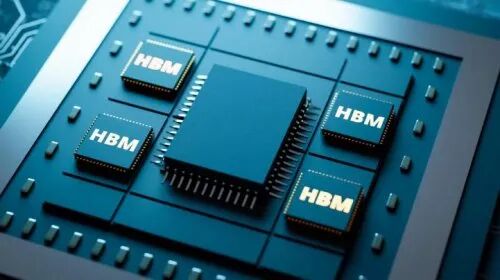
The reason for the soaring prices of storage chips is that the market supply side is fully transitioning to HBM products with high bandwidth, low power consumption, and low latency.
Under the massive growth in AI computing power demand, the primary challenge faced is the severe challenge of the “memory wall”—the data transfer speed of traditional memory can no longer meet the massive processing demands of trillion-parameter models. This bottleneck has directly led to the emergence of a new generation of storage standards: High Bandwidth Memory (HBM), which stacks multiple DRAM chips in 3D and utilizes through-silicon vias to achieve a doubling of data transfer speeds, becoming the core storage infrastructure for AI computing power, fundamentally driving market transformation— the DRAM configuration demand for a single AI server has surged to eight times that of traditional servers, which has directly caused pressure on the market supply side.
HBM Demand Crowds Out Traditional Storage Capacity: The DRAM Supply Chain Dilemma Under 3x Capacity Consumption
However, the prosperity of HBM is having a severe impact on traditional DRAM capacity and supply. Micron’s Chief Financial Officer Sumit Sadana publicly stated at the “2025 KeyBank Technology Conference” that, “The structure of HBM is complex, and its wafer capacity consumption is more than three times that of standard DRAM.”
This structural capacity tilt severely crowds out the production resources of general DRAM, directly leading to an expanded supply gap for traditional products like DDR4, and this impact has already manifested globally. Tencent Technology analysis indicates that the direct reason for the rise in memory prices is the demand from AI giants for HBM storage, which crowds out DRAM chip capacity, while the competition for HBM capacity is one of the main factors leading to the current shortage and price increase of general DRAM.
International Capacity Transfer Intensifies the “Chip Shortage,” Pressuring the Downstream Industry Chain
Meanwhile, the market strategy adjustments of leading international manufacturers have further exacerbated supply tightness. According to reports from “Caijing,” in April 2025, international giants such as Samsung, SK Hynix, and Micron have successively announced EOL (End of Life) notifications for DDR4, significantly reducing or halting production of DDR4 products. The storage industry has a strong leading effect, and the simultaneous cessation of production by the three major original manufacturers has directly driven the entire industry to migrate towards DDR5 and HBM capacity, with leading domestic storage manufacturers also quickly adjusting their capacity to keep pace with the global industry rhythm to maintain market competitiveness.
Under the dual impact of capacity transfer and product iteration, the phenomenon of supply “in transition” in the domestic chip market is particularly prominent. In this regard, Zhao Haijun, co-CEO of SMIC, stated that the shortage of storage chip supply and rising prices have led clients in industries such as mobile phones and network communication equipment to be cautious in their procurement. According to TrendForce’s forecast, a supply gap will appear in the general DRAM market by 2026, and the gap between supply and demand is being sharply amplified through price signals.
Industry insiders generally believe that the current rise in chip prices is not dominated by a few manufacturers, but rather a structural transformation in the industry triggered by the development of the AI industry, compounded by the inevitable result of capacity strategy adjustments. With the mass production of new generation products like HBM4, capacity competition will further intensify, and the tight supply-demand situation in the market may be difficult to alleviate in the short term, with chip prices likely to remain high.