 Image source: J. Am. Chem. Soc.Introduction:
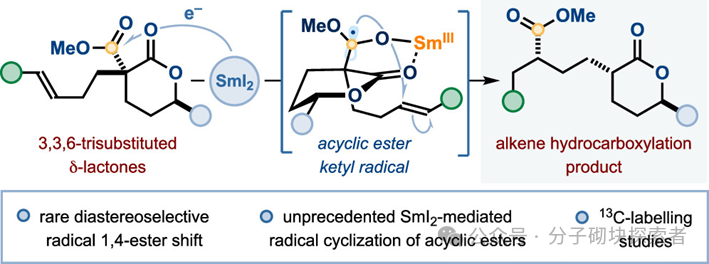
Samarium(II) iodide (SmI₂,Kagan reagent) mediated reduction cyclization reactions of carbonyl compounds provide an important platform for stereocontrolled construction of complex molecular structures. In addition to traditional ketone and aldehyde substrates, recent advances in radical chemistry have enabled lactones and lactams to undergo cyclization via SmI₂. However, acyclic ester compounds are generally considered unreactive with SmI₂, and their participation in reduction cyclization processes has not been reported to date.Professor David J. Procter reported a non-diastereoselective radical 1,4-ester migration process mediated by SmI₂, achieving a stereospecific olefin hydrogen carboxylation reaction through radical cyclization of acyclic ester moieties in α-carbon methoxy δ-lactones. Isotope labeling experiments and theoretical calculations revealed the reaction mechanism of the migration process. It was proposed that conformational changes guide single electron transfer from SmI₂ to the acyclic ester moiety, rather than to the “more reactive” lactone carbonyl. This study opens new avenues for applying elusive carbonyl radical intermediates derived from acyclic esters in SmI₂ mediated reduction cyclization reactions.
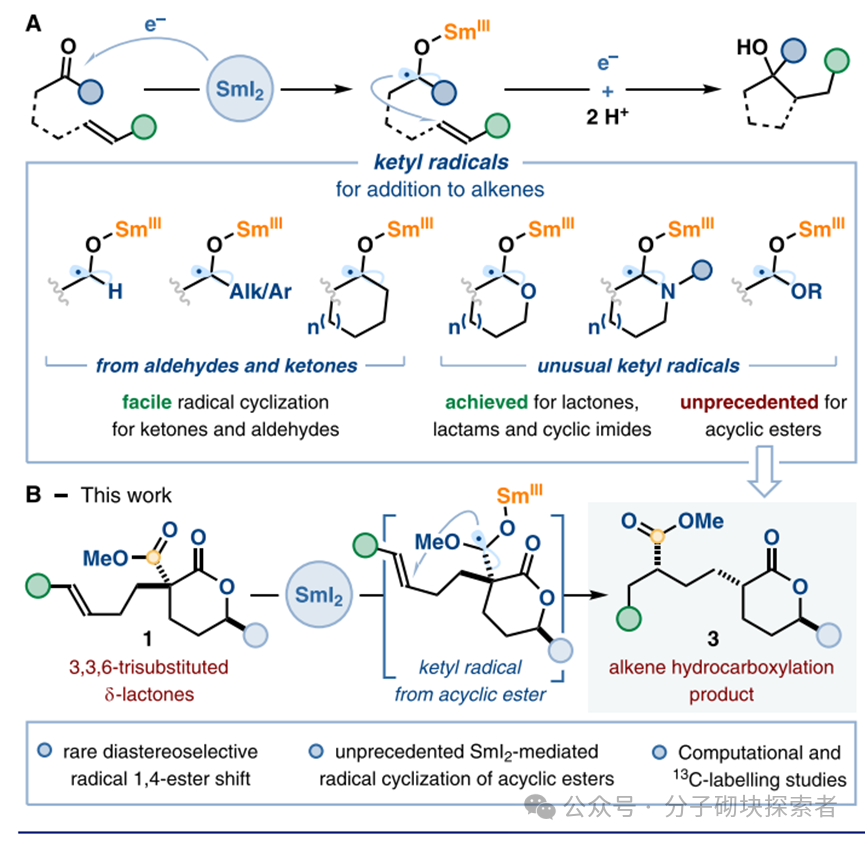
Image source: J. Am. Chem. Soc.
Radical cyclization reactions have become an important synthetic strategy due to their ability to achieve regio- and stereocontrolled construction of complex molecules. Among them, the cyclization reactions initiated by single electron transfer reduction of carbonyl compounds using the classic single electron transfer reducing agent samarium(II) iodide (SmI₂,Kagan reagent) provide a unique polarity reversal strategy—this strategy couples carbonyl units with unsaturated functional groups to prepare structurally modified cyclic molecules (Scheme 1A). For example, carbonyl radicals generated from ketones and aldehydes treated with SmI₂ can undergo efficient intramolecular olefin addition reactions, continuously providing effective solutions for the synthesis of star natural products and bioactive molecules.
Recently, the author’s research group and other teams have successfully achieved single electron transfer reduction of more challenging substrates such as lactams, cyclic imides, and lactone derivatives by using coordinating additives (such as H₂O, phosphoramides, ureas, amines, etc.) to modulate the reactivity of SmI₂, thus expanding the scope of SmI₂ mediated reduction cyclization to more “unconventional” carbonyl radicals. However, acyclic esters have long been regarded as non-reactive substrates for SmI₂, and are often used as inert chelating groups to guide SmI₂ reactions. To fill this synthetic gap, it has been reported that the system of SmI₂·H₂O·Et₃N reduced acyclic esters to corresponding carbonyl radical equivalents. However, the enhanced reducing power of SmI₂ in this system led to excessive reduction of the carbonyl radical intermediates, making them unsuitable for radical cyclization reactions. To date, the SmI₂ reduction cyclization of acyclic esters remains unexplored.
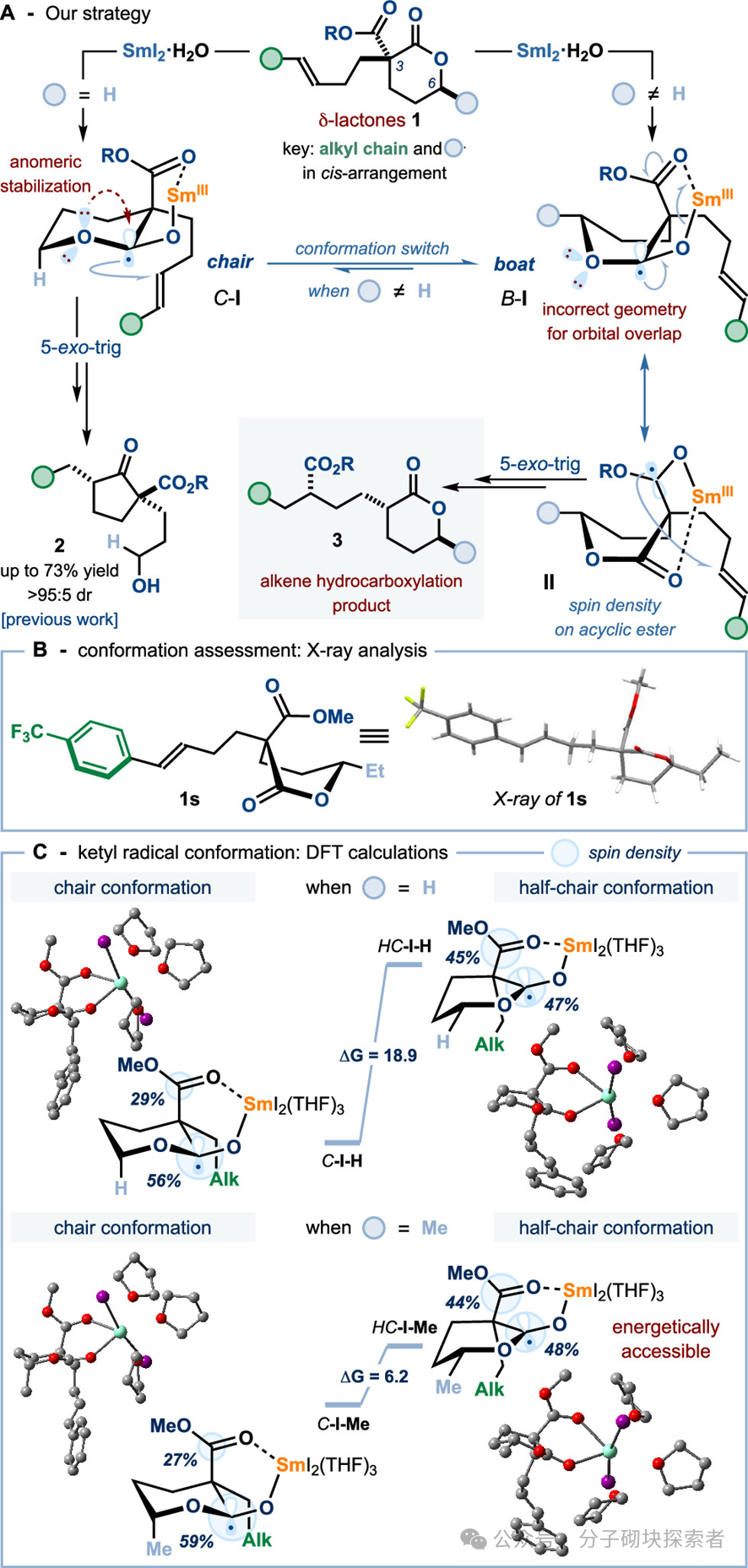 Image source: J. Am. Chem. Soc.
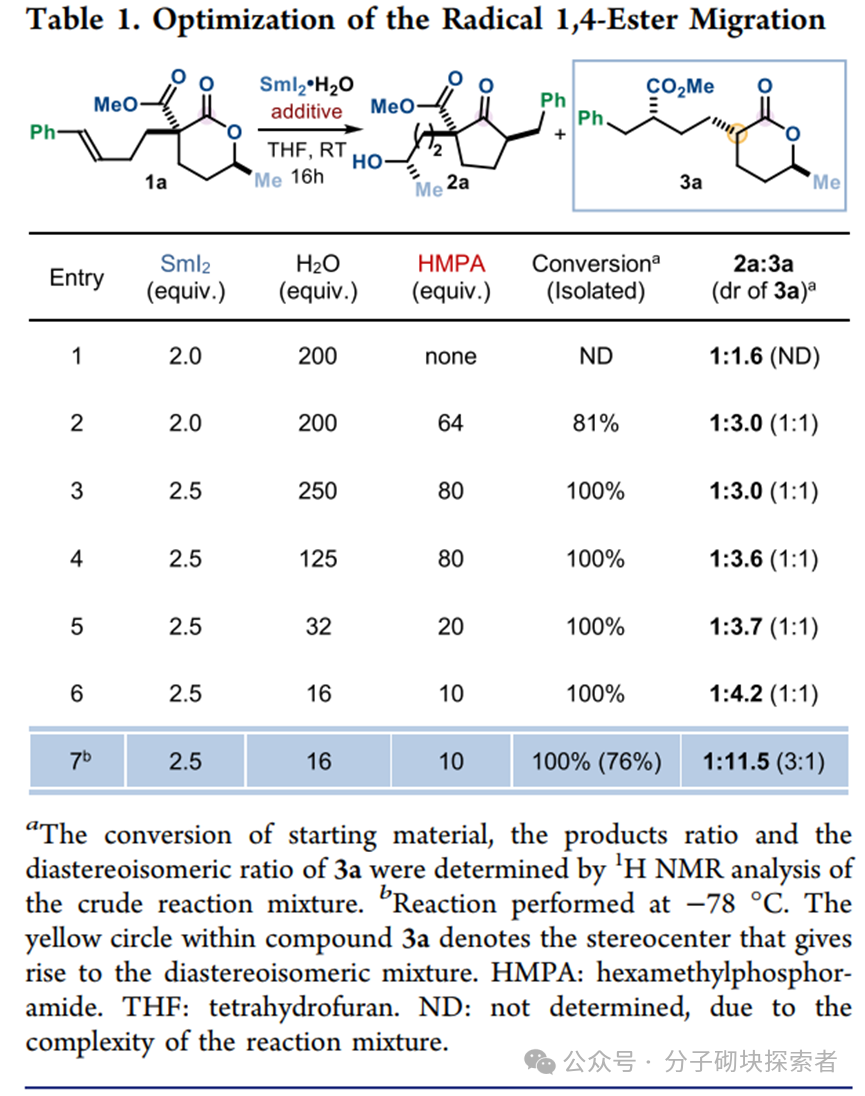 Image source: J. Am. Chem. Soc.
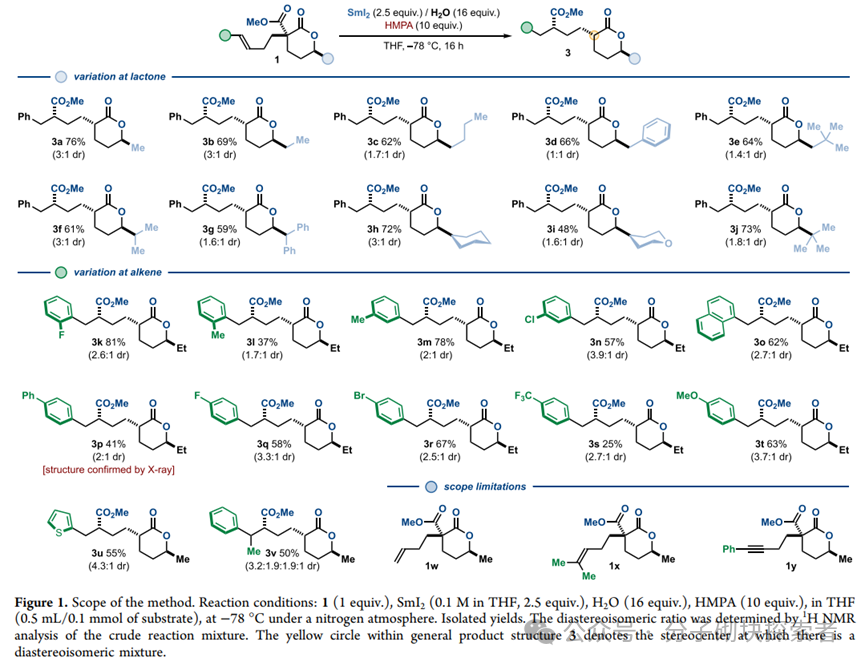 Image source: J. Am. Chem. Soc.
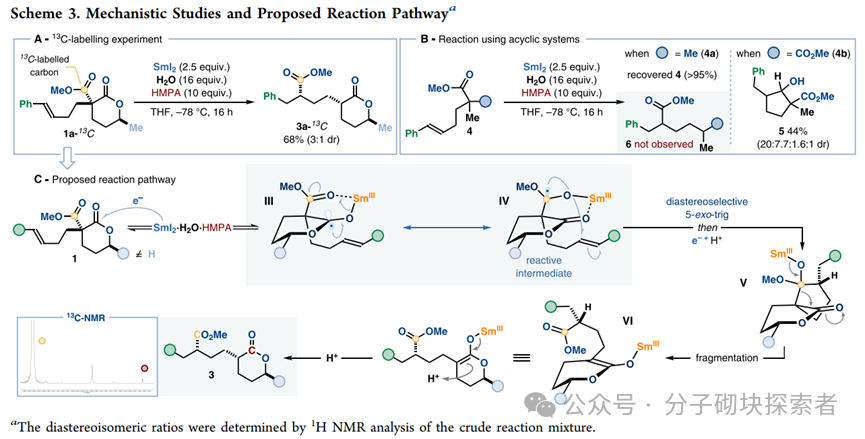 Image source: J. Am. Chem. Soc.
Conclusion:
Under the presence of H₂O and HMPA, SmI₂ mediated an unprecedented reductive radical cyclization reaction of acyclic esters. By altering the substituents on the lactone ring of α-carbon methoxy δ-lactones, conformational changes can redirect the single electron transfer direction of SmI₂ from the “highly reactive” lactone carbonyl to the acyclic ester moiety. The carbonyl radical derived from the ester moiety undergoes 5-exo-trig cyclization, achieving non-diastereoselective radical 1,4-ester migration and forming stereospecific olefin hydrogen carboxylation products. This reaction system is compatible with various functional groups, and the migration process exhibits complete non-diastereoselectivity. This study not only realizes the first SmI₂ mediated coupling of acyclic ester-derived carbonyl radicals with olefins, but also reports an unconventional radical 1,4-ester migration phenomenon, revealing a new paradigm for achieving chemical selectivity control in radical processes through conformational control.
References:
Diastereoselective Radical 1,4-Ester Migration: Radical Cyclizations of Acyclic Esters with SmI2
J. Am. Chem. Soc. 2022, 144, 30, 13946–13952
https://doi.org/10.1021/jacs.2c05972