Over the past half century, the rapid development of the polymer industry has made plastics an indispensable material in modern society. However, due to their excellent durability and low cost, a large amount of plastic waste continues to accumulate in landfills and the natural environment. Among them, durable polymers with carbon-carbon backbones are particularly difficult to degrade and can persist in the environment for decades or even longer. After weathering and fragmentation, this waste ultimately forms microplastics with a particle size of ≤5 mm, which have become a global pollutant found in nearly all ecosystems. Recent studies have confirmed that microplastics have entered human tissues and blood, and are believed to be associated with various health hazards, potentially even inducing cerebral thrombosis. This not only highlights the severity of current plastic pollution but also exposes the limitations of existing end-of-life treatment strategies: polymers labeled as “biodegradable” degrade very slowly in the natural environment and still produce microplastics; while incineration releases greenhouse gases that accelerate global warming.
People are gradually realizing that if a new type of material can be developed that is indistinguishable in appearance and feel from traditional plastics, yet can completely depolymerize into metabolizable small molecular monomers at the end of its life cycle, it may fundamentally alleviate the aforementioned issues. Supramolecular polymers, which connect monomers through reversible non-covalent bonds, provide a highly promising platform to achieve this sustainable goal. Traditional views hold that the dynamic characteristics of non-covalent bonds often only impart rubber-like softness and deformability to materials, making it difficult to meet the mechanical strength requirements of practical applications. However, recent research has developed a new type of “ionic” supramolecular polymer by combining multivalent charged monomers with oxyanions and guanidine groups, which forms a cross-linked network through salt bridges, significantly enhancing mechanical properties. More importantly, the dynamics of this system can be regulated by electrolytes: carefully designed monomers undergo liquid-liquid phase separation during cross-linking, causing the polymer network to separate from the aqueous phase containing inorganic counterions, thus breaking the dissociation equilibrium and being “locked”; once electrolytes are added, the network can be “unlocked” and rapidly depolymerized. Since salt bridges exhibit both electrostatic and hydrogen bonding effects, they remain extremely stable even in water, allowing the resulting material to demonstrate excellent mechanical strength when not exposed to electrolytes. This supramolecular ionic polymerization can be conducted in water without heating, without the use of catalysts or harmful solvents, and the products can be used directly without complex purification.
To further enrich the performance of supramolecular plastics and expand their raw material sources, research has shifted to polysaccharide biomass carrying multiple oxyanions, such as chondroitin sulfate and DNA, while this work focuses on cellulose, the most abundant biomass on Earth. Cellulose has an annual production of approximately 1.5×10¹² tons, is low-cost, fully biodegradable, and carbon-neutral over its life cycle, making it an ideal substrate for constructing supramolecular plastics. However, cellulose and most of its derivatives are difficult to dissolve in conventional solvents, making processing challenging, and some traditional derivatives (such as nitrocellulose and cellulose acetate) still persist in the environment. To avoid these issues, this study selected carboxymethyl cellulose (CMC), which is FDA-approved, water-soluble, and biodegradable, as the raw material. CMC can be obtained with minimal chemical modification to cellulose, retaining high biocompatibility and environmental metabolic capability. Using hyperbranched polyethyleneimine guanidinium salt (PEIGu) as a cationic ligand, supramolecular ionic polymerization with CMC can yield cellulose-based supramolecular plastics (CMCSP) with excellent mechanical strength; however, this material, while exhibiting high rigidity (Young’s modulus of 10.0 GPa), is relatively brittle. Through repeated exploration, it was found that choline chloride (ChCl), an FDA-approved biodegradable nutrient, can serve as an efficient plasticizer, significantly improving its toughness and flexibility without sacrificing the original optical transparency, processability, seawater depolymerization ability, and closed-loop recycling characteristics of CMCSP, thus achieving a new type of supramolecular plastic with more balanced overall performance.
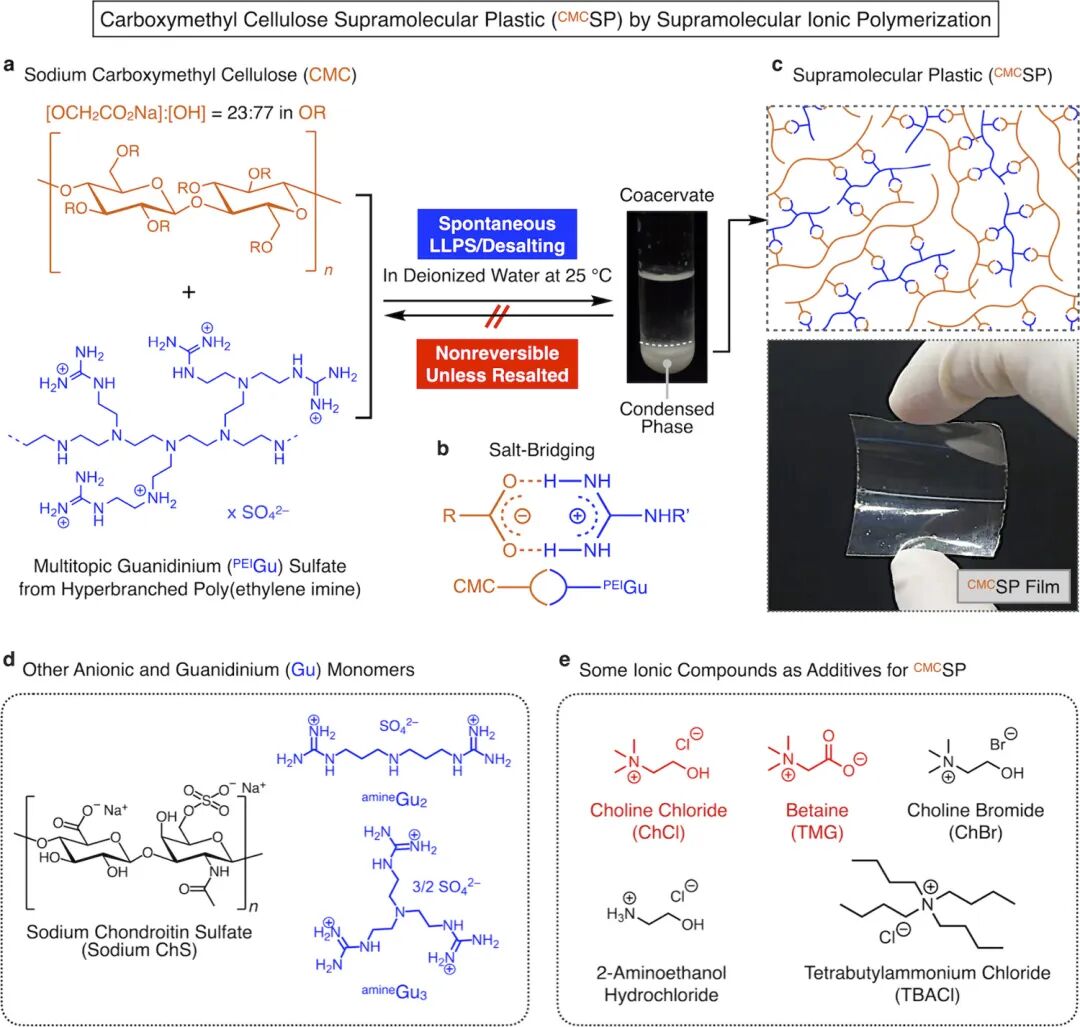
Figure 1. (a) Molecular structure of sodium carboxymethyl cellulose (CMC, orange) and multifunctional guanidinium sulfate (PEIGu, blue) derived from hyperbranched polyethyleneimine. (b) Supramolecular plastic CMCSP is formed by cross-linking CMC and PEIGu in deionized water through multivalent salt bridges, during which liquid-liquid phase separation occurs spontaneously, separating the inorganic counterions of the two monomers into the water-rich upper phase. (c) Collecting and drying the concentrated lower phase composed of the cross-linked polymer network to obtain a transparent CMCSP film. (d) Chemical structures of other multifunctional guanidinium ionic monomers (aminoguanidine 2 and aminoguanidine 3) and chondroitin sulfate sodium (ChS) (previously reported). (e) Chemical structures of ionic additives used to soften CMCSP, where only ChCl and TMG (marked in red) can soften CMCSP.
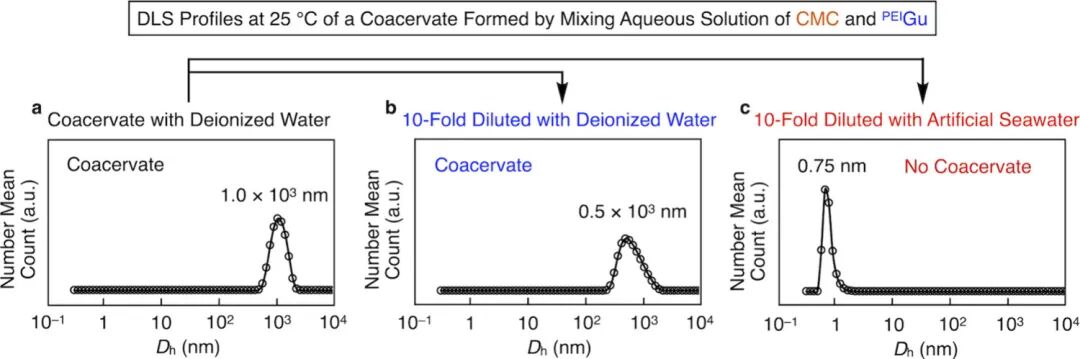
Figure 2. Dynamic light scattering (DLS) spectrum of the aggregated liquid formed by mixing CMC (0.50 wt%) and PEIGu (0.12 wt%) in deionized water at 25°C: before (a) and after (b) 10-fold dilution with deionized water or artificial seawater.
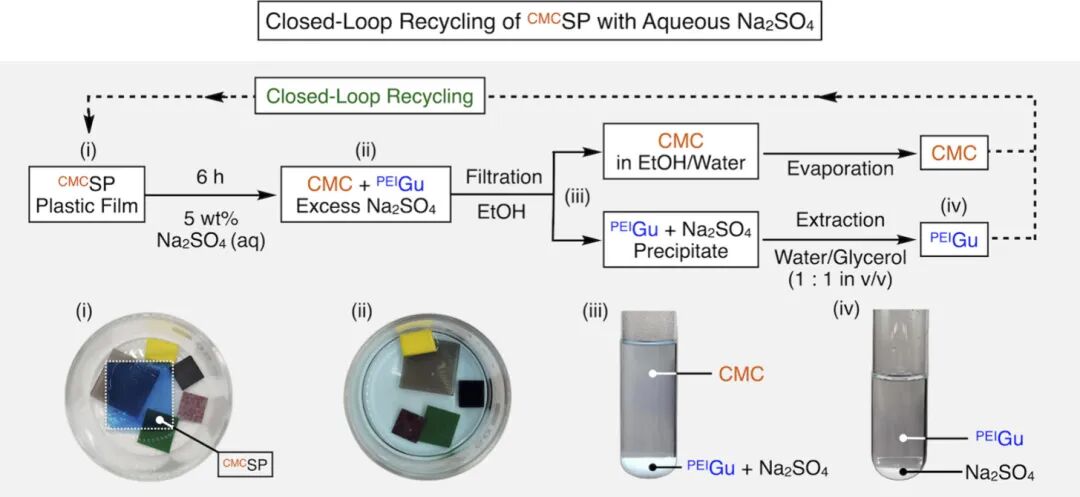
Figure 3. Closed-loop recycling process of CMCSP: after complete dissociation of the supramolecular polymer network in Na₂SO₄ aqueous solution, recovery of CMC and PEIGu is achieved. CMCSP (stained with methylene blue) is incubated in a mixture with commercial plastics (polyethylene, polyvinyl chloride, polystyrene, epoxy resin, and phenolic resin) (i) in Na₂SO₄ aqueous solution at 25°C (ii), where CMCSP is selectively dissolved and releases methylene blue within 6 hours. Adding three times the volume of ethanol to this mixture forms a precipitate mixture containing PEIGu and Na₂SO₄ (iii). PEIGu is extracted from the precipitate using a water/glycerol system (iv). The supernatant from (iii) can be evaporated to obtain CMC.
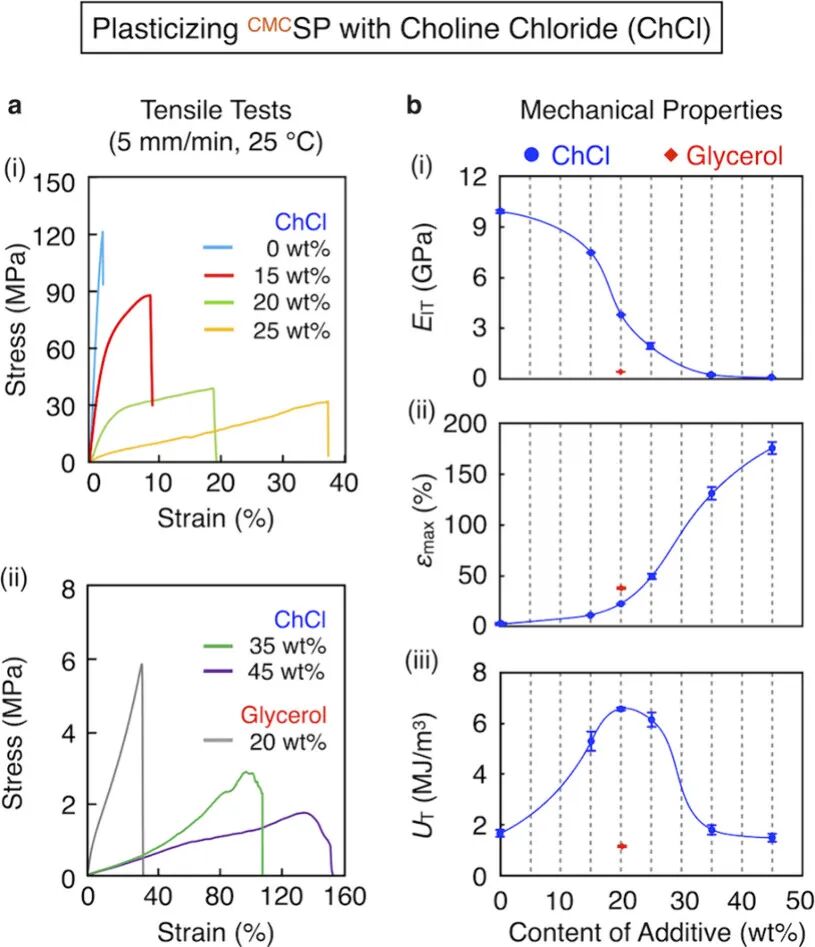
Figure 4. (a) Stress-strain curves of CMCSPChCl ([ChCl] = 0–45 wt%) under tensile testing at 25 °C and 50% relative humidity. (b) Young’s modulus (EIT), maximum elongation (εmax), and toughness (UT) of CMCSPChCl ([ChCl] = 0–45 wt%). The UT value is obtained by integrating the stress-strain curve. The gray curve in (a)(ii) and the red symbols in (b)(i-iii) represent the mechanical properties of CMCSP containing glycerol (20 wt%), with glycerol serving as a representative plasticizer for CMC.
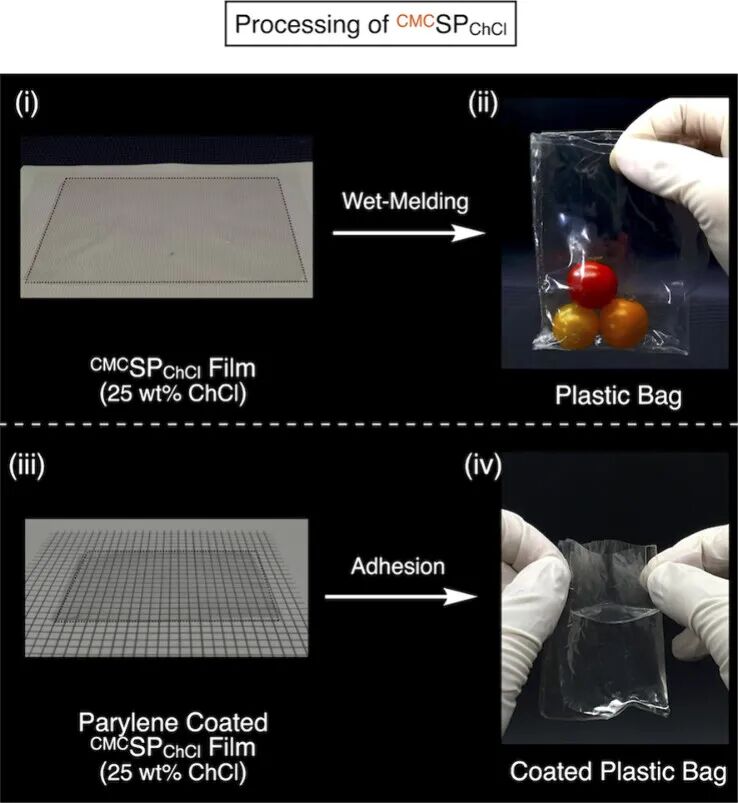
Figure 5. The uncoated CMCSPChCl flexible film ([ChCl] = 25 wt%) (i) is folded and subjected to wet melt treatment at its edges, resulting in a flexible and durable plastic bag (ii), which dissolves in artificial seawater (see supplementary video S2). The CMCSPChCl film coated with polyimide (iii) and the plastic bag (iv) can withstand freshwater and seawater environments.
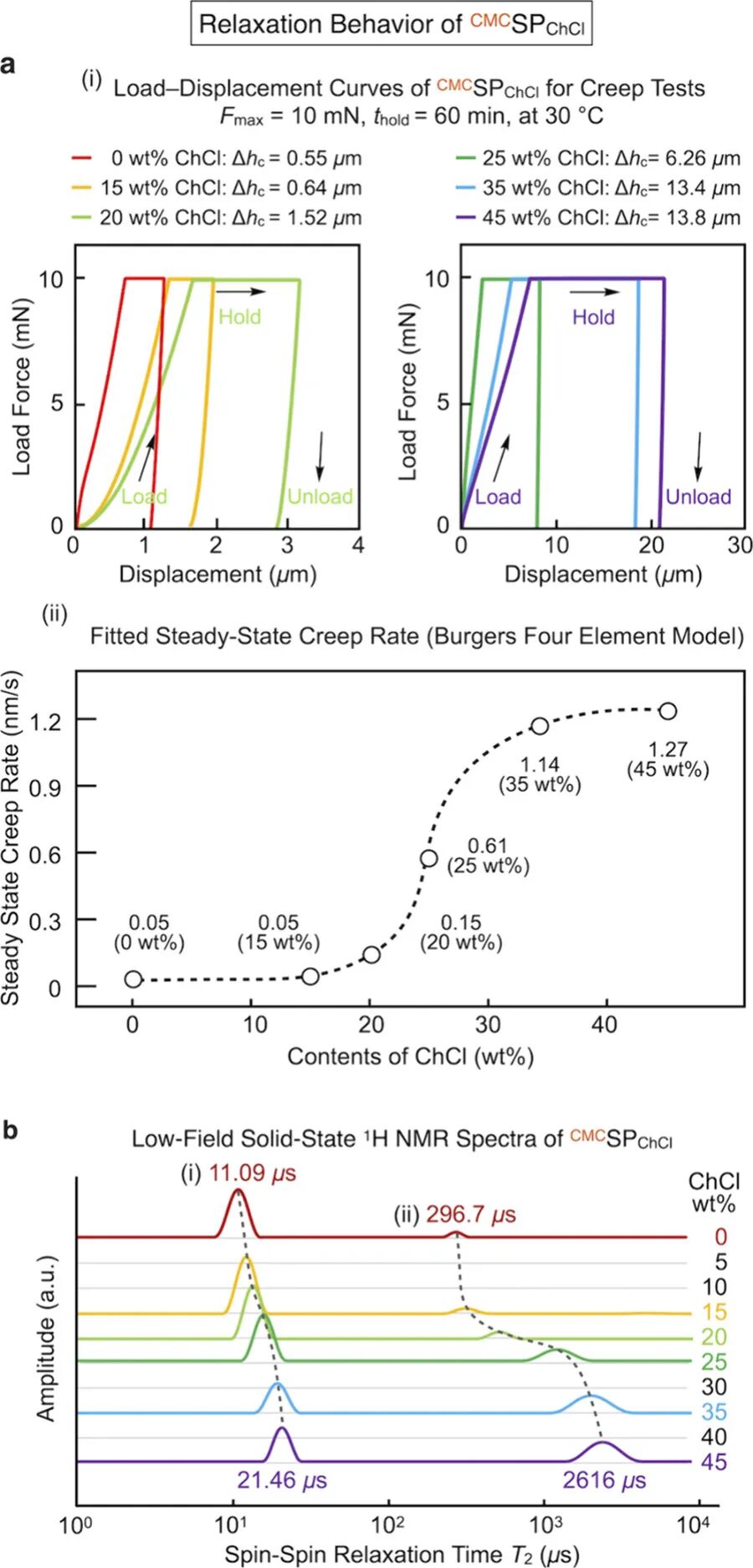
Figure 6. (a) Load-displacement curves of CMC-SP-ChCl ([ChCl] = 0–45 wt%) obtained through nanoindentation testing, where the creep depth Δhc is measured at 30 °C, with a maximum load (Fmax) of 10 mN and a holding time (thold) of 60 min. (ii) The relationship curve of steady-state creep rate dh/dt with the content of chlorinated styrene, yielding a critical seepage threshold of approximately 25 wt%. The dh/dt value is obtained by fitting the time-dependent creep curve using the Burgers four-element model. (b) Low-field solid-state ¹H NMR spectra of CMC-SP-ChCl ([ChCl] = 0–45 wt%) at 50°C. Two sets of spin-spin relaxation time T₂ peaks appear, showing different dependencies on ChCl content. Peaks (i) and (ii) show a gradual and abrupt trend of T₂ with [ChCl] variation, respectively.
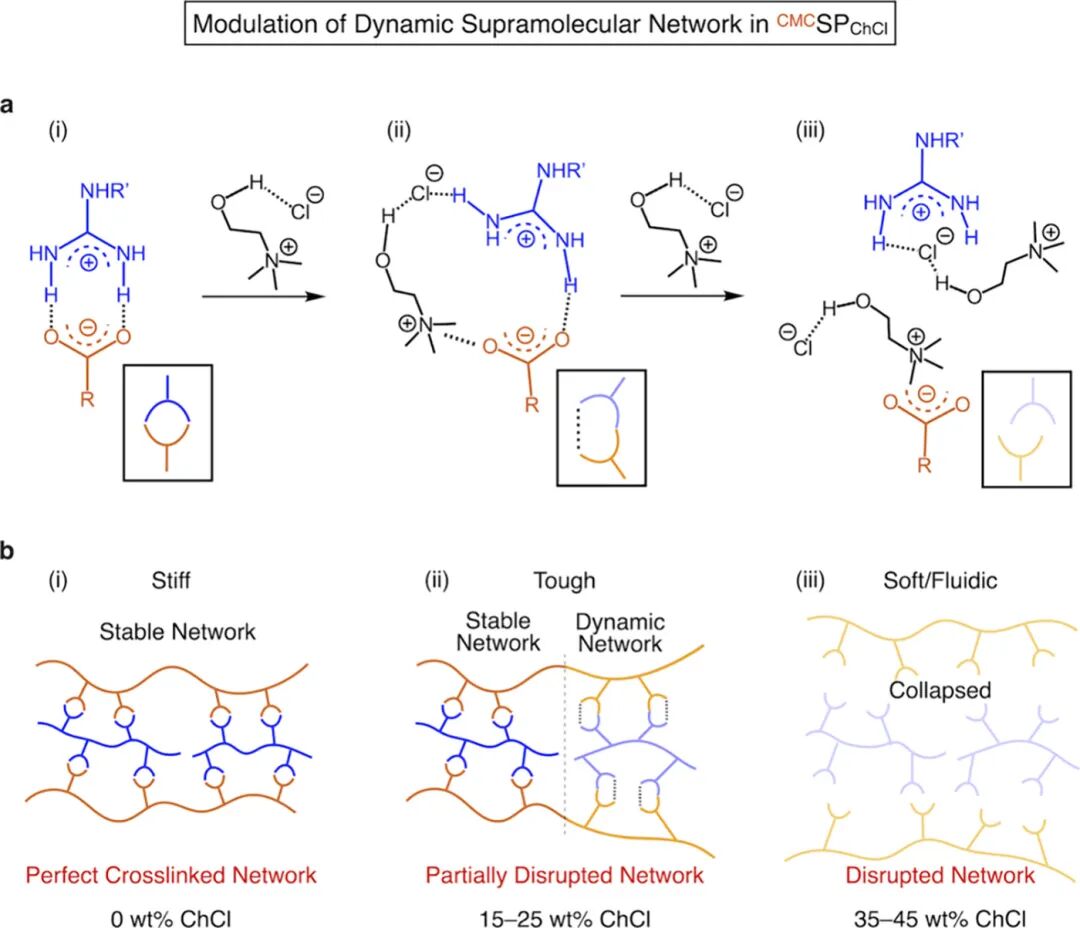
Figure 7. (a) Schematic diagram of the possible behavior of choline chloride in the carboxymethyl cellulose sodium cross-linked network, showing perfect salt bridges (i), partially broken salt bridges (ii), and degraded species (iii). (b) Schematic diagram illustrating the possible evolution of the CMCSP cross-linked network with varying choline chloride content, where the toughening effect in (ii) may be achieved by partially breaking the stable cross-linked network (i) into a more dynamic network (ii), allowing stable and dynamic networks to coexist.
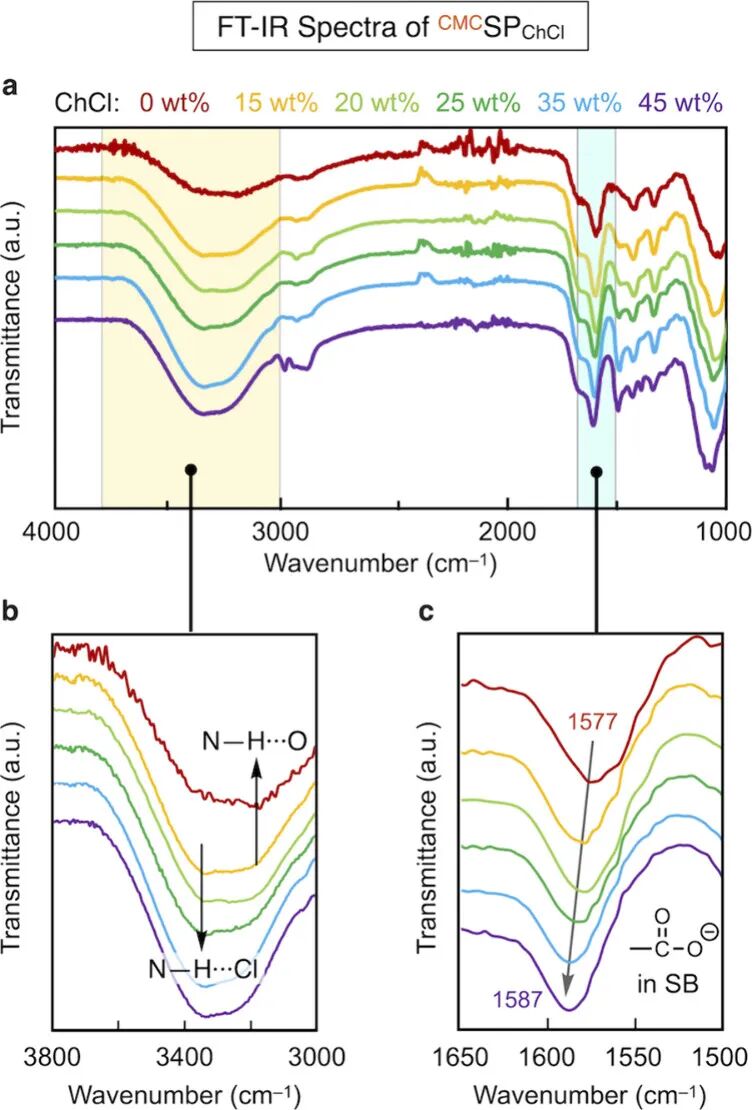
Figure 8. Fourier transform infrared spectra of CMCSPCl ([Cl] = 0–45 wt%): (a) region 4000–1000 cm⁻¹, (b) region 3800–3000 cm⁻¹ (attributed to NH···O and NH···Cl bonds), (c) region 1650–1500 cm⁻¹ (attributed to CO₂ groups).
Original link:https://doi.org/10.1021/jacs.5c16680
Please open in the WeChat client