[East China Normal University Tian Yang]Published on 2025.9.3
Research Highlights
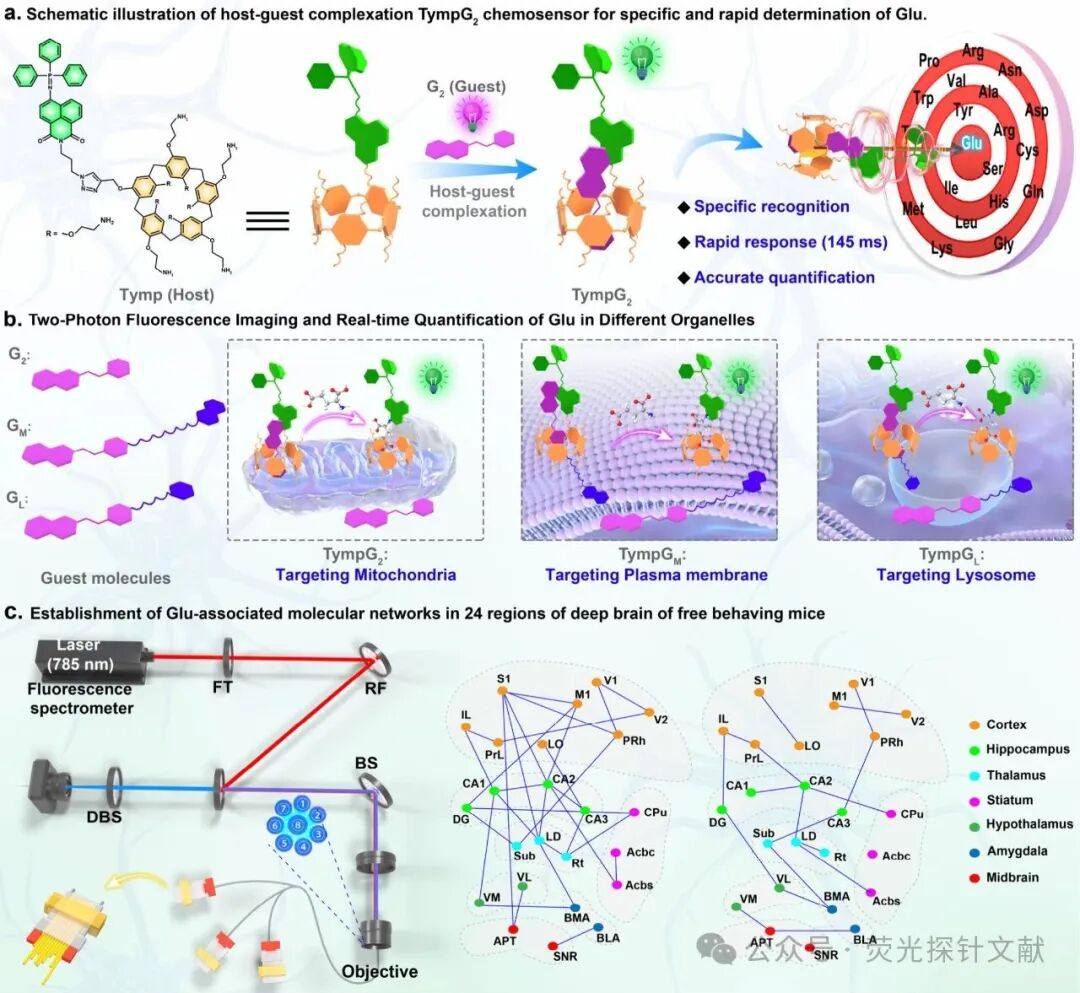
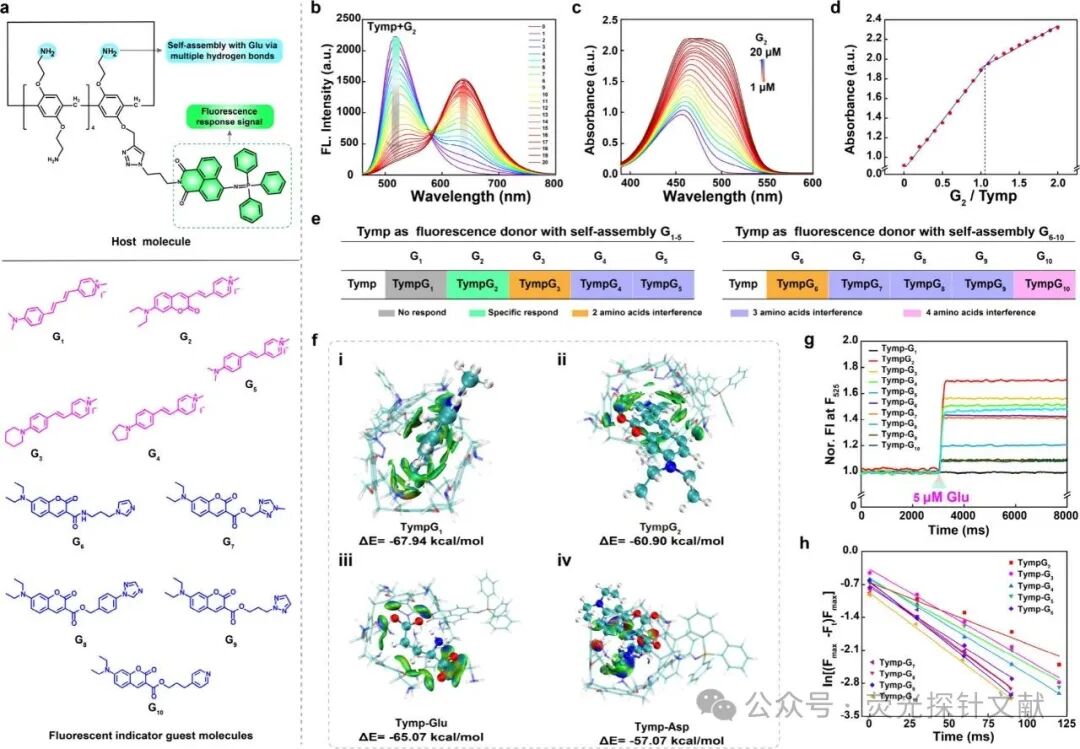
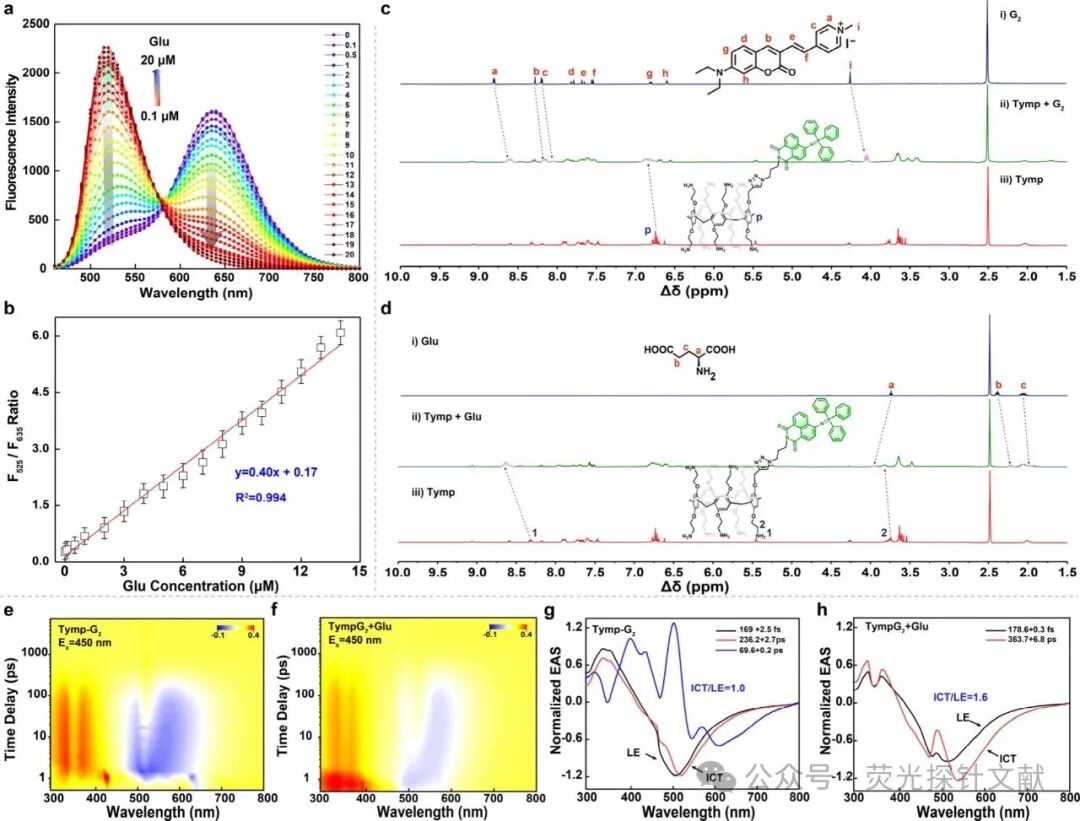
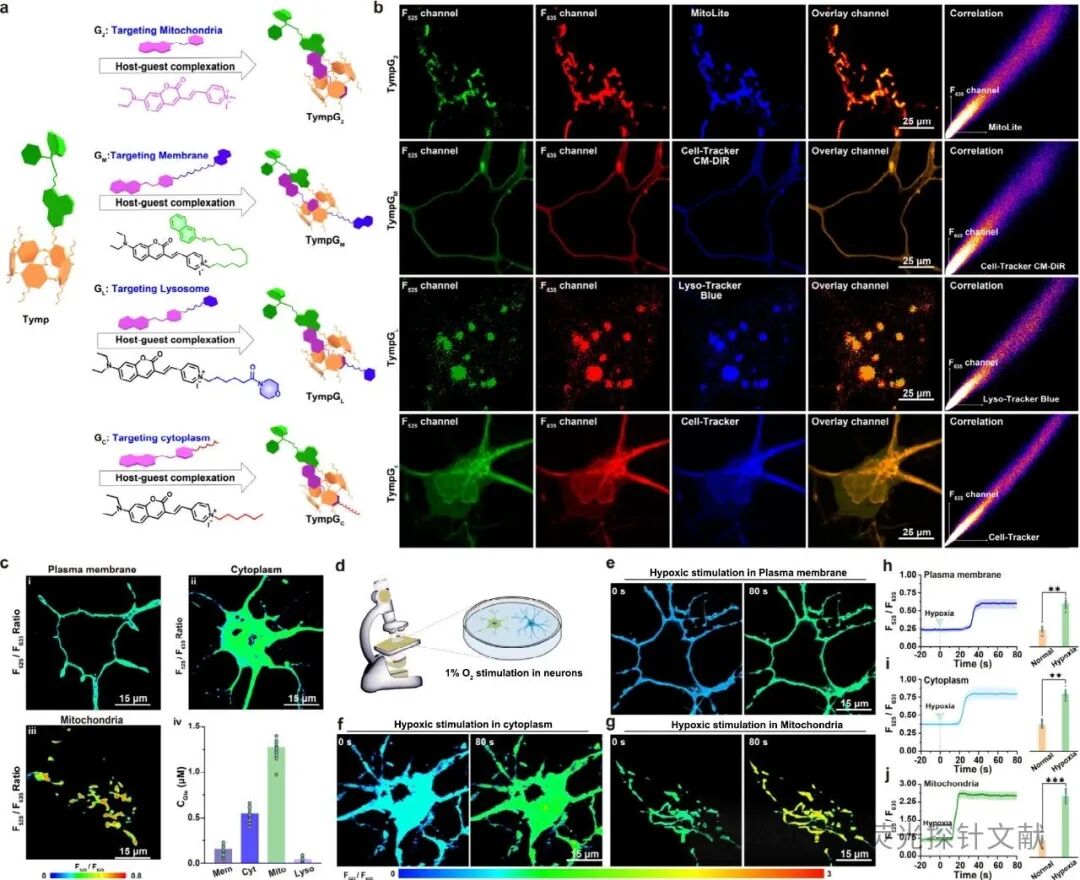
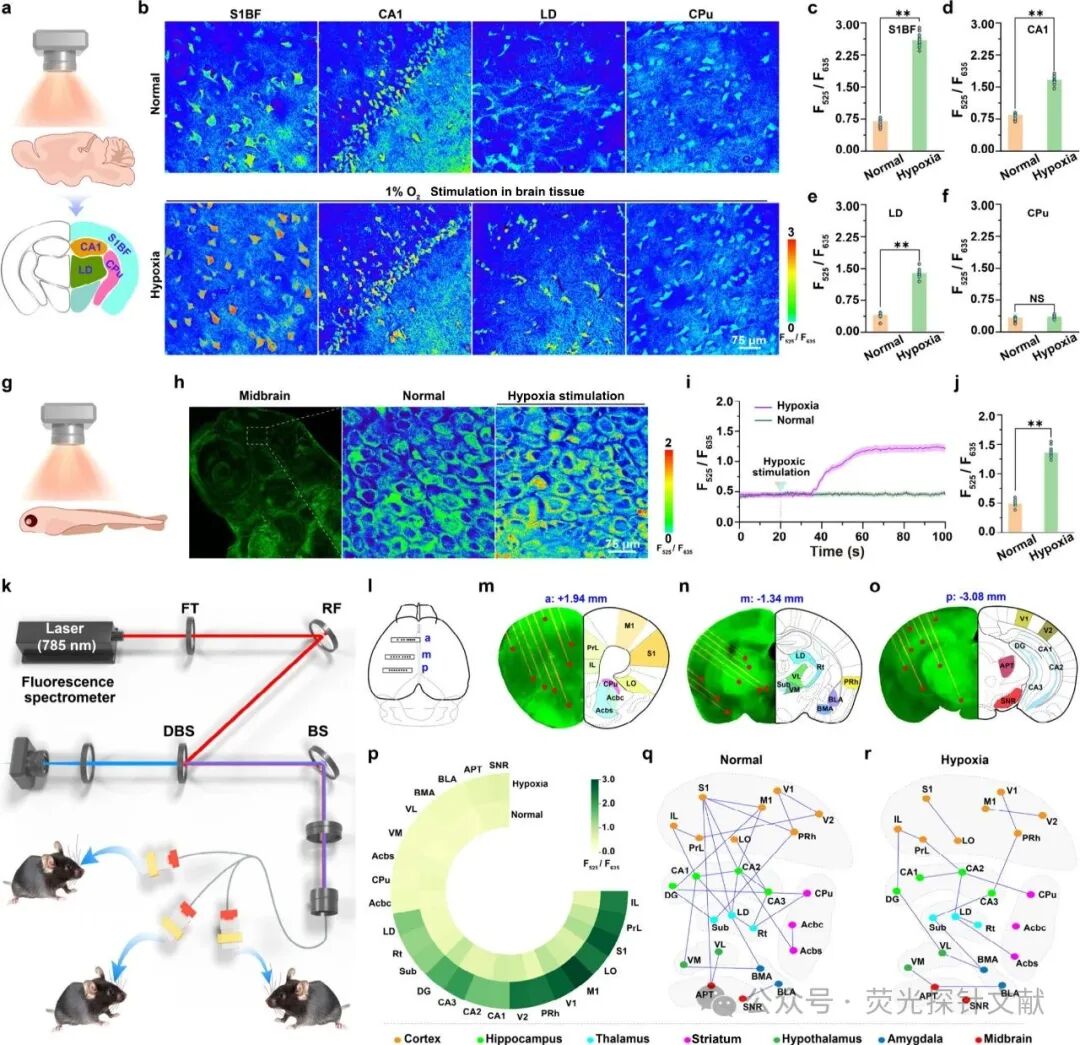
Glutamate (Glu) plays a critical role in the brain, and the ability to directly measure glutamate activity is essential for understanding its physiological functions and pathological processes. This paper presents a series of glutamate sensors (TympGn) designed based on the indicator displacement assay (IDA). The optimized supramolecular chemical sensor TympG2 exhibits specificity, sensitivity, signal-to-noise ratio, rapid kinetics (approximately145 milliseconds), and photostability, making it suitable for monitoring dynamic glutamate levels in neuronal organelles, brain tissues, and zebrafish. Notably, we established a glutamate-related functional network map covering24 deep brain regions using a custom high-density fiber optic photometry array for the first time. The study found that the correlation between adjacent brain regions in hypoxic mice was significantly reduced compared to normal mice, particularly among cortical, hippocampal, and thalamic populations. Overall, TympG2 enables spatiotemporal resolution quantification of glutamatergic activity across different model organisms, from subcellular compartments to broader neural networks. This comprehensive approach not only enhances our understanding of glutamate dynamics but also aids in identifying potential neurological disorders associated with changes in glutamatergic signaling.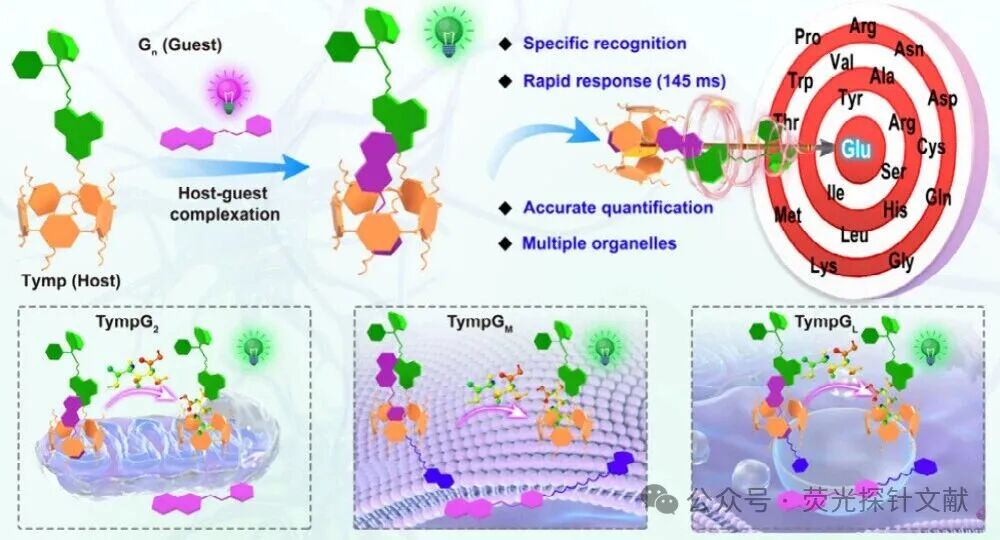
Research Content
Original Link:https://pubs.acs.org/doi/10.1021/jacs.5c11915