Welcome FPGA engineers to join the official WeChat technical group.
Clickthe blue textto follow us at FPGA Home – the largest and best FPGA engineering community in China.

With the continuous development of FPGAs, the number of built-in PCIE hard cores is increasing. This article introduces how to allocate the corresponding hardware pins using ZU11EG as an example.
Design goal: ZU11EG FFVC1760 package, with 4 sets of NVME, interface as PCIE X4.
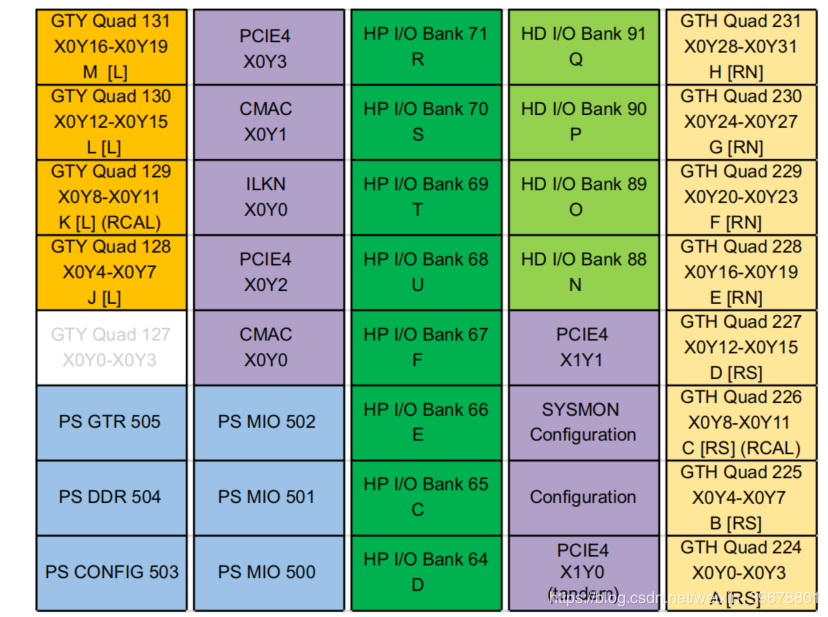
First, we analyze the resources of ZU11EG. In UG1075, we can clearly see that it contains 4 PCIE blocks, located at X0Y2, X0Y3, XIY1, and XIY0.
In document PG213, we can see the following:
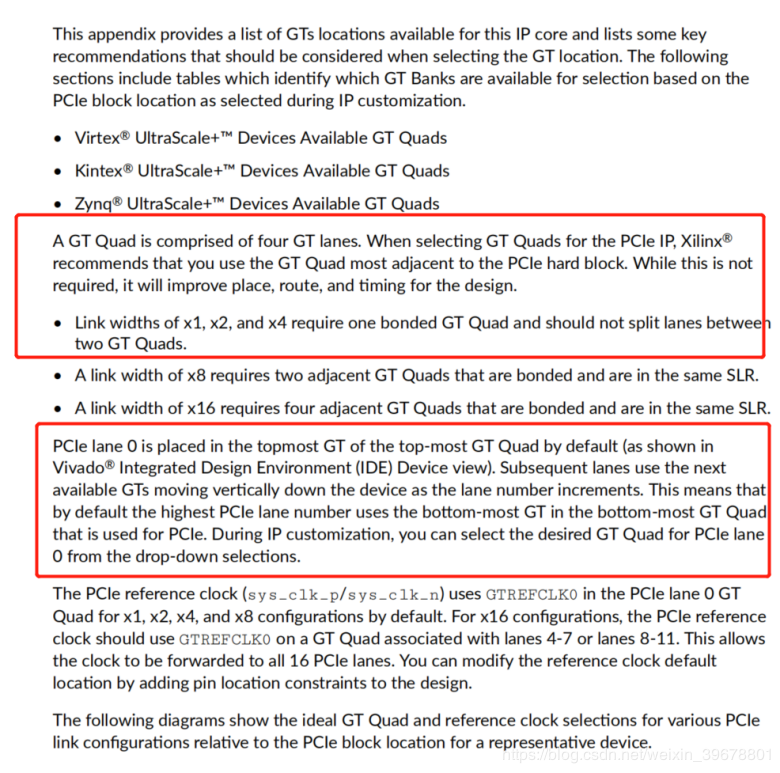
In summary: when allocating hardware design pins, we need to know:
1. A GT Quad consists of four GT lanes. When selecting GT Quads for PCIe IP, Xilinx® recommends using the GT Quad closest to the PCIe hard block. While this is not mandatory, it will improve the design’s position, routing, and timing.
2. Pay attention to the position of PCIE lane 0.
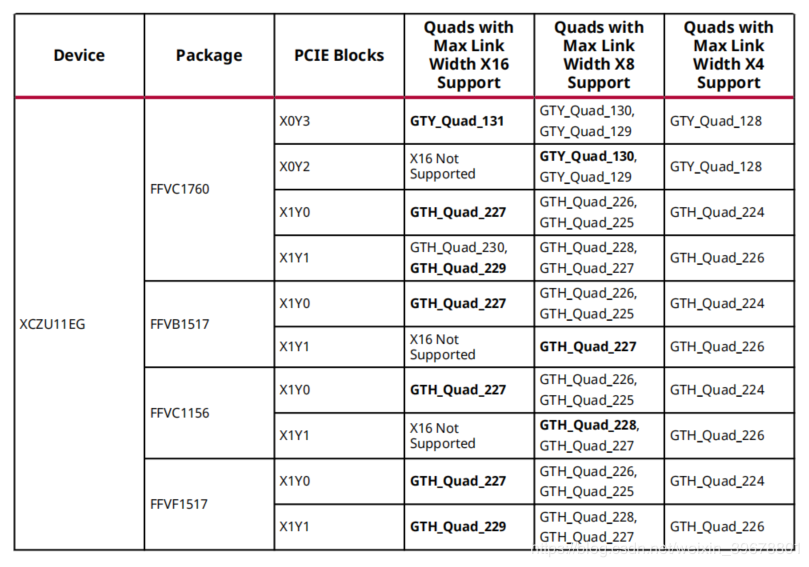
3. According to these tables, the tables determine which GT libraries are available based on the PCIe block position selected during IP customization.
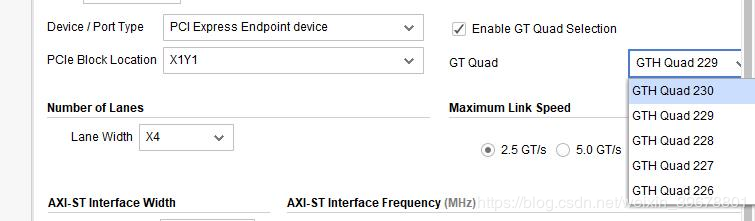
How to verify your allocation results? Ultimately, in practical usage, we will apply the relevant IP cores. The simplest and most reliable method is to create a new project in Vivado and generate the PCIe IP core for verification, as shown in the figure below, where you can clearly see which ones are available.
In FPGA hardware design, pin allocation is the most important and critical step.

Welcome communication engineers and FPGA engineers to follow our public account.

National Largest FPGA WeChat Technical Group
Everyone is welcome to join the national FPGA WeChat technical group, which has tens of thousands of engineers, a group of engineers who love technology. FPGA engineers here help and share with each other, creating a strong technical atmosphere!Hurry up and invite your friends to join!!

Press and hold to join the national FPGA technical group.
FPGA Home Component City
Advantageous component services, if you have demands, please scan to contact the group owner: Jin Juan Email: [email protected] Welcome to recommend to procurement
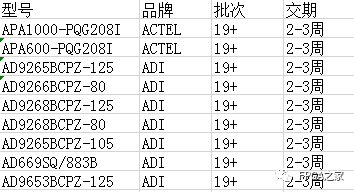
ACTEL, AD part advantageous ordering (operating the entire series):
XILINX, ALTERA advantageous spot or ordering (operating the entire series):
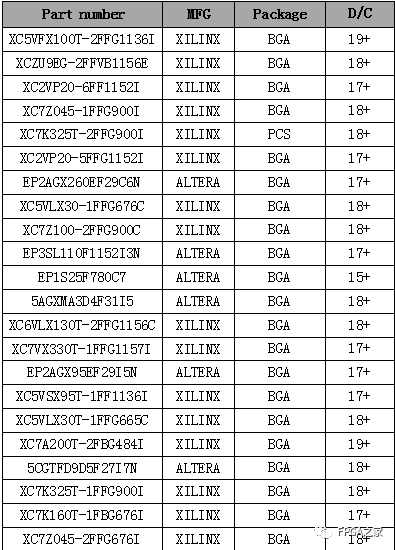
(The above components are part numbers, for more models please consult group owner Jin Juan)
Service philosophy: FPGA Home component self-operated city aims to provide engineers with quick and convenient purchasing services for components. After several years of dedicated service, our customer service is spread across large listed companies, military research units, and small and medium enterprises. Our greatest advantage is emphasizing the service-first philosophy and achieving quick delivery and favorable prices!
Direct brand: Xilinx ALTERA ADI TI NXP ST E2V, Micron and other hundreds of component brands, especially good at components subject to US embargoes against China.We welcome engineer friends to recommend us to procurement or personally consult us!We will continue to provide the best service in the industry!

Official thanks to brands in the FPGA technical group: Xilinx, Intel (Altera), Microsemi (Actel), Lattice, Vantis, Quicklogic, Lucent, etc.