 Special Statement: Due to limited knowledge, there may be omissions and errors. Readers are encouraged to read critically and provide constructive feedback.
Oral Probiotic-Drug Conjugates for Targeted Colonization and On-Demand Drug Release in the Treatment of Ulcerative Colitis and Its Complications
Introduction
This article constructs an orally administered, ROS-responsive probiotic-drug conjugate that achieves targeted colonization of probiotics at the site of colonic inflammation and simultaneous release of the anti-inflammatory drug pterostilbene, significantly alleviating ulcerative colitis and preventing its carcinogenesis.
Research Content
Ulcerative Colitis (UC) is a chronic inflammatory bowel disease that poses a serious threat to human health and significantly affects the quality of life of patients. However, current treatment strategies for UC have many limitations, such as a single therapeutic mechanism, uncontrolled drug release, and non-specific drug distribution, leading to poor clinical efficacy and significant adverse reactions. Unfortunately, the long-term lack of remission of the disease significantly increases the risk of malignant transformation, especially triggering colitis-associated colorectal cancer (CAC), which poses a major threat to patient survival. Therefore, developing new and effective therapeutic methods to address UC and its complications has become an important direction in current medical research.
Oral probiotics have gained widespread attention in recent years as a promising biotherapy strategy for UC and other gastrointestinal diseases. Recent reports on probiotic surface modification techniques have shown that they can effectively maintain the activity and adhesion ability of probiotics in the harsh gastrointestinal environment, thereby regulating gut microbiota and competitively inhibiting pathogenic bacteria. For example, metal-phenolic networks (MPNs), such as tannic acid (TA) and Fe³⁺ complexes, have been confirmed to form biocompatible coatings on bacterial surfaces through cross-linking reactions. This coating acts as a protective barrier against various external threats, including UV radiation, lysosomal enzymes, and antibiotics, while also enabling environmentally responsive degradation. Crucially, the abundant catechol groups in TA can form multiple bindings with the intestinal mucosal surface through non-covalent interactions such as hydrogen bonding and π-π stacking, endowing the encapsulated probiotics with strong tissue adhesion capabilities.
Despite the significant progress made in the above studies, orally administered MPN-modified probiotics still face major challenges. Firstly, the complex and variable gastrointestinal environment may lead to insufficient selective colonization of MPN-modified probiotics at the lesion sites. Additionally, lesion sites are often accompanied by severe inflammatory infiltration, resulting in damage to the intestinal mucosal barrier, mucosal erosion, and ulcer formation. Therefore, solely relying on probiotics to mediate gut microbiota remodeling may have limited efficacy.Currently, there have been no reports of strategies that can achieve selective colonization of probiotics at lesion sites under oral administration conditions and combine this with on-demand activation of chemotherapeutic methods.
To address these issues, the team of Gao Huiyuan, Sun Jin, and Sun Mengchi from Shenyang Pharmaceutical University developed a triggerable probiotic-drug conjugate that integrates probiotic protection, lesion site-specific colonization, and pathological responsive anti-inflammatory drug release. Specifically, the authors utilized natural polyphenol TA to coordinate with Fe³⁺, forming a strongly adhesive inner coating on the surface of the probiotic Escherichia coli Nissle 1917 (EcN) in situ, which can regulate gut microbiota and competitively inhibit pathogenic bacteria. The outer lipid coating consists of a ROS-responsive thioether-linked phospholipid-pterostilbene (PSL) complex. After oral administration, this conjugate protects probiotics from the harsh gastrointestinal environment (such as gastric acid, proteases, and bile salts), significantly improving the survival rate of EcN. When the conjugate reaches the colonic lesion site, the thioether bonds in PSL break under the action of high concentrations of pathological ROS, releasing pterostilbene with anti-inflammatory and ROS scavenging activities, effectively alleviating the inflammatory microenvironment at the lesion site and synergistically enhancing the therapeutic effect with probiotics. We confirmed its strong therapeutic effect in UC mouse models and further validated its efficacy in more severe CAC mouse models, thereby expanding the clinical application value of this strategy.
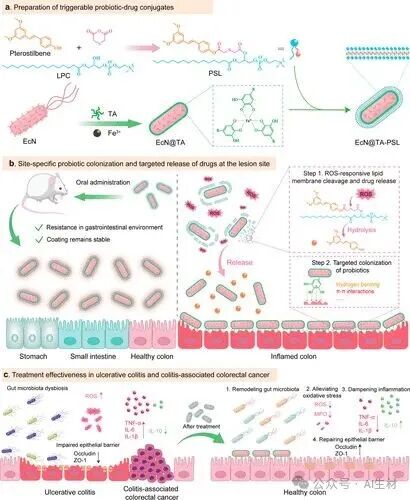 Figure 1. Triggerable probiotic-drug conjugates and their therapeutic mechanisms for UC and CAC
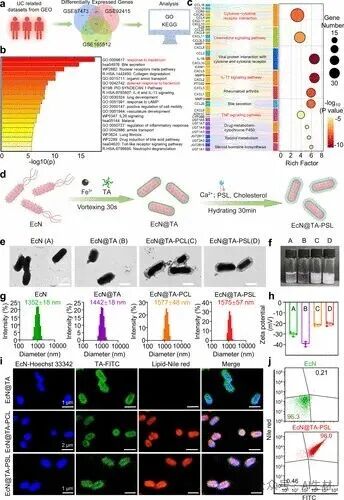 Figure 2. Design, preparation, and characterization of the conjugate
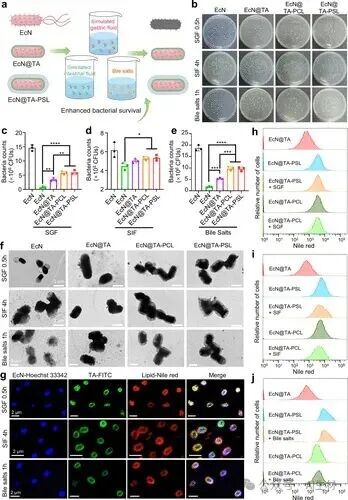 Figure 3. In vitro protection and stability of the conjugate
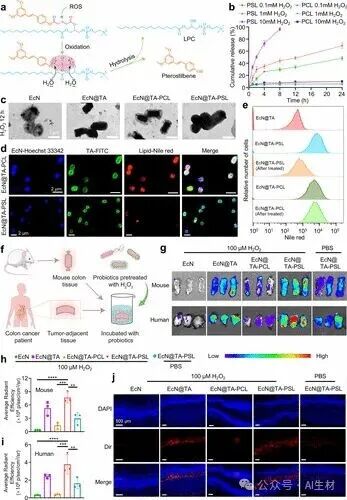 Figure 4. ROS-triggered dissociation, drug release, and in vitro tissue adhesion of the conjugate
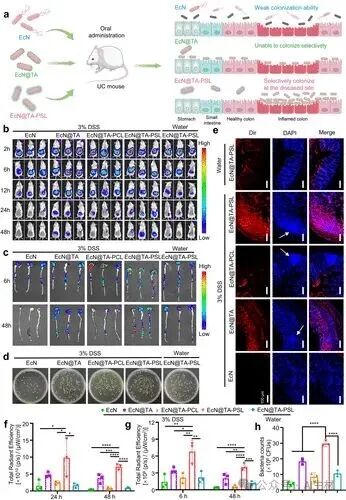 Figure 5. Specific colonization of the conjugate in vivo
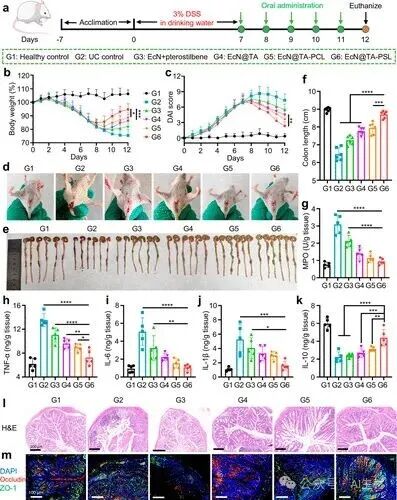 Figure 6. Therapeutic effect of the conjugate on DSS-induced UC mice
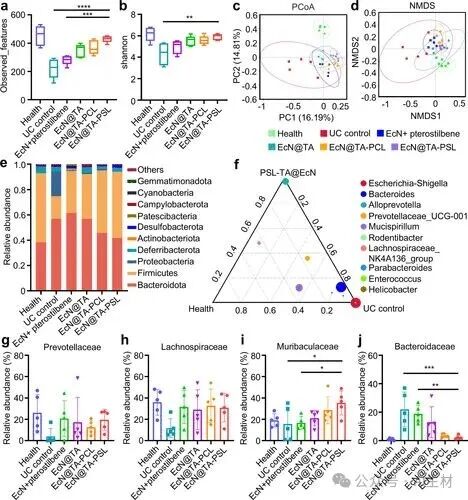 Figure 7. Regulation of gut microbiota in DSS-induced UC mice
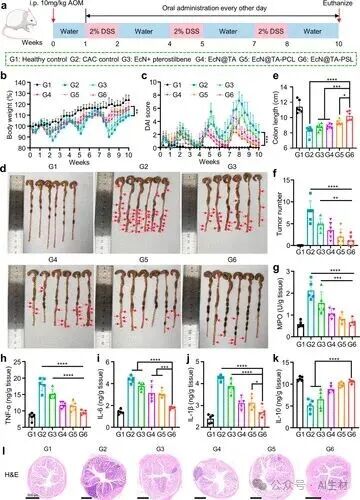 Figure 8. Preventive effect of the conjugate on CAC
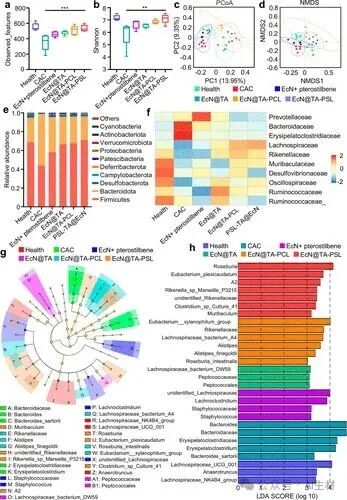 Figure 9. Regulation of gut microbiota by the conjugate in CAC miceResearch ConclusionIn summary, this article constructs a triggerable probiotic-drug conjugate aimed at achieving synergistic colonization of probiotics and intelligent drug release. Experimental results confirm that this conjugate can effectively protect probiotics from the harsh gastrointestinal environment. Through in vitro and in vivo models, it has been demonstrated that EcN@TA-PSL can respond to reactive oxygen species (ROS) stimulation, releasing therapeutic drugs at the colonic lesion site and achieving specific colonization of probiotics. Crucially, in both UC and CAC mouse models, EcN@TA-PSL exhibited excellent therapeutic effects, with mechanisms including modulation of the inflammatory microenvironment and remodeling of gut microbiota. This research establishes a new paradigm for treating gastrointestinal diseases by integrating materials science and microbiome engineering technology.Nevertheless, the significant efficacy observed in mouse models still faces challenges in clinical translation. The anatomical structure and physiological functions of the human gastrointestinal tract are more complex than those of the mouse system, especially with significant differences in microbiota composition and ROS gradients. Future research should further validate these findings in humanized microbiota models. Additionally, achieving uniformity in the thickness of probiotic surface coating during large-scale production remains challenging, which may affect the stability of drug release. Therefore, stricter quality control and quantitative monitoring must be implemented during the production process in compliance with GMP (Good Manufacturing Practice).Original Information: https://doi.org/10.1021/jacs.5c08094
Click the “Read Original” button at the bottom left corner of the article to access the original text directly!
——END——
For the latest research news in artificial intelligence, biomedicine, functional materials, etc., please click the public account belowto follow us!👇👇👇
Selected Past Articles:Tongji University & Suzhou University Advanced Materials! Non-invasive and efficient inhaled nano-vaccines based on natural polysaccharides for lung cancer treatmentSichuan University latest Advanced Materials! DNA hydrogels based on tetrahedral nucleic acid frameworks for burn wound healing