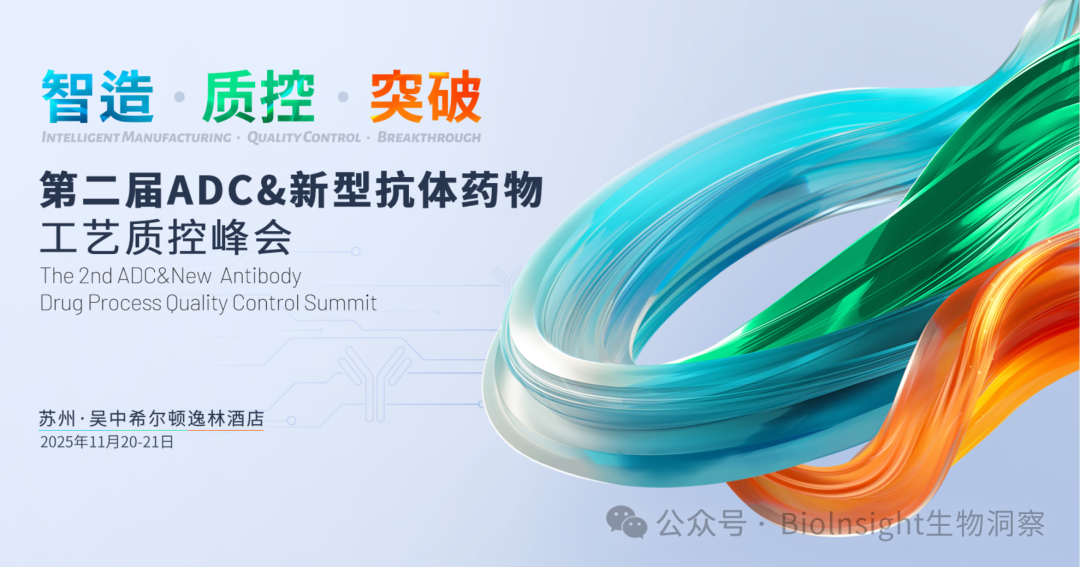
Synergistic Breakthroughs in ADC and Novel Antibody Drug Fields: From Industrial Predicaments to Value Reconstruction at Academic Summits
When Qide Pharmaceutical’s FGFR3 ADC drug GQ1011 completed global licensing with a total transaction amount exceeding $13 billion, the biopharmaceutical industry witnessed once again the immense potential of antibody-drug conjugates (ADCs). Meanwhile, the $8.4 billion collaboration between Bai Li Tian Heng’s BL-B01D1 bispecific antibody and BMS further confirmed the strategic position of novel antibody drugs in the global pharmaceutical landscape. However, behind these remarkable transactions lies a common process bottleneck faced by the industry — an ADC production line of a leading pharmaceutical company has a batch qualification rate of only 68% due to fluctuations in conjugation efficiency, and a bispecific antibody encountered aggregation issues during large-scale production, causing production costs to soar by 300%. These real-world dilemmas reveal a harsh truth: when the speed of technological innovation far exceeds the maturity of processes, industrial upgrades must rely on a collaborative breakthrough across the entire chain.
The Contradiction Between Industrial Expansion and Process Lag: The Inevitable Birth of the Summit
The global ADC drug market is racing at a compound annual growth rate of 35.6%, expected to exceed $20 billion by 2025. Chinese innovative pharmaceutical companies are particularly eye-catching in this race, with ADC outbound transaction amounts exceeding $20 billion between 2024 and 2025, and the total amount of external licensing in the bispecific antibody field reaching $15.6 billion. Behind this explosive growth is an increasingly prominent crisis of disconnection in various links of the industrial chain.
In the transformation chain from laboratory to commercialization, the lag in process development has become the most prominent bottleneck. A clinical-stage ADC drug found significant deviations in the conjugation process when scaled up to a 2000L reactor, with the drug-antibody ratio (DAR) fluctuation range expanding from ±0.3 to ±1.2, directly leading to a delay in the Phase III clinical trial. This “scale-up shock” is not an isolated case; industry data shows that about 43% of ADC candidates are forced to terminate development due to process issues between the IND and NDA stages.
The inadequacy of quality control systems exacerbates industrial risks. The FDA’s inspection report released in 2024 pointed out that 38% of ADC production companies have incomplete identification of critical quality attributes (CQA), with defects in process control of bioconjugation processes accounting for as much as 62%. A domestic bispecific antibody faced different regulatory requirements during submissions in China and the U.S. due to differences in glycosylation modifications of the Fc region, with compliance modifications taking 18 months. This conflict between global and local standards is becoming increasingly acute as the proportion of Chinese innovative drugs going overseas rises (expected to reach 54.3% by 2025).
The disconnection between technological innovation and industrial practice is equally concerning. Breakthroughs in new conjugation technologies (such as unnatural amino acid conjugation) in academia often fail to translate into industrial applications due to production cost issues; while the practical experience accumulated by companies in process optimization cannot form industry-shared knowledge due to commercial confidentiality restrictions. A targeted conjugation technology developed by a university laboratory has yet to achieve industrialization three years after its publication, primarily due to a lack of early process connection with CDMO companies.
In this industrial context, a professional summit focusing on ADC and novel antibody drug process quality control has emerged. The core value of such academic exchange platforms lies in breaking the isolation of the innovation chain — it is neither a simple technology showcase nor purely commercial promotion, but rather a cross-disciplinary dialogue space that accommodates scientific exploration, engineering practice, and regulatory wisdom. When over 80 experts and scholars covering basic research, process development, quality control, and regulatory affairs gather together, the resulting intellectual collisions will far exceed the scope of a single meeting, forming a sustained momentum for industrial upgrading.
The Integration of Academic Depth and Industrial Value: Constructing a Multidimensional Dialogue Mechanism
On the agenda of the conference at the Hilton Garden Inn in Suzhou, themes such as “Next-Generation ADC Drug Process Development” and “Quality Research and Analysis Strategies for Antibody Drugs” hide a carefully designed logic of knowledge transfer. This logic differs from the theoretical discussions of pure academic conferences and the technical promotions of industry exhibitions, as it is built on a precise grasp of industrial pain points.
Subforum one focuses on breakthroughs in ADC drug processes, directly addressing the most urgent technical bottlenecks. A process R&D director from a multinational pharmaceutical company publicly stated that the “three highs and one low” (high toxicity, high complexity, high variability, low stability) characteristics of ADC production make it one of the most challenging production systems in the pharmaceutical industry. The topic discussion on “linker-payload stability control” will explore the impact of pH fluctuations on maleimide-type linkers, including quantum chemical bond energy analysis and industrial application data of different buffer systems. This deep analysis from “molecular mechanisms to production parameters” is precisely the knowledge form that enterprise R&D personnel most desire — a CMC head from a biopharmaceutical company mentioned in past feedback that a group discussion on buffer formulations directly helped solve a product stability issue that had troubled them for six months.
The forum on the process development of complex multi-antibody drugs reflects a keen capture of technological frontiers. The production challenges posed by the structural heterogeneity of bispecific and trispecific antibodies have led to the emergence of new analytical technologies such as charge variant analysis and size exclusion chromatography – multi-angle laser light scattering (SEC-MALLS). The case studies presented in the forum include purification process optimization for IgG-scFv structure bispecific antibodies and exploration of aggregation control for bispecific T-cell engagers. The value of these contents lies in their ability to fill the knowledge gaps between textbooks and operational manuals, distilling individual experiences into transferable methodologies.
The quality research subforum constructs a triangular dialogue of “regulatory science – analytical technology – process control”, further highlighting the unique perspective of the conference. The subtle differences between the ADC quality standards of China’s NMPA and the U.S. FDA, such as different requirements for the detection limits of free payloads, directly impact the global layout of enterprises. Experts from regulatory agencies invited to the forum will interpret the practical path of the “Quality by Design (QbD)” concept in antibody drugs in conjunction with the latest guidelines, and this interpretation is not a simple regulatory lecture, but rather illustrates how to establish statistical correlations between critical process parameters (CPP) and critical quality attributes (CQA) through practical cases. A quality head from an innovative pharmaceutical company once admitted that the latest ideas on comparability studies from EMA learned through the summit helped save six months in their process change submission.
The 1V1 business negotiation session set up at the conference is cleverly designed as an extension of academic exchange rather than a commercial transaction venue. This arrangement avoids the utilitarian nature of traditional exhibitions, allowing technology providers and demanders to engage in dialogue based on a common scientific language — when an instrument manufacturer showcases its ultra-high-performance liquid chromatography (UHPLC) application in ADC purity analysis, the focus of the discussion is not on equipment parameters, but on the mechanism of different chromatographic column fillers affecting ADC peak shapes. This exchange centered on the essence of technology often leads to deeper cooperation consensus.
Notably, the summit’s inclusive attitude towards “failure cases” is worth attention. In the “Comprehensive Quality Control of ADC Drugs” forum, a session dedicated to sharing experiences of process transfer failures allows companies to anonymously present technical mistakes and lessons learned. A CDMO company once shared its batch scrapping incident due to particle contamination during ADC filling, analyzing the correlation between the electropolishing of stainless steel pipelines and particle generation. This courage to “turn accidents into teaching materials” embodies the true essence of academic exchange platforms — industrial progress requires not only the motivation of successful experiences but also the sharing of lessons from failures.
Building a Cross-Disciplinary Knowledge Network: The Deep Logic of Conference Value
For researchers from universities, the summit provides a window to understand the real needs of the industry. A professor focused on antibody engineering adjusted his research direction after attending the first conference, shifting from purely pursuing affinity optimization to molecular design that also considers developability — he learned in the forum that a company had to abandon a preclinical molecule with excellent in vitro activity due to low expression levels of the candidate antibody. This balance of “academic value and industrial feasibility” wisdom can only be obtained through deep exchanges with enterprise R&D personnel. The “university-enterprise joint laboratory” docking session arranged at the summit has also facilitated multiple industry-university-research collaborations, including a high-throughput process screening platform developed by a certain team, which has been applied in three biopharmaceutical companies.
The participation of biopharmaceutical companies reflects the logic of maximizing knowledge acquisition efficiency. The process development of ADCs and novel antibody drugs involves dozens of professional fields, making it difficult for a single company to establish comprehensive technical reserves. The “full-chain process development workshop” set up at the summit simulates real production scenarios, presenting the decision-making logic from cell culture, purification to formulation. A production head from a biotech company calculated that to systematically learn the knowledge covered by the summit, he would need to attend at least six specialized training courses, costing over 150,000 yuan, while the concentrated learning opportunity provided by the summit also includes the value of direct dialogue with top industry experts — this “knowledge density” is difficult to match with other forms of learning.
The participation of CDMOs and equipment suppliers also transcends commercial purposes. A CDMO company providing conjugation process services released an “ADC process development milestone timeline” in the forum, which has become a reference template for several biotech companies in formulating R&D plans; a chromatography column manufacturer shared an “ADC analytical method validation strategy”, the technical details of which were even incorporated into a certain company’s internal standard operating procedures (SOP). These knowledge outputs may seem gratuitous, but they actually establish professional recognition of their technical capabilities within the industry, and this recognition brings long-term value far exceeding short-term equipment sales.
The participation of regulatory agencies and academic institutions endows the summit with a unique neutral perspective. Experts from the National Medical Products Administration’s Drug Evaluation Center interpreted the formulation ideas of China’s “Technical Guidelines for Non-Clinical Research of ADC Drugs” in the “International Regulatory Coordination” roundtable discussion, while also objectively analyzing the similarities and differences with FDA and EMA-related guidelines. This authoritative interpretation helps companies avoid compliance risks brought by “multiple standards”; a certain ADC project preparing for dual submissions in China and the U.S. adjusted its non-clinical toxicology research experimental design based on such discussions.
The implicit value gained by participants is often more precious. A certain experimental phenomenon mentioned casually during a coffee break may become a key clue to solving a technical problem; the coping strategies adopted by different companies in similar process challenges can inspire new solutions. A process engineer from a certain company once discussed the “peak tailing issue of protein A chromatography columns” with peers during lunch, unexpectedly gaining innovative suggestions on sample pretreatment, ultimately improving product yield by 12%. This knowledge spillover effect generated from informal exchanges constitutes the most valuable part of the summit — it builds an active professional community, allowing knowledge flow to transcend the temporal and spatial limitations of the conference.
From Dialogue to Action: The Sustained Driving Force for Industrial Upgrading
After the first ADC and Novel Antibody Drug Process Quality Control Summit, a set of data drew attention: among the participating companies, 37% initiated process optimization projects within three months, 19% established new school-enterprise cooperation relationships, and eight companies’ R&D teams adjusted their analytical methods based on forum content. These follow-up actions confirm the substantial impact of the conference — it is not only a carrier of knowledge transfer but also a catalyst for industrial transformation.
Several consensus formed in the “ADC Drug Process Optimization and Commercial Production” forum have begun to influence industry practices. In response to the solvent recovery challenges in ADC production, a closed-loop recovery system jointly developed by an environmental technology company and participating pharmaceutical companies has increased the utilization rate of organic solvents from 65% to 92%; while the cost-benefit analysis of “continuous production vs batch production” has helped two biotech companies make technical route choices that align with their scale. These cases of transformation from discussion to practice demonstrate the practical guiding role of professional summits in industrial decision-making.
The expert network established by the summit is addressing more complex industry challenges. Under the coordination of regulatory agency experts, several innovative pharmaceutical companies jointly initiated an “ADC Analytical Method Comparison Study”, establishing more scientific impurity limit standards through shared blind sample testing data; while the “Process Parameter Database Construction” conducted in collaboration between universities and CDMO companies has accumulated over 500 sets of key process parameters and product quality correlation data for ADC production, providing valuable reference benchmarks for the industry. This collaborative model breaks down technical barriers between companies, achieving the elevation of individual experiences to industry knowledge.
For the long-term development of the novel antibody drug field, the summit’s value is even more reflected in talent cultivation. Young R&D personnel, through direct exchanges with top experts like Academician Wei Yuquan, not only gain technical guidance but also grasp industry development directions; while cross-company technical exchanges help quality analysts, process engineers, and other professionals broaden their knowledge boundaries. A QC manager from a listed company applied the mass spectrometry imaging technology learned at the summit to bispecific antibody charge variant analysis, and his research results were eventually published in the “Journal of Pharmaceutical and Biomedical Analysis”; this virtuous cycle of “conference inspiration – practical innovation – academic output” is a microcosm of industry progress.
As the summit in 2025 unfolds, participants will bring new technological breakthroughs and practical confusions — possibly regarding the cytotoxicity control of new payloads, the stability prediction models of bispecific antibodies, or real-time analysis technologies in continuous production. The discussion process of these topics itself is a process of forming industrial wisdom. In the context of increasingly fierce global biopharmaceutical competition, this collaborative model of gathering forces to jointly solve process challenges will become a key support for Chinese innovative drugs to transition from “following innovation” to “global leadership”.
The survey questionnaire distributed at the end of the summit included a question that best reflects its core value: “What do you think was the most valuable part of this conference?” The high-vote answers from previous years were neither the titles of the speakers nor the thickness of the conference materials, but rather the “sincere sharing of different perspectives”. This professional dialogue that transcends commercial interests is the fundamental driving force behind breakthroughs in the ADC and novel antibody drug fields — when scientific spirit, engineering thinking, and regulatory wisdom achieve true integration on such a platform, the password for industrial upgrading has quietly been cracked.
Disclaimer: The original text and images are sourced from the internet, and the copyright belongs to their respective owners. The interpretations and reflections in this article do not represent the position of this public account. If there are issues related to the content, copyright, or other matters, please leave a message on this platform, and we will verify and address them promptly.
· END ·
Business Cooperation: [email protected]