Click the above Xingzhou Drug ▲ Follow
This year, CED released the draft for comments on the “Technical Guidelines for Non-Clinical Research of Antibody-Drug Conjugates (ADC)”, which provides assistance for companies conducting non-clinical research on ADCs.It provides guidance on non-clinical studies such as “pharmacology, safety pharmacology, pharmacokinetics, and toxicology”.
(1) PharmacologyIn the early development of ADC drugs, in vitro and in vivo pharmacological/effectiveness studies of ADC should be conducted.1) In Vitro Pharmacological Testing: It mainly includes the binding activity of ADC antibodies to cell surface receptors, the endocytosis of ADC-antigen complexes, the impact of ADC drugs on cell physiological morphology, and the assessment of cell-killing effects.T-Dxd in vitro pharmacological testing experiment 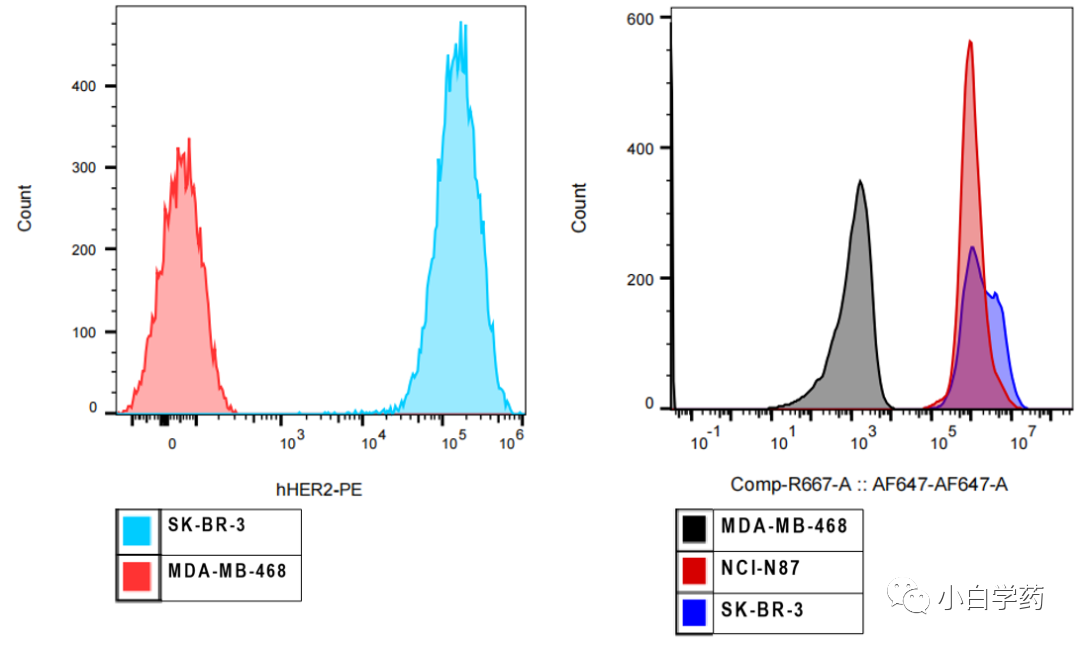 Figure T-DXd binding ability to cell surface receptors
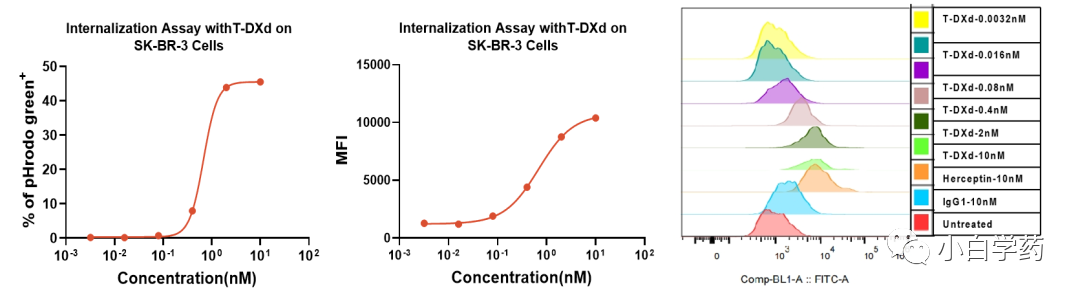 Figure T-DXd endocytosis
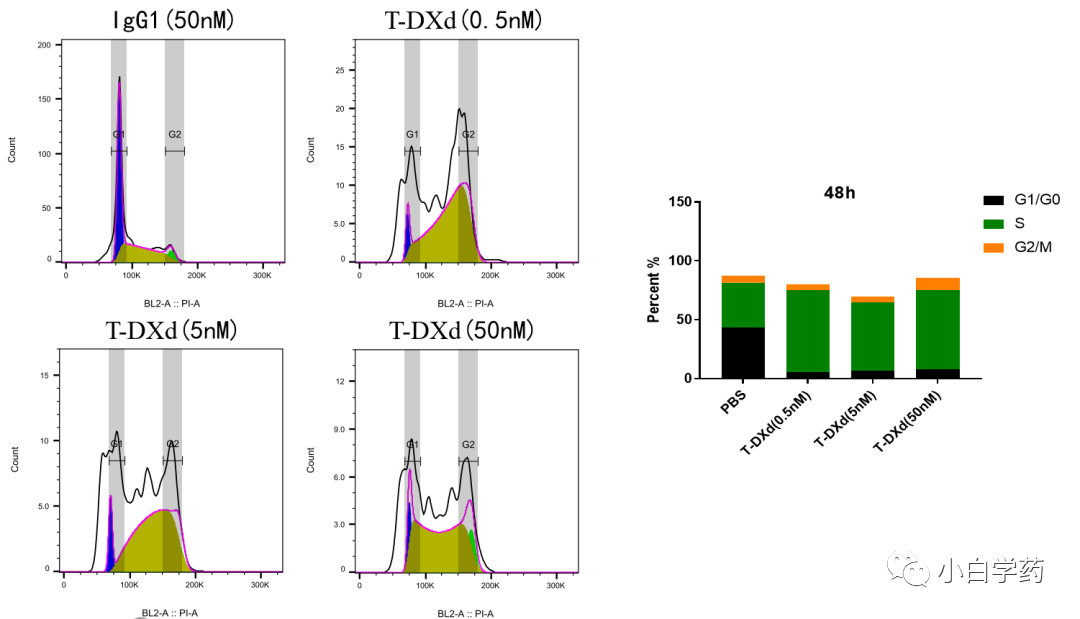 Figure T-DXd inhibits SK-BR-3 cell cycle
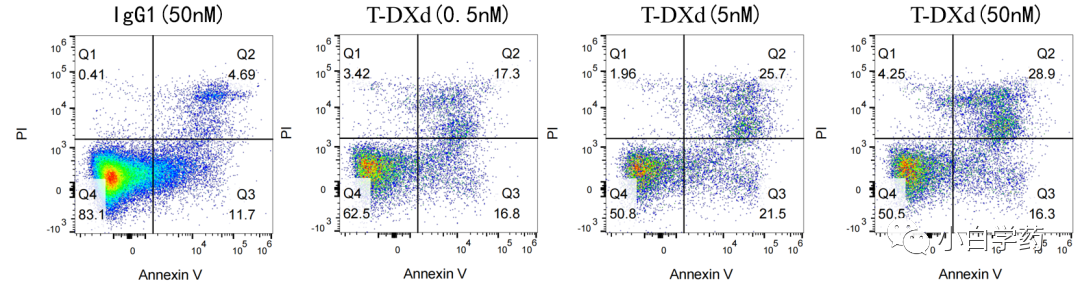 Figure T-DXd induces SK-BR-3 cell apoptosis
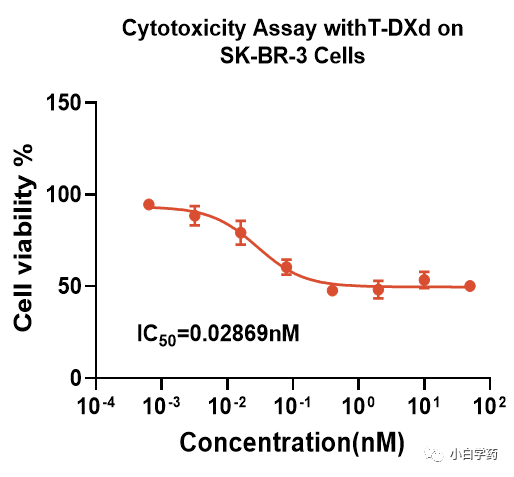 Figure T-DXd cytotoxicity in SK-BR-3 cells2) In Vivo Pharmacological Testing: Depending on the method of administration and target, there are different model selections and experimental protocol standards for in vivo efficacy evaluation of ADC drugs. Through in vivo experiments, evaluate the inhibitory effect of T-DXd on tumors.ADC monotherapy: Generally, severe immunodeficient mice NCG inoculated with tumor cell line xenografts (CDX) can be selected for related research.ADC combination therapy: The combination of ADC drugs with anti-PD-1 monoclonal antibodies can produce bifunctional PD-1 targeted ADCs, which have greater application prospects.
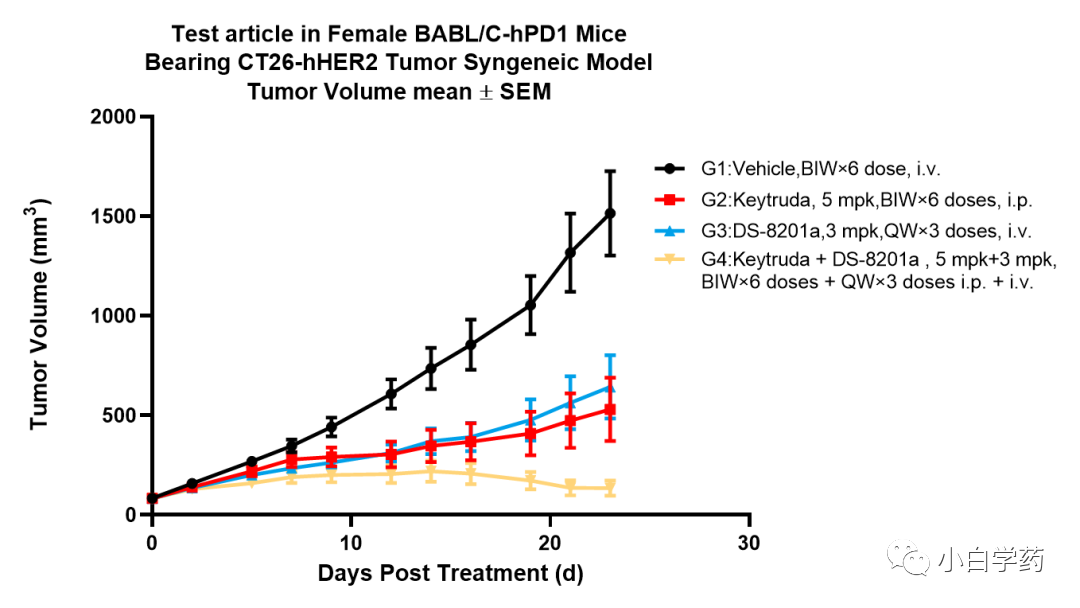 Figure In vivo efficacy test based on BALB/c-hPD1Experiments have shown that the PD-1 inhibitor Keytruda combined with the conjugate T-DXd (DS-8201a) exhibits stronger tumor suppression ability.Generally, in addition to the overall pharmacological/effectiveness of ADC, it is also necessary to study the pharmacological effects of its individual components. This mainly includes target antigen binding activity, potential target antigen-related pharmacological effects, and Fc effects; mechanisms of action studies on free small molecule compounds or major pharmacologically active metabolites.Attention should be paid to the pharmacological differences between ADC and naked antibodies, free small molecule compounds, or pharmacologically active metabolites, as well as the impact of antigen expression levels on pharmacological effects.(2) Safety PharmacologyBefore clinical trials, information on the impact of ADC on important system functions must be obtained. Safety pharmacology tests can be conducted separately or combined with general toxicology tests.When free small molecule compounds are new compounds, separate tests are required to evaluate the potential effects of the drug on QT interval prolongation. If necessary, additional and/or supplementary safety pharmacology tests of ADC and/or small molecule compounds should be conducted.ADC has its unique characteristics, one of which is PK, which significantly affects the half-life, clearance, elimination, and biodistribution of unbound components. Unbound antibodies involve degradation metabolism and target-mediated clearance pathways, while small molecule payloads are usually cleared via liver and kidney pathways.The clearance of ADC involves the properties of both macromolecules and small molecules. The conjugate is first metabolized to produce ADC metabolites or deconjugated to produce naked antibodies and payload components. Once degraded, antibodies are broken down into amino acids for circulation, while payloads undergo renal and hepatic clearance. This difference in elimination can affect the half-life of ADC.Predicting potential safety risks in clinical settings is the goal of non-clinical toxicology research. Non-clinical safety studies of ADCs can enhance predictive value by appropriately selecting animal test species, understanding the mechanisms of adverse reactions, or identifying the toxic driving factors of ADC.Due to the presence of antibody structures, ADC drugs also have a potential risk of inducing immunogenic responses. The generation of ADA in immunogenic responses can have certain effects on the pharmacological and/or toxicological effects of ADC.The formation of ADA can affect pharmacokinetic (PK) parameters, the incidence and severity of toxic reactions, and long-term efficacy (due to the production of neutralizing antibodies).(3) ToxicologyIn 2000, the first generation of ADC drugs, Mylotarg, developed by Pfizer, was approved by the FDA but was withdrawn from the market in 2010 due to toxic side effects.Toxicology includes: 1. General toxicology 2. Genotoxicity 3. Reproductive toxicity 4. Carcinogenicity 5. Immunogenicity/immunotoxicity 6. Photosafety 7. Tissue cross-reactivity 8. Formulation safety 9. ToxicokineticsKey toxicological studies should be conducted in relevant species to assess potential safety risks on-target and off-target.Currently, the safety evaluation of second-generation and third-generation ADCs mainly includes on-target toxicity and off-target toxicity.On-target toxicity is caused by ADC binding to target antigens on normal cells, so safety evaluations need to consider using animal species that exhibit non-target tissue cross-reactivity similar to humans.Off-target toxicity is mainly due to the instability of the conjugate, causing normal cells to nonspecifically internalize the conjugated small molecule drugs (mainly mediated by Fc receptor-mediated endocytosis, binding with FcRn, and pinocytosis).Conducting safety evaluations in animal species without tissue cross-reactivity can predict off-target toxicity to some extent and can serve as important support for improving the success rate of ADC development.Studies should include toxicokinetic analyses of both conjugated and unconjugated components to assess the impact of stability on safety.Currently, there are two directions for the development of Payload in the industry: one is high DAR value with low toxicity, and the other is low DAR value with high toxicity; how to choose should be based on specific experimental data.Reference materials[1] National Medical Products Administration Drug Review Center “Technical Guidelines for Non-Clinical Research of Antibody-Drug Conjugates (Draft for Comments)”[2] www.biomart.cn/news/16/3067505.htm
Article information is sourced from the public account Xiaobai Learning Medicine, the purpose of publishing this article is to disseminate industry information more widely, and does not represent endorsement of its views or responsibility for its authenticity. Article copyright belongs to the original author and original source, and the content is for reference only. This website reserves the final interpretation rights of this statement, and if there is any unintentional copyright infringement, please contact the editor for deletion.
Learning is like rowing upstream; not to advance is to drop back;
The heart is like a horse on a flat plain, easy to release but hard to retrieve.

Xingzhou Drug
Updated daily, welcome to subscribe+

Pharmaceutical Big Data | Industry Dynamics | Policy Interpretation