
In the past decade, China’s shipbuilding industry has made significant progress and achievements, attracting increasing public attention. Various media have frequently reported on the shipbuilding industry. Ship tonnage is an important indicator for measuring the dimensions, volume, weight, and loading capacity of ships, as well as a key metric for assessing the shipbuilding capabilities of enterprises and countries.
 Related ConceptsThe definition and concept of ship tonnage are relatively complex, and even industry insiders may find it challenging to understand thoroughly. Based on ship statics and the latest International Convention on Tonnage Measurement, a brief overview of the definitions and concepts of ship tonnage and weight is provided using civil vessels as examples:✦ Displacement (in “tons”)Displacement refers to the weight of water displaced by the hull and its appendages at a specified draft, typically measured in tons. Displacement can be categorized as lightweight displacement (or lightship, Light Weight), design displacement, and full load displacement, corresponding to design draft and full load draft, respectively.✦ Deadweight (in “tons”)Deadweight refers to the difference between displacement and lightweight displacement at a specified draft. Deadweight includes the weight of cargo carried, as well as constants for deadweight during the voyage, crew and baggage, passengers and baggage, food, fuel and lubricants, drinking water and wash water, spare parts and supplies, necessary ballast water, and ice weight.✦ Tonnage (Tonnage)Tonnage is not a weight unit but a measure of the size of a ship. Tonnage is a standardized unit for measuring and determining the volume of the hull, with the internal volume of civil vessels calculated in tons. Port fees, mooring fees, and dockage fees are calculated based on net tonnage. Vessels that have determined gross tonnage and net tonnage according to tonnage measurement standards are issued tonnage measurement certificates by the competent authorities. Gross tonnage (GT) refers to the total volume of enclosed spaces below the deck and above the deck with fixed coverings, measured in 100 cubic feet or 2.83 cubic meters. Net tonnage (NT) is the remainder after subtracting the volume of spaces that cannot be used for carrying passengers or cargo from gross tonnage, representing the volume available for carrying passengers or cargo converted into tons.Tonnage measurement calculations are made in “meters,” and the values of gross and net tonnage are recorded as whole numbers. The gross and net tonnage recorded in the “International Tonnage Certificate” only include numbers without the unit “tons” after the numbers. The gross tonnage of merchant ships generally indicates the total volume of the vessel, which also reflects the size and scale of the ship; while net tonnage generally represents the effective volume available for profit, indicating the ship’s operational capacity.✦ Compensated Gross Tonnage (CGT)Compensated gross tonnage is a measurement unit calculated based on the complexity of the vessel on top of gross tonnage. Compensated gross tonnage not only more accurately reflects the workload of shipbuilding compared to deadweight tonnage and gross tonnage but also reflects the price and output value to some extent. Thus, it can accurately represent shipbuilding output, workload, and capabilities. Particularly, when comparing countries and enterprises with significantly different product structures, using compensated gross tonnage as a statistical unit is much more accurate than deadweight tonnage or gross tonnage. Internationally, it is calculated according to the coefficients established by the OECD Shipbuilding Working Group. The OECD CGT calculation system is continuously updated, with the power function added in the calculation system released at the end of 2006, allowing for a more precise expression of the characteristics of different ship types.Why is tonnage not a weight? How has the definition of tonnage and the measurement system developed? From a historical research perspective, the most professional and detailed work is by A. Van Driel, a senior ship surveyor at the Netherlands Maritime Inspection Authority, in his monograph “Tonnage Measurement, Historical and Critical Essay” (Figure 1), published in 1925 by The Hague Government Printing Office, comprising 164 pages, which is quite challenging to read. Japanese ship surveyor Masao Yamashita translated A. Van Driel’s monograph and named it “船舶の積量測度”. In the July 1983 issue of “船の科学”, Yoshio Itami published an article titled “トンの発生と積量測度”, which comprehensively summarized and organized A. Van Driel’s monograph and other related historical materials on tonnage measurement. Additionally, I noticed that the book “中国古近代船检暨相关航政史料汇要” also contains some relevant descriptions of ancient Chinese tonnage measurement systems.
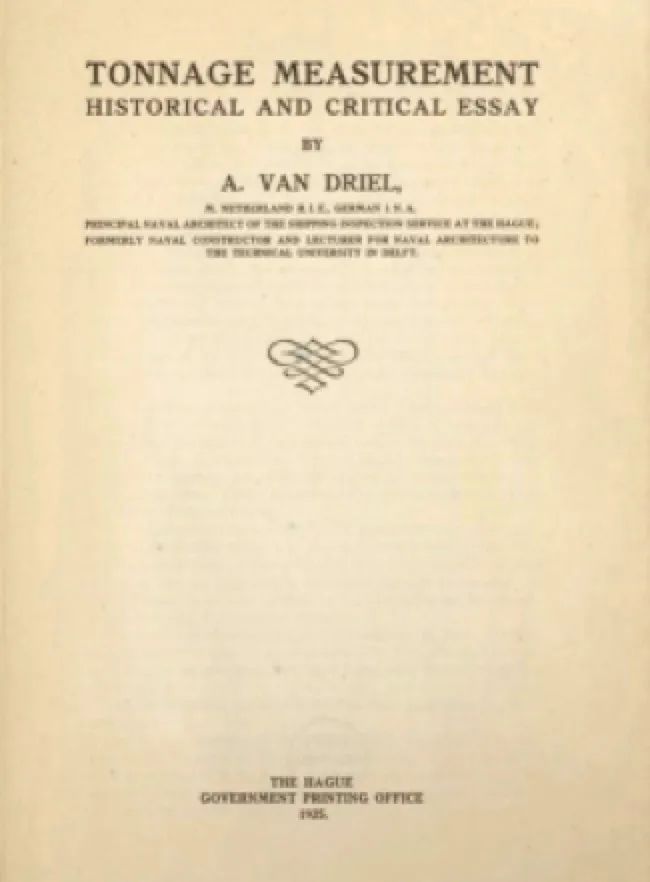 Figure 1
This article aims to provide a general description and overview of the definition of tonnage and the tonnage measurement system based on the aforementioned materials, while also distinguishing between the often-confused concepts of “tonnage” and “Builder’s Measurement” (BM) in modern ship development history research.
Ship Size and MeasurementThe main purpose and use of measuring ship size is twofold: first, to serve as a basis for national and local governments to levy port fees, mooring fees, tolls, dockage fees, etc.; second, to measure the carrying capacity of ships, serving as a calculation unit for charter rates, and can also serve as a calculation unit for new ship costs, resale of old ships, and dismantling, in addition to being used as a unit for shipbuilding output, freight rate agreements, and capacity distribution.There are no records in the history of world shipping regarding when ships began to be taxed. The earliest record of collecting tolls dates back to 1358, which stipulated tolls for sea vessels passing through the Oude Maas near Dordrecht, Netherlands. The record of collecting port taxes dates back to 1368, initiated by Danish King Valdemar IV Atterdag during the second war against the Hanseatic League. The former toll was collected based on the loading capacity of herring (measured in “last”), while the latter was levied based on the dimensions of the ship.1. Methods for Determining Ship SizeThere are two methods for determining ship size: one is the internal cargo space of the ship; the other is how much weight of cargo the ship can carry. The priority of which method to use depends on the type and specific gravity of the cargo, akin to the modern loading factor of ships.In ancient Egypt, the unit used to measure ship dimensions primarily for grain was called “artab,” while ancient Athens used “medimnus” (approximately 40kg), and ancient Rome used “modius” to express ship size. Additionally, ships transporting wine and oil in the Mediterranean region were often measured by the number of amphorae loaded in the hold. Similar to modern times, where the tonnage of a ship is used as a descriptor, such as “2000 tons XXX ship,” ancient ships were also referred to as “2000 jar ship.” For the capacity of amphorae, wine amphorae generally held 19 to 20 liters, while other liquids had a capacity of 26 liters, weighing 17 to 18 kilograms per amphora. This method of measuring ship size using amphorae was not precise and could only serve as a rough comparative reference for ship size. For heavier cargoes such as salt, lead, and copper, ancient Greeks, Hebrews, and Romans sometimes used the unit “talent.” These units varied across different countries, ports, and even different ports within the same country and era. For example, the volume unit “baril” in Genoa was 55 liters in 1455, increasing to 59 liters by 1523. Similarly, the ancient British weight unit “chaldron” was 53 hundredweight (cwt, 5936 pounds) in 1694, but only a little over half that weight in 1422.The “last” unit used in Northern Europe had both volume and weight elements, while the British ton originally was a volume unit that later became a weight unit and then reverted to a volume unit, undergoing a complex transformation process. Notably, accurate conversion methods must be applied to the statistical figures for ship size during that time to reduce errors.2. Prerequisites for Determining Ship SizeThere are two main reasons for determining ship size: first, to prevent overloading for weight-type cargoes, certain draft limits must be set; second, for volume-type cargoes, to ensure space for crew accommodations and necessary provisions, cargo space must be limited. The definition of the full load waterline is more clearly defined in the Rhodian Sea-Law during the Byzantine era in the 7th to 8th centuries.In the 10th to 16th centuries, some port cities in Italy adopted certain provisions from this maritime law. In 1255, Venetian maritime law provided detailed regulations for the two different types of cargo: (1) for ships carrying heavy cargo such as salt and alum, the hold is usually not filled, resulting in a deeper draft; thus, a full load waterline must be established throughout the ship’s length. The corresponding minimum freeboard varies based on the ship’s age, type of cargo, and route; (2) in the 14th century, the main light cargo transported in Venetian waters was cotton, where draft was usually not an issue, and waterlines and draft markings were not typically marked on the hull.However, strict regulations were imposed on cargo space, ensuring necessary storage space, crew accommodations, and armaments. In the port of Venice, an official known as “Scriba nus” was responsible for inspecting cargo loading before departure.In 1284, maritime regulations in Marseille, France, and the maritime law of Visby, one of the Hanseatic League’s trading stations in 1288, imposed restrictions on ship overloading, but there are no detailed records on how to delineate full load waterlines and draft markings. The 14th-century Genoese regulations provided some descriptions of the rules for determining waterlines.Origins of Ship Volume Measurement and Tonnage1. EnglandEngland’s maritime influence significantly affected the origin of tonnage measurement. In the early Middle Ages, trade between England and France involved the transportation of wine, which was taxed under a system known as “Prisage,” where the tax rate was 10 tun or 1 tun for every 10-20 tun and 2 tun for over 20 tun. The term “ton” evolved from the Old English word “tun” used in medieval times. In the Latin used in medieval monasteries, a wine barrel was referred to as “tuna.” Initially, these containers for wine had varying capacities, but they gradually standardized over time. By 1423 (or 1416), the most commonly used large wine barrel had a volume of 40.32 cubic feet (252 gallons, 1.13m3) and a weight of 2240 pounds, typically measured by the number of such barrels a ship could carry. A 100-ton ship indicated it could carry 100 of these barrels. For lighter, bulkier goods, 40 cubic feet served as the volume unit for transport, known as “fleet ton.” Thus, this ton (ton) was initially a volume unit rather than a weight unit. The internal net volume of such a barrel was approximately 34 liters, allowing for 810-957 liters of wine, with a specific gravity of 0.99, resulting in a net weight of 2000 pounds (approximately 900 kilograms). When adding the weight of the barrel itself, which is 2240 pounds, the ton later became defined as a weight unit of 2240 pounds. Considering the spaces between barrels when stacked, each barrel typically occupied 50-60 cubic feet of space. For smaller vessels, each barrel could take up to 56.5 cubic feet of space.In the late 14th century, Newcastle in England preserved relevant provisions for the tonnage measurement of coal/mineral transport vessels (keels, which are flat-bottomed boats used for transporting coal from upstream on the Tyne River to the sea) that were recorded since the reign of King Henry V in 1422, marking the first documented use of the term “tonnage” in written records. At that time, a governmental announcement stated that the loading capacity of ships (keels) transporting coal from Newcastle to London was equivalent to the land transport (portage) of 20 chaldrons of coal, which equals 8 wagons carrying 126 cubic feet each, but it was found that some ships had a loading capacity of up to 23 chaldrons. The king mandated a tax of 2 pence per chaldron, and all ships were required to mark their waterlines and draft markings on the hull, subject to inspection by royal officials.Initially, the measurement unit “tonnage” was solely for tax purposes, later evolving into a measure of ship size. In 1694, regulations for tonnage measurement were enacted, and the parliament also issued relevant regulations, defining tonnage as a weight unit rather than a volume unit. Considering that these vessels (keels) were often used to carry iron ore or directly loaded to the freeboard marks, one chaldron was fixed at a weight of 53 hundredweight.2. FranceFrance has a long-standing wine trade with England, leading to many similarities in tonnage measurement systems. In Marseille, the early loading capacity of ships was expressed in “tons,” calculated by multiplying the length, width, and depth of cargo and then dividing by 200. In medieval France, ports exporting salt from Brouage and the Loire River mouth to the Gironde River mouth also influenced ship dimensions. The weight unit used at that time was “brouage,” slightly larger than one-sixth of a ton.The first legal tonnage measurement regulation in France was included in the maritime ordinance issued by French Prime Minister Jean Baptiste Colbert (1619-1683). In 1746, French scientist Pierre Bouguer (1698-1758) pointed out in his first monograph on shipbuilding “Traité du Navire” that the aforementioned maritime ordinance was incomplete and vague as a tonnage measurement rule. Under this ordinance, all French ships were required to register, with tonnage measured by surveyors. The tonnage unit (volume) referred to as “tonneau de mer” was set at 42 feet, but there was no description of the specific measurement method. Bouguer noted in his book that both the French “tonneau” and the English “tun” originated from wine transportation.Additionally, around 1300, small wine barrels in the Bordeaux region of France were referred to as “pipes” and “barriques,” while large barrels capable of holding 800-900 liters were called “tonneau.” Later, the proportion of different sizes of barrels formed a certain relationship: 1 tonneau=2 pipes=4 barriques, meaning 1 tonneau could hold approximately 960 liters of wine, weighing around 960 kilograms, with an additional 5%-10% for the barrel’s weight.In Colbert’s tonnage measurement regulations, 2000 French pounds (livres Fr. 979 kilograms) was defined as the weight benchmark for tonneau. In 1681, the volume unit for tonnage (tonneau de mer) was changed to 42 cubic feet Fr. (1.44m3, 50.8 cubic feet).3. SpainIn Spain, the term “tonelada” was used as the registered ton unit in the early 16th century. The measurement of “tonelada” was similar to that of “tonneau.” In the eastern Iberian Peninsula, “tonelada” was 1.4m3, while in the western Bay of Biscay area, it was 1.7m3. These were all cargo volume units, and the determination of ship size was still based on the length and width of the hull.4. ItalyBefore the 13th century, surrounding Mediterranean countries also used wine barrels to measure ship dimensions. In Venice and Naples, it was referred to as “botta,” while also being called “botte.” The barrels in Naples could hold 470 liters, Marseille’s barrels could hold 480 liters, and barrels in Crete could hold 450 liters. However, there were significant changes in barrel size units in the Mediterranean region during the 14th to 15th centuries.In the 14th century, Venice began to focus more on volume measurement units than weight measurement units due to the predominance of light cargo transportation over heavy cargo. The tax unit related to shipping, “milliarium,” used since the 13th century, transformed into “botta” before the end of the 14th century. Subsequently, Venice continued to use “botta” as a volume unit for measuring ship size, and in the 15th century, barrels with a capacity of 600 liters became the standard for measuring ship dimensions, with the weight of a botta barrel being around 640 kilograms, including the weight of the barrel. Additionally, for centuries, grain has been a significant cargo in Venice, and in the 16th century, the measurement unit for grain known as “ster (also known as stera, staio)” was used as a tax unit for shipping. For wheat, 1 ster equals 132 liters (62.5 kilograms), and the estimation of ship size was based on converting 1 ster volume to 0.1 botta, with 10 ster weighing equivalent to a botta.Another grain-producing region, Sicily, used the volume measurement unit “salma” to measure ship size. Similarly, grain transported from Naples was measured using the volume unit “carri” (also known as carra, equivalent to 2000 liters, weighing 1500 kilograms). Additionally, the port of Ragusa in Sicily used “carro” to measure ship size, with the loading weight also being 1500 kilograms.Genoa primarily measured the size of ships based on the weight of heavy cargoes like alum (specific gravity 1.7), using the weight unit “cantar” (47.6 kilograms), while the volume unit “baril” varied with time.5. Northern European CountriesShips navigating in the Baltic Sea region towards Northern Europe, especially those from the Hanseatic League and the Netherlands, have long been measured in terms of grain loading. This unit is the “last” mentioned earlier, which was initially a weight unit but later became associated with volume, exhibiting dual characteristics. Around 1254, Sweden adopted this unit as a volume measurement unit. The last refers to the load capacity of a four-wheeled cart, and its volume varies depending on the port or the type of cargo in the same port. Typically, the number of black rye last (approximately 3.105m3) is used for measurement, with one black rye last weighing approximately 4000 pounds (around 2000 kilograms).In the 12th century, Germany replaced “last” with “var” as a grain volume or weight measurement unit. In the 17th century, the port of Hamburg began using the grain last (equivalent to 3.159m3), and the size of ships was expressed using a special unit “schiffslast” (4000 Hamburg pounds = 1935 kilograms). In Amsterdam, the Netherlands, “kornlast (3105m3)” was used as a grain measurement unit, and the weight measurement unit for ship size was also “schiffslast” (4000 Amsterdam pounds = 1976 kilograms). The measurement of volume used kornlast, with the weight unit limited to not exceed full load draft.In summary, since the 17th century, the ratio of weight (kornlast) and volume (schiffslast) in the Hanseatic and Dutch regions has been approximately 0.61 to 0.63.6. Asian Countries(1) ChinaIn 119 BC, Emperor Wu of Han, Liu Che, promulgated the “算缗令,” which includes the legal provisions for measuring the length of ships over five zhang (丈), marking the earliest recorded ship measurement and tax management regulations in Chinese history, holding significant importance in the history of ancient Chinese ship inspection.During the Song Dynasty, government officials often measured the width of ships to estimate “力胜” (carrying capacity), using the ship’s width to determine the amount of tax collected, which was one of the methods for government tax collection.To accurately collect ship taxes, starting from the fourth year of the Xuande reign (1429), during important river checkpoints, “钞关” were established. The checkpoints primarily collected shipping taxes based on the measured length of the ship’s hull and counted the number of beams in the hull, converting it into a loading capacity measured in materials for tax purposes. Officials at the checkpoints measured the ships, often estimating the ship’s material based on the widest beam (the widest part of the hull) to collect ship taxes.After the first maritime ban was lifted in 1864 during the Qing Dynasty, Kangxi established customs in the four regions of Jiangsu, Zhejiang, Fujian, and Guangdong. Customs personnel were responsible for inspecting and measuring outgoing merchant and fishing vessels, collecting shipping taxes. Customs also measured the beam dimensions of foreign ships arriving in China. During the late Qing Dynasty, China’s customs were primarily dominated by foreign officials in the Shipping Hall (also known as the Port Administration Office). The Shipping Hall was responsible for managing port affairs, including inspecting incoming and outgoing vessels, verifying crew certificates, and measuring ship tonnage.(2) JapanIn Japan, the primary cargo transported by water was rice, with the measurement unit for rice being “石” (shaku). Thus, the size of ships was measured by the number of “石” (shaku) they could carry, which is somewhat similar to Northern Europe.Although there are several formulas for calculating the number of “石” (shaku), the most standard method is based on the carpenter’s foot used that year, where 10 cubic feet equal 1 “石” (shaku), but this does not equal the actual volume of rice. For tax purposes, it is sometimes calculated as 150 kilograms of cargo equivalent for 1 “石” (shaku).In 1885, the Japanese tonnage measurement rules promulgated that the loading capacity of Japanese-style ships would be converted based on 10 cubic feet as 1 “石” (shaku) and 10 “石” (shaku) as 1 ton.(3) Ancient Babylon and IndiaIn the ancient Babylonian era, there are historical records of managing ships navigating the Mesopotamian river basin, where the unit used for measuring ship size was “kur,” equivalent to 7260 liters of volume. During the glorious era of Indian merchant shipping, wooden ships used bags of pepper as units to measure the internal volume of ships.Changes in Ship Volume Measurement MethodsTo avoid high port taxes and obligations for crew and ship armament, shipowners typically seek to minimize the tonnage of their vessels. Conversely, when these ships are rented by the government, owners hope to receive substantial compensation. Thus, a reasonable and quantifiable calculation formula is essential.1. VeniceIn the 15th century, a calculation formula was found in the notes of Venetian carpenters: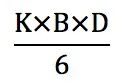 In the formula above, K represents the length of the ship’s keel, measured in Venetian feet (also known as Venetian strides, approximately 2-1/2 feet), while B and D represent the width and depth of the ship, also measured in Venetian feet. The result is expressed in the volume unit of “botte.”2. EnglandDuring the same period in England, the Old Carpenter’s Formula was used to calculate (volume) tonnage:
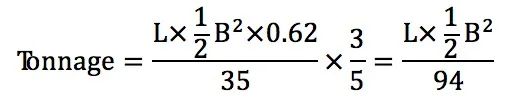 In the formula above, K is the (projected) length of the ship’s keel, B is the width measured inward along the longest beam, and D is the depth of the hold, all measured in feet.In the fourth edition of “The Complete Shipwright” published in 1678, the author Edmund Bushnell mentioned that shipbuilders in the Thames River area used ship dimensions to estimate cargo weight, with the denominator being 94, considering the average square coefficient of the ship to be 0.62, where 35 cubic feet is equivalent to 1 ton of displacement, with 2/5 of the displacement being the weight of the ship (lightweight), and supplies, deadweight tonnage (deadweight tonnage) is represented by the following formula (Bushnell’s first rule):Another example is found in the first edition published in 1711 by a shipbuilder named William Sutherland in a famous shipbuilding professional book “The Shipbuilders’ Assistant.” Sutherland criticized the Bushnell calculation formula and its irrationality, but these criticized formulas were still included in the bill passed by parliament in 1720 until 1835. This tonnage measurement formula became widely known as the Builder’s Old Measurement Rule (BOM). In 1773, during the reign of King George III, this tonnage measurement law was enacted and enforced on all merchant ships until 1835.However, customs and naval officials also raised objections to the practical operability of the Old Carpenter’s Formula, as measuring the length of the keel and the depth of the cargo hold was challenging for operational and cargo ships. Therefore, they suggested simplifying the formula by replacing D with 1/2B and using the length of the keel as L minus 3/5B.It is noteworthy that these tonnage measurement methods and formulas had a significant negative impact on ship design. Firstly, tonnage is proportional to the square of the ship’s width, leading to an excessive weight of the ship’s width in tonnage calculations. To reduce tax costs, shipowners often designed vessels to be very narrow, resulting in poor stability and a tendency to capsize. Furthermore, the tonnage calculated by these formulas often deviated significantly from the actual loading capacity of the vessel. After many maritime accidents, dissatisfaction with the current tonnage measurement methods gradually increased.In 1821, the British government established a special committee to discuss amendments to this law. The committee submitted a report recommending measurements at a position between the lightweight and full load drafts, but this suggestion lacked practical rationality and feasibility, leading the committee to consider measuring from within the hull. The specific method involved measuring the width at five positions and the depth at two positions, and the revised tonnage calculation formula proposed by the committee was as follows:The tonnage calculated using this method was very close to that of the old formula. The British Navy did not adopt the committee’s recommendation but instead established another special committee in 1833. This committee concluded that “Tonnage measurement should not be based on the carrying capacity, but on the internal capacity.” This indicated a return to the original calculation method based on the number of barrels.The new calculation method involved dividing the deck length into six equal parts and the depth into five equal parts, as shown in Figure 2.Figure 2Then, the widths at positions A1, A4, C2, C4, E1, and E4 were measured as shown in Figure 1. For specific calculation formulas, refer to “References 2).” Starting from 1819, the total tonnage was to deduct the volume of the engine room.The overview of the above methods emphasizes the practicality and simplicity of measurement methods, which also had some negative impacts on ship design, resulting in about a 7% increase in tonnage compared to the old methods. In response to this situation, in 1849, the Navy established another committee, which submitted a revision report a year later, proposing a new measurement method that was passed in parliament. The secretary of this committee, George Moorsom, was the leader of this new measurement method, which was thus named after him.3. FranceThe oldest calculation method for loading capacity in France originated in the southern port city of Marseille, where the loading capacity of ships was expressed using the following formula:The unit used in the formula is pan = 3/4 Paris feet (also known as “法尺”).Later, the initial tonnage measurement regulations in France were referred to as “Colbert’s” maritime ordinance, which mandated the registration of all French ships. Tonnage measurement had to be conducted by specialized tonnage measurement officials, but the measurement method was also based on measuring the length, width, and depth of the hull from within, although the specific descriptions and records were incomplete and unclear.By the end of the 18th century, France also adopted the (L×B×D)÷94 calculation formula, which was the same as the tonnage measurement formula in England from 1694. In 1837, this formula was converted into metric (metric system) as follows:Other European countries, such as Spain, Italy, Germany, and Sweden, also adopted a similar method of measuring length multiplied by width multiplied by depth divided by a constant, similar to the approaches taken by England and France. Van Driel’s monograph on tonnage measurement, “Tonnage Measurement, Historical and Critical Essay,” provides a detailed description of the tonnage measurement system and methods in the Netherlands.The Birth of the Moorsom System and the International Convention on Tonnage Measurement of Ships1. Moorsom SystemIn 1854, the UK adopted the Moorsom System for measuring ship size and carrying capacity. The basic concept of the Moorsom System is to measure the enclosed internal volume of the ship in cubic feet, with 100 cubic feet of volume equivalent to 1 ton (unit). This volume and tonnage calculation equivalence was rounded to 100 based on the average volume of one ton of weight for British ships at that time being 98.22 cubic feet. The internal volume calculation method adopted Simpson’s first rule, significantly improving accuracy and marking a milestone in measurement methods. This method is similar to the principles of modern tonnage measurement based on internal volume calculations.Under the Moorsom System, for tonnage measurement, the crew’s accommodation on the deck was initially exempted within 5% of the total tonnage, later revised to be adjusted. Additionally, spaces unsuitable for carrying cargo or storing items, such as superstructures, entrances, and stairways, were also exempted.The registration ton and the ship’s cargo volume are closely related, which is also a concern for shipowners, as registration ton evolved into the later net tonnage (NT). Regarding the deduction of machinery spaces, the Moorsom System introduced a percentage deduction method in 1854, where 32%-37% of the total tonnage of the ship was deducted for machinery spaces. This deduction method underwent multiple revisions. In 1869, the British government intended to modify the deduction method for machinery spaces, but ultimately did not proceed. The specific modification proposal was to measure the volume of the main engine room and boiler room, with a deduction of 1.5 times the measured volume for ships propelled by paddle wheels and 1.75 times for screw-propelled vessels. The maximum deduction for machinery spaces did not exceed 50% of the total tonnage of the ship.On May 24, 1873, France promulgated an ordinance adopting the Moorsom System for tonnage measurement. At that time, the French government supported policies for shipping and shipbuilding, and regardless of the increase in port fees and docking fees, shipowners believed that the increase in total tonnage directly related to their interests. Based on this, shipowners sought to obtain more subsidies, hoping for two total tonnages: one as a subsidy calculation basis, termed “special gross tonnage,” which was much larger than the total tonnage calculated according to the British Moorsom System; the other was lower than the “special gross tonnage” but higher than the total tonnage calculated according to the British Moorsom System. To support shipping, France established a third tonnage for steamships, resembling the calculation of net tonnage for sailing vessels. The net tonnage of French ships was very low, causing foreign ships entering French ports to prefer holding French tonnage certificates, while British and American authorities did not recognize French tonnage certificates, which was disadvantageous for French ships. By 1904, the French government decided to fully adopt British law.In 1872, Germany used the Moorsom System as the basis for measuring the tonnage of ocean-going vessels when drafting its tonnage measurement law. The tonnage measurement law in Germany was enacted the following year (1873). The deduction for machinery spaces included measuring the main engine room, boiler room, and also the coal bunkers, with a maximum deduction of 50% for all machinery spaces. This became known as the “German rule.” By 1895, the German government adopted British rules for the deduction of machinery spaces.In the early 17th century, ships built in the Netherlands had noticeable inward slopes on both sides to reduce the width of the deck and thus lower the ship’s tonnage. By 1699, new rules required measurement from the maximum width of the ship vertically upward. According to the law published in 1875, the measurement rules based on the agreement reached at the international conference in Constantinople in 1873 were implemented the following year. Ultimately, the British law was adopted in 1899.Other European countries gradually adopted the Moorsom System, but regarding the deduction of machinery spaces, Sweden and Belgium adopted the “German rule,” while Romania and Egypt adopted the “Danube rule.”The United States followed the UK in adopting the Moorsom System as the tonnage measurement regulations. Before this, different Builder’s Measurement (B.O.M, Builder’s Old Measurement) methods were used. In 1865, parliament passed a law adopting the British Moorsom System as the tonnage measurement regulations.In the late Qing Dynasty and the Republican period in China, the Moorsom System was essentially adopted following the British regulations for tonnage measurement.2. 1969 International Convention on Tonnage Measurement of ShipsThe Moorsom System has certain scientific and rational aspects and was gradually adopted by many countries worldwide. However, due to modifications and supplements made by various countries when adopting this method, significant differences arose primarily in the definitions and calculation precision of deduction and exemption spaces. Approximately 100 years later, this method had evolved into a cumbersome system, with contrasting views on the definitions of deduction and exemption spaces from the perspectives of governments and shipowners. To simplify and improve the original tonnage measurement methods, making them mutually recognizable among countries and more adaptable to international waters and port transportation, as well as the development of various new ship types, the Intergovernmental Maritime Organization (IMCO, now known as the International Maritime Organization, IMO) formulated the “1969 International Convention on Tonnage Measurement of Ships.” This convention was adopted in London on May 27, 1969, and came into effect on July 18, 1982. China joined the “1969 International Convention on Tonnage Measurement of Ships” on April 8, 1980, becoming a contracting party to the convention. For domestic vessels, simplified methods are employed.Compared to the diverse tonnage measurement rules of various countries before unification, the “1969 International Convention on Tonnage Measurement of Ships” retained the gross tonnage (GT) and net tonnage (NT) concepts from the Moorsom System, but the concept of 100 cubic feet = 1 tonnage no longer exists. Gross tonnage and net tonnage are directly calculated using formulas. Moreover, the measurement rules defined in the convention are straightforward, shifting from measuring internal volume to measuring shaped volume. Measurement work can be conducted entirely based on blueprints, significantly reducing the workload of measurement. Furthermore, gross tonnage clearly reflects the overall dimensions of the vessel, while net tonnage in the Moorsom System was derived from gross tonnage after deducting deduction and exemption spaces, but the new convention directly calculates net tonnage in relation to draft. Notably, for certain ship types such as sheltered deck ships, roll-on/roll-off ships, and ferries, the new rules differ significantly from the old rules.Although the “1969 International Convention on Tonnage Measurement of Ships” standardized tonnage measurement for internationally sailing vessels, for ocean-going vessels, in addition to the tonnage certificate of the flag state (nationality), certificates from the Suez Canal and Panama Canal are also required. The tonnage measurement system for vessels transiting the Panama Canal has been aligned with the “1969 International Convention on Tonnage Measurement of Ships” since October 1, 1994. According to the new measurement method, the new Panama Canal net tonnage (PC/UMS) can be calculated based on the gross volume defined in the 1969 International Convention, eliminating the previous total tonnage for the Panama Canal. The new tonnage measurement rules for the Panama Canal are also listed in the United States Federal Code (Code of Federal Regulations, CFR) Title 35, Chapters 133 and 135. The new Panama Canal net tonnage primarily pertains to the fees charged for vessels transiting the canal. In contrast, the tonnage measurement system for the Suez Canal is primarily based on the rules established at the 1873 Constantinople conference, with complex and cumbersome terms and many spaces included in gross tonnage and net tonnage. Due to self-interest considerations, the Suez Canal authorities have not yet become a contracting party and are unwilling to adopt the definitions of volume calculations and deduction and exemption spaces in the 1969 International Convention.Conclusion: Displacement vs. TonnageIn summary, the role of ship tonnage primarily serves as a benchmark for ship taxation and various fees, with gross tonnage also used to classify ships and set standards for equipment allocation. Gross tonnage is also commonly used as a benchmark in various ship statistics. For shipyards or ship design units, aside from estimating gross tonnage during the preliminary design phase, tonnage calculations, including the cumbersome Suez tonnage calculations, are handled by classification societies.Due to the complexity and confusion of the concept and definition of ship tonnage, this is reflected not only in public media promotion but also in research on the modern history of the shipbuilding industry, shipping history, and naval history, where misinterpretations and confusions frequently occur. The “中国近代舰艇工业史料集” is an authoritative collection of materials on the history of China’s shipbuilding industry, which mentions the tonnage of ships listed by “Deputy Officer and Editor-in-Chief Chi Zhongyou” in the summer of the seventh year of the Republic of China as being counted in “displacement tons.” This tonnage statistic may have been correct during the Republic of China era, but it is inappropriate for ships built during the late Qing Dynasty.Modern naval history research expert Ma Youyuan (1940-present) has pointed out that during the sailing ship era, ship size was not calculated using displacement in tons, but rather by “Builder’s Measurement” (BM). Secondly, from the perspective of the design process of Western sailing ships, the principle of “weight buoyancy balance” is distinctly different from modern ship design, relying significantly on the experience of the Chief Constructor, with ship static calculations not yet comprehensively applied. Although French ship designers invented the Bonjean curves that could be used for calculating displacement in tilted states in the early 19th century, there are no records of their application in the ship design process during the 19th century. Additionally, records of steam-powered sailing cruisers “Hai’an” and “Yuyuan” built by Jiangnan Arsenal in 1877 clearly state “tonnage” rather than displacement.
 Figure 3In 2019, during the restoration design process of the “Hai’an” cruiser at Jiangnan, not only were modern ship design methods used to generate lines and verify the static waterline of the hull, but the BOM method was also used to calculate the ship’s tonnage, which closely matched Huang Dao Ping’s records. Displacement is a weight calculation method, while BM is a volume calculation method. Without detailed ship data, it is nearly impossible to calculate corresponding values. Perhaps due to the authoritative nature of the “中国近代舰艇工业史料集,” it has led to misjudgments about the definition of the scale of ships built during the late Qing Dynasty. In conclusion, the study of the development history of tonnage measurement, especially the formation and development of tonnage measurement systems in England and France, is very helpful for clarifying the design and construction of ships by Jiangnan Arsenal and Fuzhou Shipbuilding Administration during the late Qing Dynasty.
Source: China Classification Society