Affiliated Unit: Chinese Academy of Sciences Semiconductor Research Institute
Technical Field: Next Generation Information Technology
Application Areas: Consumer electronics, industrial, communications, automotive, artificial intelligence (AI), military defense, and other fields
Intellectual Property: Invention patents
Technology Maturity: Samples available
Project Overview
Clock devices are core components of all electronic products, with each electronic product requiring at least one. They have a wide range of applications and are known as the “salt of industry,” providing precise clock signals for electronic systems. Currently, the most widely used clock device is the quartz crystal oscillator. However, quartz crystal oscillators face insurmountable technical bottlenecks in terms of reliability, miniaturization, and power consumption, which cannot meet the future development needs of electronic equipment systems.
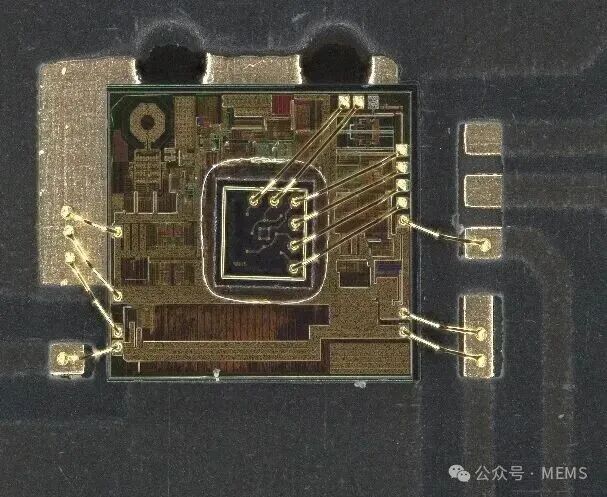
The all-silicon MEMS clock is made using MEMS technology, integrating a robust silicon-based MEMS resonator with ASIC circuits. The all-silicon MEMS resonator has advantages of high frequency, high quality factor (Q), miniaturization, low power consumption, and high reliability, achieving high stability and low noise all-silicon MEMS clocks. Its reliability exceeds that of quartz crystal oscillators by at least an order of magnitude, while significantly reducing size and power consumption. Therefore, it is regarded as an upgraded product of quartz crystal oscillators, with extensive application needs in industrial and consumer electronics.
The team at the Chinese Academy of Sciences Semiconductor Research Institute has a rich accumulation in the design and fabrication of high-performance silicon-based MEMS resonators, low-noise ASIC circuit design, and the full-chain technology development of silicon-based MEMS clock chip integration and packaging. The technical features include: (1) Development of over 20 different structures of high-performance silicon-based MEMS resonators, with frequencies covering kHz to GHz, Q ≥ 105, and f·Q approaching the theoretical limit, reaching an internationally leading level. (2) Development of high-stability all-silicon MEMS clock engineering samples, with frequency stability of ±20 ppm and phase noise reaching -135 dBc/Hz@1 kHz, performance comparable to commercial products and leading domestically. The team holds over 40 independent intellectual property rights in the design and fabrication of all-silicon MEMS clocks.
All-silicon MEMS clocks have been applied in consumer electronics, industrial, communications, automotive, and other fields. In 2022, the market size for all-silicon MEMS clocks was approximately 2.5 billion yuan, accounting for nearly 10% of the overall clock market, primarily monopolized by the American company SiTime. According to Yole’s forecast, by 2027, the demand for clock devices will exceed 70 billion units, and by 2031, the global clock device market size is expected to reach 84.2 billion yuan.
Further Reading:
“Analysis of the Piezoelectric MEMS Clock Generator SiT30100 in Apple’s iPhone 16e”
“MEMS Industry Status – 2025 Edition”
“Piezoelectric MEMS Technology and Market – 2025 Edition”
“MEMS Industry in Greater China – 2025 Edition”
“Next Generation MEMS Technology and Market – 2025 Edition”