
Click the blue text above to follow us
IntroductionAntibody-drug conjugates (ADC) consist of antibodies, linkers, and small molecule toxins. While they possess the advantages of high targeting ability and high cytotoxicity, their structural diversity and complexity, as well as the low levels of small molecule toxins released in the circulatory system, present numerous challenges for pharmacokinetic studies…Contents of this article: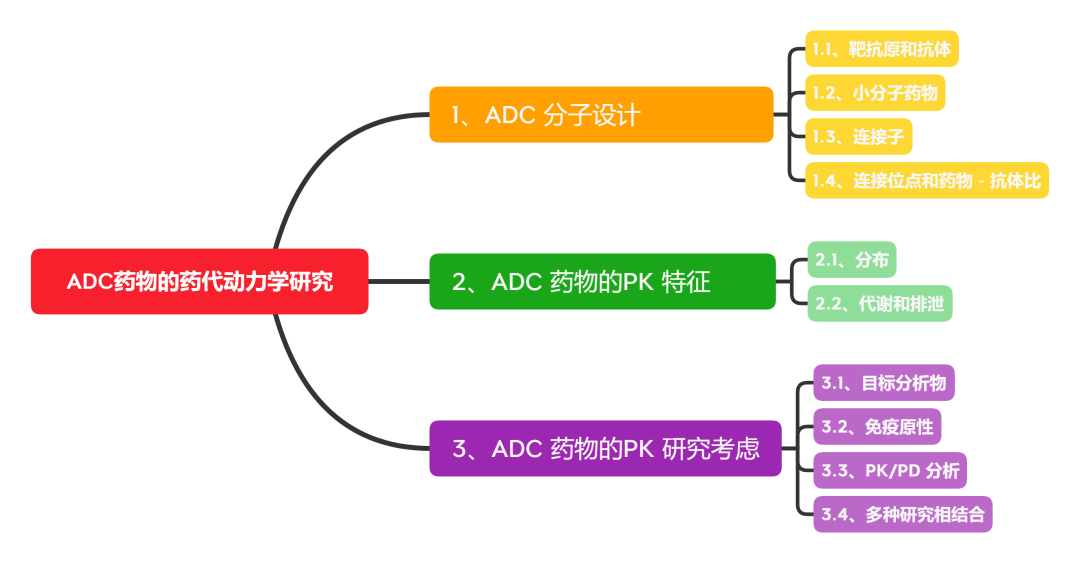 1. ADC Molecular DesignIn ADC molecules: ①The selection of targets and antibodies is the starting point for ADC drug design and is a decisive factor for drug indications. The selected target antigens should typically be tumor or disease-related and expressed at high levels; ②The linker should be stable enough during the in vivo circulation of the ADC drug and should be able to rapidly release the small molecule toxin in an active form after the ADC drug enters the target cell; ③The small molecule toxin should have a highly effective killing effect on tumor cells. Factors such as targets, antibodies, and linkers can all affect the effective safety of ADC drugs, which will be discussed one by one below.1.1 Target Antigens and AntibodiesAfter determining the target indications, the first consideration is which antigens are specifically and highly expressed on the surface of tumor cells of this type. Ideally, the selected antigens should be highly uniformly expressed on the surface of target cells, and not expressed or expressed at low levels on normal tissues or cells; the antigens should be non-secretory, as secretory antigens can bind with ADC drugs or naked antibodies in the circulatory system, leading to a reduction in the binding of ADC drugs to tumor cells, affecting drug efficacy and safety; after the ADC drug binds to the antigen, it needs to have an appropriate endocytosis pathway and a certain endocytosis rate to release small molecule toxins through enzymatic degradation inside the cell.Currently, lack of efficacy and off-target toxicity are major challenges faced by ADC drugs, one significant reason being the low level of target antigen expression and limited internalization rates.Researchers are currently developing methods to address low antigen expression and low internalization rates, such as using anti-tumor angiogenesis antibodies or designing non-internalizing ADC drugs with bispecific antibodies:① Using anti-angiogenesis antibodies avoids the internalization process, but may result in off-target effects affecting normal blood vessel formation, requiring careful selection of target antigens and corresponding antibodies;② Using bispecific antibodies to target two non-overlapping epitopes of one antigen to enhance the affinity between the antibody and the antigen.In ADC drugs designed by ROSSIN et al., they used bispecific antibodies lacking the Fc region to target antigens, utilizing an additional chemical activator to cleave the linker outside tumor cells, thereby releasing free small molecule drugs and penetrating into tumor cells. This approach avoids insufficient internalization caused by tumor cell interstitial pressure and epithelial barriers, thereby enhancing anti-tumor activity. Bispecific antibodies can also selectively bind to two different antigens on tumor cells, thereby reducing off-target toxicity.Studies have shown that some ADC drugs can utilize the physical and chemical properties of the linker and the tumor microenvironment to release free small molecule toxins, thus killing adjacent antigen-negative tumor cells, a process known as the bystander killing effect. Some ADC drugs, after internalization, can be metabolized to release uncharged, cell membrane-permeable cytotoxic metabolites, killing nearby antigen-negative cancer cells. The bystander killing effect is significant for tumors with heterogeneous antigen expression.It is important to note that even for the same target, different tumor types can influence the therapeutic effect of ADCs, meaning that the same ADC drug may exhibit different PK characteristics and effective safety in patients with different indications. For example, Besponsa, an antibody-drug conjugate targeting CD22, Inotuzumab combined with the alkylating agent Ozogamicin, was approved by the FDA in 2017 for adult relapsed/refractory B-cell acute lymphoblastic leukemia, but the phase III clinical trial for Besponsa in relapsed/refractory non-Hodgkin lymphoma was terminated due to poor efficacy.In immunoglobulin G (IgG) class antibodies, IgG1, IgG2, and IgG4 are typically used to develop therapeutic bioproducts (half-life approximately 18-21 days), while IgG3 is less frequently used due to its low binding rate with FcRn receptors, resulting in a faster clearance rate (half-life approximately 7 days).Currently, many ADC drugs use the IgG1 subtype, which can exert antibody-dependent cellular cytotoxicity (ADCC) and complement-dependent cytotoxicity (CDC) to further enhance ADC activity. However, there are also certain drawbacks; the binding of ADC drugs to effector cells may affect their targeting of tumor cells, reduce drug accumulation in target cells, and hinder drug molecules from entering target cells.Additionally, consideration must be given to the size of the selected antibody molecule; if the antibody is too large, it may have difficulty passing through the capillary endothelial layer and extracellular space, while if the antibody is too small, it may affect its half-life in the body.Overall, an ideal antibody should have good targeting functions, effectively deliver small molecule drugs to target cells, while possessing low immunogenicity, and the antibody should have suitable coupling sites for the linker. After binding to the antigen, it should have a certain endocytosis rate and appropriate endocytosis pathways, and the selected antibody should retain all or part of the function of the naked antibody.For example, the first approved ADC drug for single-agent treatment of solid tumors, Ado-trastuzumab emtansine (Kadcyla, T-DM1), is composed of trastuzumab and the small molecule microtubule inhibitor DM1 (derivative of maytansine), where the antibody part is trastuzumab, retaining its ADCC activity.1.2 Small Molecule DrugsThe limited tumor penetration capacity of antibodies, low antigen expression, and limitations of endocytosis efficiency can all result in low concentrations of small molecule toxic drugs inside cells; therefore, small molecule toxins need to have high cytotoxicity.Typically, the targets of small molecule toxins in ADC drugs are located intracellularly; if the ADC drug cannot be transported into the cell, it will affect the drug’s efficacy and safety, and may produce toxicity to adjacent normal cells when outside the cell or after dissociation.Additionally, the influence of small molecules on the overall properties of the ADC drug must be considered, as they may affect the endocytosis efficiency of the ADC drug, its polarity, and immunogenicity. Moreover, small molecule toxins usually need to have appropriate solubility in aqueous buffer solutions to facilitate coupling with antibodies; the coupled small molecule toxin should have a certain stability. Currently used small molecule toxins primarily include maytansine, auristatins, anthracycline drugs, and camptothecin analogs.1.3 LinkersThe selected linker must be stable in plasma to avoid the premature release of small molecule toxins that could damage normal tissues or cells. When the ADC drug is internalized into the target cell, the selected linker should be able to rapidly release effective active components. Additionally, the molecular weight and polarity of the selected linker should be considered for their impact on the overall properties of the ADC drug.Linkers can be categorized ascleavable and non-cleavable; cleavable linkers can utilize the differences between the tumor microenvironment and normal physiological environment to release small molecule toxins that may permeate and produce bystander effects. Non-cleavable linkers typically disconnect the antibody and linker after the antigen-antibody complex enters the lysosome. Both types of linkers have their advantages and disadvantages; non-cleavable linkers are more stable than cleavable ones, reducing off-target toxicity and improving multi-drug resistance (MDR); however, the metabolites produced by cleavable linkers diffuse more easily into cells to produce bystander killing effects, which is significant for tumors with heterogeneous antigen expression, but they are more prone to off-target effects. Compared to cleavable linkers, using non-cleavable linkers requires stricter selection of antigens.Ado-trastuzumab emtansine (Kadcyla) uses a non-cleavable thioether linker connected to a maytansine derivative. Since the ADC metabolizes to produce ionizable metabolites with poor permeability, it has a minimal impact on surrounding normal cells, and Kadcyla demonstrates acceptable safety. The nature of the linker can significantly affect the drug’s metabolic pathways in vivo, which is crucial for the design of ADC drugs.1.4 Coupling Sites and Drug-Antibody RatioThe efficacy of ADC drugs mainly depends on the concentration of small molecule toxins in tumor cells; therefore, the drug-antibody ratio (DAR) is an important influencing factor for the efficacy of ADC drugs.Currently, multiple studies are dedicated to improving the DAR of ADC drugs to increase the concentration of drugs in tumor cells. However, research has shown that a higher DAR does not always correlate with better efficacy, which may relate to factors such as the polarity of small molecule toxins. From a safety perspective, a higher DAR may also increase toxicity to normal tissues. In the study by ZHANG et al., it was found that when the DAR was increased beyond a certain point, the activity of the ADC drug did not further increase. Selecting an appropriate DAR is significant for achieving effective concentrations in tumor cells.The coupling site is related to the homogeneity of the ADC drug and is also one of the important considerations in DAR molecular design.Cysteine (8) and lysine residues (80) on the antibody are more prone to chemical reactions and modifications, and are therefore often used as sites for binding with effector molecules. In early ADC development studies, lysine residues on the antibody were typically chosen as coupling sites, as there can be up to 80 lysine residues on each antibody, leading to great heterogeneity. Conversely, there are only 8 free cysteines on each antibody that can be linked to the linker via disulfide bonds; using cysteine as a coupling site helps reduce ADC heterogeneity. JUNUTULA et al. reported a new type of THIOMAB-drug conjugates (TDC) that utilize engineered site-specific cysteines, providing a clearer DAR and reduced heterogeneity.According to the “Expert Consensus on Quality Control and Preclinical Evaluation of Antibody-Drug Conjugates” published by the National Institutes for Food and Drug Control in China on July 20, 2018, the main coupling sites of the drug, DAR, and drug loading distribution are important components of ADC drug quality control.2. PK Characteristics of ADC DrugsThe absorption, distribution, metabolism, and elimination of ADC drugs are crucial for understanding their PK and PK/PD relationships, which can influence the selection of candidate molecules during drug development. Since ADC drugs consist of both large molecule antibodies and small molecule toxins, mixed methods may be needed to characterize their ADME properties. As ADC drugs are primarily administered intravenously in clinical settings, their absorption characteristics will not be discussed here.From the perspective of molecular weight and spatial volume, the main structure of ADC drugs is primarily the antibody, thus exhibiting many pharmacokinetic characteristics similar to naked antibodies, including target-mediated drug clearance, FcRn receptor recycling, and non-specific proteolytic degradation.Table 1 compares the main PK characteristics of ADC drugs with small molecule drugs and antibody drugs. Overall, ADC drugs are typically administered intravenously, with distribution similar to that of antibody drugs, while possessing metabolic and clearance pathways of both antibodies and small molecules. They exhibit non-linear characteristics at low doses and linear characteristics at high doses.
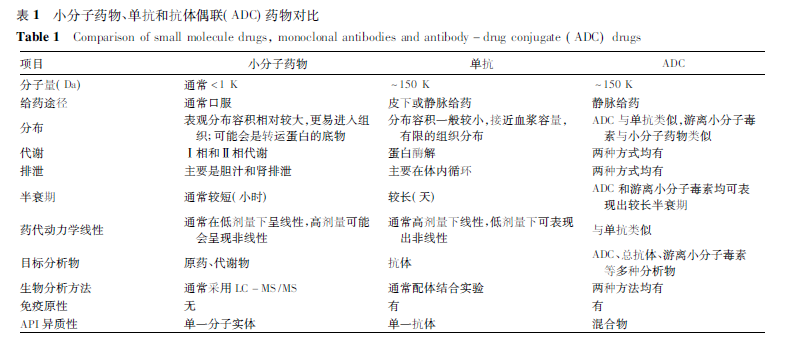 One of the most important features of ADC drugs is their diversity.Due to the different numbers of small molecule toxins conjugated to antibodies and/or the different binding sites, ADCs are a mixture of various different molecules. When ADCs enter the body, small molecule toxins gradually dissociate from the ADC drug through enzymatic or chemical reactions, further increasing the diversity of ADC drugs. This ever-changing diversity is one of the significant challenges in the PK study of ADC drugs.2.1 DistributionThe spatial structure of ADC drugs is mainly composed of antibodies, thus their distribution in the body is usually similar to that of unbound antibodies.After administration, the initial distribution of ADC drugs is primarily confined within the vasculature, with the central compartment’s distribution volume being similar to that of plasma (approximately 50 mL·kg-1), and later expanding into the interstitial spaces, with a steady-state distribution volume of about 150-200 mL·kg-1.Similar to naked antibodies, ADC drugs have difficulty crossing endothelial cells and have lower degrees of tissue distribution, with slow diffusion, and higher distribution in tissues with high blood flow, such as the liver, kidneys, lungs, spleen, and heart.Similar to naked antibodies, the distribution of ADC drugs is also influenced by target antigen expression and internalization rates. The distribution of drugs to non-target tissues through non-specific or specific binding of naked antibodies typically does not have pharmacological effects; however, in the case of ADC drugs, since small molecule toxins or their analogs will be released subsequently, the distribution and accumulation in the same tissue may produce clinically significant pharmacological/toxic effects.Understanding the distribution of ADC drugs is crucial for comprehending pharmacological/toxic effects.Tumor cells or normal tissues may release antigens into the circulatory system, which can bind to ADC drugs and clear them from circulation, thus affecting their distribution. The complexes formed when ADC drugs bind to soluble antigens can be taken up and cleared by the liver, releasing a significant amount of small molecule toxins during this process, potentially causing liver toxicity.In rodent studies, it has been shown that antibody binding to monomethyl auristatin E (MMAE) affects its tissue distribution, increasing liver uptake compared to unbound antibodies; similar phenomena have been observed in other studies, where the binding of small molecule toxins significantly impacted the distribution of ADC drug CMD-193 in normal tissues and tumors in humans: reduced tumor uptake and increased distribution in the liver.In these cases, the distribution studies of the ADC drugs used labeled antibodies. However, it is also important to understand the tissue distribution of free and bound small molecule toxins. Some researchers have conducted dual radioisotope labeling studies on antibodies and small molecule toxins, showing that the distribution of small molecule toxin MMAE is similar to that of the antibody in most tissues, but the concentration of the small molecule toxin is higher in the liver.2.2 Metabolism and ExcretionAntibodies primarily enter cells through target-mediated and non-specific uptake and are cleared from the body via proteolysis.Unlike naked antibodies, ADCs have unique metabolic characteristics, releasing cytotoxic metabolites through two different pathways (decoupling and degradation).① Decoupling: The linker cleaves, releasing free small molecule toxins while retaining the antibody scaffold; ② Degradation: The antibody portion of the ADC drug is proteolytically hydrolyzed into peptides/amino acids, simultaneously generating free small molecule toxins or small molecule toxins with linkers or amino acid-linker analogs, which can still possess high cytotoxicity.Generally, both metabolic pathways occur simultaneously in the body, with the predominant pathway depending on factors such as linker stability, binding sites, and total drug loading.For ADC drugs with linkers that are easily cleaved by enzymes or chemicals (e.g., disulfide bonds), the release of cytotoxic drugs via decoupling may be the primary pathway. If a non-cleavable linker is used, the metabolic pathway in vivo may primarily release free small molecules and their structural analogs through degradation.For example, in Ado-trastuzumab emtansine (Kadcyla), the in vivo metabolism produces effect molecules with amino acid residues and/or linkers, where the Cmax of MCC-DM1 in plasma is significantly higher than that of free DM1.The free small molecule toxins and their structural analogs produced from the metabolism of ADC drugs continue to undergo metabolism and biotransformation (e.g., through cytochrome P450 enzymes), theoretically presenting the possibility of drug-drug interactions (DDI) with other small molecule therapeutic drugs, which may affect the blood drug concentrations of ADC drug degradation metabolites or other concomitant medications.However, given that the concentration of small molecule toxins released from ADC drugs in the circulatory system is relatively low, the risk of DDI is generally low..3. Considerations for PK Studies of ADC Drugs3.1 Target AnalytesThe main content of PK studies of ADC drugs includes the stability of ADC drugs, blood drug concentration-time curves, distribution, metabolism, and excretion processes; if the small molecule drug is a new compound, it is recommended to comprehensively apply in vivo and in vitro research methods, qualitative and/or quantitative detection methods, to conduct detailed studies on the systemic exposure of the small molecule drug, plasma protein binding, excretion characteristics, and the uptake/distribution characteristics in tumor and normal tissues. If necessary, studies on the systemic exposure, metabolite profiles, distribution, shedding mechanisms, and cleavage points of small molecule drug metabolites should be conducted.Common analytes used to characterize the PK characteristics of ADC drugs include bound antibodies (antibodies conjugated with at least one small molecule toxin), total antibodies (antibodies conjugated and unconjugated with small molecule toxins), bound effector molecules, free small molecule toxins, and their analogs. Different analytes reflect different contents and significance in PK, collectively forming the overall metabolic profile of ADC drugs in vivo.The reduction in the concentration of ADC drugs in vivo involves two clearance pathways:① The antibody portion is disintegrated through enzymatic degradation; ② The small molecule toxin completely dissociates from the antibody (i.e., DAR becomes 0). However, the pathway that affects the concentration of total antibodies is only pathway ①. Therefore, it is usually observed that ADC drugs have a faster clearance rate, with the difference in clearance speed of total antibody concentration reflecting the speed at which effector molecules completely dissociate from ADC drugs, indirectly reflecting the stability of ADC drugs in blood, i.e., comparing the clearance speed of total antibodies and bound antibodies after ADC administration, the observed difference reflects the speed at which effector molecules completely dissociate from ADC drugs.The impact of conjugated drugs on antibody metabolism can be evaluated by comparing the total antibody PK measured with naked antibodies and ADC drugs, thereby assessing the effect of small molecule drugs on the antibody clearance rate after conjugation. In some ADC drug studies, it has been found that after binding with small molecule toxins, the clearance speed of antibodies may accelerate, with ADC drugs with higher DAR clearing faster.3.2 ImmunogenicitySimilar to other macromolecular biologics, ADC drugs can also induce immune responses to produce anti-therapeutic antibodies (ATA) in the human body. Both intrinsic factors (product-related) and extrinsic factors (patient-related) may influence the incidence of ATA, such as variations related to ADC drugs (e.g., tertiary structure deformation) may increase the risk of immunogenicity. The ATAs produced in vivo can neutralize ADC drugs, representing one pathway for the clearance of ADC drugs, increasing the clearance rates of both the ADC drug itself and the naked antibodies. Like monoclonal antibodies, it is also necessary to strictly monitor and evaluate the immunogenicity of ADC drugs during clinical trials.3.3 PK/PD AnalysisPK/PD modeling quantitatively reflects the relationship between drug dosage and pharmacological effects (responses) and is an important component of new drug development. A comprehensive assessment of the exposure-response (ER) relationship can provide recommendations for patient dosing, frequency of administration, and dose adjustments. Compared to unbound naked antibodies, ADC drugs typically have a narrower therapeutic index, thus necessitating improved ER analysis to guide clinical research and practical medication.PK/PD analysis in ADC drug development has its own characteristics and challenges, such as ADC drugs may simultaneously exhibit multiple pharmacological mechanisms (e.g., target-specific toxicity and non-specific toxicity), and in vivo metabolism can produce multiple active analytes (e.g., ADCs, total antibodies, free small molecules, and their structural analogs), each with different pharmacological/toxic effects, necessitating thorough consideration of analytes in PK/PD studies.The presence of multiple active substances in vivo complicates the establishment of the ER relationship. The selected key analytes driving drug action may differ, leading to varying results in the established ER relationship modeling.For instance, in the development and application of T-DM1, the applicant’s established ER PK/PD model utilized driving analytes such as the AUC and Cmax of T-DM1 predicted by NCA, total antibody AUC, and Cmax of DM1, showing no significant correlation between exposure and drug efficacy.In the ER model established by the FDA during the review process, the driving analytes included the AUC and Cmin predicted for T-DM1, with results suggesting that for subjects with low exposure, increasing the dosage could enhance efficacy.3.4 Combining Multiple StudiesResearch on the metabolic mechanisms and metabolites of ADC drugs requires a combination of in vitro and in vivo studies, animal studies, and human studies, working collaboratively and taking a multi-faceted approach.Reasonable in vitro and animal studies (including degradation studies conducted in cell lines expressing the targets and cross-species plasma stability studies) help clarify the metabolic mechanisms and pathways of ADCs, which can be used to identify ADC degradation metabolites and establish relevance to preclinical species, providing references for clinical trials in humans.For example, during the development of T-DM1, two mass balance studies were conducted in rats to explore the metabolic pathways and recovery rates of ADC and DM1 in rats, laying the foundation for clinical research of T-DM1 in humans. Simultaneously, it was found that DM1 is primarily metabolized by CYP3A4/5, thus the instructions for T-DM1 recommend not to co-administer with strong CYP3A4 inhibitors and continue to complete PK studies of T-DM1 in patients with liver injury after market launch.
[Source: gmp online public account]

Recommended Reading
1. Ideas, Strategies, and Actions—AI Assists Innovative Drug Research Online Seminar Successfully Held2. Upgrade of Somapacitan is Coming Soon!3. Macau University of Science and Technology, Shenyang Pharmaceutical University, and DISCOVERY (Shenzhen) New Drug Development Co., Ltd. Signed Cooperation Agreement on AI-Assisted Innovative Drug Discovery4. News Review—New Influenza Drug Xofluza Reports Two Research Results in One Month, Significantly Reducing Human Transmission of Influenza, Well-Tolerated in Children with Influenza!5. News Review—The First in 20 Years! FDA Approves New Mechanism Influenza Drug for Market Release Today6. The “AlphaGo” of Chemistry is Born: Accelerating the Synthesis of Compounds Needed by Humans Based on Over 10 Million Chemical Reactions7. AI + New Drug Discovery Industry Overview: 14 Overseas Startup Companies Raised $276 Million, Only One Domestic Company Involved, Highlighting Significant Gap Between China and the West8. AI Screening of Small Molecule Compounds Based on Targets, Innovative Drug Development Models9. AI + Drug Development Approaches to a Tipping Point—A Look at 118 Global AI + Drug Development Enterprises10. Analysis: How Drugs Go from Development to Market

Training Group Services

Five Core Business Sectors
★ Innovative Drug Platform
★ High-end Formulation Platform
★ CRO/CMO/CDMO/MAH Platform
★ API Co-construction, Sharing, and Co-development Platform
★ Registration Training Consulting
If you think it’s good, give a thumbs up!
Long press the QR code to follow us!
Disclaimer:
The information in this article is partially sourced from online articles, and does not guarantee the absolute accuracy and completeness of all information, text, graphics, links, and other items, thus is for reference only. If you (an individual or organization) believe that any part of this article infringes on your rights, please notify us immediately, and we will correct or delete it as soon as possible. The interpretation rights of the above statement belong to this public account. In legal terms, it is based on the interpretation of Chinese law. In case of disputes, they shall be resolved in the judicial department where we are located. Thank you.