ADCs are currently the trending molecules, sweeping across the globe, with 15 ADC drugs approved for market entry worldwide, and hundreds more under development. Various BD transactions continuously stimulate interest, and these phenomena precisely illustrate the future prospects of ADCs.
BD Overview
According to incomplete statistics, in the first quarter of 2024, there were 10 reported transaction cooperation events in the field of novel antibodies like ADCs.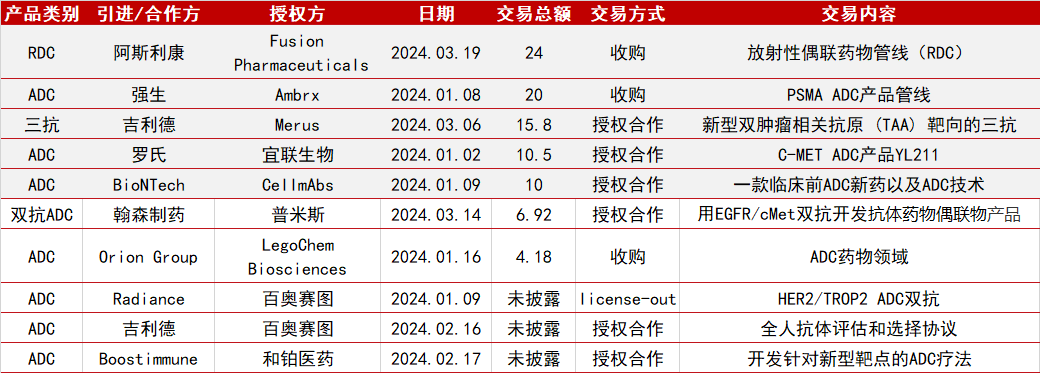 Figure 1: BD Overview in the Antibody Field for Q1 2024In the past month, the most noteworthy event was Genmab’s all-cash acquisition of ProfoundBio,with a transaction amount of $1.8 billion (approximately 13 billion yuan), setting a new record for pharmaceutical acquisitions in China this year.Genmab is not the only biopharmaceutical company investing heavily in ADCs; compared to the pharmaceutical giants, it is merely a small player. Pfizer spent $43 billion last year to acquire ADC pioneer Seagen, and Merck’s licensing agreement with Daiichi Sankyo is one of the largest upfront deals in history, amounting to $4 billion.After a series of large-scale ADC transactions, Merck KGaA announced a collaboration with Caris Life Sciences in Texas totaling $1.4 billion.Epizyme acquired a company entering human studies; blue-chip investors provided $158 million for a startup ADC company entering Phase III clinical trials.
Future Market
Antibody-drug conjugates (ADCs) have become a key therapeutic approach in oncology, with clinical characteristics superior to various standard chemotherapies for tumors.It is projected that revenues from approved ADCs and those in Phase III development will reach $26 billion by 2028 (Figure 2).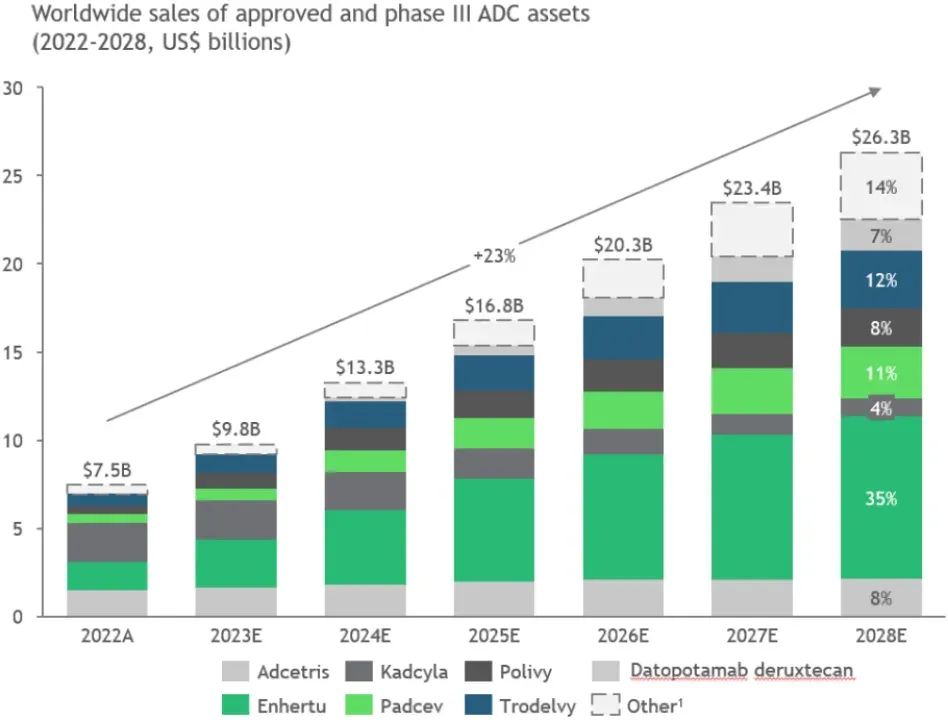 Figure 2: Revenue Forecast for Approved or Phase III ADCsDespite the success of ADCs, their long-term growth faces two major challenges.First, the limited number of validated mechanisms of action (MoAs) restricts the range of treatable diseases. Currently approved ADC payloads cover three cytotoxic mechanisms: anti-mitotic, DNA alkylation, and topoisomerase 1 inhibition, which typically require tumor-specific overexpressed target antigens to ensure effective and safe payload delivery. Thus, these ADCs primarily target known tumor antigens such as HER2, CD20, and BCMA.Second, non-specific and inadequate payload delivery limits the therapeutic window of antibody-drug conjugates (ADCs). The delivery components of currently approved ADCs typically include cleavable peptide linkers randomly conjugated to monoclonal antibody carriers through cysteine reduction. Common issues include premature payload release, poor tumor penetration, unstable drug-to-antibody ratios, and aggregation.
Pipeline Assessment
Currently, ADCs in development can be divided into two categories:
- Type 1 ADCs have new targets and/or effective payload MoAs and exhibit good therapeutic potential;
- Type 2 ADCs utilize established target/payload MoA combinations with novel delivery components to achieve certain therapeutic effects.
Applying this classification framework to a database of 168 ADCs in clinical development (Figure 3A), approximately 85% of ADCs target solid tumor indications, with breast cancer and lung cancer being the most common (Figure 3B). Among ADCs in Phase III clinical trials, about 60% are Type 2 ADCs, which leverage established targets and payloads along with improved delivery components, potentially reflecting the reliability of this model’s success and lower risk in later development.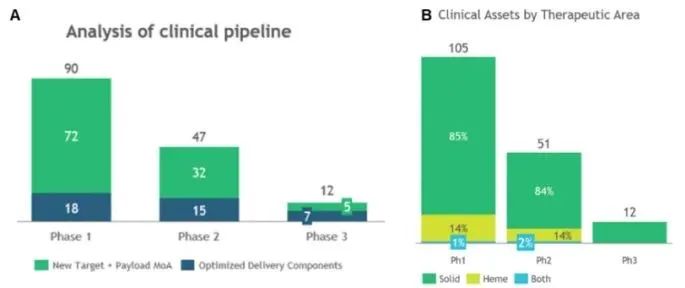 Figure 3: ADCs in Clinical Pipeline
Next-Generation ADCs
To explore the impact of next-generation ADC technologies on these challenges, we analyzed innovations in the ADC clinical pipeline from five design dimensions—targets, payload mechanisms of action, antibodies, linkers, and conjugation methods—and assessed the potential for expanding the treatable indications of ADCs or widening their therapeutic window (Figure 3).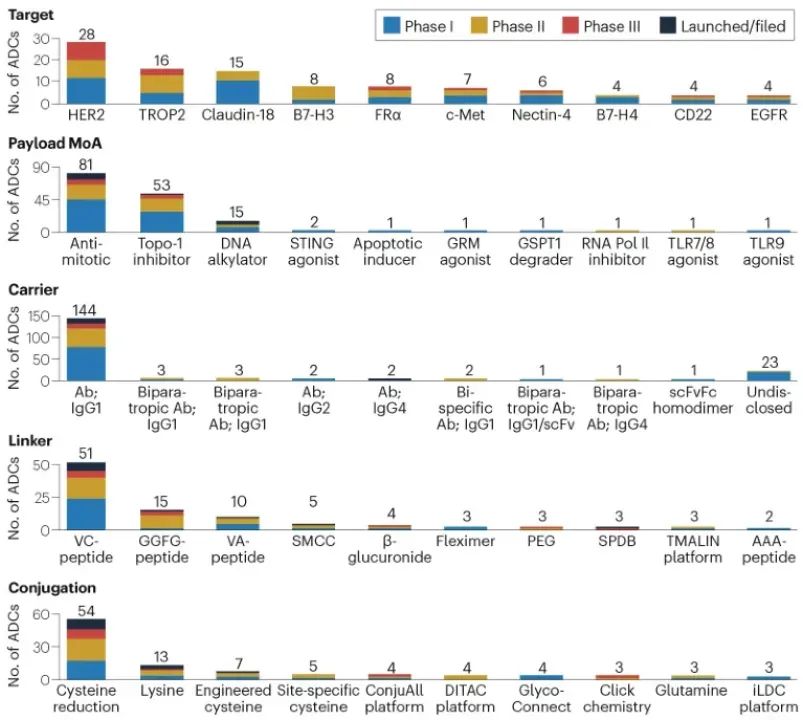 Figure 4: Statistics on Different Aspects of ADCs in Clinical Development
Next-Generation ADC Technology Directions
To evaluate the potential impact of ADC innovations, we classified next-generation technologies according to the aforementioned innovation framework and compared them with marketed ADCs (Figure 5).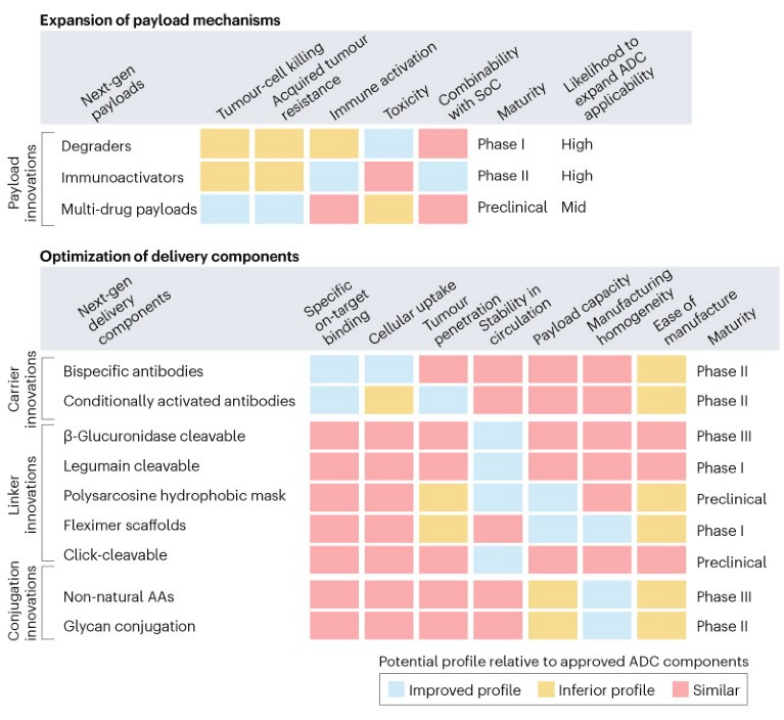 Figure 5: Assessment of Next-Generation ADC Components to Expand ADC Applicability or Optimize Therapeutic Potential
- Targets
Biological targets are an important area of innovation for ADCs, with 61 unique targets being studied clinically.Overall, approximately 90% of targets are antigens highly expressed on cancer cells, while about 10% are associated with unique features of the tumor microenvironment. For example, Pyxis Oncology’s PYX-201 targets fibronectin, an extracellular protein highly secreted by cancer-associated fibroblasts. ADCs targeting matrix components may be effective for tumors with a high stroma-to-tumor ratio (such as breast and prostate cancers) and may prevent the evolution of resistance through the genetic stability of stromal cells.
- Next-Generation Payloads
Small molecule degraders are an emerging drug carrier that has garnered attention for their high specificity, picomolar potency, and ability to target a wide range of intracellular proteins associated with cancer.
- Next-Generation Antibodies
By designing antibodies with variable antigen-binding affinities, toxicity to non-target tissues can be reduced while increasing tumor-specific exposure. Peptide masks that can be cleaved by proteins overexpressed in tumors shield the Fab domain, and antibodies with optimized pH-sensitive binding characteristics are developed. Despite previous failures, antibody engineering has the potential to expand the therapeutic window and treat patients with low target expression levels.
- Next-Generation Linkers
Emerging linker technologies focus on controlling payload release, not relying on endogenous enzyme-mediated cleavage. Controlled payload release can reduce systemic toxicity and support further development targeting non-internalized protein targets that are overexpressed in cancer.
- Next-Generation Conjugation Technologies
Introducing non-natural amino acids to antibodies through genetic codon expansion technology aids in site-specific conjugation via oxime bonds. Ambrx’s ARX788 is an HER2-targeted ADC with an uncleavable PEG linker, site-specifically conjugated to a non-natural amino acid. Phase I data show that ARX788 exhibits antitumor activity and improved stability in serum compared to approved HER2-targeted ADCs. Reducing premature drug release can increase the amount of drug delivered to tumor cells and improve response rates.
Chinese Market
Rongchang Biologics, one of China’s earliest ADC players. It currently has a fully integrated ADC platform and has developed several ADC drugs based on this platform, including RC18 (HER2 ADC), RC88 (Mesothelin ADC), RC108 (c-MET ADC), and RC118 (Claudin18.2 ADC).Its commercially available ADC product—Vidicizumab—has been approved for both gastric cancer and urothelial carcinoma, both of which have entered medical insurance. Although the price decreased by 72% after entering medical insurance, its sales still increased by 1513.23% year-on-year, maintaining a remarkably rapid growth momentum.Kelun-Biotech, the second strong promoter of ADCs in China after Rongchang Biologics. In 2022, it achieved a record of consecutive BD transactions, signing up to nine licensing and cooperation agreements for ADC assets with Merck, totaling up to $11.8 billion. In May last year, the CDE website publicized Kelun-Biotech’s application for the marketing of HER2-ADC (A166) for the treatment of advanced HER2+ solid tumors.BeiGene has four ADC drugs approved for clinical trials in China, covering EGFR/HER3, HER2,TROP2, and CD33 targets. Among them, BL-B01D1 is the world’s only ADC drug targeting EGFR/HER3 dual antibodies, which has entered Phase II clinical trials and is communicating with CDE regarding Phase III registration clinical application.BeiGene completed a significant transaction with BMS, with an $800 million upfront payment and a total transaction amount of $8.4 billion for the licensing of the EGFR×HER3 dual antibody ADC pipeline BL-B01D1. This deal also set a record for the largest single project License-out transaction in the history of innovative drugs in China.Numerous Chinese pharmaceutical companies such as Innovent Biologics, Qide Pharmaceutical, Xynomic Pharmaceuticals, CSPC Pharmaceutical Group, and Baillie are making significant strides in the ADC field, and any of them could become the next disruptor in the Chinese ADC market.At the AACR 2024 held in April, Chinese pharmaceutical companies accounted for nearly half of the ADC reports at AACR, with a large number of new target ADCs and dual antibody ADCs.Innovent Biologics’ three studies (including IBI343, the first ADC drug targeting CLDN18.2 to enter Phase III in February this year), Orange Sail Pharma’s two dual antibody ADCs, and Huahui Anjian and ProfoundBio’s ADC targeting CD98 were all selected for this year’s Late-Breaking Research, recognized as the latest discoveries in tumor basic research and the most innovative therapies in the field of tumor treatment, poised to resonate the voice of China’s ADC on the world stage.
Conclusion
With the arrival of the ADC era and the rapid expansion of the ADC market scale, continuing to invest in the ADC field and conducting broader differentiated layouts is also a plausible trend.Companies must effectively assess emerging platforms, determine investment strategies to maximize expertise and capabilities, and ascertain whether a First-in-class or Best-in-class approach is more attractive.Source: Antibody Circle

Disclaimer: This article is based on publicly available information or information provided by interviewees. The authors and the pharmaceutical time do not guarantee the completeness or accuracy of this information. Under no circumstances do the information and opinions expressed in this article constitute any investment advice. Share, Like, and Follow