
The ADC field has gradually been pushed to market since 2000, and in recent years has surged in cancer treatment, leading to rapid development and fierce competition in this sector. To differentiate themselves, some companies are beginning to develop ADCs for non-oncology applications. Although the number of related ADCs is very small and most are still in preclinical stages, this represents a new approach. Next, we will introduce these potential areas.
Anti-InfectionBacterial Infections: ADCs can target specific bacterial pathogens, delivering antibiotics directly to the bacteria, which may help reduce antibiotic resistance and protect beneficial microbiota.Viral Infections: ADCs can be designed to target viral proteins, providing a new approach for treating viral infections such as HIV and hepatitis.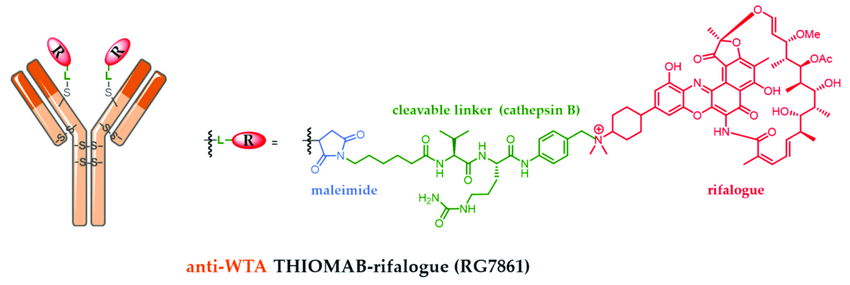 Structure of RG-7861For example, Genentech’s RG-7861 is an Anti-S. aureus AAC, which connects a THIOMAB™ IgG1 that recognizes Staphylococcus aureus with a rifampicin-class antibiotic. After binding with the antibody, the antibiotic is released inside the phagocytic cells to kill the Staphylococcus. It is currently in Phase 1 clinical trials.
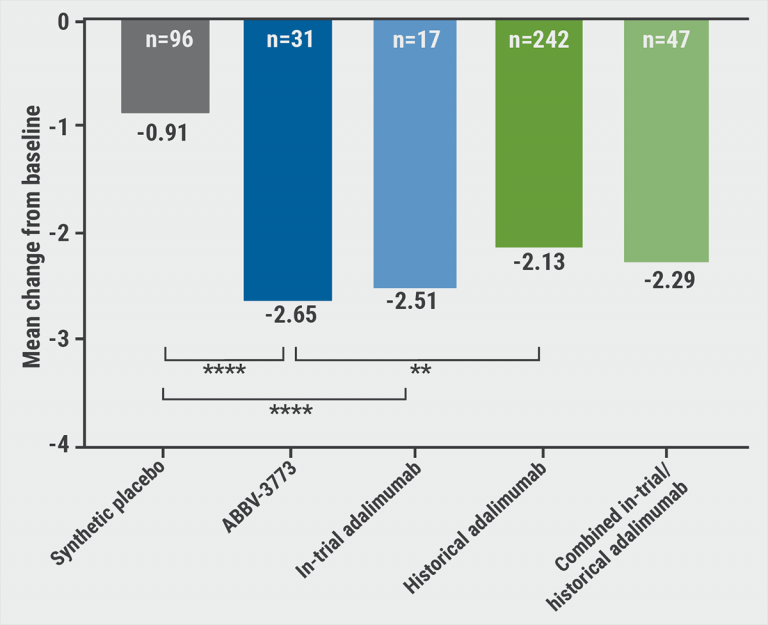 Information on RG-7861Autoimmune DiseasesAutoimmune diseases have become the most concentrated area for non-cancer ADC applications, with the most research projects focusing on rheumatoid arthritis. Especially, AbbVie, a leader in the autoimmune field, is also laying out ADCs for autoimmune diseases, such as ABBV-3373. ABBV-3373 consists of adalimumab and a novel glucocorticoid receptor modulator (GRM), aimed at directly delivering the effective payload GRM to activated immune cells expressing TNFα, thus modulating TNF-mediated inflammatory pathways.Clinical Results of ABBV-3373In June 2020, AbbVie announced positive results from the Phase II M16-560 study of ABBV-3373 for the treatment of moderate to severe rheumatoid arthritis (RA). Compared to the pre-specified historical average for adalimumab (-2.13), the ABBV-3373 treatment group showed a greater change in the primary endpoint DAS28-CRP from baseline to week 12 (-2.65, p=0.022). Bayesian analysis of a second statistical comparison showed that ABBV-3373 had a 90% probability of greater improvement in DAS28-CRP from baseline to week 12 compared to adalimumab, which combined trial data with historical data. In terms of safety, the incidence of adverse events in the ABBV-3373 treatment group was lower than that in the adalimumab treatment group (35% vs 71%).Although AbbVie has currently terminated the ABBV-3373 project, this has provided ideas for other companies. For example, domestic companies are also actively laying out:
- On April 7, 2024, the patent for Hengrui Medicine’s CD40 ADC was published. This CD40 ADC mainly explores the treatment of autoimmune diseases.
- Yingen Biotech’s BDCA2 ADC patent was published. It uses glucocorticoids as payloads for the treatment of autoimmune diseases.
Neurological DiseasesResearch related to ADCs in the context of neurodegenerative diseases such as Alzheimer’s, Parkinson’s, and Huntington’s diseases is on the rise.
- Alzheimer’s Disease: ADCs targeting amyloid β plaques or tau protein aggregates can provide new treatment options for neurodegenerative diseases.
- Multiple Sclerosis: ADCs can selectively target and modulate pathogenic immune cells or inflammatory processes in the central nervous system.
At the Alzheimer’s Association International Conference (AAIC 2024), AC Immune presented a new class of candidate drugs for neurodegenerative diseases, called Morphomer antibody-drug conjugates (morADC). morADC can target important targets including β-amyloid (Aβ), Tau, and α-synuclein, while allowing single or dual-targeting strategies (e.g., combining anti-Aβ antibodies with anti-Tau small molecules) to provide combination therapies in a single formulation.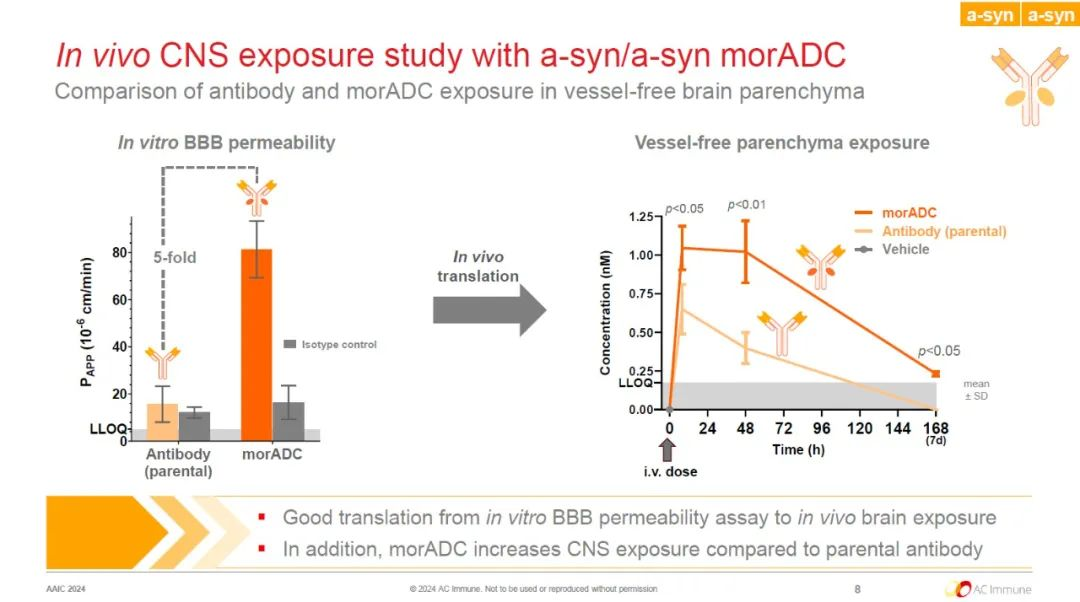 morADC Improves Drug Penetration Across the Blood-Brain BarrierIn preclinical studies, morADC was found to cross the blood-brain barrier five times better than traditional antibodies, significantly improving drug exposure levels in the central nervous system.Studies have shown that morADC drugs targeting both Aβ and Tau proteins (monoclonal antibody targeting Aβ, Morphomer targeting Tau) have three times the inhibitory activity against Aβ42 compared to the corresponding antibodies, and fifteen times the inhibitory activity against Tau compared to the corresponding Morphomer. This also provides ideas for treating neurological diseases.Metabolic DiseasesGLP-1R and its ligand GLP1 are highly validated targets for obesity and type 2 diabetes, which goes without saying. Currently, drug development targeting this receptor mainly focuses on peptides and small molecules, with only peptide drugs available on the market.However, these marketed peptide drugs have certain drawbacks, such as requiring weekly or more frequent dosing. To improve this disadvantage, developing GLP-1R agonist antibodies is a potential strategy, but currently, there are no direct GLP-1R agonist antibodies available.Regeneron has provided a new solution: an antibody-drug conjugate that combines an antibody specifically targeting the extracellular domain of GLP1R or its antigen-binding fragment with a functional GLP1 peptide mimetic that activates GLP1R. Regeneron has coined a new term for this technology: antibody-tethered drug conjugates (ATDCs).
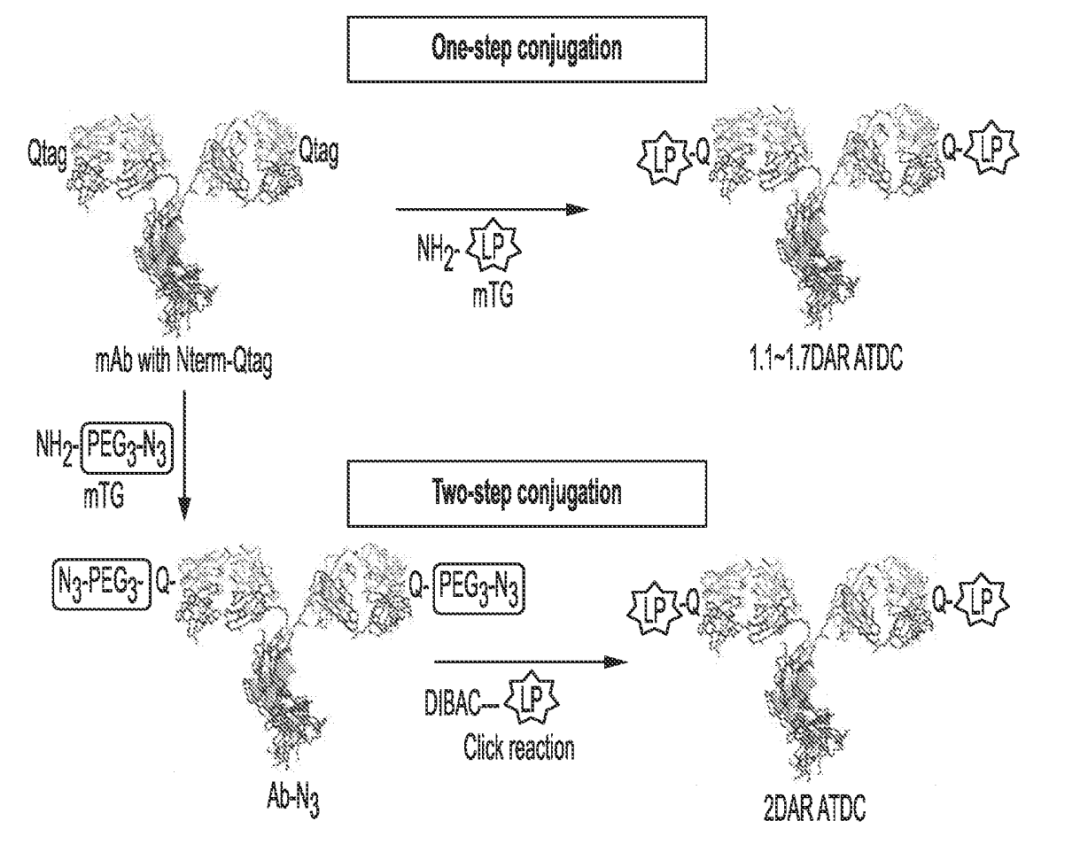 Patent WO2023173132A1Unlike ADCs that carry cytotoxic drugs, ATDCs do not require the linker to break. By linking the GLP-1R antibody, the drug’s affinity is greatly increased, while also increasing the drug’s relative molecular weight, enhancing the stability and half-life of GLP-1 peptide mimetics. In the patent WO2023173132A1 published on September 14, 2023, the weight loss effect of ATDC can last for at least 4 weeks after a single dose.BalancingR&D Investment Between Oncology and Other Therapeutic AreasThe prioritization of investments is based on factors such as market demand, scientific feasibility, regulatory environment, competitive landscape, potential for breakthrough therapies, strategic alignment, partnerships, and financial considerations.Due to the severity of cancer diseases, oncology typically has accelerated approval pathways, attracting R&D investments. The FDA’s breakthrough therapy designation and fast track programs can shorten development times and reduce risks. Clear and supportive regulatory pathways for non-oncology diseases can also encourage investments in these areas.The fierce competition in oncology may prompt companies to seek opportunities in less competitive areas, evaluating the number of competitors and the status of competing therapies. Therapeutic areas with fewer competitors or novel targets may be attractive, providing companies with opportunities to establish leadership and differentiate products.Sources:1. Antibody-Drug Conjugates: The Last Decade2. https://www.adcreview.com/drugmap/dsta4637s/https://conferences.medicom-publishers.com/specialisation/rheumatology/eular-2021/abbv-3373-a-potential-new-therapeutic-agent-for-ra/3. Exploring the potential of ADCs beyond oncology. By Mike Ward4. The next frontier for GLP-1, small molecules? ATDC? Drug Intelligence Network5. New directions in antibody-drug conjugate development.Pharmaceutical Magic CubeScan the WeChat QR code to add the editor of Antibody Circle,qualified individuals can join the Antibody Circle WeChat group!Please indicate: Name + Research Direction!
 All articles reproduced by this public account are for the purpose of conveying more information, and the sources and authors are clearly indicated. If the media or individuals do not wish to be reproduced, please contact us ([email protected]), and we will immediately delete it. All articles only represent the author’s views and do not represent the position of this site.