
Breast cancer is the leading cause of death among women in China and worldwide. When breast cancer spreads to other parts of the body, the prognosis is poor. Currently, there is no treatment for metastatic breast cancer. Antibody-drug conjugates (ADCs) are a new type of anticancer drug consisting of antibodies, linkers, and cytotoxic agents [1]. The monoclonal antibodies in ADCs target specific antigens, and the cytotoxic agents can kill cancer cells without harming surrounding healthy cells.Ado-trastuzumab Emtansine (T-DM1), Fam-trastuzumab Deruxtecan (T-DXd), and Sacituzumab govitecan (SG) are ADCs approved by the FDA for the treatment of breast cancer. T-DM1 and T-DXd target human epidermal growth factor receptor 2 (HER2), while SG targets trophoblast cell surface antigen 2 (TROP-2). Datopotamab deruxtecan (Dato-DXd) is an investigational ADC targeting TROP2. In the TROPION-Breast01 Phase III trial, this drug demonstrated a clinically significant improvement in progression-free survival for breast cancer patients. Both TROP-2 and HER2 are involved in the proliferation of cancer cells. In addition to HER2 and TROP2, other proteins are involved in tumor progression and can serve as important targets for ADCs. 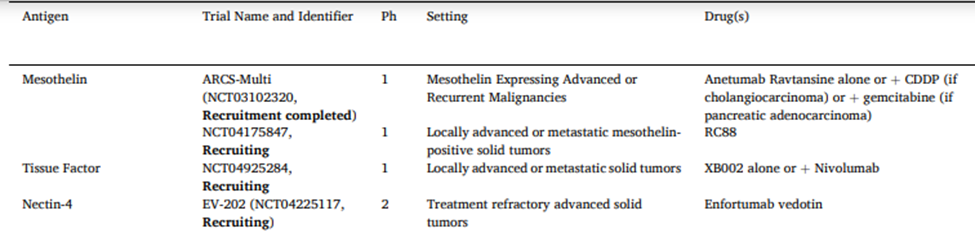





ADC treatment targets and ongoing ADC clinical trials [Image source: Reference 1]
Nectin Cell Adhesion Molecule 4 (Nectin-4)
Nectin-4 is a cell surface protein that plays a crucial role in cell-cell adhesion [2]. It is overexpressed in breast cancer and other malignancies and promotes the proliferation and metastasis of cancer cells. Enfortumab vedotin (EV) is an ADC targeting nectin-4 that has been approved by the FDA for the treatment of urothelial carcinoma. This drug has also been approved in the EU and China [3]. The EV-202 Phase II trial is underway to test the efficacy of EV in breast cancer and other cancers expressing nectin-4.
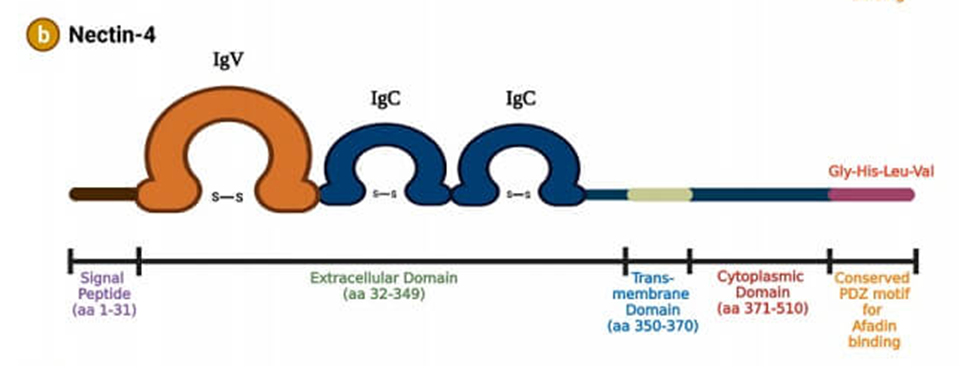
Structure of Nectin-4 [Image source: Reference 3]
Tissue Factor (TF)
TF is a transmembrane protein primarily involved in blood coagulation [4]. Scientists have discovered that this protein can promote cancer progression and metastasis. Tisotumab vedotin (TV) is an ADC targeting TF that has received accelerated approval from the FDA for the treatment of cervical cancer. However, this ADC has not yet been tested in breast cancer patients. XB002 is another ADC targeting TF. Scientists found that this drug was effective against various types of tumors in preclinical studies [5]. XB002 caused reversible adverse reactions such as dry eye and non-infectious conjunctivitis in patients with solid tumors in Phase I clinical trials [6].
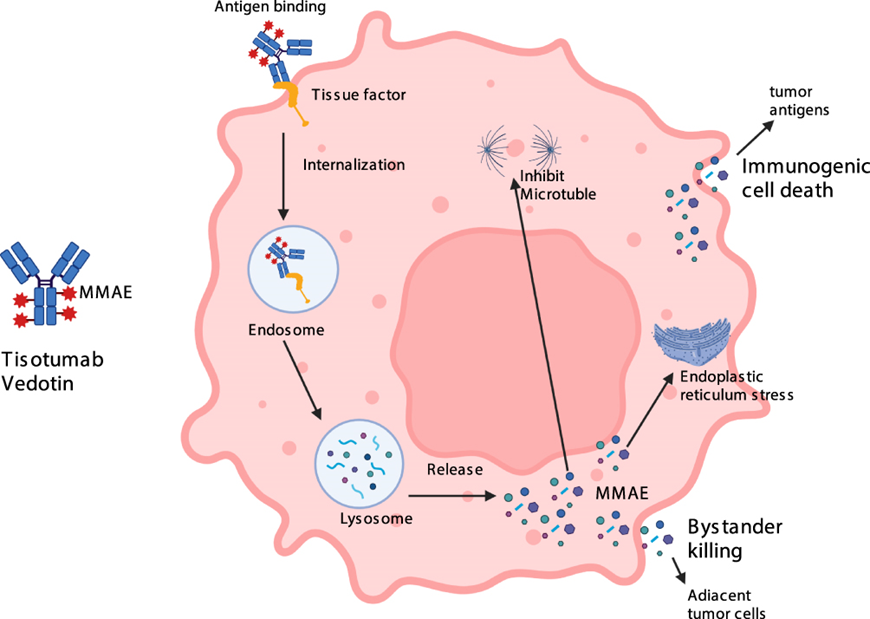
Mechanism of Tisotumab vedotin [Image source: Reference 20]
Mesothelin
Mesothelin is another cell surface protein that plays a significant role in cell adhesion. This cell surface protein is predominantly expressed in mesothelial cells of the conjunctiva, pericardium, and cornea. It is also overexpressed in cancer and is associated with poor prognosis. Anetumab ravtansine (AR) and RC88 are two ADCs targeting mesothelin. In Phase I clinical trials, Anetumab Ravtansine caused manageable adverse reactions such as keratitis, fatigue, and anorexia in patients with solid tumors [7]. Both ADCs are being tested in basket trials for triple-negative breast cancer and other solid tumors.
LIV-1
LIV-1 is a transmembrane protein that transports zinc into cells and is overexpressed in breast tumors. LIV-1 expression is associated with cancer metastasis and lymph node involvement.Ladiratuzumab vedotin (LV or SGN-LIV1A) is an ADC composed of a monoclonal antibody targeting LIV1. This ADC can induce immunogenic cell death, which is beneficial for patients receiving immunotherapy. The efficacy of this drug is being tested in Phase I clinical trials in LIV1-positive breast cancer patients. Preliminary results from this clinical trial show an overall response rate (ORR) of 32% among breast cancer patients [8]. The median progression-free survival (PFS) is 11.3 weeks. This drug causes nausea, hair loss, fatigue, and peripheral neuropathy in patients. Preliminary results from the Ib/II trial show that the ORR for patients with triple-negative breast cancer receiving a combination of ladiratuzumab vedotin and pembrolizumab is 35% [9].
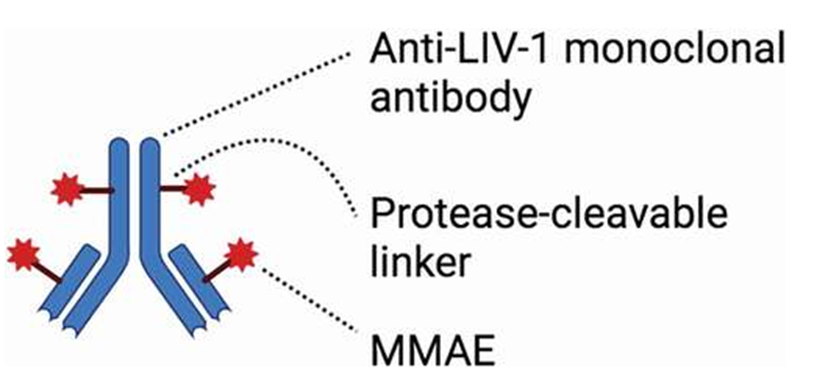
Structure of ladiratuzumab vedotin [Image source: Reference 9]
Receptor Tyrosine Kinase-Like Orphan Receptor 1 and 2
Receptor Tyrosine Kinase-Like Orphan Receptor 1 (ROR1) plays an important role in the development of the nervous system. It is overexpressed in triple-negative breast cancer and has shown antitumor activity against this breast cancer subtype in xenograft models [10].NBE-002 is an anti-ROR1 ADC that is being tested in Phase 1/2 clinical trials in patients with solid tumors. Receptor Tyrosine Kinase-Like Orphan Receptor 2 (ROR2) plays a crucial role in the development of the skeletal system. It also promotes breast cancer metastasis, leading to poor prognosis. Ozuriftamab vedotin (BA3021) is a conditionally active biologic (CAB) ADC targeting ROR2. It is also being tested in Phase 1/2 basket clinical trials.
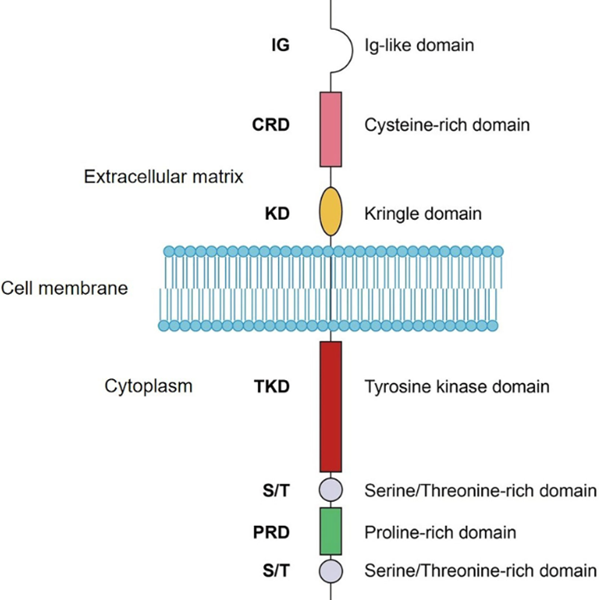
Structure of ROR1 [Image source: Reference 18]
Human Epidermal Growth Factor Receptor 3 (HER3)
HER3 belongs to the human epidermal growth factor receptor (HER) family. HER3 has weak tyrosine kinase activity and cannot transduce signals. Therefore, it forms heterodimer complexes with hepatocyte growth factor receptor (HGFR), fibroblast growth factor receptor 2 (FGFR2), and other receptor tyrosine kinases (RTKs) [11]. It is overexpressed in breast cancer and other cancers such as melanoma and head and neck cancer. Patritumab deruxtecan is an ADC targeting HER3 that has been tested in Phase 1/2 clinical trials in breast cancer patients. The ORR for HR-positive/HER3-high & low/HER2-negative breast cancer patients receiving this drug is 30.1%. No patients showed complete response. This drug also caused adverse reactions such as thrombocytopenia, neutropenia, and anemia.
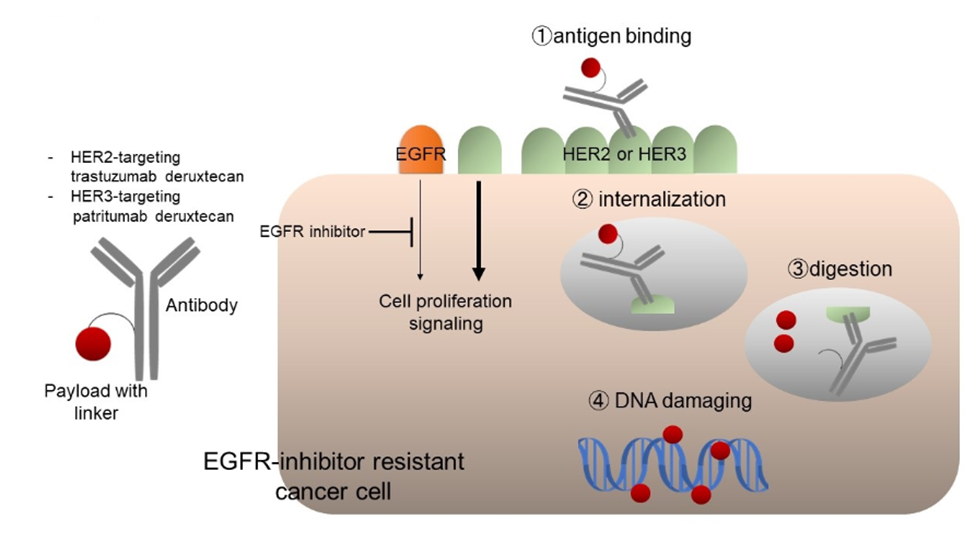
Mechanism of HER2 and HER3 targeting ADCs [Image source: Reference 19]
Globohexaosylceramide (Globo-H)
Globo-H is a carbohydrate antigen expressed in cancer cells. OBI-999 is an anti-Globo-H ADC that has been tested in Phase I clinical trials in patients with solid tumors. Patients received this drug intravenously at different doses, and it was found to be well-tolerated at doses up to 1.2 mg/kg [12]. This drug caused adverse reactions such as anemia and neutropenia.
Folate Receptor α (FRα)
FRα is a membrane-bound protein involved in folate transport. It is expressed in triple-negative breast cancer [13]. MORAb-202 is an ADC composed of a monoclonal antibody targeting FRα. In xenograft mouse models, this drug inhibited the proliferation of cell lines expressing FRα. In a Phase I clinical trial, this drug was administered to patients with solid tumors, and common adverse reactions observed in patients included neutropenia and leukopenia [14].
B7 Homolog 4 Protein (B7–H4)
B7–H4 is an immune checkpoint protein that inhibits the function of activated T cells [15]. It is expressed in breast cancer and other tumors such as endometrial cancer and cholangiocarcinoma. AZD8205 and SGN-B7H4V are two novel ADCs targeting FRα. Both ADCs have shown antitumor activity in mouse models. A Phase 1/2 clinical trial is underway to evaluate the safety of AZD8205 in tumors such as breast cancer [16]. SGN-B7H4V is also being tested in Phase I clinical trials in breast cancer and other tumors [17].
ADCs have been developed targeting these objectives, and many of these ADCs have shown good tolerability in clinical trials. Scientists hope that some of these ADCs will effectively treat metastatic breast cancer.
References
[1] Corti, C., Bielo, L. B., Schianca, A. C., Salimbeni, B. T., Criscitiello, C., & Curigliano, G. (2023). Future potential targets of antibody-drug conjugates in breast cancer.The Breast.
[2] Wang, H., Sun, D., Chen, J., H, L., & Chen, L. (2023). Nectin-4 has emerged as a compelling target for breast cancer. European Journal of Pharmacology, 960, 176129. https://doi.org/10.1016/j.ejphar.2023.176129
[3] NECTIN-4: New Antibody-Drug Conjugate (ADC) Target (2023). https://www.biochempeg.com/article/353.html#:~:text=Nectin-4%20is%20overexpressed%20in,cell%20lung%20cancer%2C%20gastric%20cancer%2C
[4] Ahmadi, S. E., Shabannezhad, A., Kahrizi, A., Akbar, A., Safdari, S. M., Hoseinnezhad, T., … & Safa, M. (2023). Tissue factor (coagulation factor III): a potential double-edge molecule to be targeted and re-targeted toward cancer.Biomarker Research, 11(1), 1-39.
[5] Ulahannan, S., Johnson, M. L., Park, H., Vandross, A., Uttamsingh, S., Li, J., … & Tolcher, A. (2022). A Phase 1 study of the anti-tissue factor antibody-drug conjugate XB002 in patients with advanced solid tumors (JEWEL-101): initial results from the dose-escalation stage.European Journal of Cancer, 174, S92-S93.
[6] Exelixis Announces Promising Initial Dose-Escalation Results from the First-in-Human Phase 1 JEWEL-101 Trial Evaluating XB002 in Patients with Advanced Solid Tumors at ENA 2022 (2022, October 26). https://ir.exelixis.com/news-releases/news-release-details/exelixis-announces-promising-initial-dose-escalation-results
[7] Hassan, R., Blumenschein Jr, G. R., Moore, K. N., Santin, A. D., Kindler, H. L., Nemunaitis, J. J., … & Bendell, J. C. (2020). First-in-human, multicenter, phase I dose-escalation and expansion study of anti-mesothelin antibody–drug conjugate anetumab ravtansine in advanced or metastatic solid tumors.Journal of Clinical Oncology, 38(16), 1824.
[8] Modi, S., Pusztai, L., Forero, A., Mita, M., Miller, K. D., Weise, A., … & Specht, J. (2018). Abstract PD3-14: Phase 1 study of the antibody-drug conjugate SGN-LIV1A in patients with heavily pretreated triple-negative metastatic breast cancer.Cancer Research, 78(4_Supplement), PD3-14.
[9] Rizzo, A., Cusmai, A., Acquafredda, S., Rinaldi, L., & Palmiotti, G. (2022). Ladiratuzumab vedotin for metastatic triple negative cancer: preliminary results, key challenges, and clinical potential.Expert opinion on investigational drugs, 31(6), 495-498.
[10] Tolcher, A. W., Meric-Bernstam, F., McKean, M., Beerli, R. R., Waldmeier, L., Gebleux, R., … & Grawunder, U. (2021). NBE-002: A novel anthracycline-based antibody-drug conjugate (ADC) targeting ROR1 for the treatment of advanced solid tumors—A phase 1/2 clinical trial.
[11] Mishra, R., Alanazi, S., Yuan, L., Solomon, T., Thaker, T., Jura, N., & Garrett, J. T. (2018). Activating HER3 mutations in breast cancer. Oncotarget, 9, 27773–27788. https://doi.org/10.18632/oncotarget.25576
[12] Tsimberidou, A. M., Vo, H. H., Beck, J., Shia, C. S., Hsu, P., & Pearce, T. E. (2023). First-in-Human Study of OBI-999, a Globo H-Targeting Antibody-Drug Conjugate, in Patients With Advanced Solid Tumors.JCO Precision Oncology, 7, e2200496.
[13] O’Shannessy, D. J., Somers, E. B., Maltzman, J. D., Smale, R., & Fu, Y. (2012). Folate receptor alpha (FRA) expression in breast cancer: identification of a new molecular subtype and association with triple negative disease. SpringerPlus, 1(22). https://doi.org/10.1186/2193-1801-1-22
[14] Shimizu, Toshio, et al. “First-in-human phase 1 study of MORAb-202, an antibody–drug conjugate comprising farletuzumab linked to eribulin mesylate, in patients with folate receptor-α–positive advanced solid tumors.”Clinical Cancer Research 27.14 (2021): 3905-3915.
[15] Smith, J. B., Stashwick, C., & Powell Jr, D. J. (2014). B7-H4 as a potential target for immunotherapy for gynecologic cancers: a closer look.Gynecologic oncology, 134(1), 181-189.
[16] Meric-Bernstam, F., Oh, D. Y., Naito, Y., Shimizu, T., Chung, V., Park, H., … & Mileshkin, L. R. (2022). First-in-human study of the B7-H4 antibody-drug conjugate (ADC) AZD8205 in patients with advanced/metastatic solid tumors.
[17] Patnaik, A., Lakhani, N. J., Xu, P., Nazarenko, N. N., & Call, J. A. (2022). Phase 1 study of SGN-B7H4V, a novel, investigational vedotin antibody–drug conjugate directed to B7-H4, in patients with advanced solid tumors (SGNB7H4V-001, trial in progress).
[18] Zhao, Y., Zhang, D., Guo, Y., Lu, B., Zhao, Z. J., Xu, X., & Chen, Y. (2021). Tyrosine kinase ROR1 as a target for anti-cancer therapies. Frontiers in Oncology, 11, 680834.
[19] Yonesaka, K. (2021). HER2-/HER3-Targeting Antibody—Drug Conjugates for Treating Lung and Colorectal Cancers Resistant to EGFR Inhibitors.Cancers, 13(5), 1047.
[20] Agostinelli, V., Musacchio, L., Camarda, F., Salutari, V., Carbone, M. V., Ghizzoni, V., … & Lorusso, D. (2023). Therapeutic Potential of Tisotumab Vedotin in the Treatment of Recurrent or Metastatic Cervical Cancer: A Short Report on the Emerging Data. Cancer Management and Research, 1063-1072.
Recent Activities

Scan the WeChat QR code to add the Antibody Circle editor, and eligible individuals can join the Antibody Circle WeChat group!Please indicate: Name + Research Direction!


This public account’s reprinted articles are for the purpose of conveying more information, and clearly indicate the source and author. Media or individuals who do not wish to be reprinted can contact us ([email protected]), and we will delete it immediately. All articles represent the author’s views and do not represent the position of this site.