Compiled by: Oncology NewsSource: Oncology News
In the treatment of hormone receptor-positive (HR+), HER2-negative (HER2-) advanced breast cancer, CDK4/6 inhibitors combined with endocrine therapy have become the first-line standard regimen. However, treatment options after resistance to CDK4/6 inhibitors or endocrine therapy remain a significant clinical challenge. With the rise of antibody-drug conjugates (ADCs), the treatment landscape in this field is undergoing a transformation. At the 2025 China Integrated Oncology Conference (CCHIO) breast cancer sub-forum, Professor Song Chuan Gui from Fujian Cancer Hospital delivered an impressive report titled “Optimized Treatment Strategies for ADC Drugs in HR+ mBC Patients in the Post-Endocrine Era.” The content of the report is summarized below for readers.
Post-CDK4/6 Inhibitor Era:
Limitations of Traditional Targeted Therapy and Opportunities for ADC Drugs
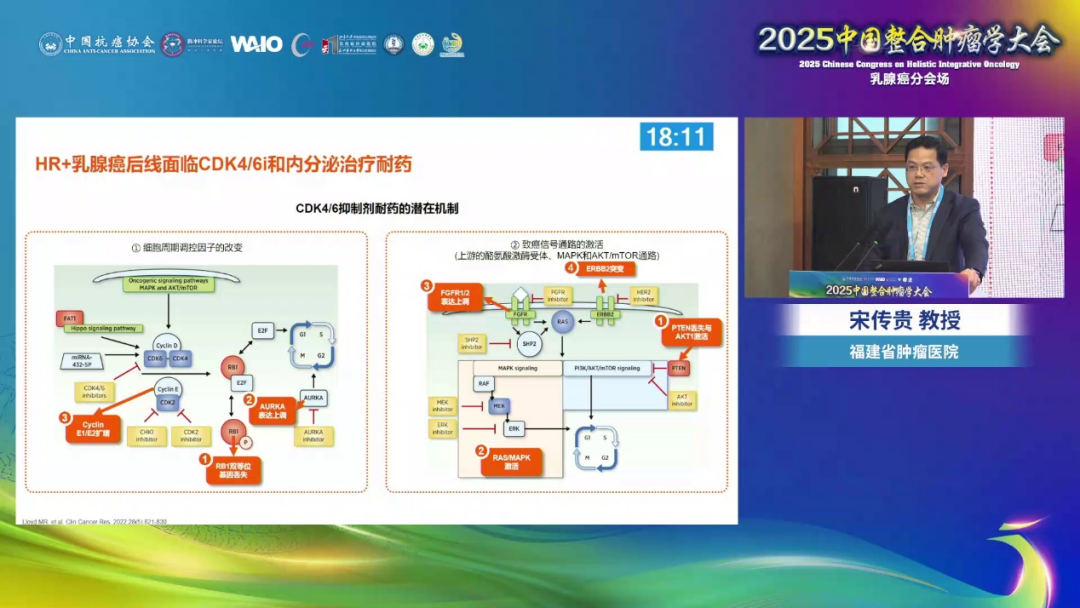
CDK4/6 inhibitors are the first-line standard treatment for HR+/HER2- mBC, with a median progression-free survival (PFS) of 20-33 months. However, with the emergence of various resistance mechanisms such as alterations in cell cycle regulators (e.g., CDK2-Cyclin E amplification, RB1 biallelic deletion) and activation of oncogenic bypass signals (e.g., PI3K/AKT/mTOR pathway, RAS/MAPK pathway), HR+ breast cancer patients face clinical dilemmas of resistance to CDK4/6 inhibitors and endocrine therapy. Subsequent treatment options such as cross-line use of CDK4/6 inhibitors, PI3K inhibitors targeting PIK3CA mutations (alpelisib), AKT inhibitors (capivasertib), mTOR inhibitors (everolimus), oral SERDs (elacestrant), and HDAC inhibitors (vorinostat) provide multiple treatment choices, but the overall PFS benefit is limited (e.g., cross-line use of CDK4/6 inhibitors typically results in mPFS of only 4-6 months), and some drugs have limited accessibility in China or are associated with significant toxic side effects.
In the face of the bottlenecks of traditional endocrine and targeted therapies, new drugs represented by ADCs show great potential. In particular, the third-generation ADC drug trastuzumab deruxtecan (T-DXd) not only precisely targets HER2 low-expressing tumor cells but also effectively kills surrounding HER2-negative tumor cells through a powerful “bystander effect,” overcoming tumor heterogeneity and bringing new hope to break through the resistance dilemma in subsequent-line treatments. This characteristic gives it a unique advantage in the treatment of HR+, HER2-negative (including HER2 low-expressing) breast cancer.
T-DXd: Breakthrough Efficacy from Low to Ultra-Low HER2 Expression
The DESTINY-Breast04 study is a milestone research that changes the treatment paradigm for HR+, HER2 low-expressing advanced breast cancer with ADC drugs. This study confirmed that for treated HR+, HER2 low-expressing patients (about 70% of whom had received CDK4/6 inhibitor treatment), T-DXd significantly improved mPFS (10.1 months vs 5.4 months) and overall survival (OS) (23.9 months vs 17.5 months) compared to physician’s choice chemotherapy. This result not only established T-DXd as the standard treatment in this population but also defined “HER2 low expression” for the first time as a treatment category that can be precisely targeted.
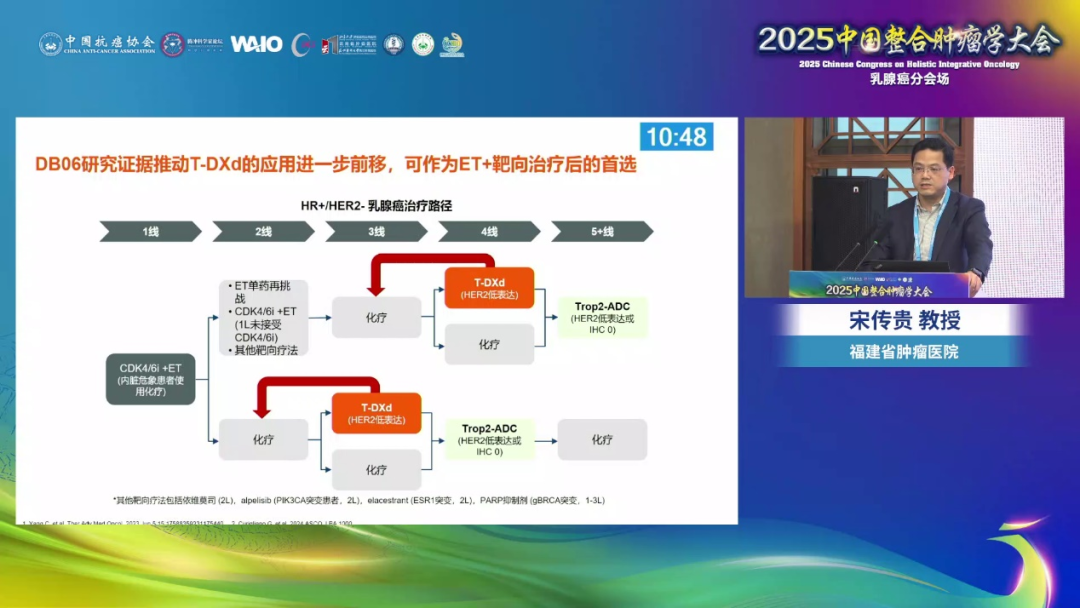
Based on preliminary observations from the DAISY study that T-DXd still has activity in HER2-negative patients, the DESTINY-Breast06 study further explored the efficacy of T-DXd in a broader population at earlier lines of treatment. This study included HER2 low-expressing and ultra-low-expressing (IHC 0 but with weak membrane staining) patients who progressed after endocrine therapy and had not received chemotherapy at advanced stages. The results showed that regardless of whether in the HER2 low-expressing or ultra-low-expressing subgroup, the efficacy of T-DXd was significantly better than standard chemotherapy, and the efficacy was consistent and stable, unaffected by the time of progression after first-line endocrine therapy or the type of endocrine resistance. This marks the successful expansion of the advantageous population for T-DXd to include HER2 ultra-low-expressing patients and supports its earlier application in the post-endocrine treatment phase.
Targeting Trop-2 ADC:
Gosatuzumab and Dato-DXd Provide New Options
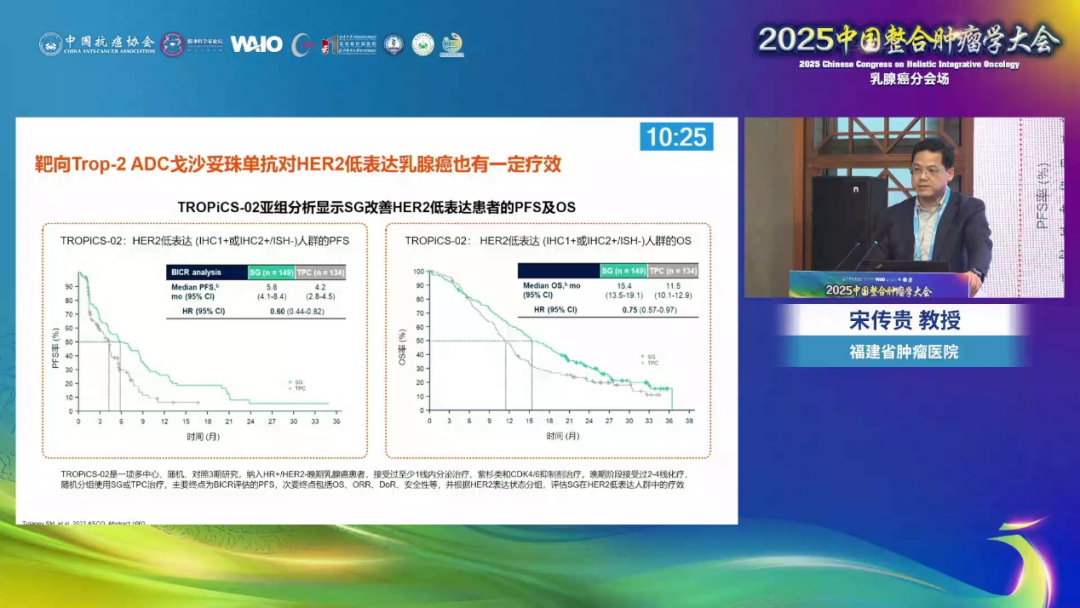
In addition to HER2-targeting ADCs, Trop-2-targeting ADCs have also made significant progress in the HR+/HER2- breast cancer field. Gosatuzumab (SG) in the TROPiCS-02 study showed dual benefits in PFS (5.8 months vs 4.2 months) and OS (15.4 months vs 11.5 months) for heavily pretreated HR+/HER2- patients (including HER2 low-expressing populations) compared to the TPC regimen, providing an effective treatment option for later-line patients.
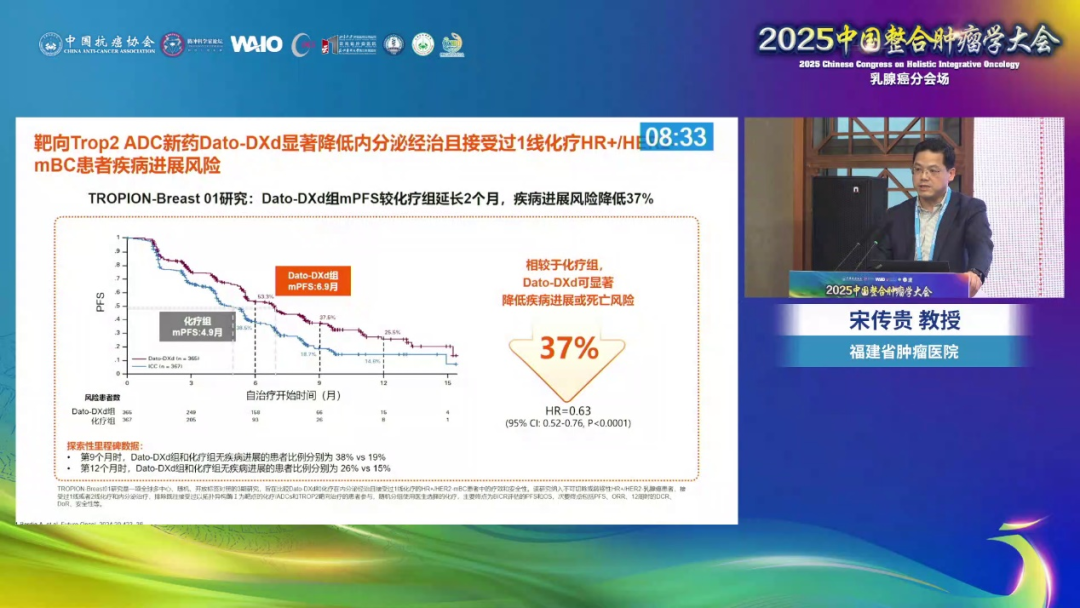
Another Trop-2-targeting ADC drug, Dato-DXd, also demonstrated superior PFS benefits (6.9 months vs 4.9 months) compared to chemotherapy in the TROPION-Breast01 study, reducing the risk of disease progression or death by 37%, with consistent mPFS benefits across different patient subgroups receiving Dato-DXd treatment. Notably, the patient lines in this study were relatively earlier than those in the TROPICS-02 study, suggesting that Dato-DXd may have a place in relatively earlier-line treatments. The success of these two Trop-2-targeting ADC drugs further enriches the treatment options in the post-CDK4/6 inhibitor era.
Updates on Clinical Practice Guidelines and Strategic Layout of ADC Drugs
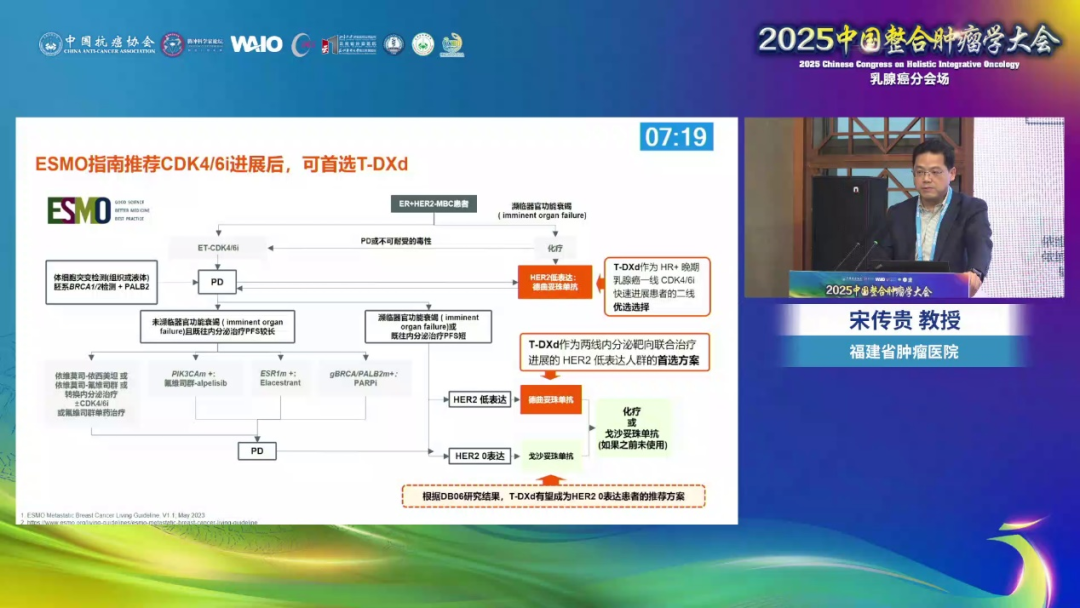
Based on the aforementioned high-level evidence from clinical studies, authoritative guidelines both domestically and internationally (such as CSCO BC, NCCN, ESMO guidelines) have included ADC drugs in the treatment options for HR+ advanced breast cancer. After progression on first-line CDK4/6 inhibitor treatment, for patients sensitive to endocrine therapy, it is advisable to consider switching endocrine regimens combined with other targeted drugs; for patients with short PFS and poor prognosis on endocrine therapy, ADC treatment should be considered early based on HER2 expression levels, with T-DXd becoming the preferred option (regardless of HER2 expression level); for HER2-negative patients, T-DXd or SG may be considered; for patients experiencing visceral crisis, chemotherapy remains the choice for rapid crisis resolution, followed by consideration of ADC treatment based on HER2 expression status. Additionally, horizontal comparative studies show that the patient lines in the DESTINY-Breast series studies are generally earlier than those in the TROPICS-02 study, thus clinical consensus tends to favor “T-DXd sequential SG” rather than reverse usage.
Summary and Outlook
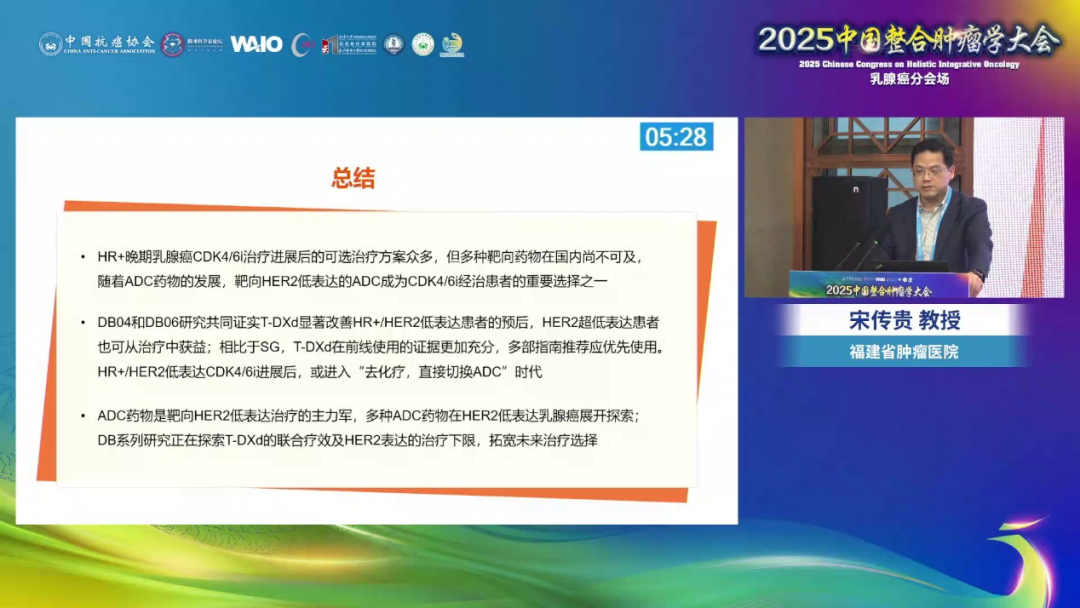
In the post-CDK4/6 inhibitor era for HR+ advanced breast cancer, ADC drugs have become a core force in overcoming treatment resistance. Targeted HER2 ADCs represented by T-DXd and Trop-2 ADCs represented by gosatuzumab and Dato-DXd have all demonstrated excellent efficacy through large clinical studies. Future exploration will focus on the optimized application of ADC drugs, such as the DESTINY-Breast08 study exploring the best combinations of T-DXd with chemotherapy, immunotherapy, or other targeted drugs, and the DESTINY-Breast15 study further including HER2-negative patients in early exploration, aiming to expand the beneficiary population of ADC drugs and advance treatment lines to provide patients with longer survival times and better quality of life.
 Editor: Oncology News-Ethon Layout Editor: Oncology News-zxyCopyright StatementThis article is for the reference of medical professionals only and may not be published or distributed without the author’s permission. Individuals are welcome to share it, and any other media or websites wishing to reproduce or quote content owned by this website must obtain authorization and prominently indicate “Reprinted from: Good Doctor Exchange – Oncology Doctor APP”.