This issue records the latest news and shareable content about Zephyr, published in the last week of each month.
This magazine is open source (GitHub: lgl88911/Zephyr_Fans_Monthly[1]), and contributions, issue submissions, or recommendations for Zephyr content are welcome.
Project Data
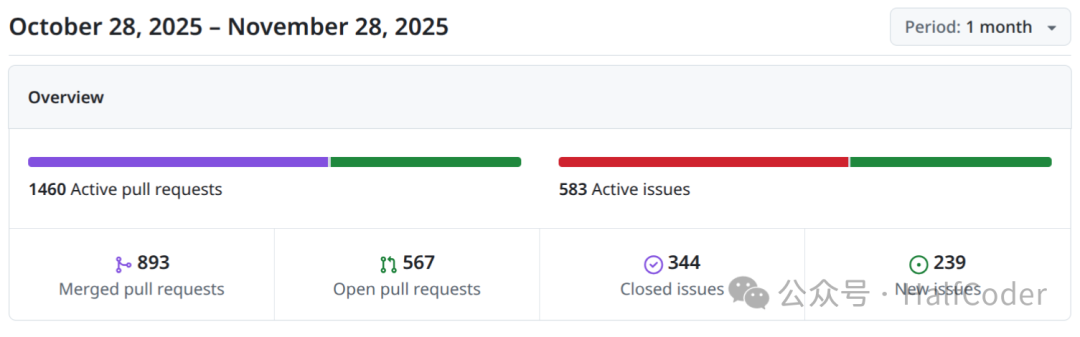
Excluding merges, 333 authors pushed 1,657 commits to the main branch and 1,733 commits to all branches. A total of 5,298 files changed in the main branch, with 124,567 lines added and 42,810 lines deleted.
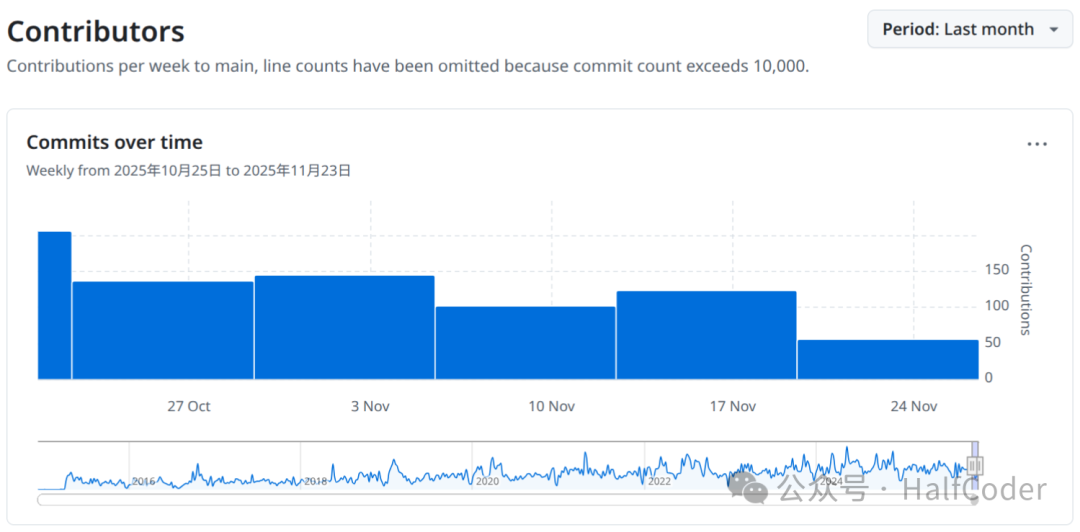
Recent Developments:
- Added support for OpenRISC[2]
- Runtime configuration for the network stack[3]
- Counter driver added 64-bit support[4]
- NVMEM subsystem supports efuse/OTP devices[5]
- Imported actuator (motor) driver[6]
- Imported libMP[7]
- hwmv2 introduced series and families application directories[8]
- Imported “Forward Tree” protocol[9]
- Introduced new CMake configuration variables to support application-overridable configurations[10]
- Proposed support for runtime selection of Device Tree configuration variants[11]
- Support for cross-compilation for native simulators[12]
- Definition of boundaries for drivers, libraries, and subsystems[13]
- Design and management of vendor-specific APIs in Zephyr[14]
- Introduced additional-property support for Device Tree binding mechanisms[15]
- New universal driver interface for digital potentiometers[16]
- LVGL upgraded to 9.4.0 in the Zephyr mainline[17]
News & Events
1、Zephyr 4.3.0 Released[18]
The Zephyr 4.3 version includes several major improvements, including a comprehensive update for USB device support, dynamic CPU frequency scaling, a new instrumentation subsystem, and support for the electric vehicle charging protocol OCPP 1.6. Additionally, Zephyr introduces Twister display capture functionality for automated GUI testing. The addition of DT Doctor and traceconfig tools enhances the developer experience. These updates make Zephyr more powerful in embedded development while providing developers with more efficient development tools and broader hardware support.
https://mp.weixin.qq.com/s/vKPQ3igPArgpG62W9I5lAA?poc_token=HOt8KmmjO_Uxfsbz3YJj6twUsDe96yJg1qalE2la
2、November Offline Meetup
- October 28, 2025, Copenhagen
- https://www.zephyrproject.org/recap-of-the-zephyr-project-meetup-mjolner-informatics-october-28-2025/
- November 5, 2025, Embedded World North America, Anaheim Convention Center, California, USA
- https://www.zephyrproject.org/what-to-expect-at-the-zephyr-project-meetup-november-5-2025-anaheim-california/
- November 20, 2025, Siemens Technology Center, Garching, Munich, Germany
- https://www.zephyrproject.org/what-to-expect-at-the-zephyr-project-meetup-november-20-2025-garching-munich-germany/
3、Zephyr Podcast Continues to Release
This month, Zephyr released 4 episodes of the podcast
- https://www.zephyrproject.org/openbmc-ported-to-zephyr-and-lots-of-other-news-zephyr-podcast-009/
- https://www.zephyrproject.org/watch-your-language-zephyr-podcast-010/
- https://www.zephyrproject.org/zephyr-4-3-is-out-zephyr-podcast-011/
- https://www.zephyrproject.org/can-it-run-doom-yes-and-with-bluetooth-zephyr-podcast-012/
Abstracts & Opinions
1、Overview of Zephyr RTOS: Technical Specifications, Firmware Development, and Professional Advice[19]
Zephyr RTOS is an open-source real-time operating system designed for modern embedded devices, particularly suitable for resource-constrained connected devices. By providing a security-first design, support for multiple architectures, and a broad ecosystem, it addresses the complexities and risks in traditional firmware development. The modularity and configurability of Zephyr allow it to scale from simple prototypes to complex production systems, while its open-source nature and community support reduce development costs and risks. Although its learning curve may pose challenges for some teams, Zephyr is an ideal choice for projects requiring long-term maintenance, security, and wireless connectivity. The article elaborates on the following aspects:
- Challenges Faced by Modern Embedded Systems
- Introduction to the Zephyr Platform
- Technical Specifications of Zephyr
- What Makes Zephyr Unique
- Security-First Design: Building security from the ground up, leveraging hardware-level security measures (such as MPU).
- Vendor and Architecture Flexibility: Supporting multiple architectures (including ARM and RISC-V), providing a unified, vendor-neutral API.
- Community and Enterprise Collaboration as a Trust Signal: Supported by the Linux Foundation, with an active community and corporate contributors.
- Firmware Development with Zephyr
- Commercial Value of Zephyr
- Shortened Time to Market: Modular and vendor-neutral toolchains accelerate the development cycle.
- Reduced Firmware Development Costs: Open-source and royalty-free, reducing reliance on proprietary toolchains.
- Increased Reliability: Secure design and OTA updates ensure product quality and customer satisfaction.
- Competitive Advantage: Supports AI integration and secure connected devices, enabling product differentiation.
- When to Choose Zephyr
- Long-term projects, wireless IoT applications, teams with a Linux background, safety-critical applications.
- For simple consumer products or rapid prototypes, the learning curve and architectural overhead of Zephyr may outweigh its advantages.
2、NXP’s Zephyr Wireless Connectivity Support[20]
NXP, as a founding member and platinum board member of the Zephyr project, continues to drive the development of the Zephyr ecosystem, particularly in the area of wireless connectivity. NXP has contributed various devices upstream to Zephyr, including Wi-Fi 6 and Bluetooth solutions such as RW612, IW612, and IW610. These devices provide developers with flexible wireless solutions supporting multiple protocols, including Wi-Fi, dual-mode Bluetooth, Thread, and Matter. NXP also plays a key role in the Zephyr community, including integrating Hostapd to support mobile access points, providing enterprise-grade security features, and advanced wireless capabilities. Additionally, NXP offers a wealth of development resources, including documentation, sample applications, and getting started guides to help developers get up to speed quickly.
3、Why Zephyr is the Preferred Choice for MCU Development[21]
Zephyr is a powerful and flexible open-source real-time operating system designed for microcontroller development. It simplifies the migration process from development boards to custom hardware through a hardware abstraction layer that provides extensive hardware support. Zephyr’s built-in security features, rich ecosystem, and unified development environment make it an ideal choice for modern MCU development. Despite a steeper learning curve, its strong community support and continuous improvements ensure that developers can fully leverage its capabilities.
4、TI Embedded Seminar[22]
TI mentioned the **Zephyr ecosystem** in its embedded seminar: TI supports Zephyr RTOS, providing seamless migration across MCU platforms, ensuring developers can quickly adapt to different hardware architectures.
5、From System Design to Source Code: Tobias Kästner Talks About Zephyr[23]
This article interviews Tobias Kästner, a solution architect for medical IoT at the consulting firm inovex, discussing the application of the Zephyr framework in embedded system development. Kästner emphasizes the importance of functional architecture in system design and mentions the powerful tools provided by Zephyr (such as KConfig and Device Tree) that help developers translate system requirements into clear software designs. Additionally, Zephyr’s ready-to-use services (such as shell and logging frameworks) and support for simulation tools can accelerate development cycles and enable test-driven development. Kästner believes that understanding the interaction between KConfig, Device Tree, and the CMake build system in Zephyr is key to achieving maintainable and flexible architectural designs.
6、Zephyr RTOS: Challenges and Reflections on Hardware Abstraction[24]
This article shares the author’s experiences and reflections on using Zephyr RTOS. He believes that Zephyr’s approach to hardware abstraction through Device Tree is commendable, but there are many issues in practical use, such as complex compilation error messages, abstraction layer failures, and frequent API changes. Compared to Arduino and MicroPython, Zephyr excels in complex projects but can be overly complex for smaller projects. Nevertheless, the author will continue to explore Zephyr, as it may be more valuable in complex systems. He points out that Zephyr outperforms MicroPython in certain specific features (such as Bluetooth Low Energy support for nRF52840), but MicroPython remains a better choice for rapid prototyping.
7、Discussion on Using Device Trees in Microcontrollers[25]
The application of Device Trees in microcontroller development has polarized opinions. On one hand, it provides a standardized mechanism for hardware description and driver development, especially excelling in multi-hardware platform support; on the other hand, its complexity and reliance on the C language lead many developers to criticize it. The Device Tree implementation in Zephyr RTOS is a typical case, supporting multiple hardware platforms but also raising discussions about complexity and usability.
Courses & Tutorials
1、Guide to Migrating from FreeRTOS to Zephyr[26]
This article provides embedded developers with a detailed guide for migrating from FreeRTOS to Zephyr. While FreeRTOS is widely used, it is gradually becoming insufficient for modern embedded systems. Zephyr, as a modern RTOS, offers more features and better scalability. The article details a step-by-step migration strategy, including how to analyze application architecture, abstract common functionalities, adapt the build system, port kernel primitives, and integrate Zephyr subsystems. It also compares FreeRTOS and Zephyr in terms of scheduling models, thread models, synchronization primitives, and interrupt handling, demonstrating the code migration process through a producer-consumer example. The author suggests that developers build an OS abstraction layer, migrate gradually, and leverage the Zephyr ecosystem for a smooth transition.
2、Zephyr Basic Development Course[27]
This course provides comprehensive and systematic guidance for developing with Zephyr RTOS, covering all aspects from basic theory to practical operations. Through rich chapter content and laboratory exercises, learners can gradually master Zephyr development skills, benefiting both beginners and those with some foundational knowledge. The course’s openness also encourages learners to actively participate in contributions to improve the course content.
3、Tutorial on Using Zephyr RTOS and LVGL on Raspberry Pi Pico[28]
This article provides a detailed tutorial guiding readers on how to initialize Zephyr RTOS on Raspberry Pi Pico and connect the ILI9341 LCD display, XPT2046 resistive touchscreen, and the lightweight graphics library LVGL. The article outlines the tools and environment required to install Zephyr on Windows, including Visual Studio Code, Zephyr Workbench extension, Host Tools, and Zephyr SDK. It introduces how to configure hardware interfaces through Device Tree overlay files and how to enable necessary drivers and modules through the prj.conf file. Finally, the article presents test results demonstrating the normal operation of the device and the accuracy of the touch functionality.
4、Migration Guide from OsIf (RTD) to Zephyr Operating System[29]
This article provides a migration guide from AUTOSAR RTD’s OsIf to the Zephyr operating system. Zephyr, as a feature-rich open-source RTOS, offers more powerful capabilities than OsIf. Through a detailed comparison matrix, the document helps developers understand the core differences between the two in terms of latency, semaphore, interrupt management, scheduler, task creation, and timing. Migrating from OsIf to Zephyr involves transitioning from a lightweight operating system abstraction to a fully functional RTOS platform, which will aid in developing more complex and connected embedded applications but requires adjustments in API usage and system design.
Technologies & Tools
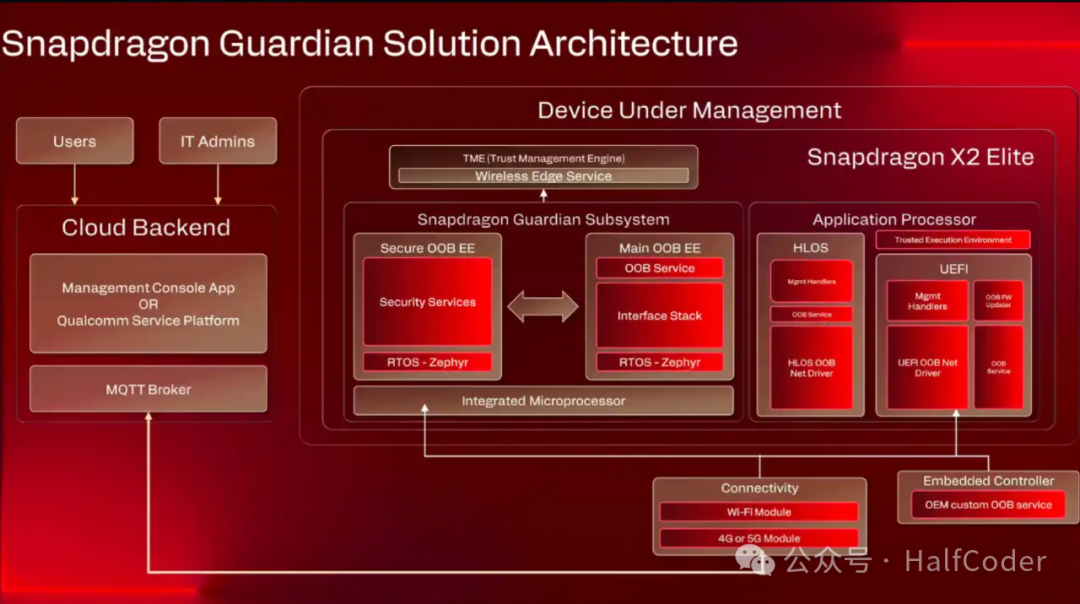
1、Snapdragon X2 Elite’s Security Services Using Zephyr[30]
Qualcomm’s latest Snapdragon X2 Elite chip aims to revolutionize Windows business laptops. It offers **Snapdragon Guardian security technology**, integrating a microprocessor and containing a dedicated, secure OOB EE (execution environment) that runs security services based on the Zephyr RTOS kernel. Even if the Windows system fails to boot or is offline, the security services can operate through the dedicated Zephyr kernel. https://www.digit.in/features/laptops/security-to-sensing-three-key-snapdragon-x2-elite-highlights-on-windows-business-laptops.html
2、Using Rust or Zephyr to Develop Embedded Firmware for Pico[31]
This article discusses the support of the Visual Studio Code extension (pico-vscode) for Rust and Zephyr for Raspberry Pi Pico, aimed at simplifying the embedded firmware development process. The article details how to create Zephyr and Rust projects through pico-vscode, including steps for installing necessary dependencies, selecting templates, compiling, and debugging.
3、Building a Multi-Toolchain Rain-Triggered Greenhouse[32]
This article describes a smart greenhouse automation project that integrates multiple development environments to automatically open the greenhouse roof when rain is detected, while also supporting manual control. The core of the project is the SAM E54 microcontroller, running Zephyr RTOS as the main controller, coordinating inputs from the MTCH9010 rain detection module and PIC32CM GC00 touch control module, and communicating with the AVR® EB stepper motor controller via UART to drive the opening and closing of the greenhouse roof. During development, the MTCH9010 was configured using MPLAB® Data Visualizer, the PIC32CM GC00 used MPLAB Code Configurator and VS Code to develop the touch interface, while the SAM E54 utilized Zephyr RTOS’s Device Tree system for hardware mapping and logical control.
4、How to Upgrade an Entire IoT Device Fleet Without Touching Hardware[33]
This article discusses how Croxel and Blues helped Lift AI completely replace its IoT device operating system from CircuitPython to Zephyr RTOS without touching the hardware. Lift AI initially chose CircuitPython for rapid market entry, but this choice gradually became a limitation as they scaled. Croxel and Blues proposed a “brain transplant” solution, achieving a 100% update success rate, zero downtime, and a quick update of about 15-20 minutes per device. This solution not only saved significant costs but also provided Lift AI with a sustainable evolving platform for more complex data collection and analysis.
5、Serial NAND Flash: The Perfect Partner for Zephyr OS[34]
This article explores why serial SLC NAND Flash is an ideal storage choice for Zephyr OS. NAND Flash has significant advantages in write speed, latency, energy consumption, and cost, making it particularly suitable for data acquisition applications. The article emphasizes the importance of NAND management software, including bad block identification, failure block tracking, wear leveling, and read error management. Additionally, it introduces three NAND file systems suitable for Zephyr OS: LittleFS (current version has limitations, but version 3.0 is expected to improve), Yaffs2 (mature and performs well, but has high RAM requirements), and TSFS (high-performance and low RAM usage). Although Zephyr OS currently has limited support for NAND Flash, reliable and fast storage solutions can be easily achieved by integrating Yaffs2 or TSFS.
- LittleFS: The built-in file system of Zephyr OS, but the current version (2.0) has serious limitations on NAND Flash, such as lack of bad block tracking, critical read error handling, and high write amplification. Version 3.0 is in development and is expected to address these issues.
- Yaffs2: A file system successfully deployed on SLC NAND Flash, supporting bad block management, read error management, and wear leveling. It has the advantages of low write amplification and high write throughput but requires a significant amount of RAM to store file system metadata.
- TSFS: A high-performance embedded file system designed for small, bare-metal, and RTOS-based embedded systems. It provides bad block tracking, block refresh, dynamic and static wear leveling, and low write amplification. TSFS typically has write latencies below 10ms on NAND Flash and requires only about 20KB of RAM.
6、Using Zephelin AI Profiling Library for Real-Time Analysis and Tracing in Zephyr RTOS[35]
This article introduces the Zephelin AI Profiling Library, an open-source real-time analysis and tracing tool for Zephyr RTOS. Zephelin was developed by the Antmicro team in collaboration with Analog Devices, Inc., aimed at helping developers optimize AI applications on embedded platforms. It provides detailed statistics for AI models by tracing the execution of RTOS applications and collecting system state information. Zephelin leverages existing subsystems in Zephyr RTOS and introduces a new instrumentation subsystem for finer-grained performance analysis. It supports various data collection methods and formats and provides conversion tools from CTF to TEF for detailed analysis using the Zephelin Trace Viewer. Zephelin offers three preset analysis levels, allowing developers to choose different performance overheads and data detail levels based on their needs.
Zephyr Monthly Knowledge
1、Generate a report <span>west build -t traceconfig</span> to understand where the application configuration “comes from”. The report is divided into three parts: visible symbols, invisible symbols, and unset symbols. Each symbol displays its type, name, current value, and the statement type and location information that led to that value being applied.
References
[1]
lgl88911/Zephyr_Fans_Monthly: https://github.com/lgl88911/Zephyr_Fans_Monthly
[2]
Added support for OpenRISC: https://github.com/zephyrproject-rtos/zephyr/pull/98160
[3]
Runtime configuration for the network stack: https://github.com/zephyrproject-rtos/zephyr/pull/97266
[4]
Counter driver added 64-bit support: https://github.com/zephyrproject-rtos/zephyr/pull/94189
[5]
NVMEM subsystem supports efuse/OTP devices: https://github.com/zephyrproject-rtos/zephyr/issues/98184
[6]
Imported actuator (motor) driver: https://github.com/zephyrproject-rtos/zephyr/pull/98741
[7]
Imported libMP: https://github.com/zephyrproject-rtos/zephyr/pull/98514
[8]
hwmv2 introduced series and families application directories: https://github.com/zephyrproject-rtos/zephyr/issues/81458
[9]
Imported “Forward Tree” protocol: https://github.com/zephyrproject-rtos/zephyr/pull/95945
[10]
Introduced new CMake configuration variables to support application-overridable configurations: https://github.com/zephyrproject-rtos/zephyr/issues/98679
[11]
Proposed support for runtime selection of Device Tree configuration variants: https://github.com/zephyrproject-rtos/zephyr/issues/98879
[12]
Support for cross-compilation for native simulators: https://github.com/zephyrproject-rtos/zephyr/issues/99436
[13]
Definition of boundaries for drivers, libraries, and subsystems: https://github.com/zephyrproject-rtos/zephyr/issues/99250
[14]
Design and management of vendor-specific APIs in Zephyr: https://github.com/zephyrproject-rtos/zephyr/issues/91373
[15]
Introduced additional-property support for Device Tree binding mechanisms: https://github.com/zephyrproject-rtos/zephyr/pull/96083
[16]
New universal driver interface for digital potentiometers: https://github.com/zephyrproject-rtos/zephyr/pull/99077
[17]
LVGL upgraded to 9.4.0 in the Zephyr mainline: https://github.com/zephyrproject-rtos/zephyr/pull/97599#event-21121051300
[18]
Zephyr 4.3.0 Released: https://www.zephyrproject.org/zephyr-4-3-is-here-whats-new/
[19]
Overview of Zephyr RTOS: Technical Specifications, Firmware Development, and Professional Advice: https://developex.com/blog/zephyr-rtos-overview/
[20]
NXP’s Zephyr Wireless Connectivity Support: https://www.nxp.com/company/about-nxp/smarter-world-blog/BL-ZEPHYR-ENABLEMENT
[21]
Why Zephyr is the Preferred Choice for MCU Development: https://www.eet-china.com/mp/a434634.html
[22]
TI Embedded Seminar: https://www.digitimes.com.tw/tech/dt/n/shwnws.asp?id=0000739178_KSI25ZS865RFN59C8TB9G
[23]
From System Design to Source Code: Tobias Kästner Talks About Zephyr: https://www.eenewseurope.com/en/from-system-design-to-source-code-tobias-kaestner-on-zephyr/
[24]
Zephyr RTOS: Challenges and Reflections on Hardware Abstraction: https://www.pavelp.cz/posts/eng-zephyr-reflections/
[25]
Discussion on Using Device Trees in Microcontrollers: https://www.reddit.com/r/embedded/comments/1ojeaov/device_trees_for_microcontrollers/
[26]
Guide to Migrating from FreeRTOS to Zephyr: https://www.beningo.com/freertos-to-zephyr-migration-a-step-by-step-guide-for-embedded-developers/#
[27]
Zephyr Basic Development Course: https://chrispinetinega.com/course_zephyr_rtos_rpi_4b/
[28]
Tutorial on Using Zephyr RTOS and LVGL on Raspberry Pi Pico: https://www.embedded.com/how-to-initialize-zephyr-rtos-on-raspberry-pi-pico-with-ili9341-lcd-xpt2046-resistive-touch-and-lvgl/
[29]
Migration Guide from OsIf (RTD) to Zephyr Operating System: https://docs.nxp.com/bundle/AN14792/page/topics/from_osif_rtd_to_zephyr_operating_system.html
[30]
Snapdragon X2 Elite’s Security Services Using Zephyr: https://punemirror.com/technology/qualcomm-snapdragon-x2-elite-shocks-industry-with-next-level-security-sensing-and-ai-the-ultimate-windows-business-laptop-revolution/
[31]
Using Rust or Zephyr to Develop Embedded Firmware for Pico: https://www.raspberrypi.com/news/develop-embedded-firmware-for-pico-using-rust-or-zephyr-with-pico-vscode/
[32]
Building a Multi-Toolchain Rain-Triggered Greenhouse: https://www.hackster.io/539965/building-a-multi-toolchain-rain-triggered-greenhouse-ae8f3c
[33]
How to Upgrade an Entire IoT Device Fleet Without Touching Hardware: https://www.croxel.com/insights/webinar-future-proof-fleet
[34]
Serial NAND Flash: The Perfect Partner for Zephyr OS: https://www.jblopen.com/serial-nand-flash-zephyr-os/
[35]
Using Zephelin AI Profiling Library for Real-Time Analysis and Tracing in Zephyr RTOS: https://www.zephyrproject.org/real-time-profiling-and-tracing-in-zephyr-rtos-with-zephelin-ai-profiling-library/