The Era of Dual-Antibody ADCs is Approaching

The Era of Dual-Antibody ADCs is Approaching

© Amino Observation – Innovative Drug Group Original Production Author | Zheng Xiao The explosive popularity of DS-8201 has accelerated the rapid development of the ADC field. Now, this track is about to welcome a new breakthrough – the era of dual-antibody ADCs is accelerating towards us. On November 21, according to the CDE official … Read more

Comparative Clinical Value of Bispecific ADC vs. Dual Payload ADC

Comparative Clinical Value of Bispecific ADC vs. Dual Payload ADC

The following article is sourced from Biotech Investment Notes, authored by Andy. As the technology of ADCs (Antibody-Drug Conjugates) evolves from the “first generation” to the “new generation”, bispecific ADCs and dual payload ADCs have emerged as two major research directions in the industry, breaking through the traditional single-target, single-payload ADCs. Although both are designed … Read more

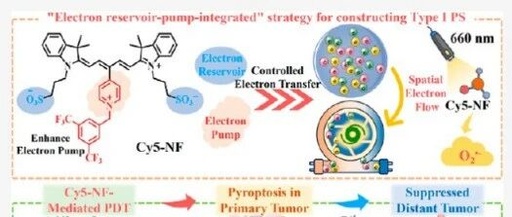
Controlled Electron Transfer: Development of Type I Photosensitizers through Energy Storage Pump Integration Strategy to Induce Long-term Tumor Immune Memory

Controlled Electron Transfer: Development of Type I Photosensitizers through Energy Storage Pump Integration Strategy to Induce Long-term Tumor Immune Memory

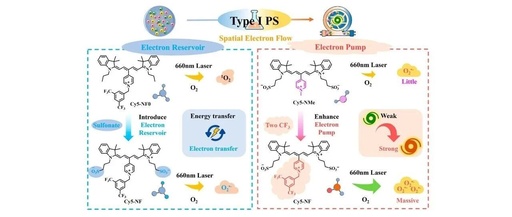
1. Research Background In recent years, various tumor treatment methods, including surgery, chemotherapy, radiotherapy, and photodynamic therapy (PDT), have received widespread attention in the biomedical field. Among them, PDT kills cancer cells by generating reactive oxygen species (ROS) through the light activation of photosensitizers (PS), which is favored in clinical tumor treatment due to minimal … Read more

Controlled Electron Transfer: Implementing a Reservoir-Pump Integrated Strategy to Develop a Type I Photosensitizer for Evoking Long-Term Tumor Immunological Memory

Controlled Electron Transfer: Implementing a Reservoir-Pump Integrated Strategy to Develop a Type I Photosensitizer for Evoking Long-Term Tumor Immunological Memory

Currently, the treatment of malignant tumors is a significant focus of public concern. In recent years, various tumor treatment methods, including surgical resection, chemotherapy, radiotherapy, and photodynamic therapy (PDT), have gained widespread attention in the biomedical field. Among these, PDT kills tumor cells by generating reactive oxygen species (ROS) through the light activation of photosensitizers … Read more

ADC Technology Report: Forecast of Next-Generation ADC Development

ADC Technology Report: Forecast of Next-Generation ADC Development

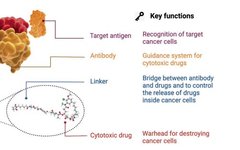
Antibody-drug conjugates (ADCs) have become a popular avenue in tumor treatment in recent years, typically covalently linking monoclonal antibodies (mAbs) with cytotoxic drugs (payloads) via chemically synthesized linkers. ADCs combine the advantages of highly specific targeting capabilities and effective killing actions, achieving precise and efficient clearance of cancer cells.Figure 1. Structure and characteristics of ADC … Read more

3D Printing Precision Guidance for Large Segment Implant Radiation Therapy Successfully Targets Complex Uterine Sarcoma Metastases

3D Printing Precision Guidance for Large Segment Implant Radiation Therapy Successfully Targets Complex Uterine Sarcoma Metastases

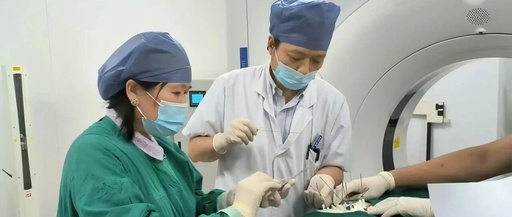
Recently, the expert team at our hospital’s Gynecological Oncology Center successfully utilized a 3D printed individualized navigation template to guide the Large Segment Implant Radiation Therapy (HIBT) technique, precisely treating a patient with a large and complex metastatic lesion in the sacral region due to uterine sarcoma. This innovative application, which integrates cutting-edge guidance technology … Read more

3D Printed Scaffolds Aid in Bone Defect Repair: A Study from Shanghai Jiao Tong University in Biomaterials

3D Printed Scaffolds Aid in Bone Defect Repair: A Study from Shanghai Jiao Tong University in Biomaterials

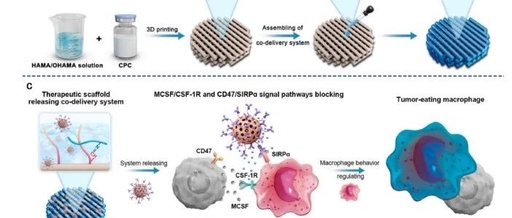
Postoperative treatment of bone tumors faces numerous challenges, the most prominent of which is the high recurrence rate of tumors. This is closely related to the inability of implants to effectively reverse the polarization state of M2 macrophages and the loss of tumor phagocytosis caused by residual tumor cells. M2 macrophages play an immunosuppressive role … Read more

Can C Codes Be Used as Primary Diagnoses? Principles for Selecting Primary Diagnoses for Tumors

Technology information leads high-quality development Co-creating a community of case studies Whether it is the “Quality Standards for Filling Inpatient Medical Records (Interim)” or the “Medical Insurance Fund Settlement List Filling Standards”, the reporting rules for tumors are the most extensive, and the changes in the DRG grouping rules related to tumors are also significant … Read more

Organic Radiosensitizer with Aggregation-Induced Emission Characteristics for Tumor Ablation through Synergistic Apoptosis and Immunogenic Cell Death

Organic Radiosensitizer with Aggregation-Induced Emission Characteristics for Tumor Ablation through Synergistic Apoptosis and Immunogenic Cell Death

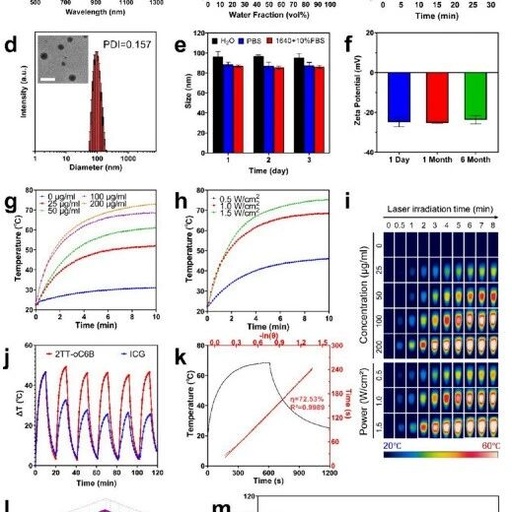
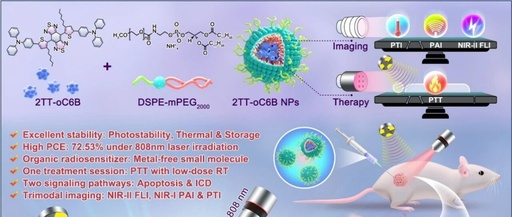
This study explores the application of pure organic nanoparticles in tumor therapy, particularly their potential in photothermal radiotherapy combined treatment. The background of the article points out that the hypoxic state of the tumor microenvironment is a significant reason for radiotherapy resistance, while photothermal therapy can improve the hypoxic state and enhance the radiotherapy effect … Read more

ACS Nano | Organic Radiotherapy Sensitizers with AIE Characteristics Achieve Tumor Ablation through Synergistic Induction of Apoptosis and Immunogenic Cell Death

ACS Nano | Organic Radiotherapy Sensitizers with AIE Characteristics Achieve Tumor Ablation through Synergistic Induction of Apoptosis and Immunogenic Cell Death

Inspired by the clinical enhancement of radiotherapy efficacy through hyperthermia, this study demonstrates a pure organic nanoparticle’s multimodal diagnostic application in tumor combination therapy, integrating imaging and photothermal properties. This nanoparticle possesses various unique characteristics and functions, including excellent photostability and thermal stability, strong fluorescence emission in the near-infrared II (NIR-II) region, extremely high photothermal … Read more