Controlled Electron Transfer: Development of Type I Photosensitizers through Energy Storage Pump Integration Strategy to Induce Long-term Tumor Immune Memory
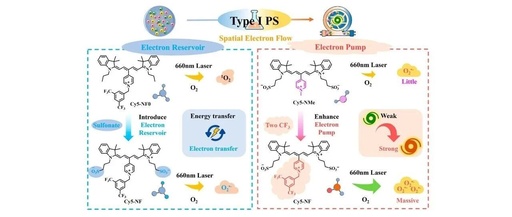
Controlled Electron Transfer: Development of Type I Photosensitizers through Energy Storage Pump Integration Strategy to Induce Long-term Tumor Immune Memory

1. Research Background In recent years, various tumor treatment methods, including surgery, chemotherapy, radiotherapy, and photodynamic therapy (PDT), have received widespread attention in the biomedical field. Among them, PDT kills cancer cells by generating reactive oxygen species (ROS) through the light activation of photosensitizers (PS), which is favored in clinical tumor treatment due to minimal … Read more
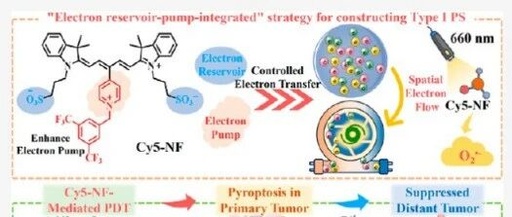
Controlled Electron Transfer: Implementing a Reservoir-Pump Integrated Strategy to Develop a Type I Photosensitizer for Evoking Long-Term Tumor Immunological Memory

Controlled Electron Transfer: Implementing a Reservoir-Pump Integrated Strategy to Develop a Type I Photosensitizer for Evoking Long-Term Tumor Immunological Memory

Currently, the treatment of malignant tumors is a significant focus of public concern. In recent years, various tumor treatment methods, including surgical resection, chemotherapy, radiotherapy, and photodynamic therapy (PDT), have gained widespread attention in the biomedical field. Among these, PDT kills tumor cells by generating reactive oxygen species (ROS) through the light activation of photosensitizers … Read more

Chem. Soc. Rev: Enhancing the Biosafety of Photodynamic Therapy

Chem. Soc. Rev: Enhancing the Biosafety of Photodynamic Therapy

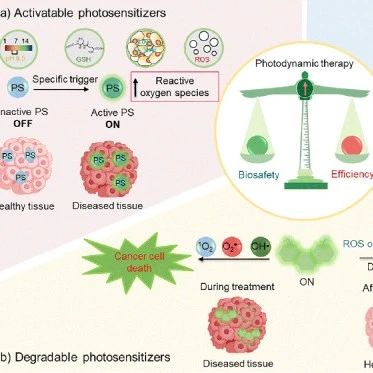
Professor Li Xingshu from Fuzhou University, Professor Juyoung Yoon from Ewha Womans University, and Professor Zhang Hua from Henan Normal University have reviewed the relevant research on enhancing the biosafety of photodynamic therapy. Key Points of the Article: (1) Photodynamic therapy (PDT) is a non-invasive optical treatment method involving reactive oxygen species (ROS), characterized by … Read more

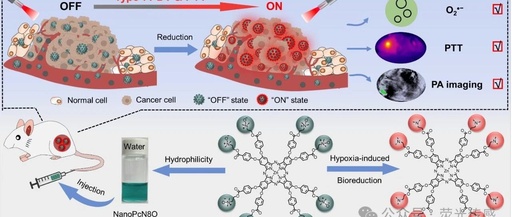
Professor Li Xingshu and Academician Juyoung Yoon in Angew: Hypoxia-triggered Bioreduction of Hydrophilic Type I Photosensitizers for Switchable In Vivo Photoacoustic Imaging and High-specificity Cancer Phototherapy

Professor Li Xingshu and Academician Juyoung Yoon in Angew: Hypoxia-triggered Bioreduction of Hydrophilic Type I Photosensitizers for Switchable In Vivo Photoacoustic Imaging and High-specificity Cancer Phototherapy

Click the blue text Follow us Background Introduction Hypoxia has been identified as a prominent feature within tumors, resulting from the rapid and aggressive growth of tumor cells and abnormal vascularization. Consequently, the low concentration of oxygen (O2) in the hypoxic tumor microenvironment significantly weakens O2-dependent physiological mechanisms and further reduces therapeutic efficacy, such as … Read more

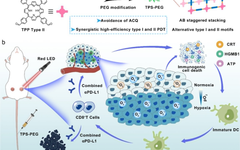
Potent Covalent Organic Framework Nanophotosensitizers for Photodynamic Immunotherapy

Potent Covalent Organic Framework Nanophotosensitizers for Photodynamic Immunotherapy

iNature The photodynamic therapy (PDT) using oxygen-dependent type II photosensitizers is often limited by the hypoxic microenvironment of solid tumors. Type I photosensitizers generate oxygen-independent reactive oxygen species (ROS) under light irradiation, but they suffer from aggregation-caused quenching (ACQ) and low ROS generation efficiency. On December 19, 2024, the team led by Ge Zhishen from … Read more