Explaining The Packaging And Testing Process Of IC Chips
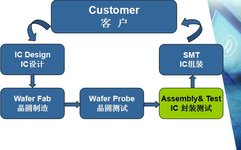
Explaining The Packaging And Testing Process Of IC Chips

Source: Sensor Technology Source: Reliability Technology Exchange IC Package (the form of IC encapsulation) refers to the different shapes of the encapsulation formed by the chip (Die), various types of frameworks (L/F), and encapsulation materials (EMC). There are many types of IC Packages, which can be classified according to the following standards: Classified by encapsulation … Read more
Exploring System-In-Package (SiP) Chips: A New Era of Chip Integration

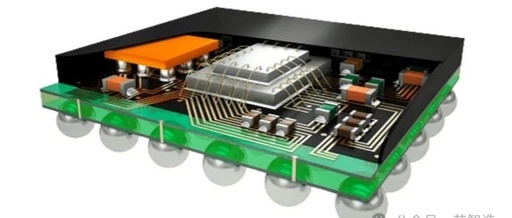
Exploring System-In-Package (SiP) Chips: A New Era of Chip Integration

The Definition of SiP System in Package (SiP) refers to the advanced technology of assembling and integrating multiple IC chips and different types of components on a single package substrate to form a complex electronic information system with specific functionalities. Constituent Elements – Package Carrier: Includes PCB, LTCC, Silicon Submount, etc. – Assembly Process: Traditional … Read more

Analysis of Key Factors Causing BGA Voids in Automotive Electronics PCBA SMT Soldering

Analysis of Key Factors Causing BGA Voids in Automotive Electronics PCBA SMT Soldering

In surface mount technology (SMT), internal voids in solder joints are one of the main defects affecting the reliability of electronic components. Voids can weaken the mechanical strength, conductivity, and thermal conductivity of solder joints, which may lead to catastrophic failures, especially in high-reliability fields such as automotive electronics and aerospace. This article systematically analyzes … Read more

PCB Panelization: Key Rules and Considerations

PCB Panelization: Key Rules and Considerations

Panelization refers to the process of combining multiple small PCB boards into a single larger panel by the manufacturer. 1. Why Panelize? What Are the Benefits of Panelization? 1. To meet production needs. Some PCB boards are too small to meet the requirements for fixtures, so they need to be panelized for production. 2. To … Read more

Failure Analysis of Poor Solder on Connector Pins

Failure Analysis of Poor Solder on Connector Pins

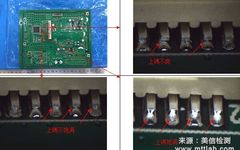
1. Case Background The sample sent for inspection is a certain type of PCBA board. After SMT, it was found that some pins on a connector had poor soldering and unstable failure. Each side of the connector has a total of 50 pins, made of copper with nickel and tin plating. The PCB pad surface … Read more

Explanation of Common PCB Terminology

Explanation of Common PCB Terminology

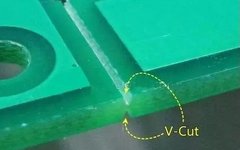
V-cut During PCB splicing, the V-shaped dividing line between two single boards and between a single board and the process edge forms a “V” shape; it is called V-cut because it is broken and separated after soldering. Purpose of V-cut The main purpose of designing V-cut is to facilitate operators in separating the boards after … Read more

Basic Guide to Temperature Measurement Board Production

Basic Guide to Temperature Measurement Board Production

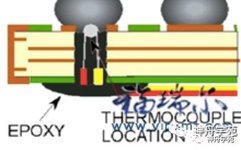
Choosing measurement points for the temperature board should follow the principles below based on the complexity of the PCBA: 1. For one measurement point, select the BGA solder ball on the PCBA; 2. For two measurement points, select the “pins + pads” of the IC components on the PCBA; 3. For three measurement points, select … Read more

FPC Production Process Overview

FPC Production Process Overview

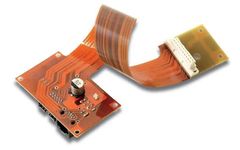
FPC, also known as flexible printed circuit board, has a significantly different PCBA assembly and soldering process compared to rigid circuit boards. Due to the insufficient hardness of the FPC boards, which are relatively soft, it is impossible to complete the basic SMT processes such as printing, mounting, and reflow without using a dedicated carrier … Read more

Component Polarity Identification in PCBA

Component Polarity Identification in PCBA

Polarity components require special attention throughout the PCBA processing, as incorrect orientation of directional components can lead to mass failures and the complete failure of the PCBA board. Therefore, it is extremely important for engineering and production personnel to understand SMT polarity components. 1. Definition of Polarity Polarity refers to the positive and negative terminals … Read more

Understanding the Difference Between PCB and PCBA

Understanding the Difference Between PCB and PCBA

When learning about PCB design, we often encounter two very similar concepts: PCB and PCBA. We know that PCB stands for Printed Circuit Board, but what about PCBA? What is the relationship and difference between them? About PCB PCB stands for Printed Circuit Board, which is a circuit board made using electronic printing technology. It … Read more