Professor Xu Haichao’s Research Group Achieves Significant Progress in Organic Electrosynthesis

Professor Xu Haichao's Research Group Achieves Significant Progress in Organic Electrosynthesis

Research Updates Professor Xu Haichao’s research group, in collaboration with Professor Lang Kai’s team from Heilongjiang University, has made significant progress in the field of organic electrosynthesis. Their research, titled “Carbene Reactivity Directly from Aldehydes via Low-Valent Iron Electrocatalysis,” has been published online in the Journal of the American Chemical Society (DOI: 10.1021/jacs.5c17027). Carbenes are … Read more
Application of Asymmetric Catalysis in the E/Z-Stereodivergent Synthesis of Alkenes

Application of Asymmetric Catalysis in the E/Z-Stereodivergent Synthesis of Alkenes

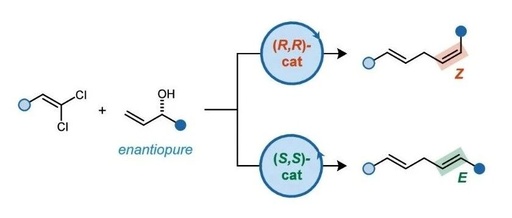
Purdue University,Professor Christopher Uyeda’s team utilized the principles of asymmetric catalysis to achieve control over the E/Z stereoisomers in the formation of non-chiral alkene products. This reaction involves cobalt-catalyzed reductive coupling of 1,1-dichloroalkenes with allylic alcohols, resulting in the formation of skipped 1,4-diene products. Abstract Catalytic asymmetric reactions are primarily used to install new stereogenic … Read more

Introduction to Porous Ceramic Pore-Forming Agents for Gas Sensors

Introduction to Porous Ceramic Pore-Forming Agents for Gas Sensors

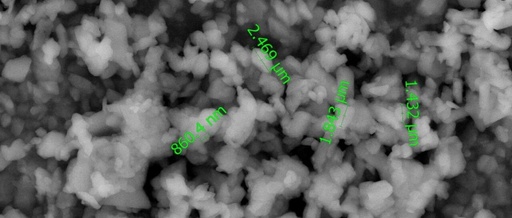
Porous ceramics are a new type of ceramic material that contains a large number of interconnected or closed pores. Our company generally prepares porous ceramic slurries using the pore-forming agent method: Carbon powder, starch, polymer microspheres, etc., are added to the ceramic powder, which will burn or volatilize during the sintering process, leaving behind voids. … Read more

Observation of *N2H3 Intermediates by In Situ Electrochemical SERS: New Pathway of Ammonia Oxidation on High-Durability PtIr Catalysts

Observation of *N2H3 Intermediates by In Situ Electrochemical SERS: New Pathway of Ammonia Oxidation on High-Durability PtIr Catalysts

Hello everyone, today I would like to share an article published in the Journal of the American Chemical Society, titled “Observation of *N2H3 Intermediates by In Situ Electrochemical SERS: New Pathway of Ammonia Oxidation on High-Durability PtIr Catalysts“. The corresponding author of the article is Professor Xie Wei from Nankai University. Abstract The electrochemical ammonia … Read more

Synergy of Single Atoms and Lewis Acid Sites for Efficient and Selective Lignin Disassembly into Monolignol Derivatives

Synergy of Single Atoms and Lewis Acid Sites for Efficient and Selective Lignin Disassembly into Monolignol Derivatives

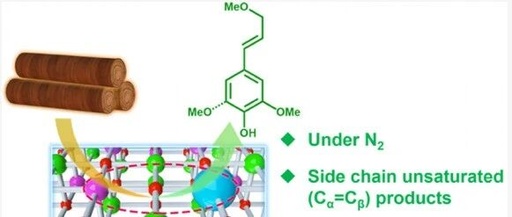
Article Overview Article Information Title: Synergy of Single Atoms and Lewis Acid Sites for Efficient and Selective Lignin Disassembly into Monolignol Derivatives Authors: Ge Meng, Wu Lan, Lilong Zhang, Shibin Wang, Tanhao Zhang, Shuo Zhang, Ming Xu, Yu Wang, Jian Zhang, Fengxia Yue* (South China University of Technology, Fengxia Yue), Yulong Wu* (Tsinghua University, Yulong … Read more

Stereoselective Synthesis of P-Stereogenic Nucleotide Prodrugs and Oligonucleotides

Stereoselective Synthesis of P-Stereogenic Nucleotide Prodrugs and Oligonucleotides

Recently, the team led by Shang Ming from Shanghai Jiao Tong University published a review titled “Stereoselective synthesis of P-stereogenic nucleotide prodrugs and oligonucleotides” in the journal Chemical Society Reviews. The article mainly discusses the stereoselective synthesis methods of phosphorus (V) stereocenters in nucleotide prodrugs and oligonucleotides, which play a significant role in the treatment … Read more

Common Chiral Biphylphosphine Ligands – BINAP

Common Chiral Biphylphosphine Ligands - BINAP

R-BINAP, R-(+)-2,2′-bis(diphenylphosphino)-1,1′-binaphthyl 【(R)-(+)-2,2′-Bis(diphenylphosphino)-1,1′-binaphthyl】 【CAS Number】76189-55-4 【Appearance】White powder S-BINAP, S-(-)-2,2′-bis(diphenylphosphino)-1,1′-binaphthyl 【(S)-(-)-2,2′-Bis(diphenylphosphino)-1,1′-binaphthyl】 【CAS Number】76189-56-5 【Appearance】White powder In 1980, Noyori first synthesized BINAP and used it in chiral catalysis, demonstrating excellent enantioselectivity. Subsequently, BINAP and various metal (Ru, Pd, Ag, Rh, Ir, Au) complexes were continuously used in various reactions. Asymmetric hydrogenation reactions reduced aldehydes and ketones, used … Read more

Cu-Catalyzed Asymmetric Nucleophilic Opening of Tetrasubstituted DAC

Cu-Catalyzed Asymmetric Nucleophilic Opening of Tetrasubstituted DAC

Researchers have found that the asymmetric catalytic transformation of donor–acceptor cyclopropanes (DAC) can construct various types of stereochemically enriched molecules, which is highly valuable, and this strategy is very powerful. However, how to use 1,1,2,2-tetrasubstituted DAC cyclopropanes to synthesize products that modify quaternary carbon stereocenters remains an unresolved challenge.In this regard, Researcher Fang Xinqiang from … Read more