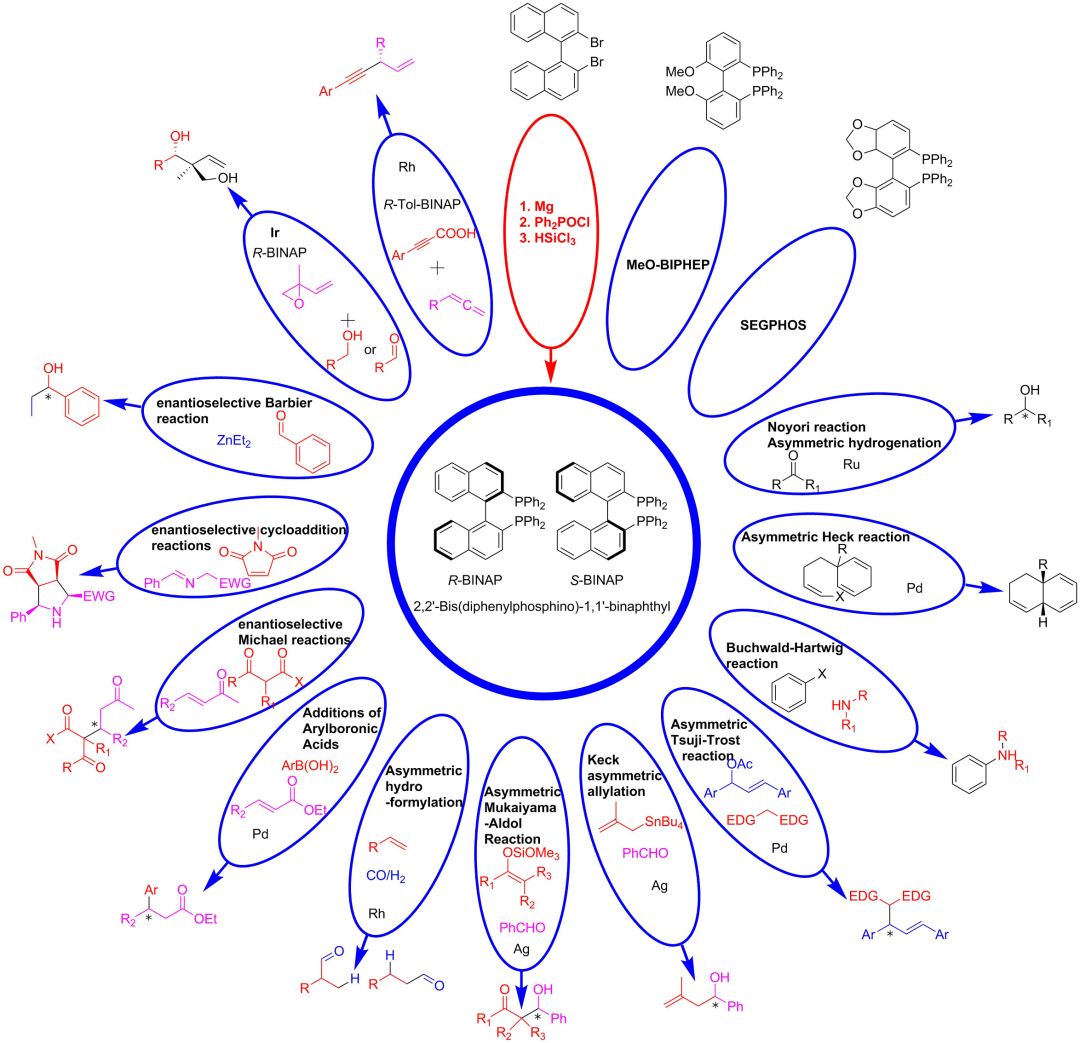
R-BINAP, R-(+)-2,2′-bis(diphenylphosphino)-1,1′-binaphthyl
【(R)-(+)-2,2′-Bis(diphenylphosphino)-1,1′-binaphthyl】
【CAS Number】76189-55-4
【Appearance】White powder
S-BINAP, S-(-)-2,2′-bis(diphenylphosphino)-1,1′-binaphthyl
【(S)-(-)-2,2′-Bis(diphenylphosphino)-1,1′-binaphthyl】
【CAS Number】76189-56-5
【Appearance】White powder
In 1980, Noyori first synthesized BINAP and used it in chiral catalysis, demonstrating excellent enantioselectivity. Subsequently, BINAP and various metal (Ru, Pd, Ag, Rh, Ir, Au) complexes were continuously used in various reactions. Asymmetric hydrogenation reactions reduced aldehydes and ketones, used as phosphine ligands in Buchwald-Hartwig reactions, asymmetric Michael additions, asymmetric cycloadditions, asymmetric Aldol reactions, and more.
1. Noyori Asymmetric Hydrogenation Reaction
Lin et al. reported in 2003 that zirconium-modified Ru-BINAP-DPEN catalysts were used for asymmetric catalytic reduction of aryl ketones, achieving high enantioselectivity (90.6-99.2% ee) and yields up to 99%.
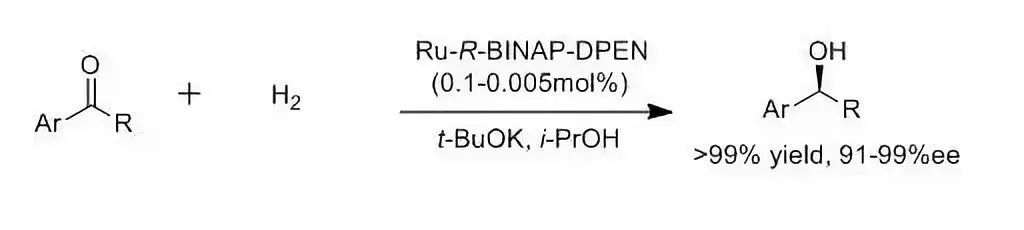
【Hu, A.; Ngo, H. L.; Lin, W. J. Am. Chem. Soc. 2003, 125, 11490】
In 2005, Noyori et al. reported the use of RuCl2(TolBINAP)(PICA) to catalyze the asymmetric hydrogenation of tert-butyl ketone, achieving a catalyst turnover number (substrate to catalyst molar ratio) of up to 100,000, with product ee values exceeding 98%.
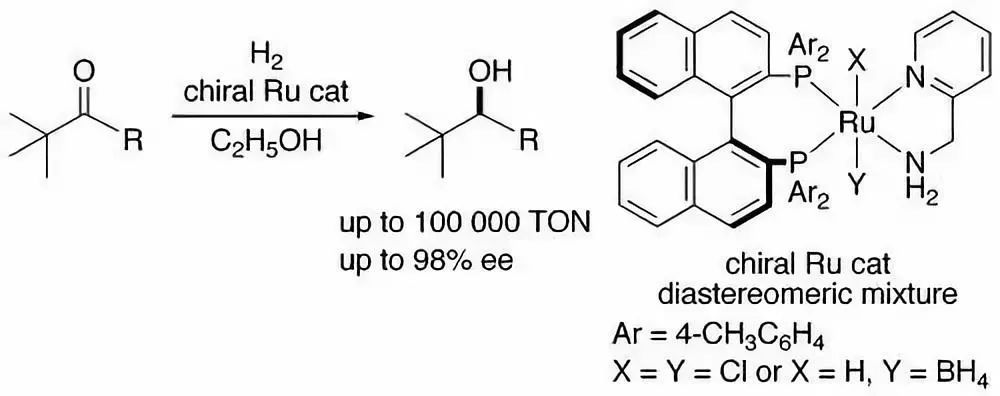
【Takeshi Ohkuma, Christian A., Ryoji Noyori J. Am. Chem. Soc., 2005, 127, 8288–8289】
2. Asymmetric Heck Reaction
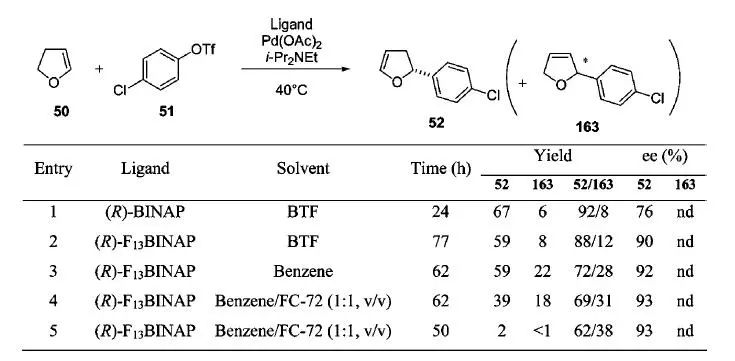
Under the catalysis of BINAP-type phosphine ligands, an asymmetric Heck reaction of 2,3-dihydrofuran and aryl trifluoromethanesulfonates was performed, achieving high stereoselectivity (97%) and an ee of 68%.
【Nakamura, Y.; Takeuchi, S.; Zhang, S.; Okumura, K.; Ohgo, Y. Tetrahedron Lett. 2002, 43, 3053】
Using modified BINAP to catalyze this reaction significantly improved enantioselectivity (93% ee).
3. Coupling Reactions
The most common coupling reaction catalyzed by BINAP as a phosphine ligand is the Buchwald-Hartwig reaction.
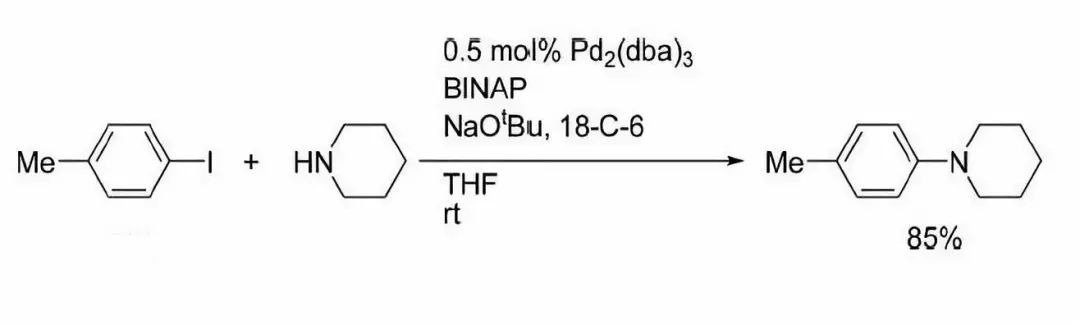
【Wolfe, J. P.; Buchwald, S. L. J. Org. Chem. 1997, 62, 1264–126】
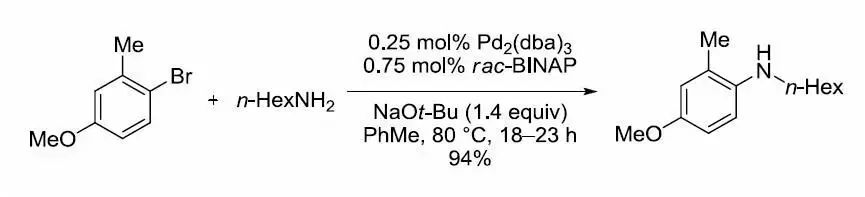
【Wolfe, J. P.; Buchwald, S. L. Org. Syn. 2002, 78, 23-30】
Additionally, there are reports of BINAP-type catalysts used in Stille coupling reactions and Suzuki reactions.

【Apoorva Misra, Jaya Dwivedi, D. Kishore Synthetic Communications, 2017, 47, 497-535】
4. Asymmetric Tsuji-Trost Reaction
Toma et al. reported the Tsuji-Trost reaction catalyzed by BINAP and using [Bmin]PF6 as a solvent, achieving high yields and enantioselectivity.
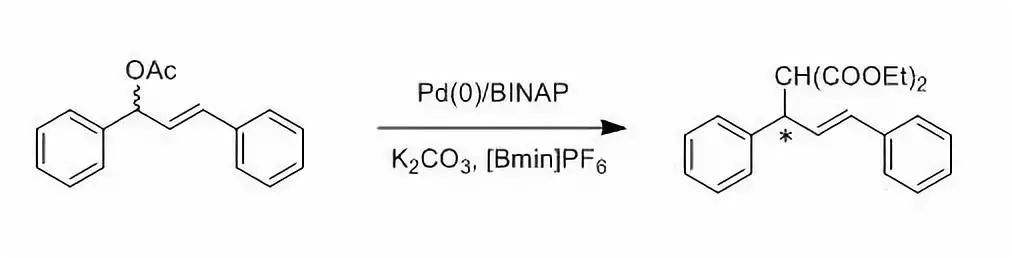
【Kmentova, I.; Gotov, B.; Solcaniova, E.; Toma, S. Green Chem. 2002, 4, 103】
5. Asymmetric Nucleophilic Addition Reactions
Allyltin compounds undergo asymmetric Keck allylation reactions against aldehydes under the catalysis of BINAP-Ag(I), achieving high yields and enantioselectivity.
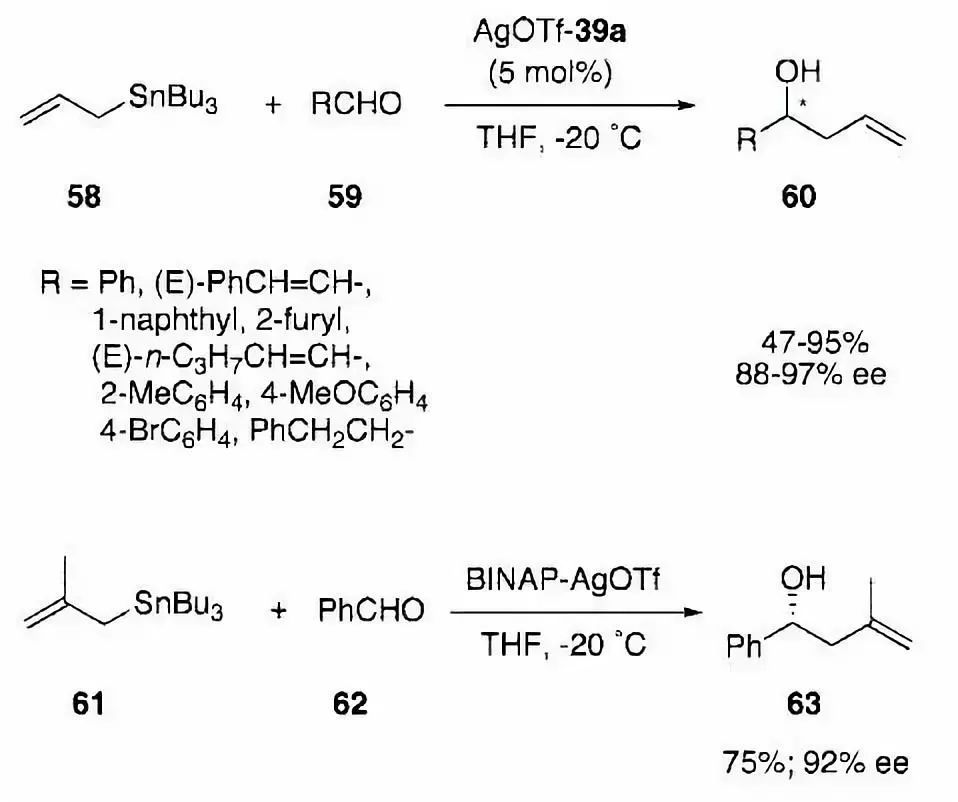
【Marina Naodovic, Hisashi Yamamoto Chemical Reviews, 2008, 108, 3138】
The asymmetric Mukaiyama-Aldol reaction catalyzed by p-Tol-BINAP-AgF exhibits high stereoselectivity and enantioselectivity.
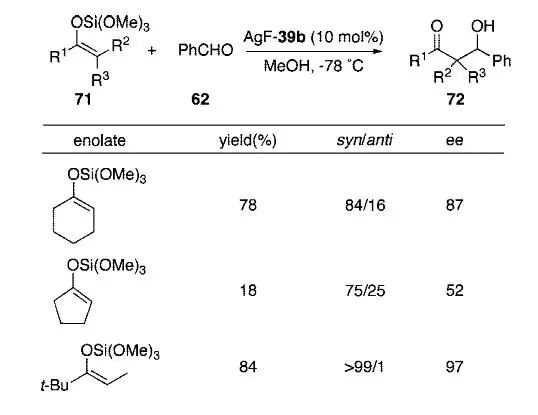
【Yanagisawa, A.; Nakatsuka, Y.; Asakawa, K.; Wadamoto, M.; Kageyama, H.; Yamamoto, H. Bull. Chem. Soc. Jpn. 2001, 74, 1477.】
(R)-p-Tol-BINAP-Pd(II) and (R)-BINAP-Pd(II) catalyzed asymmetric Michael addition reactions achieve ee values over 90% for products with quaternary chiral centers.
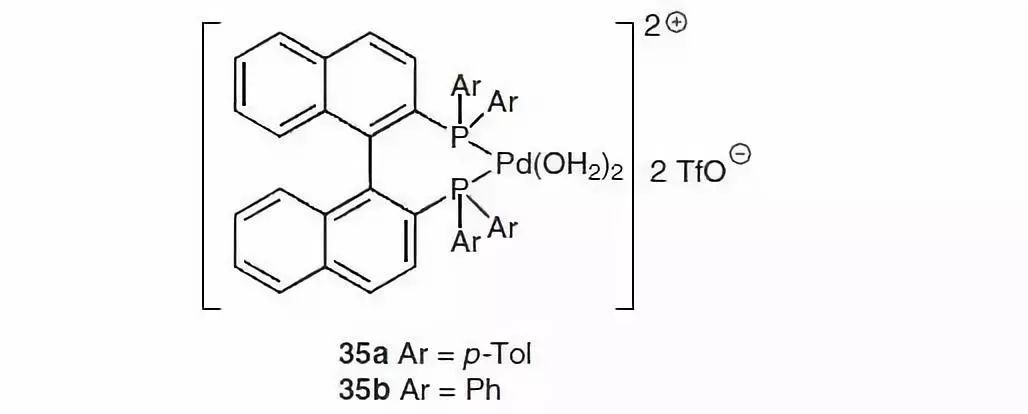
【(a) Denissova, I.; Barriault, L. Tetrahedron 2003, 59, 10105. (b) Christoffers, J.; Baro, A. Angew. Chem. Int. Ed. 2003, 42, 1688; Angew. Chem. 2003, 115, 1726. (c) Christoffers, J. Chem. Eur. J.
2003, 9, 4862. (d) Douglas, C. J.; Overman, L. E. Proc. Natl. Acad. Sci. U.S.A. 2004, 101, 5363. (e) Christoffers, J.; Baro, A. Adv. Synth. Catal. 2005, 347, 1473. (f) Trost, B. M.; Jiang, C. Synthesis 2006, 369.】
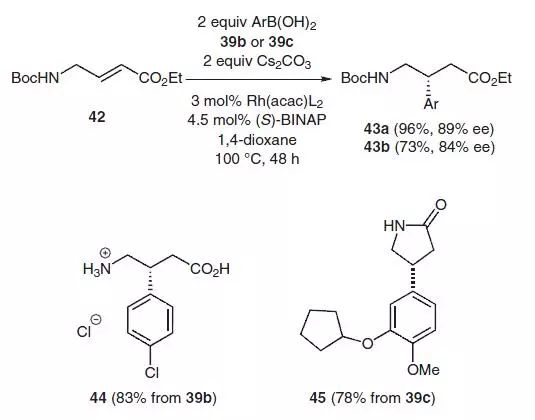
Miyaura and Hayashi utilized Rh(I)–BINAP catalysis with aryl boronic acids as nucleophiles to achieve excellent results in the synthesis of GABA analogs.
【(a) Senda, T.; Ogasawara, M.; Hayashi, T. J. Org. Chem. 2001, 66, 6852. (b) Hayashi, T.; Takahashi, M.; Takaya, Y.; Ogasawara, M. J. Am. Chem. Soc. 2002, 124, 5052. (c) Itooka, R.; Iguchi, Y.; Miyaura, N. J. Org. Chem. 2003, 68, 6000. (d) Kina, A.; Iwamura, H.; Hayashi, T. J. Am. Chem. Soc. 2006, 128, 3904.】
6. Asymmetric Cycloaddition Reactions
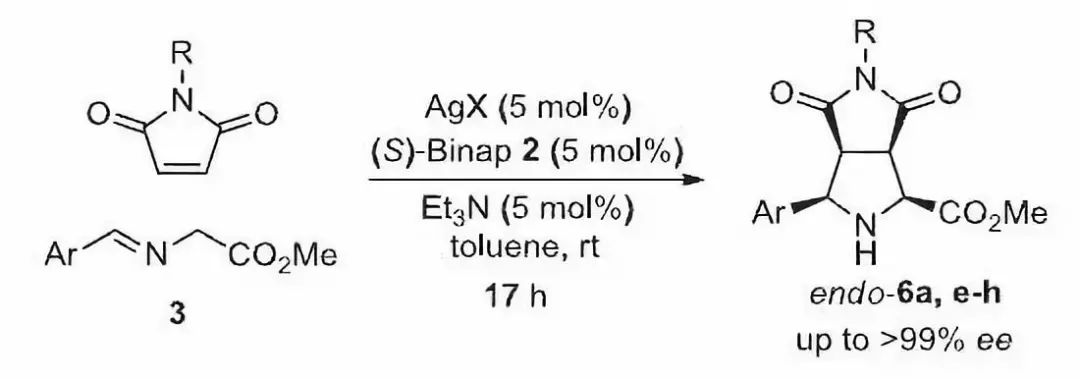
The BINAP-AgX system catalyzed [3+2] cycloaddition reactions exhibit high enantioselectivity.
【Carmen Nájera, José M. Sansano Journal of Organometallic Chemistry, 2014, 771, 78-92】
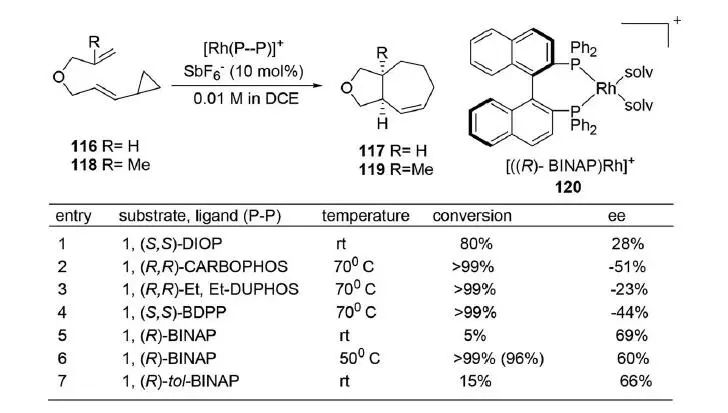
Wender et al. reported a [(R)-BINAP]Rh]+SbF6-catalyzed [5+2] cycloaddition reaction achieving high yields.
【Wender, P. A.; Haustedt, L. O.; Lim, J.; Love, J. A.; Williams, T. J.; Yoon, J. Y. J. Am. Chem. Soc. 2006, 128, 6302–6303】
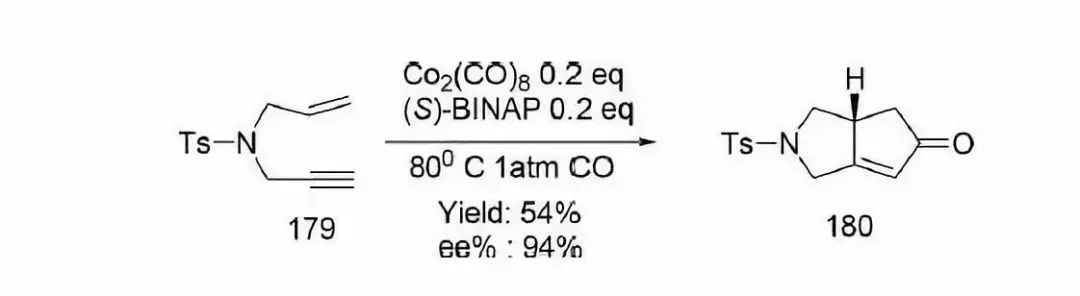
Additionally, there are reports of BINAP-catalyzed asymmetric Pauson–Khand reactions.
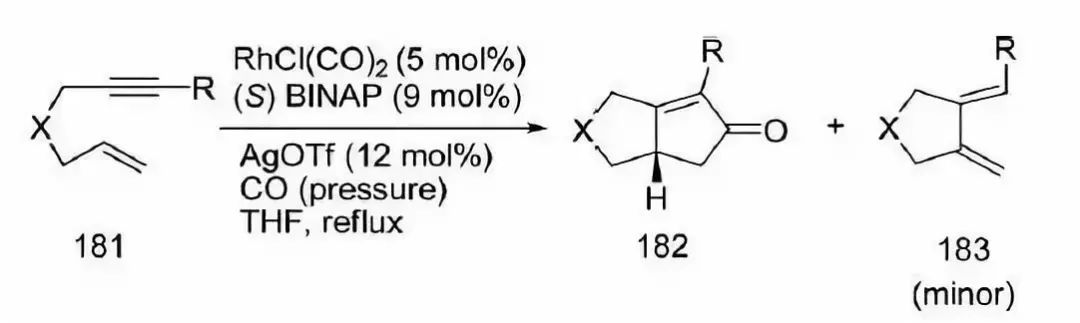
【Apoorva Misra, Jaya Dwivedi, D. Kishore Synthetic Communications, 2017, 47, 497-535】
7. Others
Additionally, literature reports BINAP used in catalyzing the asymmetric Baylis–Hillman reaction【Hayase, T.; Shibata, T.; Soai, K.; Wakatsuki, Y. Chem Commun. 1998, 1271–1272】 and hydrogenation reactions【Kant, M.; Bischoff, S.; Siefken, R.; Ko¨ckritz, A. J. Mol. Catal. A 2001, 174, 119.】
The Ir-BINAP system catalyzed the reaction of primary alcohols or their corresponding aldehydes with vinyl epoxides to produce 2-vinyl-1,3-diol.
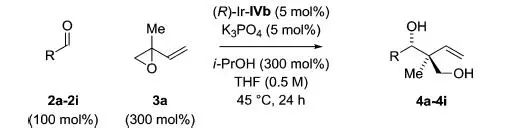
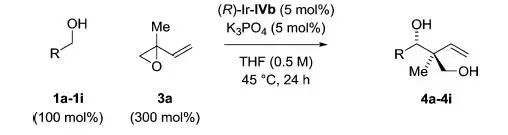
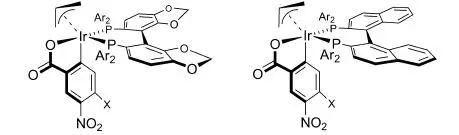
【Jiajie Feng, Victoria J. Garza, Michael J. Krische J. Am. Chem. Soc. 2014, 136, 8911−8914】
Rh(I)/(R)-Tol-BINAP system catalyzed the decarboxylative alkynylation of propargylic compounds.
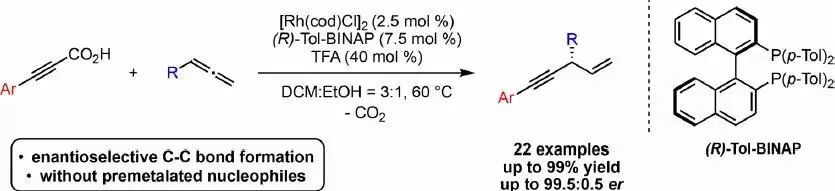
【Christian P. Grugel, Bernhard Breit Org. Lett. 2018, 20, 1066−1069】
8. BINAP-like Chiral Biphylphosphine Ligands
MeO-BIPHEP, SYNPHOS, SEGPHOS exhibit different activities in asymmetric hydrogenation reactions.
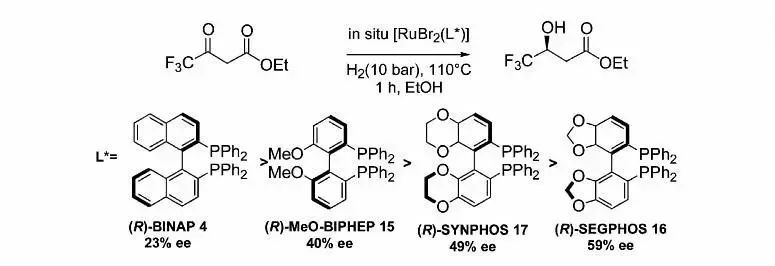
【Mikael Berthod, Gerard Mignani, Gary Woodward, Marc Lemaire Chem. Rev. 2005, 105, 1801-1836】