
Recently, the team led by Shang Ming from Shanghai Jiao Tong University published a review titled “Stereoselective synthesis of P-stereogenic nucleotide prodrugs and oligonucleotides” in the journal Chemical Society Reviews. The article mainly discusses the stereoselective synthesis methods of phosphorus (V) stereocenters in nucleotide prodrugs and oligonucleotides, which play a significant role in the treatment of severe diseases (such as viral infections, chronic diseases, and rare genetic disorders). Various methods for achieving stereocontrol at the phosphorus center are discussed in detail, including the use of stereopure precursors, chiral auxiliaries, asymmetric catalysis, and enzymatic methods, along with their applications in industrial-scale production.
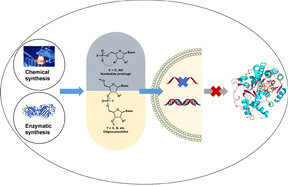 The specific content is as follows:
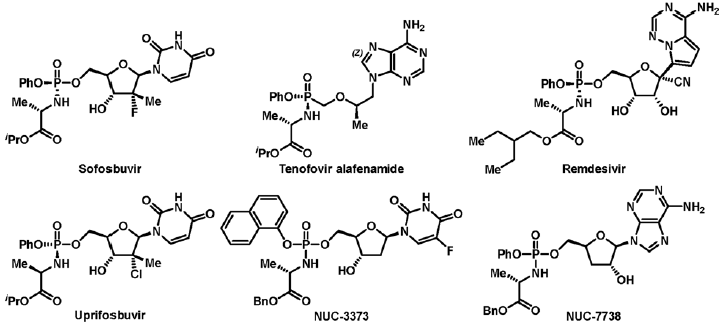
1. Synthesis of P-Stereogenic Nucleotide Prodrugs (ProTides)ProTide technology addresses the poor cell membrane permeability and low first-step phosphorylation efficiency of nucleoside drugs through prodrug forms. The review summarizes multiple routes for synthesizing P-stereopure ProTides:
-
Purification Strategy: Early methods synthesized mixtures of diastereomers (e.g., 1:1 Rp/Sp) and separated them using chromatographic techniques such as HPLC. This was a key method that initially demonstrated the influence of stereoconfiguration on activity.
-
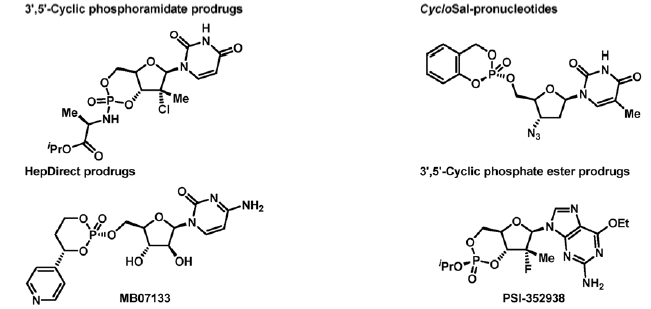
Stereospecific Coupling: Using chiral pure P(V) precursors (e.g., para-nitrophenol, pentafluorophenyl esters), the P-stereogenic center is stereospecifically constructed through S<sub>N</sub>2 reactions. Representative methods include the synthesis of HepDirect prodrugs.
-
Thermodynamic Resolution: Utilizing the more thermodynamically stable diastereomer, the reaction mixture is heated to preferentially obtain a single configurational product.
-
Chiral Auxiliary Strategy: Using chiral auxiliaries (e.g., thiazolidinethione, cyclic Saligenyl derivatives) in conjunction with phosphorus reagents to form separable diastereomeric intermediates, ultimately transferring chirality to obtain the target product.
-
Dynamic Kinetic Resolution (DKR): In the presence of chiral catalysts or environments, rapid racemization of intermediates and selective reaction of one enantiomer yield a single configurational product from racemic substrates with high yield and high enantiomeric selectivity.
-
Asymmetric Catalysis: Utilizing chiral organic small molecule catalysts (e.g., bicyclic imidazoles, chiral phosphoric acid CPA, bifunctional imino phosphorane BIMP catalysts) or chiral metal complexes (e.g., copper catalysts) to directly catalyze phosphorylation reactions, achieving high enantiomeric selectivity and high yield. This is currently the most cutting-edge and attractive method, successfully applied in the synthesis of drugs such as Remdesivir and Sofosbuvir.
-
Desymmetrization Strategy: A powerful strategy developed in recent years, through enantioselective catalytic substitution of prochiral P(V) centers (e.g., phosphorodichloride), modularly constructing fully heteroatom-substituted P-stereogenic centers, providing a unified platform for synthesizing various P-stereogenic molecules.
2. Synthesis of P-Stereogenic Oligonucleotides (mainly Phosphorothioate PS)PS modification is one of the main chemical modifications of oligonucleotide drugs, but introducing a chiral center with each PS bond leads to significant stereochemical complexity. The review summarizes methods for controlling the stereoconfiguration of PS bonds:
-
Utilizing the Inherent Chirality of Ribose: Early attempts utilized the chirality of nucleosides themselves to induce asymmetric synthesis of PS bonds, but the stereoselectivity was often not high.
-
Using P(III) Chiral Pure Monomers (Main Strategy):
-
Chiral Auxiliary Strategy: Using chiral auxiliaries derived from ephedrine, (D/L)-proline, xylose, tryptophan, etc., to construct chiral oxazaphospholidine monomers. These monomers can control the stereoconfiguration of the newly formed PS bonds during solid-phase synthesis.
-
Activator Optimization: Using specific activators (e.g., PhIMT, BIT, CMPT) can significantly improve the stereoselectivity of coupling reactions.
-
Rigid Bicyclic Structures: Development of rigid bicyclic oxazaphospholidine monomers with extremely high configurational stability, capable of maintaining stereochemical integrity during solid-phase synthesis, achieving nearly perfect stereocontrol (>99:1 dr).
Using P(V) Chiral Pure Monomers:
-
Chromatographic Separation: Synthesizing and chromatographically separating pure diastereomers of oxathiaphospholane (OTP) monomers, followed by stereospecific coupling. (Stec method)
-
Baran’s PSI (Ψ) Platform: A revolutionary P(V) synthesis platform. Using stable, programmable stereochemistry P(V) reagents derived from cellulose, achieving near-quantitative stereochemical fidelity and high yield coupling without oxidation or sulfur substitution steps. This platform is suitable for synthesizing stereopure PS, PO, PS2, and chimeric oligonucleotides, with good scalability.
Catalytic Asymmetric Synthesis: Using chiral phosphoric acid (CPA) catalysts to catalyze the coupling reactions of phosphoramidates, enabling stereodivergent synthesis without stoichiometric chiral auxiliaries or activators, representing a future direction.
3. Other P-Stereogenic OligonucleotidesBriefly introduces other P-stereogenic backbones besides PS, including:
-
Methylphosphonate (MP)
-
Borane Phosphate (BP)
-
Phosphoramide (PN)
-
Phosphorodiamidate Morpholino Oligomers (PMO) These modifications each have advantages (such as neutral charge, enhanced binding affinity, and extremely high enzymatic stability), but their stereocontrolled synthesis research is relatively limited.
4. Enzymatic Synthesis
-
ProTides: Using phosphotriesterase (PTE) and its engineered variants for the kinetic resolution of chiral phosphoramidate precursors, efficiently obtaining a single diastereomer.
-
Oligonucleotides:
-
Template-Independent Synthesis (TiEOS): Utilizing terminal deoxynucleotidyl transferase (TdT) and reversible terminators to synthesize DNA from scratch.
-
Template-Dependent Synthesis: Utilizing polymerases to incorporate α-P modified NTPs (e.g., ATPαS) into oligonucleotide chains, usually with stereoselectivity.
-
Ligation Enzyme Synthesis: Efficiently stitching together chemically synthesized short fragments using ligation enzymes to form long chains.
-
One-Pot Enzymatic Cascade: An emerging technology that directly synthesizes complex products (e.g., cyclic dinucleotide STING agonists) by designing enzymatic reaction networks (e.g., kinase+cGAS), or achieving templated cyclic synthesis through combinations of polymerases/ligation enzymes and endonucleases, with extremely high efficiency and stereocontrol capabilities.
5. Industrial Scale Production
-
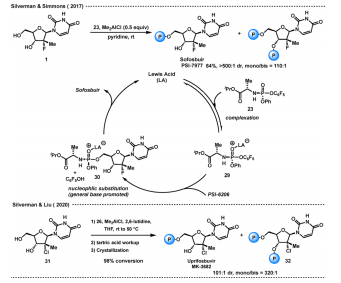
ProTides: Summarizes the kilogram-scale synthesis routes for key drugs such as tenofovir alafenamide (TAF), sofosbuvir, and remdesivir, involving key processes such as crystallization-induced dynamic resolution and high-selectivity phosphorylation promoted by dimethylaminopropyl chloride (DMACl).
-
Oligonucleotides:
-
Solid-Phase Synthesis: Still mainstream, but faces challenges of high costs for large-scale equipment.Baran’s P(V) platform is becoming an important alternative to traditional P(III) phosphoramidate methods due to its excellent stereocontrol and product consistency.
-
Liquid-Phase Synthesis: Using soluble polymer supports (e.g., PEG, AJIPHASE®) and membrane separation techniques or precipitation purification, more suitable for large-scale production, has been used to produce ton-scale clinical candidate drugs.
-
Convergent Synthesis: Using dimer or trimer “building blocks” for coupling, reducing synthesis steps and improving overall yield.
Conclusion and Outlook
-
P-stereogenic is crucial for the biological activity of nucleoside and oligonucleotide drugs.
-
Synthesis methods have evolved from early chromatographic separations to chiral auxiliaries, and now to asymmetric catalysis and efficient P(V) platforms, with continuously improving stereocontrol capabilities and synthesis efficiency.
-
Enzymatic synthesis provides a promising alternative for green and sustainable production.
-
Future directions include: developing more efficient and versatile asymmetric catalytic systems; integrating stereocontrolled synthesis with novel therapeutic applications (e.g., gene editing, RNA therapy); addressing cost and efficiency challenges in large-scale production; deepening the understanding of stereoconfiguration-activity relationships.
-
Interdisciplinary collaboration in chemistry, biology, and medicine is needed to drive the development of these cutting-edge therapies.
References
J. Wang, J. Lv, S. Bankar, et. al., Stereoselective synthesis of P-stereogenic nucleotide prodrugs and oligonucleotides, Chem. Soc. Rev., 2025, doi.org/10.1039/d5cs00260e.
Link: https://doi.org/10.1039/D5CS00260EThe above content represents the personal views of the author and is for reference only. Please feel free to criticize and correct any inaccuracies!