 Researchers have found that the asymmetric catalytic transformation of donor–acceptor cyclopropanes (DAC) can construct various types of stereochemically enriched molecules, which is highly valuable, and this strategy is very powerful. However, how to use 1,1,2,2-tetrasubstituted DAC cyclopropanes to synthesize products that modify quaternary carbon stereocenters remains an unresolved challenge.In this regard, Researcher Fang Xinqiang from the Fujian Institute of Material Structure, Chinese Academy of Sciences, Associate Professor Gu Chengzhi from Shihezi University, and Jinggong Liu and others reported the Cu-catalyzed asymmetric amination opening of tetrasubstituted alkyne DAC.
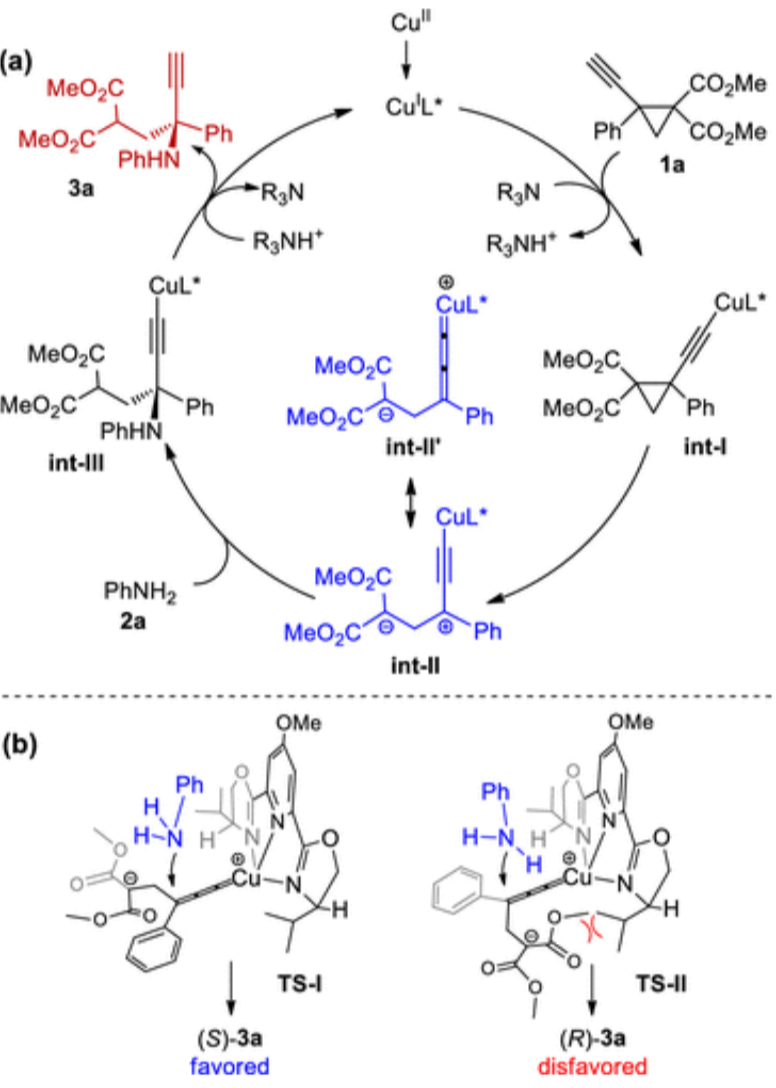
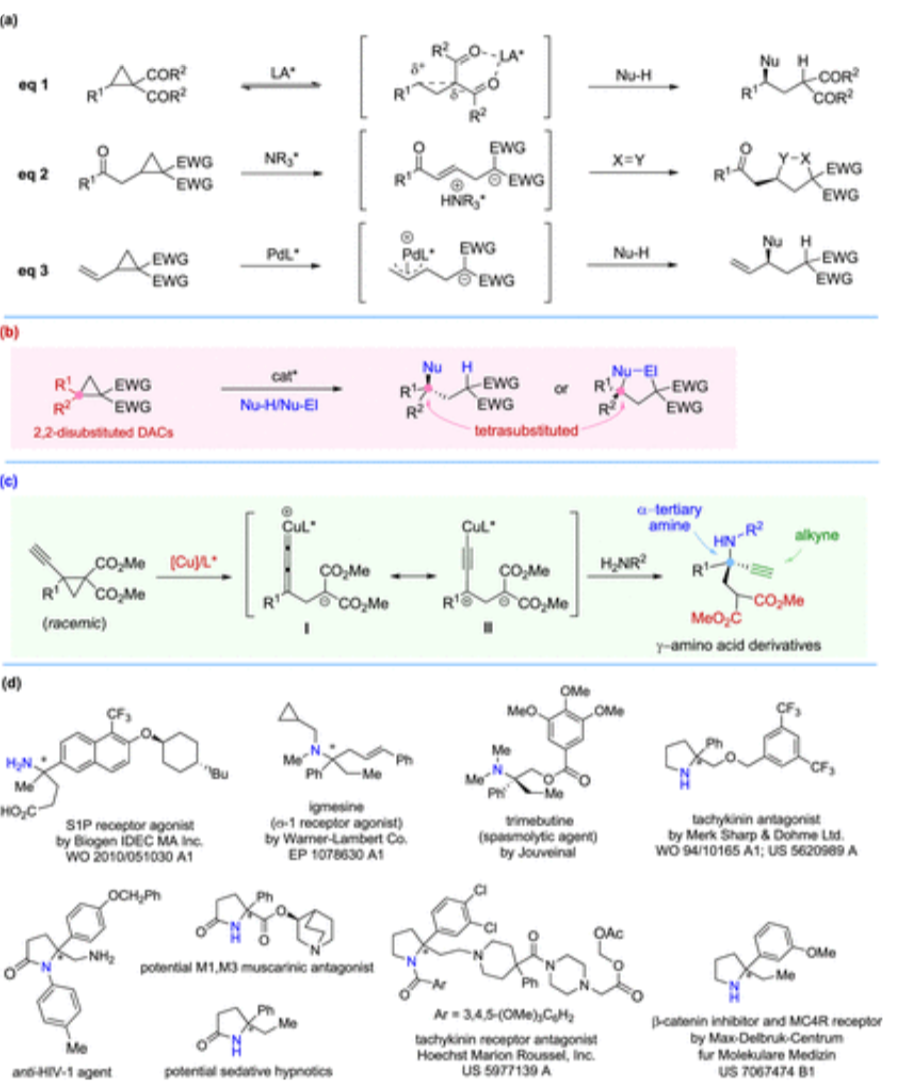 Key Points of This ArticlePoint 1. This Cu-catalyzed opening reaction of cyclopropanes yields many highly enantioselective α-tertiary amines. The synthesized product molecules containing alkyne, amine, and ester groups can undergo various further transformations, allowing for the asymmetric synthesis of biologically active compound molecules.Point 2. The mechanistic results indicate that the zwitterionic intermediate with a Cu-acetate structure plays a key role in this reaction. This reaction represents a novel mode of asymmetric transformation for DAC compounds.
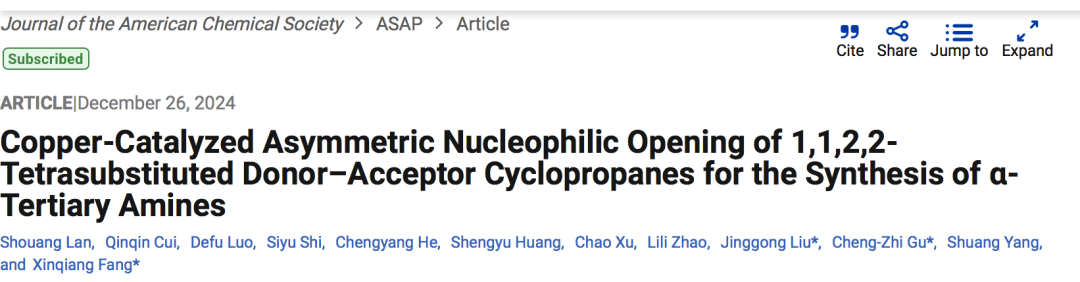
 Shouang Lan, Qinqin Cui, Defu Luo, Siyu Shi, Chengyang He, Shengyu Huang, Chao Xu, Lili Zhao, Jinggong Liu*, Cheng-Zhi Gu*, Shuang Yang, and Xinqiang Fang*, Copper-Catalyzed Asymmetric Nucleophilic Opening of 1,1,2,2-Tetrasubstituted Donor–Acceptor Cyclopropanes for the Synthesis of α-Tertiary Amines, J. Am. Chem. Soc. 2024DOI: 10.1021/jacs.4c14944https://pubs.acs.org/doi/10.1021/jacs.4c14944
Synchrotron Radiation丨Spherical Aberration Electron Microscopy丨FIB-TEM
In Situ XPS, In Situ XRD, In Situ Raman, In Situ FTIR
Expedited Testing
 Teacher Zhu158 2759 2922www.micetech.cn