Cu-Catalyzed Asymmetric Nucleophilic Opening of Tetrasubstituted DAC

Cu-Catalyzed Asymmetric Nucleophilic Opening of Tetrasubstituted DAC

Researchers have found that the asymmetric catalytic transformation of donor–acceptor cyclopropanes (DAC) can construct various types of stereochemically enriched molecules, which is highly valuable, and this strategy is very powerful. However, how to use 1,1,2,2-tetrasubstituted DAC cyclopropanes to synthesize products that modify quaternary carbon stereocenters remains an unresolved challenge.In this regard, Researcher Fang Xinqiang from … Read more
What Is the Hybridization of Carbon in C₆₀?

What Is the Hybridization of Carbon in C₆₀?

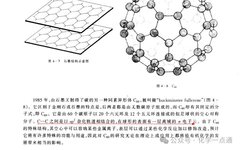
If you find this helpful, please click the above ↑↑↑ “Chemistry Basics” to follow our public account. Your encouragement is my motivation to keep updating. A teacher asked about the hybridization of carbon atoms in C60. This time, we will analyze it through literature research. Viewpoint 1: The carbon in C60 belongs to sp2 hybridization. … Read more

Simmons-Smith Cyclopropanation Reaction

Simmons-Smith Cyclopropanation Reaction

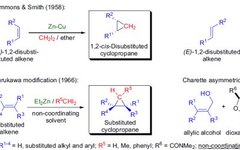
In 1958, H.E. Simmons and R.D. Smith discovered that in the presence of a zinc-copper couple, dichloromethane can convert alkenes (such as cyclohexene and styrene) into stereospecific cyclopropane derivatives. This reaction became one of the most effective methods for synthesizing cyclopropane derivatives, known as the Simmons-Smith reaction. The reaction was later improved for broader use: … Read more

Benzidine Rearrangement: A Name Reaction Explained

Benzidine Rearrangement: A Name Reaction Explained

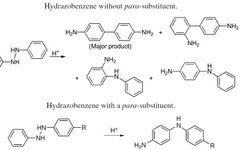
In 1863, Hofmann reported the rearrangement of diphenylhydrazine to 4,4-diaminobiphenyl (aniline) under acid catalysis, known as the benzidine rearrangement. When diphenylhydrazine contains a para-substituent, the product obtained is para-aminobiphenyl, and this reaction is referred to as the Semidine rearrangement. Reaction Mechanism Reaction Examples References 1. Hofmann, A. W., Proc. Roy. Soc. London, 1863, 12, 576. … Read more

Why Does Ferrous Hydroxide Change Color from White to Gray-Green?

Why Does Ferrous Hydroxide Change Color from White to Gray-Green?

Welcome to join the C3H3 Teacher Group, to join the group please contact WeChat c3h3wxip, please indicate “Join Group“. There are various hypotheses regarding the composition of the gray-green substance, and each hypothesis has been validated by corresponding experimental evidence, mainly as follows: ①Fe₃(OH)₈ (or Fe(OH)₂·2Fe(OH)₃) ②Fe(OH)₂ adsorbs Fe²⁺ ③Fe(OH)₂ forms a complex with H₂O … Read more