Porous ceramics are a new type of ceramic material that contains a large number of interconnected or closed pores. Our company generally prepares porous ceramic slurries using the pore-forming agent method: Carbon powder, starch, polymer microspheres, etc., are added to the ceramic powder, which will burn or volatilize during the sintering process, leaving behind voids. Our products are widely used in the fields of gas diffusion or sensing, and the pores in ceramics are generally of the interconnected type.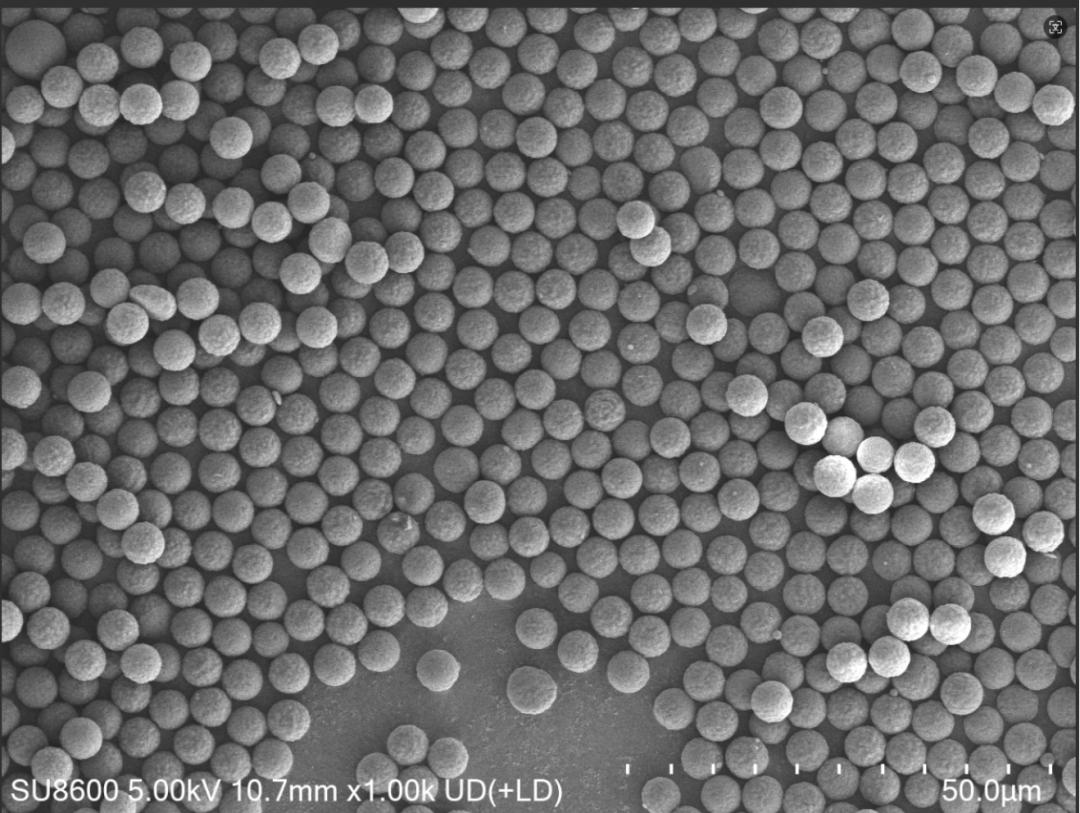 SiC porous ceramic spherical pore-forming agent (decomposes at low temperature 350℃ in a nitrogen atmosphere, with no residual carbon), is used for metal melt filtration, high-temperature flue gas dust removal, and other fields
1. Based on different pore sizes (micropores, mesopores, macropores)
Microporous ceramics: Pore size 2 nm. For example: Zeolite molecular sieves, mainly used for adsorption and catalysis.
Mesoporous ceramics: Pore size 2-50 nm. They have a very high specific surface area and are excellent catalyst carriers.
Macroporous ceramics: 50 < pore size < 100μm. Used for filtration, separation, carriers, and biological implants.
2. Types of Organic Pore-Forming Agents
-
PMMA microspheres: an important pore-forming agent for preparing uniform macropores. They have good sphericity, controllable particle size, and leave regular spherical pores after combustion.
PS microspheres: Similar properties to PMMA.
-
Starch (corn, potato starch): Very commonly used, low cost, high pore-forming rate, and a wide range of pore sizes.
-
Polyethylene, polypropylene: Granular, with larger pore sizes.
Polyester fibers, nylon fibers: Can form anisotropic channels or fibrous pores.
-
Carbon black: Small particle size, can form micron-sized pores, and is solid with minimal residue.
Walnut shell powder: An environmentally friendly natural pore-forming agent.
3. Introduction to Our Special Pore-Forming Agent
We have developed an organic polymer pore-forming agent specifically for oil-soluble electronic slurries. It is prepared using a high-temperature and high-pressure method. The powder appears as irregular particles, with a particle size of 0.5~2.5μm, a thermal decomposition temperature of 250℃, and generates very low heat during decomposition, which does not damage the ceramic coating structure.
Unlike commercially available PMMA microspheres, PMMA is slightly soluble in organic solvents, and the viscosity of the slurry varies significantly over time. The thermal decomposition of PMMA generates a large amount of heat, causing the ceramic coating to crack and collapse.
Starch pore-forming agents have larger particle sizes, low coating porosity, and low purity, leading to high ash content, which can contaminate and affect slurry performance.
It is unclear what principle is at work, but the pores created by this pore-forming agent are mostly interconnected, resulting in ceramics with extremely high specific surface area and porosity, which is very beneficial for gas flow and catalytic reactions.
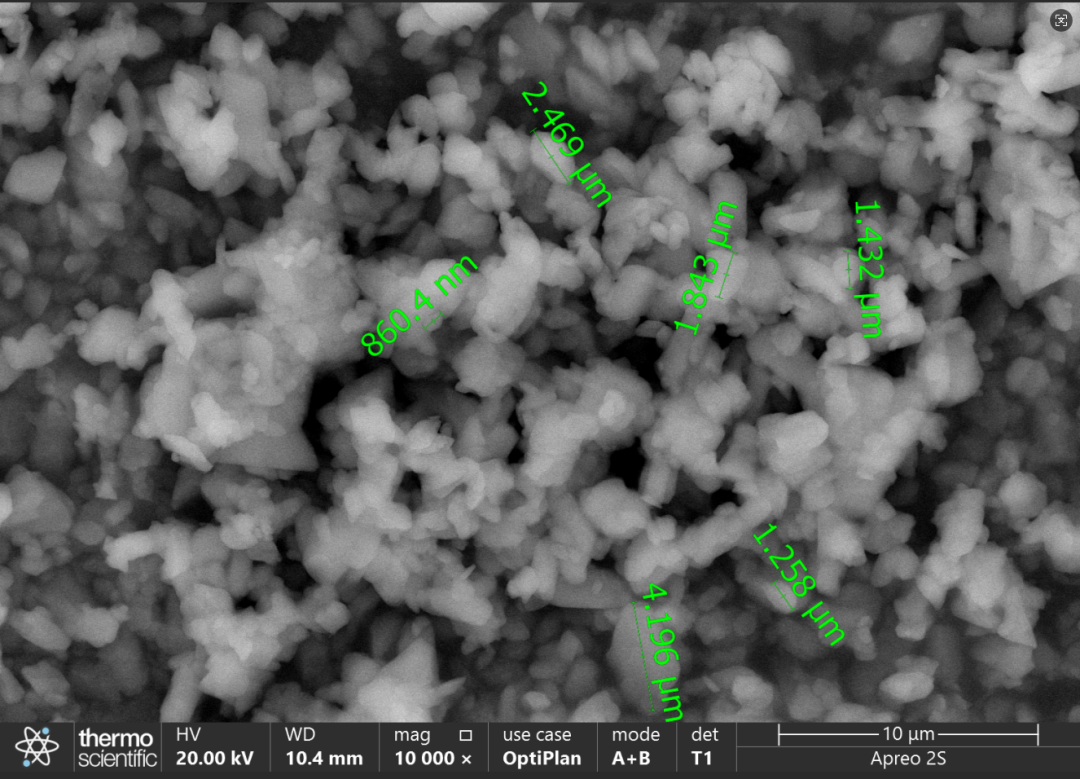 CHC-1504. Application Scenarios of Our Pore-Forming Agent Preparation Slurry
-
Sensing/Detection: As a core sensitive material, the physical properties (such as conductivity, electromotive force) change with the composition and concentration of the ambient gas.
-
Diffusion: As a physical barrier, it controls the gas to enter the reaction zone uniformly at a specific rate without participating in the reaction.
-
Carrier/Support: Provides mechanical support with a high specific surface area for sensitive materials or catalysts.
5. Application Examples
Semiconductor Metal Oxide Ceramics: tin dioxide, widely used for detecting combustible gases (such as hydrogen, methane, propane), toxic gases (such as carbon monoxide), and volatile organic compounds. Typically requires doping with precious metals (such as Pt, Pd) to enhance sensitivity and selectivity.
Zirconia Electrolyte Ceramics: zirconia sensors, catalytic platinum electrodes, diffusion barriers, protective layers, TSP materials
Gas sensor diffusion barriers: Covering the entrance of the electrochemical sensor, limiting the gas entry rate, making the sensor’s output linearly related to gas concentration, and preventing sensor overload or poisoning.
Aeration heads: In water treatment, dispersing air into tiny bubbles to increase oxygen mass transfer efficiency.
 Welcome to communicate