Introduction
With the rapid development of electric vehicles and smart grids, the reliability and safety of lithium-ion batteries in high power output scenarios have become critical constraints for their further application. As a key internal component of batteries, the thermal stability and mechanical strength of the separator directly relate to the safety boundaries of the battery. Commercial polyolefin separators (such as PE and PP) have poor thermal stability, easily shrink and melt at high temperatures, leading to battery short circuits and triggering thermal runaway.
To address this industry pain point, Professor Zhou Ji from Hunan University of Science and Technology and Professor Ding Yanhua from Xiangtan University published a research paper titled “Fabrication of Aligned PI/GO Nanofibers for Battery Separators” in the journal Fibers and Polymers. This work successfully fabricated highly aligned polyimide/graphene oxide composite nanofiber membranes using electrospinning technology. The membranes exhibited an astonishing tensile strength exceeding 100 MPa, an electrolyte absorption rate of up to 640%, and excellent thermal stability (no dimensional change at 200°C). Lithium metal batteries based on this membrane demonstrated outstanding cycling performance (92.7% capacity retention after 100 cycles) and exceptional resistance to lithium dendrite penetration, providing a key membrane material solution for the development of high safety, high-performance lithium-ion batteries.
Research Background
Commercial polyolefin separators have low thermal deformation temperatures (PE ~135°C, PP ~165°C), making it difficult to meet the stringent safety requirements of high-power lithium-ion batteries. Polyimide is considered an ideal alternative material due to its excellent thermal stability, chemical stability, and mechanical properties. However, the physical properties of pure PI membranes still have room for improvement. Graphene oxide, as a high-performance two-dimensional nanofiller, can significantly enhance the mechanical and thermal properties of polymers. Furthermore, compared to random fiber membranes, aligned nanofibers can greatly improve the tensile strength of the separator, which is crucial for coping with mechanical stress during battery assembly and dendrite growth during cycling.
Main Research Content
Main research content
1. Design and Fabrication of Aligned PI/GO Membranes
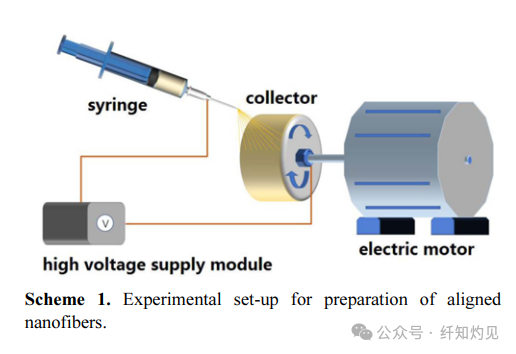
The researchers utilized a self-built electrospinning device (Scheme 1) and successfully fabricated highly aligned PI and PI/GO composite nanofibers by controlling the rotation speed of the drum collector (1000 rpm).
Key step: GO nanosheets were uniformly dispersed in the NMP solution of PI, and aligned fiber membranes were obtained through electrospinning.
Core advantage: The aligned structure not only greatly enhances the mechanical strength of the membrane but also provides a more ordered channel for ion transport.
2. Structural and Physicochemical Property Characterization
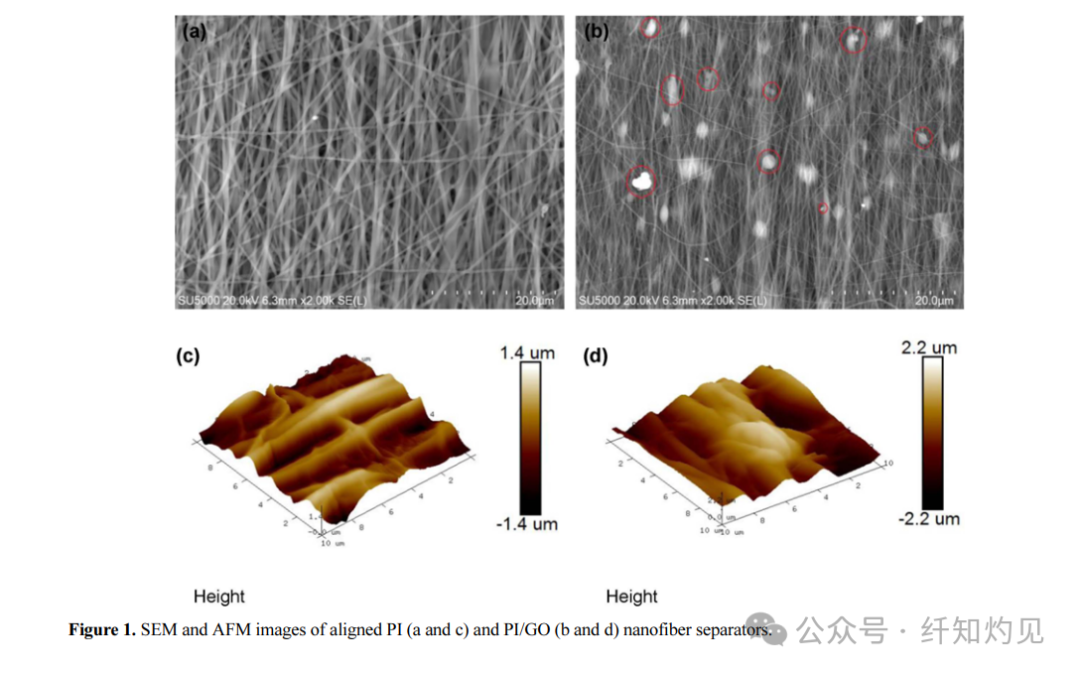
Morphology and structure: SEM and AFM images (Figure 1) show that the obtained PI and PI/GO fibers have diameters ranging from 200 to 300 nm and are highly aligned in the same direction. The addition of GO roughens the fiber surface and effectively reduces the fiber diameter.
Outstanding mechanical performance: Tensile tests indicate (Figure 2a) that the fracture strength of the aligned PI/GO membrane exceeds 100 MPa, far surpassing that of Celgard membranes (~10 MPa) and random fiber membranes, reflecting the synergistic effect of the aligned structure and GO enhancement.
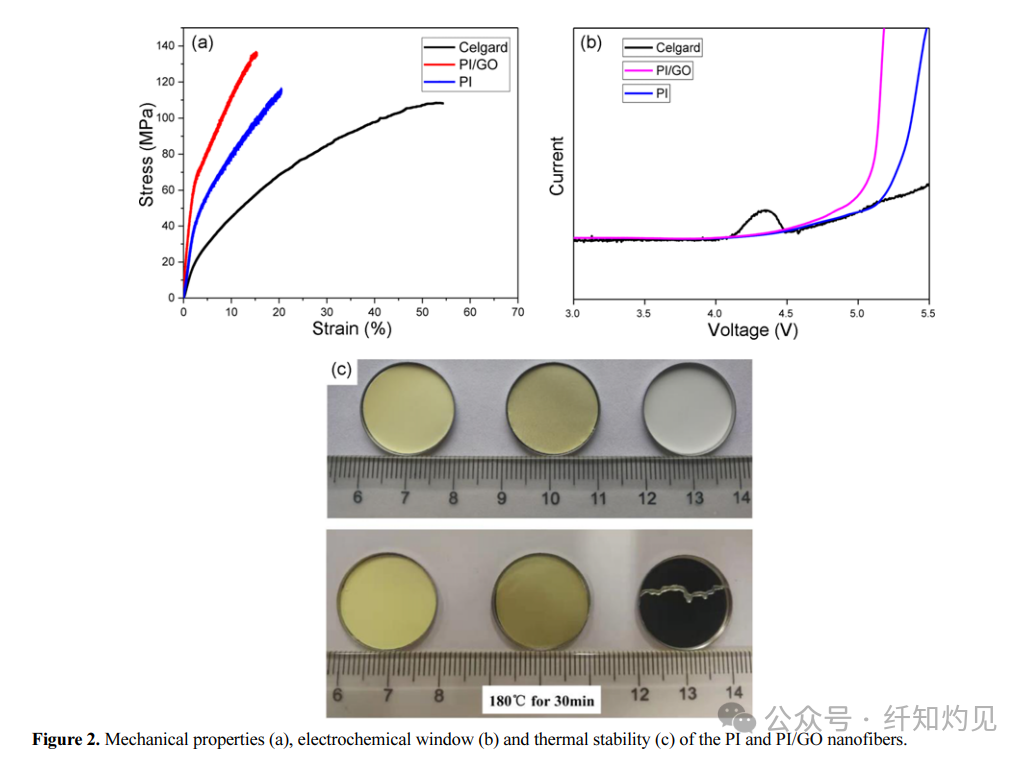
Excellent thermal stability: Thermal shrinkage tests show (Figure 2c) that the PI/GO membrane maintains a dimensional stability rate close to 100% after 30 minutes of heat treatment at 180°C, with no anisotropic shrinkage; even at 200°C, it exhibits good dimensional stability, far exceeding the melted Celgard membrane.
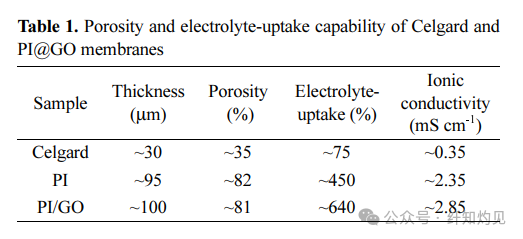
Excellent electrolyte affinity: The PI/GO membrane has a high porosity (~81%) and an extremely high electrolyte absorption rate (640%), resulting in a high ionic conductivity (2.85 mS cm⁻¹) (see Table 1).
3. Electrochemical and Battery Performance
Wide electrochemical window: Linear sweep voltammetry tests indicate (Figure 2b) that the electrochemical stability window of the PI/GO membrane reaches up to 4.5 V, compatible with high-voltage cathode materials.
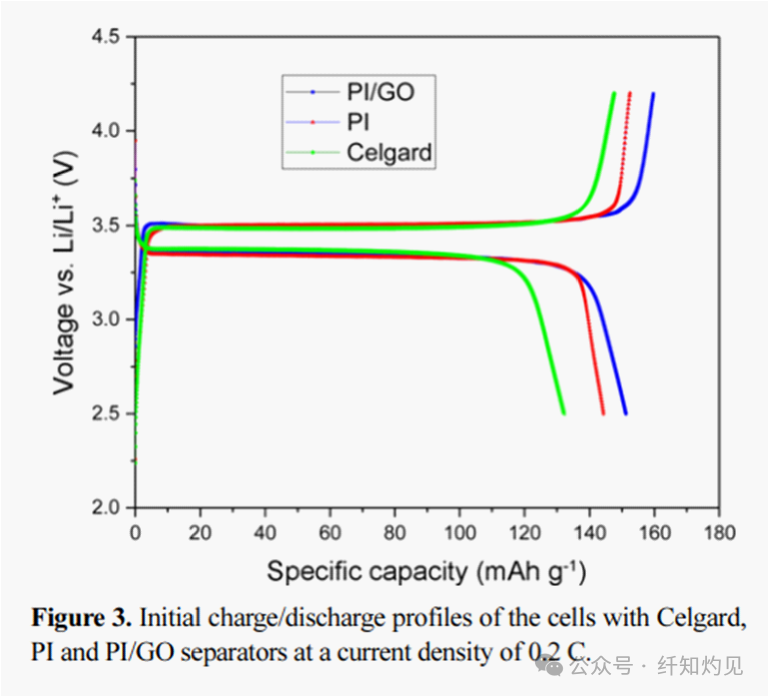
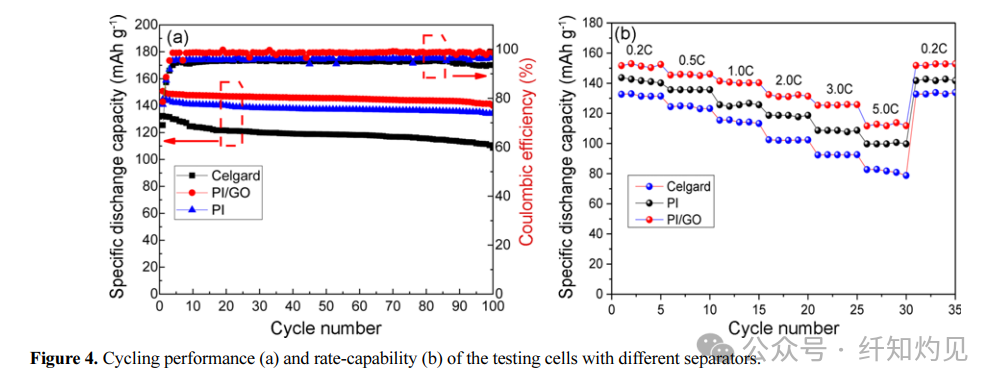
Excellent cycling and rate performance: Full cell tests using LiFePO₄ as the cathode (Figures 3, 4) show that the battery with the PI/GO membrane achieves an initial discharge capacity of up to 151.5 mAh g⁻¹ at a rate of 0.2C, with a capacity retention rate of 92.7% after 100 cycles, outperforming pure PI membranes and Celgard membranes. At a high rate of 5C, it can still deliver a reversible capacity of 110 mAh g⁻¹.
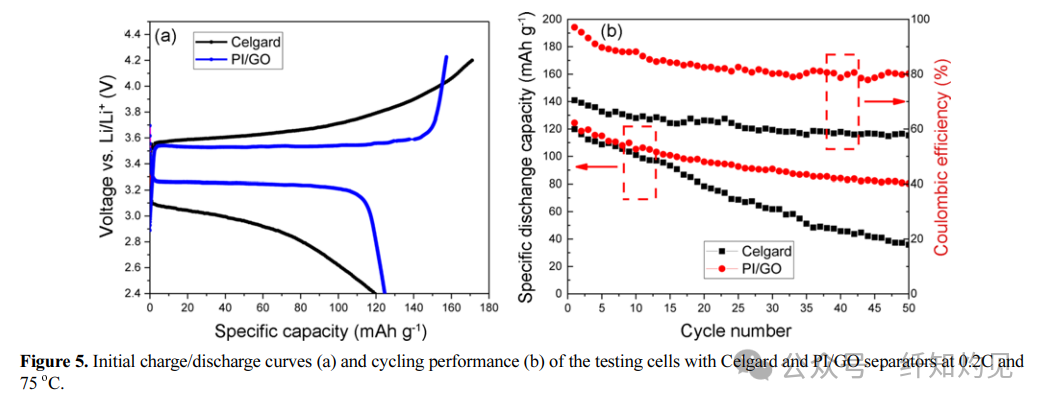
High-temperature performance advantage: At 75°C, the cycling stability (capacity retention rate of 64.8% after 50 cycles) and Coulombic efficiency of the PI/GO battery are significantly better than those of the Celgard battery, which experiences severe polarization and performance drop (Figure 5).
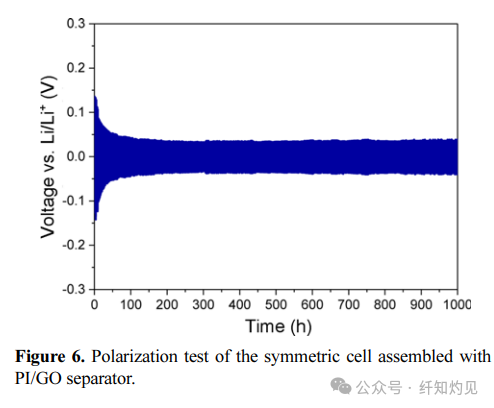
Outstanding dendrite resistance: Li/Li symmetric cell tests (Figure 6) indicate that the PI/GO membrane can maintain stable deposition/stripping for over 1000 hours at a current density of 0.2 mA cm⁻², with a very low overpotential, demonstrating its effectiveness in suppressing lithium dendrite penetration.
Research Conclusion
This study successfully developed a highly aligned PI/GO composite nanofiber membrane through electrospinning technology, which integrates multiple excellent properties:
1. Ultra-high mechanical strength: The synergistic effect of the aligned structure and GO enhancement allows its tensile strength to exceed 100 MPa.
2. Extreme thermal stability: It maintains structural integrity and dimensional stability at high temperatures of 200°C, fundamentally enhancing battery safety.
3. Excellent electrochemical performance: High porosity, high electrolyte absorption rate, and ionic conductivity ensure high capacity and excellent rate performance of the battery.
4. Strong dendrite suppression capability: It provides reliable membrane protection for the realization of lithium metal anodes.
This work not only demonstrates a new material with comprehensive performance far exceeding commercial membranes, but its design strategy of “aligned structure + nanocomposite” also points the way for the development of next-generation high safety, high-performance battery separators.
Article Information
Title: Fabrication of Aligned PI/GO Nanofibers for Battery Separators
Authors: Qiong Tian, Qiuhong Liu, Kedong Song, Yufan Mei, Weizheng Lu, Jinfeng Peng, Ji Zhou, Yanhuai Ding
Journal: Fibers and Polymers
Publication Date: 2021
DOI: 10.1007/s12221-021-0103-1
Disclaimer
This platform aims for academic exchange, and the shared content is for personal research reference only, without advocating any original copyright. If there are copyright issues, please contact us promptly, and we will address them immediately. Due to the limitations of the editor’s level, there may be omissions in the literature interpretation or author introduction, for which we sincerely apologize. If you find any discrepancies, please kindly point them out, and we will verify and correct them as soon as possible. Thank you for your understanding and support!