Skip to content
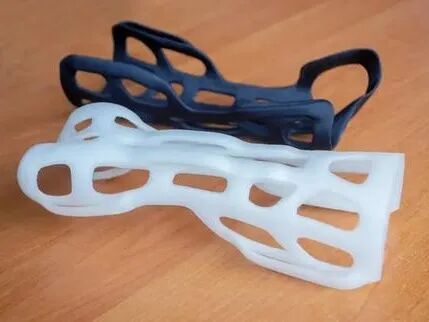
- Personalized Medical Device Manufacturing Continues to Deepen Traditional medical devices often fail to fully meet individual patient needs, whereas 3D printing technology can quickly design and print personalized medical devices based on specific patient data, such as CT or MRI scan data. Examples include surgical guides, implants, and rehabilitation aids. In orthopedics, personalized metal implants like hip joints and intervertebral fusion devices have already achieved clinical-scale application. With advancements in technology, the scope of application will further expand, and costs will gradually decrease, benefiting more patients.
- Key Breakthroughs in Bioprinting Currently, bioprinting technology is still in the laboratory stage, but it has successfully printed simple tissues such as skin, cartilage, and blood vessels, laying the foundation for organ regeneration. It is expected that by 2025, bioprinting of tissues like skin and blood vessels will enter clinical pilot stages, providing new sources for organ transplantation, alleviating organ shortages, and reducing rejection reactions, thereby improving patients’ quality of life.
- More Accurate and Efficient Surgical Planning and Simulation Through 3D printing technology, doctors can convert patients’ medical imaging data into three-dimensional models and print them out, allowing for an intuitive understanding of the actual structure of the affected area before surgery. This enables more precise surgical planning and simulation. For example, in cardiac surgery, using a 3D printed heart model, doctors can rehearse the surgical process, assess potential risks and challenges in advance, enhancing the safety and success rate of the surgery. In the future, with improvements in the precision and speed of 3D printing, along with the integration of artificial intelligence technology, surgical planning and simulation will become more intelligent and efficient.
- Accelerated Transformation in Medical Education and Training 3D printing technology can present complex human structures in a highly realistic and high-resolution manner, providing medical students and doctors with extremely realistic learning materials. By printing organ models, medical students can practice on realistic three-dimensional models, deepening their understanding of anatomical structures and improving their practical skills. In the future, 3D printing technology will play a greater role in medical education and training, potentially becoming a standard tool in medical education, cultivating more excellent healthcare professionals.
- Continuous Innovations in Drug Development In drug development, 3D printing technology can customize drug formulations, dosages, and forms according to individual patient needs, producing drugs with specific release mechanisms to ensure more precise release effects within the patient’s body. With the increasing demand for drug development and the continuous improvement of 3D printing technology, more 3D printed drugs are expected to enter clinical trial stages, bringing new breakthroughs to drug development.
- Continuous Market Growth The global 3D printing market size has grown from $10.3 billion in 2015 to $22.6 billion in 2023, with a compound annual growth rate of 9.6%. The share of the medical sector has increased from 11.2% in 2015 to 18.7% in 2023, becoming one of the fastest-growing sub-markets. It is expected that by 2025, the global 3D printing medical market size will exceed $50 billion, with China’s share rising to 25%-30%, and personalized surgical guides and biodegradable implants will become the main drivers of growth.