Have you noticed that AI is descending from the “cloud” and integrating into various devices around us? This is “Embedded AI,” which enables terminal devices to possess perception and decision-making capabilities.
However, a key question arises: how can these dispersed “small intelligences” be reliably connected and work together?The answer may lie in the well-tested communication technology—CAN bus..
This article shared by Hongke, from the authoritative international organization CiA (CAN in Automation), will reveal the unique advantages of the combination of “CAN + AI”.It concerns a smarter, more efficient, and more autonomous future, and this future is accelerating towards us.
“
When AI Meets CAN: The Future of Embedded Intelligence
Google AI defines embedded artificial intelligence as “the integration of AI with physical devices and systems,” allowing devices and systems to perform data processing, decision-making, and action execution locally without relying on cloud connectivity.
The key to achieving this functionality is to run “lean” AI models on efficient hardware, which brings advantages such as improved efficiency, optimized accuracy, and enhanced real-time performance. Its application scenarios include intelligent systems in autonomous robotics, smart sensors, healthcare, and manufacturing.
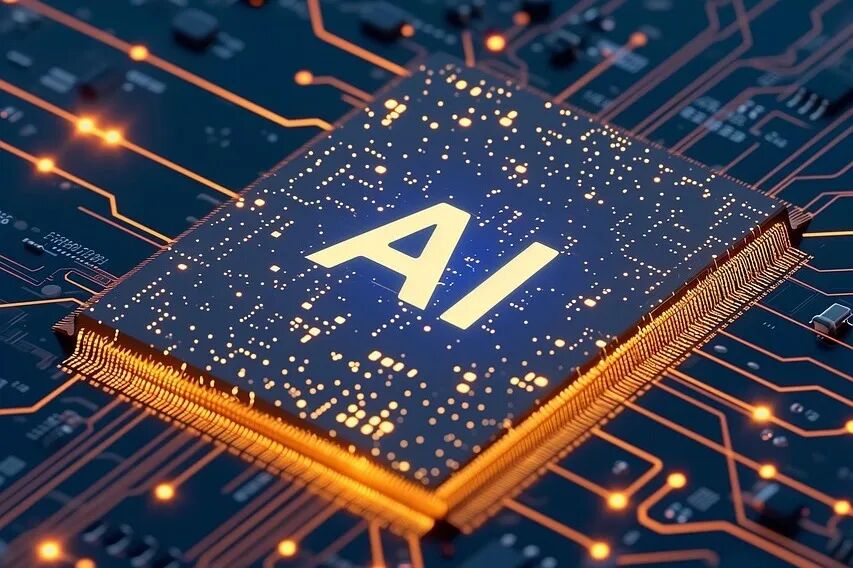
Embedded AI is the next step in upgrading embedded control networks. Initially, AI was applied to large remote computer clusters, which consume a lot of energy. Of course, some data from these AI applications also comes from sensors in the front-end embedded network: remote AI systems process sensor data and send AI-generated instructions to actuators in the front-end network.
In some embedded control applications, to break free from reliance on centralized AI computing resources that require network connectivity (which often leads to slow response times in real-time control systems), edge AI controllers are being deployed. As mentioned earlier, the next stage in the development of embedded control networks is to introduce AI-based sensors and actuators—these devices can choose whether to connect to local edge AI controllers based on actual needs.
In the early stages of a new technology, adopting a centralized control architecture is often the industry norm;the next step after centralization is usually decentralization.The advantage of decentralization is that pre-processed data can be transmitted in real-time over low-bandwidth networks—this is a significant benefit for all autonomous systems, such as Automated Guided Vehicles (AGVs), Autonomous Mobile Robots (AMRs), drones, and unmanned commercial vehicles (used in agriculture, forestry, earthworks, and construction).

Historically, most autonomous systems have adopted CAN bus-based networks; this network selection logic is also applicable in the fields of medical devices and laboratory equipment. Furthermore, decentralization brings another added effect: such embedded AI networks do not necessarily require remote interfaces, making them more resilient against network attacks and significantly enhancing security.
The first batch of embedded AI devices may focus on two categories: one is sensor fusion devices for navigation, and the other is devices for status monitoring, both of which can output “smart” data pre-processed by AI.
On the actuator side, power drive devices with self-configuration and self-optimization capabilities are expected to become typical applications of embedded AI; additionally, preventive maintenance of motors and AI-based motor status monitoring are also areas of significant interest. Of course, users can also use embedded real-time AI host controllers, but integrating AI software directly into actuator devices can relieve system designers of the burden of AI programming, thereby reducing design complexity.
We have reason to believe that chip manufacturers will soon launch compatible hardware with AI processing capabilities—this hardware will not only consume less power than current products but will also be reasonably priced, enabling embedded AI technology to extend into battery-powered application scenarios. In my view, CAN bus-based networks are the ideal choice for connecting AI sensors, AI actuators, and host controllers:the robustness, reliability, and scalability of CAN technology are essential core features for real-time control systems equipped with embedded AI capabilities.
The first instance of the CANopen protocol adapted for embedded artificial intelligence is the CiA 462 protocol for object detection devices. This protocol does not depend on specific sensor technologies (whether cameras, radar, ultrasonic sensors, etc.) and clearly specifies the process data format mapped to Process Data Objects (PDO) messages. Such sensor fusion devices can output process data generated by embedded AI algorithms. Additionally, other CiA protocols also need to be expanded in terms of status monitoring parameters to adapt to embedded AI application scenarios.

Embedded AI pushes intelligence to the edge, and stable and reliable communication is key. As revealed in the text,CAN and CANopen, with their inherent characteristics, are becoming the ideal “neural network” for embedded AI.
In response to this trend, Hongke is committed to providing CAN bus tools and solutions ranging from classic to cutting-edge (such as the latest 👉 Hongke PCAN XL suite), and we look forward to welcoming the future of embedded AI and real-time network integration together with industry peers.
Source
Holger Zeltwanger
This article is based on Holger Zeltwanger (founder of the CiA Association) in CAN Community News (16-2025), translated and shared by the Hongke Intelligent Connectivity team, aiming to share cutting-edge technological achievements with industry peers.
Recommended Reading
|
Vehicle network testing is a must! Hongke’s solution covers multiple scenarios |
|
Customer test: Hongke vehicle network communication test board |
|
Cutting-edge vehicle Ethernet! 10BASE-T1S practical application |
|
Hongke Owasys supports Bosch Rexroth BODAS Connect |

Hongke is a high-tech company with over 16 years of experience in the communication field, especially in automotive electronics and intelligent automation, dedicated to providing customers withcomprehensive one-stop intelligent connectivity solutions for CAN (CC/FD/XL), LIN, vehicle Ethernet, TSN.
Follow us for timely updates on more technical insights and Hongke news.

Scan to join
Hongke Intelligent Communication Group




Click “Read the original text” for more Hongke news