Recently, the Urology team at Zhongshan University First Affiliated Hospital (referred to as Zhongshan First Hospital) in Guangxi successfully performed a laparoscopic left kidney tumor resection on a patient with a large occupying lesion in the left kidney area, aided by the precision of the Da Vinci surgical robot. The successful completion of this surgery not only overcame the technical challenges of resecting a large tumor but also demonstrated the hospital’s advanced capabilities in minimally invasive procedures, providing valuable experience for the treatment of similar complex cases.
It is reported that the patient, Ms. Wang (pseudonym), experienced “left flank pain for one year” and was found to have a large occupying lesion in the left kidney area, measuring approximately 12.2cm in diameter. After a series of detailed examinations including enhanced CT and MRI, it was discovered that the tumor was closely related to the renal hilum vessels and collecting system. To seek further treatment, the patient came to our hospital’s urology department.
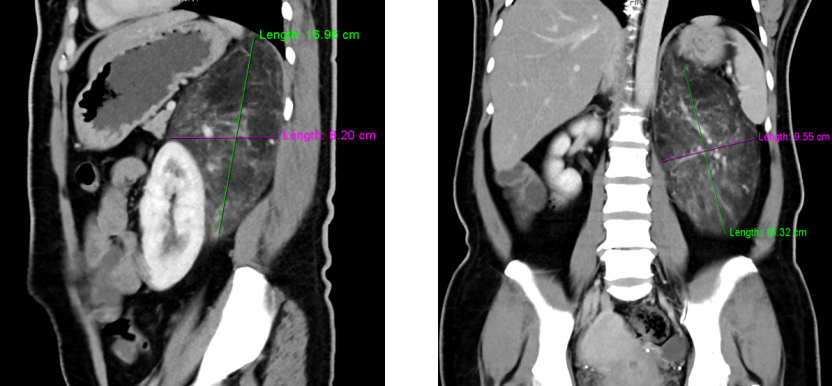 “With such a large kidney tumor and complex surrounding structures, traditional open surgery poses significant trauma, high bleeding risk, and slow postoperative recovery; conventional laparoscopic surgery has limitations in visibility and operational flexibility. Achieving complete tumor resection without damaging surrounding tissues is a significant test of the surgeon’s skills,” said Wang Wei, the deputy director of the urology department (acting director).
To maximize patient safety and surgical outcomes, Wang Wei led the department team in collaboration with experts from the surgical anesthesia center, radiology, and other disciplines to conduct multiple case discussions. The experts unanimously agreed that the Da Vinci surgical robot, with its high-definition three-dimensional vision, flexible and precise operating arms, and ability to filter hand tremors, would enable more refined operations in the complex surgical space, making it the best choice for this surgery. Subsequently, the team developed a detailed surgical plan based on the tumor’s location and its relationship with surrounding tissues, and devised comprehensive countermeasures for potential risks such as massive bleeding and organ damage during the procedure, ultimately deciding to perform a “robot-assisted laparoscopic left kidney tumor resection” for the patient.
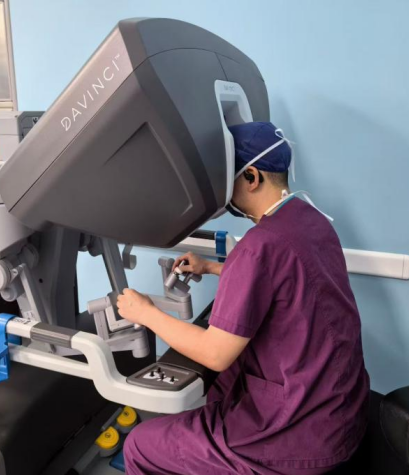
On the day of the surgery, with close cooperation from the anesthesia team, Wang Wei led the department team to officially start the Da Vinci robotic surgical system. During the procedure, the high-definition three-dimensional vision clearly presented the anatomical relationship between the tumor and important vessels such as the renal artery and renal vein, while the robot’s four operating arms acted like “miniature skilled hands,” precisely separating adhered tissues in the narrow surgical area, carefully freeing the renal hilum vessels and protecting them, and then completely dissecting the large tumor. The entire surgery lasted 3 hours, with a blood loss of only 50 milliliters, far below the blood loss typically seen in traditional surgeries. Postoperatively, the patient recovered well under the careful care of the urology nursing team.“I originally thought that such a large tumor surgery would be very painful, but I didn’t expect to recover so quickly. I am really grateful to Director Wang,” said the patient after the surgery.
Our hospital’s urology department has always been committed to introducing advanced medical technologies and equipment, strengthening discipline construction and talent training, and continuously breaking through in the diagnosis and treatment of various complex diseases. In the future, the urology team will continue to rely on the national regional medical center platform to provide more precise, safer, and higher-quality medical services for a wide range of patients.
 Department IntroductionThe Urology Department at Zhongshan First Hospital Guangxi was established in March 2023. The department’s expert team has strong clinical capabilities and is equipped with multiple advanced minimally invasive surgical devices, comprehensively developing new technologies in minimally invasive urology and andrology, with several techniques leading in Guangxi. There are currently 19 staff members, including 3 senior titles, 7 physicians, and 11 nurses.Clinical Services:Urolithiasis: Minimally invasive treatment surgeries for complex renal/ureteral stones, such as ureteroscopic stone removal with rigid/flexible ureteroscopes, single-channel/multi-channel percutaneous nephrolithotomy, and combined ureteroscopic and percutaneous nephrolithotomy.Renal/Renal Pelvis Tumors: Robot-assisted laparoscopic partial nephrectomy, laparoscopic radical nephrectomy, laparoscopic one-position heminephrectomy, and the first in Guangxi to perform ultra-minimally invasive ultrasound-guided injection of group A streptococcus for percutaneous renal cyst sclerotherapy.Benign Prostatic Hyperplasia/Tumors: Transurethral laser enucleation of the prostate/transurethral resection of the prostate, robot-assisted laparoscopic radical prostatectomy, and MRI fusion ultrasound-guided precise targeted prostate biopsy.Bladder Diseases: Comprehensive treatment strategies for bladder cancer; robot-assisted laparoscopic radical cystectomy with orthotopic bladder reconstruction; minimally invasive procedures for various stress urinary incontinence and pelvic floor diseases; sacral nerve stimulation for neurogenic bladder and overactive bladder; urinary tract and pelvic floor bladder neck reconstruction for recurrent urethral stricture, bladder prolapse, and bladder neck contraction.Pediatric Urology: Minimally invasive surgeries for various congenital urinary system diseases in children.Main Experts Introduction
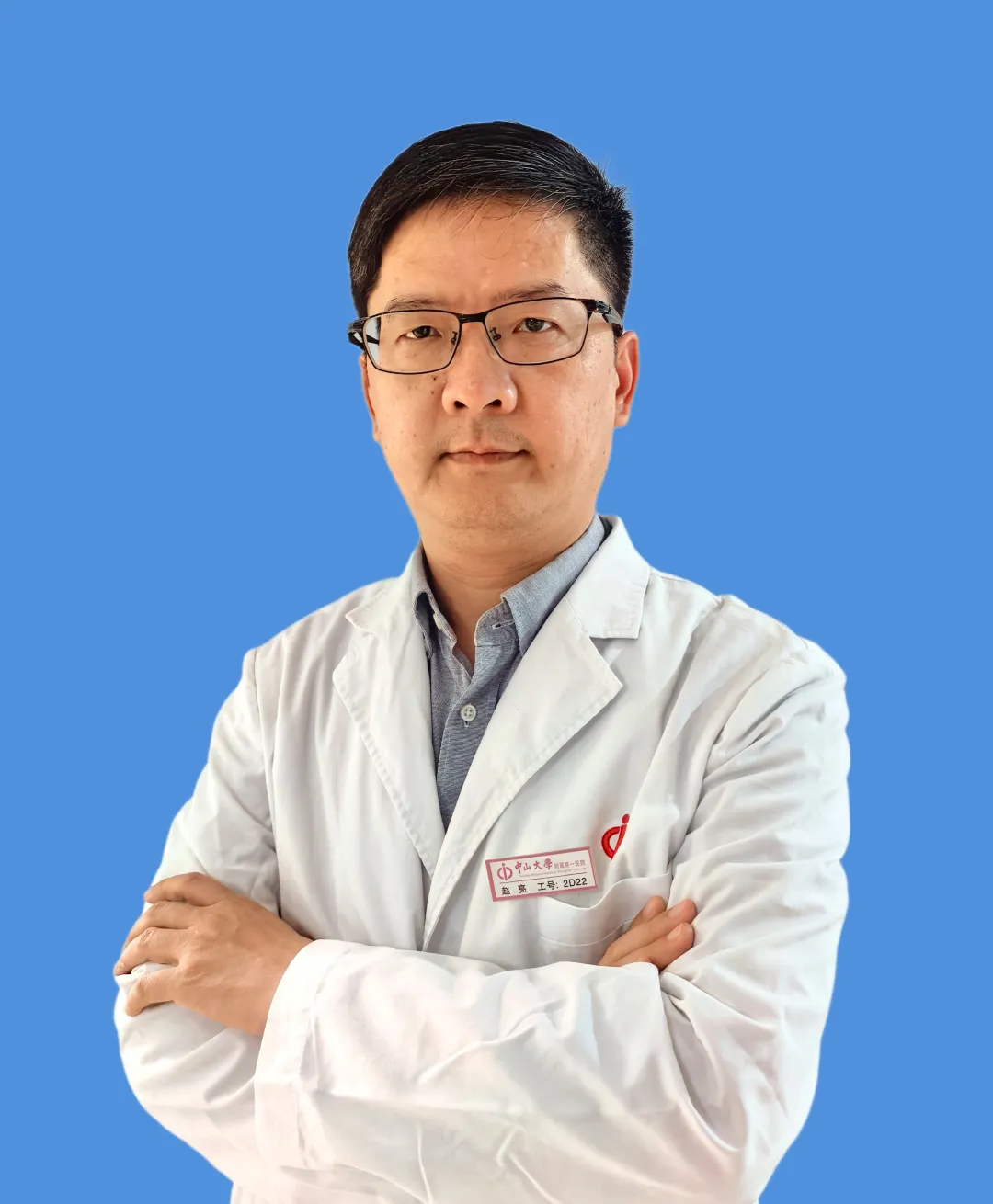
Zhao Liang
Director of the Urology Department at Zhongshan First Hospital Guangxi, Associate Chief Physician, PhD. Former member of the Prostate Group of the Third Committee of the Male Health Branch of the Guangdong Medical Association, and Executive Committee Member of the Male Health Professional Committee of the Guangdong Clinical Medicine Association. Engaged in clinical work in urology for nearly 30 years, specializing in the diagnosis and treatment of urological and male health diseases, with rich experience in minimally invasive treatment of urogenital tumors, urolithiasis, and microsurgical treatment of obstructive azoospermia.
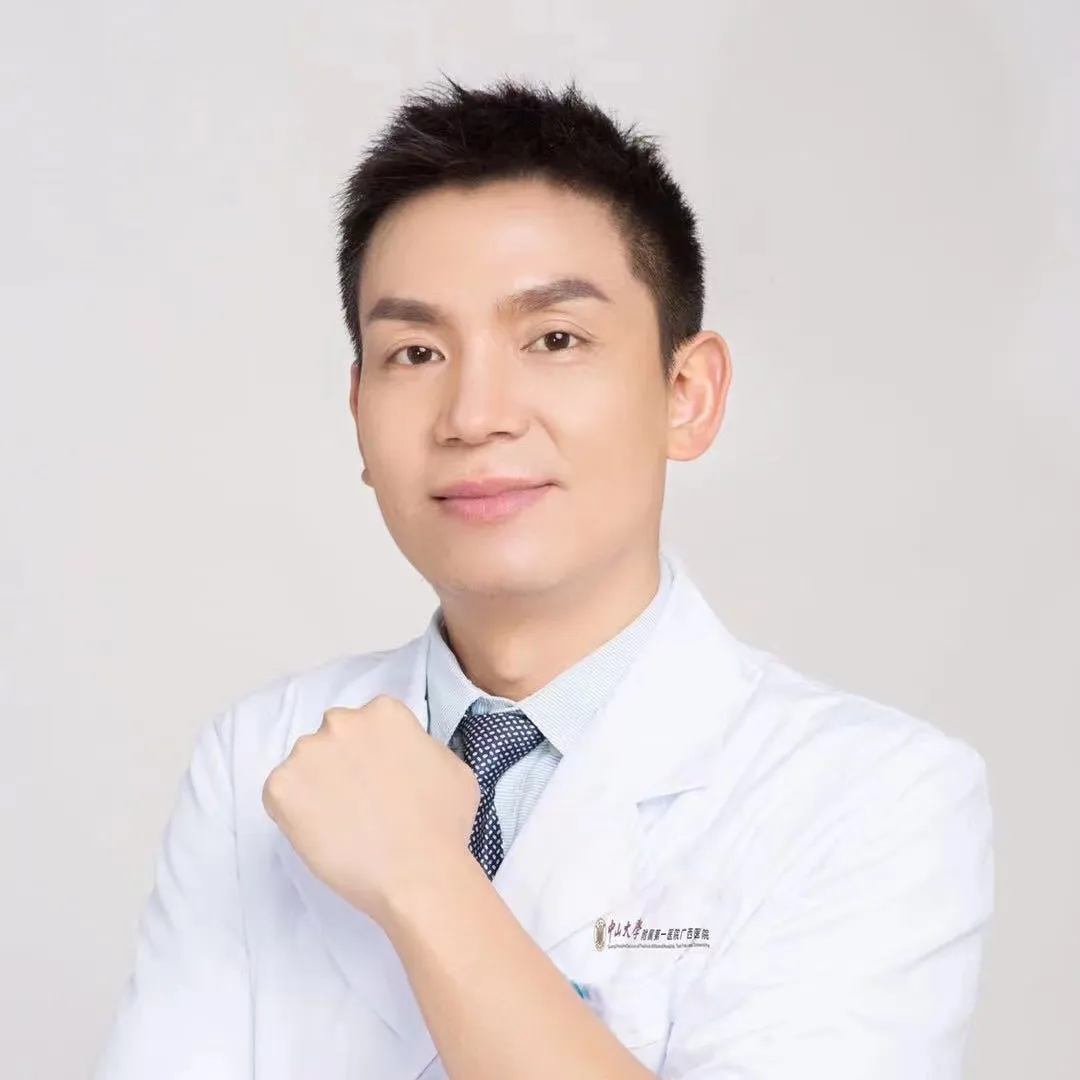
Wang Wei
Secretary of the First Party Branch of the Surgery Department at Zhongshan First Hospital Guangxi, Deputy Director of the Urology Department (acting), Master’s degree supervisor. Standing Committee Member of the Urology Branch of the Guangxi Medical Association Standing Committee Member of the Urogenital Tumor Professional Committee of the Guangxi Anti-Cancer Association Invited Expert of the Training Department of the Chinese Ethnic Health Association Director of the New Drug Transformation and Clinical Evaluation Committee of the Chinese Association for the Promotion of Traditional Chinese Medicine Member of the Health Technology Promotion Expert Committee of the Chinese Ethnic Health Association Standing Committee Member of the Health Technology Promotion Expert Committee of the National Health Industry Enterprise Management Association Expert Reviewer for Science and Technology Projects of the Guangxi Science and Technology Department Member of the Quality Control Center for Urology in Guangxi Specializes in robot-assisted laparoscopic treatment of prostate cancer, bladder cancer, kidney cancer, and various tumors, as well as urinary obstruction diseases such as ureteral stricture and bladder neck obstruction. He has pioneered several techniques in the region, such as TVT-A surgery for female stress urinary incontinence; sacrocolpopexy for bladder prolapse; intravesical multi-point injection for overactive bladder; laparoscopic bladder neck reconstruction for recurrent bladder neck obstruction; and bladder mucosal patch treatment for complex long-segment ureteral stricture. He has led and participated in several national and provincial key projects, including leading a central guidance project (funding of 2 million) and a Guangxi key R&D project (funding of 800,000), and has obtained 4 various patents, including the patent for “Pressure-Controlled Flexible Ureteroscope Sheath” which has been commercialized. He has published more than ten articles in domestic and international journals.
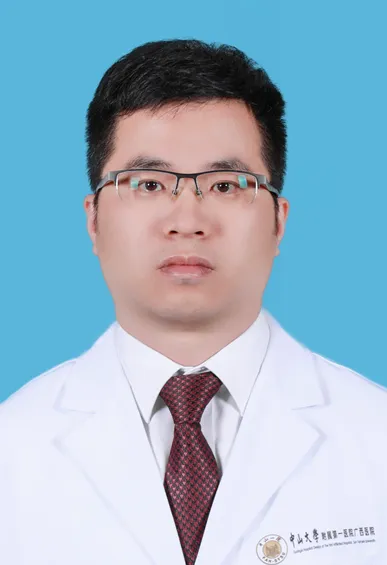
Li Jun
Associate Chief Physician of the Urology Department at Zhongshan First Hospital Guangxi, Master of Medicine.
Specializes in minimally invasive surgery for urolithiasis, standardized diagnosis and treatment of bladder and urethral dysfunction, benign prostatic hyperplasia, and microsurgical treatment of male diseases, individualized treatment for refractory prostatitis and sexual dysfunction. His diagnostic and treatment scope includes urolithiasis and tumors, neurogenic bladder, benign prostatic hyperplasia, urinary incontinence, overactive bladder, chronic pelvic pain, chronic prostatitis, varicocele, hydrocele, congenital urinary malformations, ureteropelvic junction obstruction, cryptorchidism, penile developmental abnormalities, hypospadias, phimosis, obstructive azoospermia, and sexual dysfunction. He serves as the deputy leader of the renal cancer group of the Urogenital Tumor Professional Committee of the Guangxi Anti-Cancer Association, a young and middle-aged member of the Urology Branch of the Guangxi Medical Association, and a member of the Urology Branch of the Guangxi Preventive Medicine Association.
 Source: Urology Department Reviewed by: Party and Government Office Final Review: Lai Weizhong