
This is a joint column by Pencil Road and Great Wall Strategy Consulting, discovering the unicorns of the new era. Great Wall Strategy Consulting is a leading local consulting firm in China’s new economy.
Interview | Wang Fang, Founder of Pencil RoadWritten by | Wu Xinxiao, Editor of Pencil Road
A few years ago, when it came to robot vacuums, many users might have described them as having “limited functionality,” “poor performance,” and “not smart enough.” After 2023, with the advent of technologies represented by bionic robotic arms, the coverage and cleaning power of robot vacuums have significantly improved. This round of key technological iteration has greatly enhanced user experience, increased market penetration, and brought in new entrants, quietly changing user perceptions and the industry landscape.
As one of the leaders in this transformation, Dreame told Pencil Road: In the early days, the pain points of robot vacuums were basic experiences, and Dreame focused on overcoming “ease of use” and “effectiveness.” Once the product experience met user expectations, the direction of innovation naturally pointed towards higher-level “intelligence” and “humanization.”
“When users have needs, there is room for innovation. Following user needs will keep us on the right track.”
As of now, Dreame’s robot vacuums have achieved the number one market share in dozens of countries worldwide. From breaking the stereotype of being hard to use to establishing a mature understanding of robot vacuums, to the astonishment that robot vacuums can now integrate with AI and “think” for themselves. From the technological iteration journey of Dreame’s robot vacuums, we feel that a new “innovation turning point” in the robot vacuum industry has arrived.
Please read Pencil Road’s dialogue with Meng Jia, President of Dreame’s Robot Vacuum Division, where we will explore the following key topics.
1. What are the latest trends in cleaning robots?
From single-function devices to comprehensive service robots.
2. What is the biggest impact of large models on cleaning robots currently?
Making robots smarter and facilitating user interaction.
3. Is the ultimate form of cleaning robots humanoid?
Not necessarily; the upper limbs can be robotic arms, while the lower limbs could be wheels or any other form.
4. Is it possible for robot vacuums to become the future entry point for household robots?
Indeed, there is this possibility, as robot vacuums are naturally more suited to home environments.

Meng Jia, President of Dreame’s Robot Vacuum Division
The interviewee has confirmed that the information in this article is accurate, and Pencil Road is willing to endorse its content.
– 01 –How will cleaning robots innovate next?
Pencil Road: Over the years, how have the overall industry trends and user perceptions of robot vacuums changed?
Meng Jia: When Dreame was first established, the penetration rate of the robot vacuum industry was low, and user perceptions were often stuck on outdated models, such as limited functionality (only vacuuming) and poor usability (random collisions).
Therefore, in the early years of entrepreneurship, Dreame focused on making robot vacuums “more usable” (ease of use).
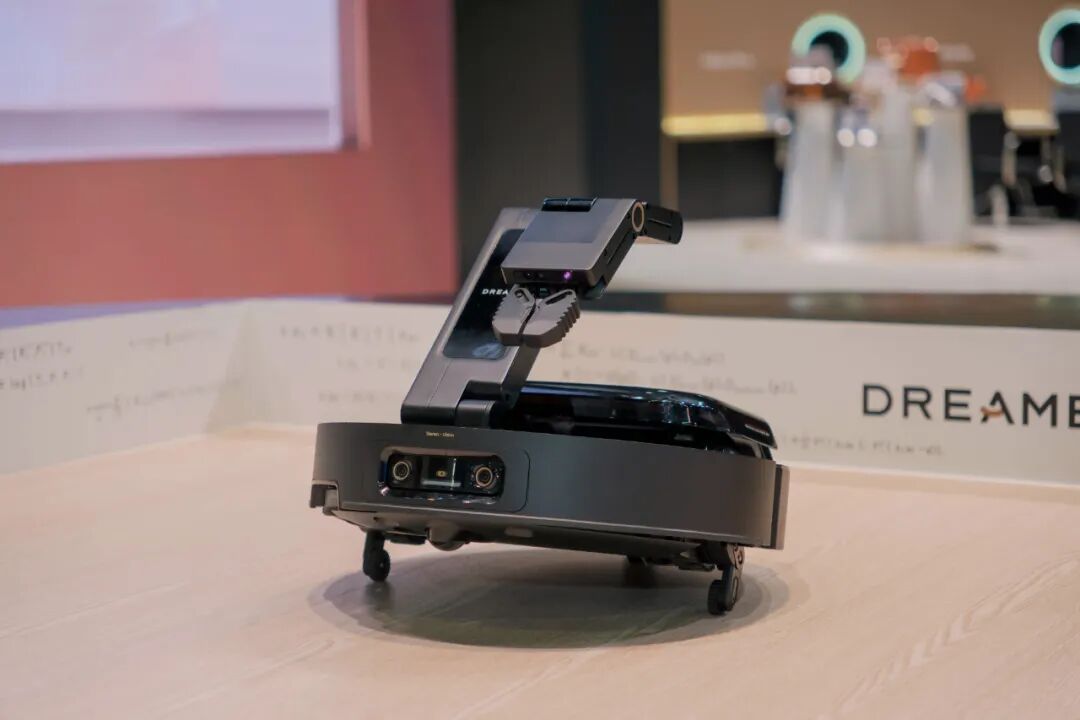
By this year, user perceptions have changed significantly. Especially in 2023, Dreame launched the X20 product with a robotic arm and a super-thin embedded base station design, which received positive feedback and attracted many industry players to follow suit. Robot vacuums have gradually become essential small appliances that users consider when renovating their homes.
In recent years, robot vacuums have shifted from being just usable to requiring refinement and seamless integration. They need to achieve more precise cleaning effects through features like robotic arms and self-lifting laser radars, while also integrating into the larger trend of embedded designs in home decoration, minimizing the presence of robot vacuums in the home to make them more harmonious and unobtrusive.
We are now at a critical innovation turning point: moving from solving basic functionality and usability issues to contemplating the next major direction for innovation. This means that cleaning robots may evolve from single-function devices to comprehensive, smarter service robots.
– 02 –How AI Transforms Cleaning Robots
Pencil Road: Speaking of innovation, AI and robotics have been hot topics this year, such as the emergence of DeepSeek and the robot performances during the Spring Festival Gala. What impact do you think these have on the industry?
Meng Jia: AI and robotics are indeed two major trends this year, which are a significant boon for the cleaning robot industry.
As one of the first robot vacuum manufacturers to integrate DeepSeek technology, we have significantly enhanced the flexibility of human-robot interaction through this technology. At the same time, the breakthroughs in DeepSeek also drive us to continuously optimize our own AI systems.
In smart hardware, robot vacuums have the highest demands for intelligence. They need to navigate, avoid obstacles, and adapt different cleaning methods based on room and furniture types.
AI is a long-term investment direction. We have accumulated over 4 million sets of data for machine learning, covering navigation, obstacle avoidance, and scene recognition functions. We have a software team of over 100 people focused on AI algorithms and data training, many of whom are from Tsinghua University.
Additionally, the robot performances during the Spring Festival Gala showcased the potential of embodied intelligence. This year, we also launched a robot vacuum with a robotic arm, which has garnered significant attention at exhibitions like AWE.
Pencil Road: I understand your point about “AI being a long-term investment direction,” as large models are not inherently designed for robots and require substantial modifications or adaptations.
Meng Jia: Currently, the biggest help from large models is enhancing semantic understanding capabilities. For example, previously, when users told the robot vacuum, “the kitchen is too dirty,” it might require multiple rounds of dialogue to confirm the location and mode, which was complex to train. Large models can accelerate this process, making semantic understanding more precise and faster.
Pencil Road: According to your statistics, what are the three most important functions users care about in robot vacuums? Please rank them starting from the most essential.
Meng Jia: The most important is cleaning ability, as this is its core function.
Secondly, intelligence; navigation and obstacle avoidance must be smart enough.
Thirdly, ease of maintenance; users hope the robot requires minimal effort on their part.
Upon further exploration of user needs and expectations, they have a broader imagination for the robot’s functions—such as achieving three-dimensional space cleaning in the future, or even taking on detailed tasks like laundry, folding clothes, and organizing home items. The robotic arm vacuum we launched is a solid step in that direction.

Dreame is one of the first robot vacuum manufacturers to integrate DeepSeek technology
– 03 –The Ultimate Form of Cleaning Robots: Humanoid?
Pencil Road: There is a lot of discussion about humanoid robots now. In Dreame’s view, do cleaning robots or other robots have to be humanoid?
Meng Jia: This is a hot topic, especially with the recent popularity of humanoid robots, such as those showcased in the robot marathon in Beijing, demonstrating their potential.
However, humanoid robots currently face several challenges: first, the high cost—creating a truly human-like robot could cost as much as 300,000 to 400,000 yuan.
Secondly, the commercial application scenarios are very limited in the short term: for ordinary consumers (C-end), this price point is too high; for enterprises (B-end), its functionality is not sufficient to completely replace human services. Therefore, the industry is currently more focused on technological accumulation and exploration, with commercialization paths still being explored.
Finally, returning to the home scenario, many people have concerns about placing a large humanoid robot in their homes. Considering overall size and flexibility, robot vacuums are naturally more suited to home environments.
Thus, Dreame is currently exploring forms that update and iterate on the basis of robot vacuums. This form may be realized within the next one to three years.
Pencil Road: How do you plan to achieve this within 1-3 years?
Meng Jia: The key lies in the path. This year, Dreame launched the “robot vacuum + robotic arm” solution, which, although a preliminary form, contains infinite possibilities for evolution.
The flexible mobility of the robot vacuum gives it the ability to move freely throughout the house, and with the addition of a robotic arm, it can also clean crevices and organize clutter.
This form can further evolve in the future. For example, using a wheeled chassis not only keeps costs manageable but also enhances maneuverability and adaptability.
Humanoid robots face balance issues, such as stumbling or falling, while wheeled chassis offer high stability, controlled costs, and can reach almost anywhere in a home environment without obstacles.
Pencil Road: This clarifies my doubts. Otherwise, I thought making a robot vacuum humanoid, walking around with a broom or vacuum cleaner, would be incredibly complex. Can you summarize Dreame’s planning for robot forms in the next one to two years? What might it look like in three to five years?
Meng Jia: In the next one to two years, our plan is to base our design on the robot vacuum, adding a single robotic arm, focusing on floor cleaning and simple clutter organization.
Further upgrades may involve dual robotic arms, forming a preliminary humanoid concept: a wheeled chassis ensuring flexible movement, while the dexterity and computing power of the dual arms will enhance capabilities to perform more complex household chores, such as putting dirty clothes in the washing machine, folding clothes, or organizing desktop items.
Looking three to five years ahead, we hope to explore modular designs, using the robot vacuum as a chassis and equipping it with different modules, such as air purifiers, to create diverse functionalities.
Pencil Road: In this case, the wheeled chassis should be the mainstream choice in the short term. You mentioned that the robotic arm is an extension of the product; is the current technology for robotic arms in the market at a mature stage or still in the verification stage?
Meng Jia: It depends on the application scenario.
In traditional manufacturing, the technology for fixed-process robotic arms is quite mature, such as executing repetitive actions.
However, in the emerging field of household service robots, robotic arms are still in the technology verification stage. Each company’s solutions vary greatly from selection to design to functionality realization, and they are still in the exploratory phase.
Pencil Road: We all envision a future where a humanoid robot can take care of itself, while robot vacuums have already entered households. Will they become the entry point for humanoid robots or a platform hub?
Meng Jia: In the future, the demand for interconnectivity among smart appliances will increase, and robot vacuums currently appear to be the most suitable devices for free movement in homes, equipped with functional attributes. As they continue to learn and optimize control logic, they may indeed become the core hub for smart home control.
They could act like a mobile “butler,” managing smart appliances in a way that aligns more closely with human lifestyles. Combined with robotic arms, they could not only manage smart appliances but also perform tasks like organizing homes and cleaning.
Pencil Road: From a first principles perspective, what do you think is the core value of household smart robots?
Meng Jia: The core value lies in solving users’ “laziness” while addressing their essential needs. For example, vacuuming is a basic requirement, and extending from that are tasks like laundry, folding clothes, organizing, and even picking up deliveries.
Additionally, combined with large language models, robots can also provide companionship value, such as chatting with users and offering emotional comfort.
These fundamental yet comprehensive functions represent the greatest value that robots can create for users.
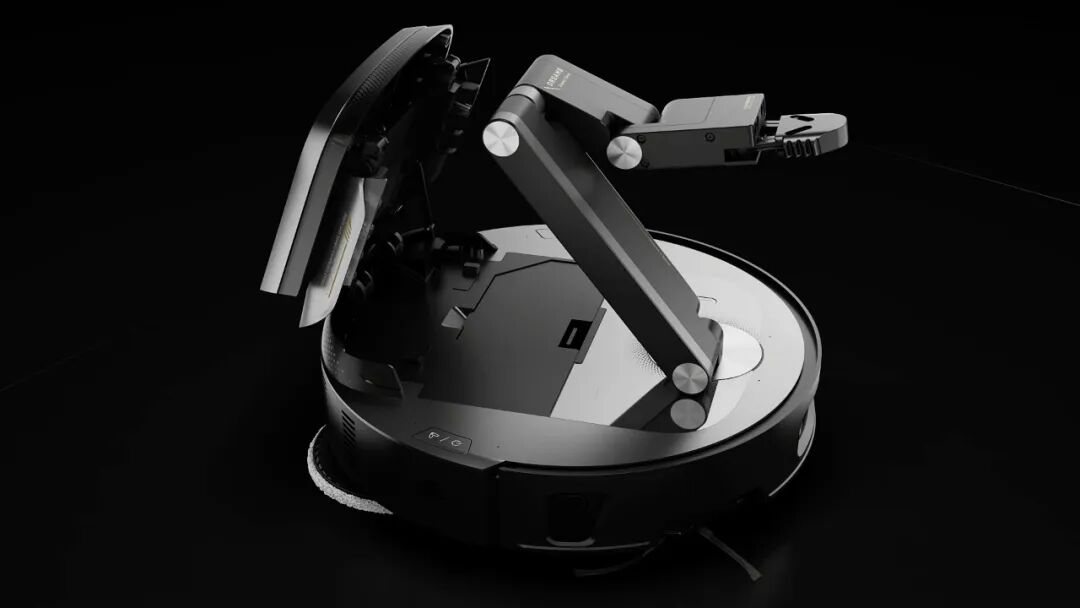
Dreame’s robotic arm can easily pick up shoes
– 04 –Real Needs vs. Pseudo Needs
Pencil Road: Whether it’s AI or humanoid robots, there has been much discussion about their applications. After your extensive practice, which applications do you believe represent the true needs of users at this stage?
Meng Jia: Our research shows that in the field of robot vacuums, users have always prioritized cleaning power and coverage.
In the past, robot vacuums had many pain points, such as the limitations of round bodies that could not cover dead corners or edges near furniture. Therefore, in 2023, we introduced the robotic arm (with an extended mop) feature, allowing the robot vacuum to clean corners.
With this year’s robotic arm, we have further improved coverage, enabling cleaning in narrow gaps (such as the 10 cm space between a toilet and a wall), solving the “last mile” cleaning problem.
Users want robots to achieve extreme cleaning, covering 100% of corners, recognizing dirt levels, and conducting targeted deep cleaning, which remains the core true need of users at this stage.
Pencil Road: In the long term, can existing technology support this goal? What technological bottlenecks need to be overcome in the next three to five years?
Meng Jia: The main bottlenecks lie in the precision of robotic arms and their tool usage capabilities.
First, robotic arms require extremely high positioning accuracy.
Secondly, they need to adapt suitable tools for cleaning. Our first-generation robotic arm proposed an innovative concept that received high user recognition: the robotic arm can grip a small vacuum cleaner to clean dust in narrow areas. This may seem simple, but it is quite challenging to implement— the arm must accurately grip the vacuum cleaner, and any change in center of gravity after gripping affects navigation and obstacle avoidance.
Moreover, vacuuming only addresses dust, while mopping requires switching to a cleaning brush, which demands higher precision. These are technical challenges that the first-generation robotic arm cannot fully resolve and require continuous iteration.
Pencil Road: You mentioned the innovation of the robotic arm gripping a vacuum cleaner, and I immediately envisioned a scene where a human upper body is holding a vacuum cleaner to clean crevices.
Meng Jia: Yes, the robotic arm essentially mimics human cleaning logic. Our research found that this capability to clean narrow gaps is very appealing to users, and they are willing to pay for it.
It is not just a gimmick; it is a true innovation that addresses pain points.
Pencil Road: Have you verified any functions that are pseudo-needs? There are many hot discussions in the market, but user demand is not as high as expected?
Meng Jia: For example, using the robotic arm solely to grip objects, we found that the demand is not strong.
Typically, there are not many obstacles on the floor that need to be picked up daily. User interest in such functions may only last a few days; once the novelty wears off, the practicality is low, and there still needs to be essential cleaning-related functions.
Pencil Road: Next, let’s showcase some data. According to the latest figures, what is Dreame’s current market share or ranking for robot vacuums?
Meng Jia: Dreame’s robot vacuums have achieved the number one market share in dozens of countries worldwide, especially in Europe and the Asia-Pacific region, with market shares exceeding 50% in some countries.
Pencil Road: If possible, could you share more data, such as revenue, profit, or user numbers?
Meng Jia: In terms of user scale, Dreame Technology has surpassed 11 million registered users globally, serving over 30 million households. This reflects the high recognition of our products and services by global consumers.
Pencil Road: This scale should far exceed that of the second and third places.
Meng Jia: Correct.
 This article represents the independent views of the speaker and does not reflect the position of Pencil Road, nor does it constitute investment advice.
Are you passionate about equity investment? Pencil Road has initiated the 【Unicorn Investment Club】. We hope to build a public unicorn investor club, gathering a group of investors committed to creating unicorns, to discover and nurture unicorns together. Click the image for details.


 Welcome to Contact UsIf you want to obtain research, please contact:pencil-newsIf you want business cooperation, please contact:renguozhou2019If you want to join the entrepreneurial community, please contact:Pencil-newsIf you want to conduct market cooperation, please contact:Pencil-newsIf you want to reprint the article, please contact:Pencil-newsRecommended Reading

Follow Us
 If you like it, remember to share, like, and check it out!